
Croc Cruise Accessibility: Boarding, Mobility And Seating
Accessibility on a crocodile cruise is decided at the jetty, not on the boat: the boarding walk, the ramp and the tide determine whether a trip works for a wheelchair, a walker or a pram. Here is what each departure point involves.
Short answer
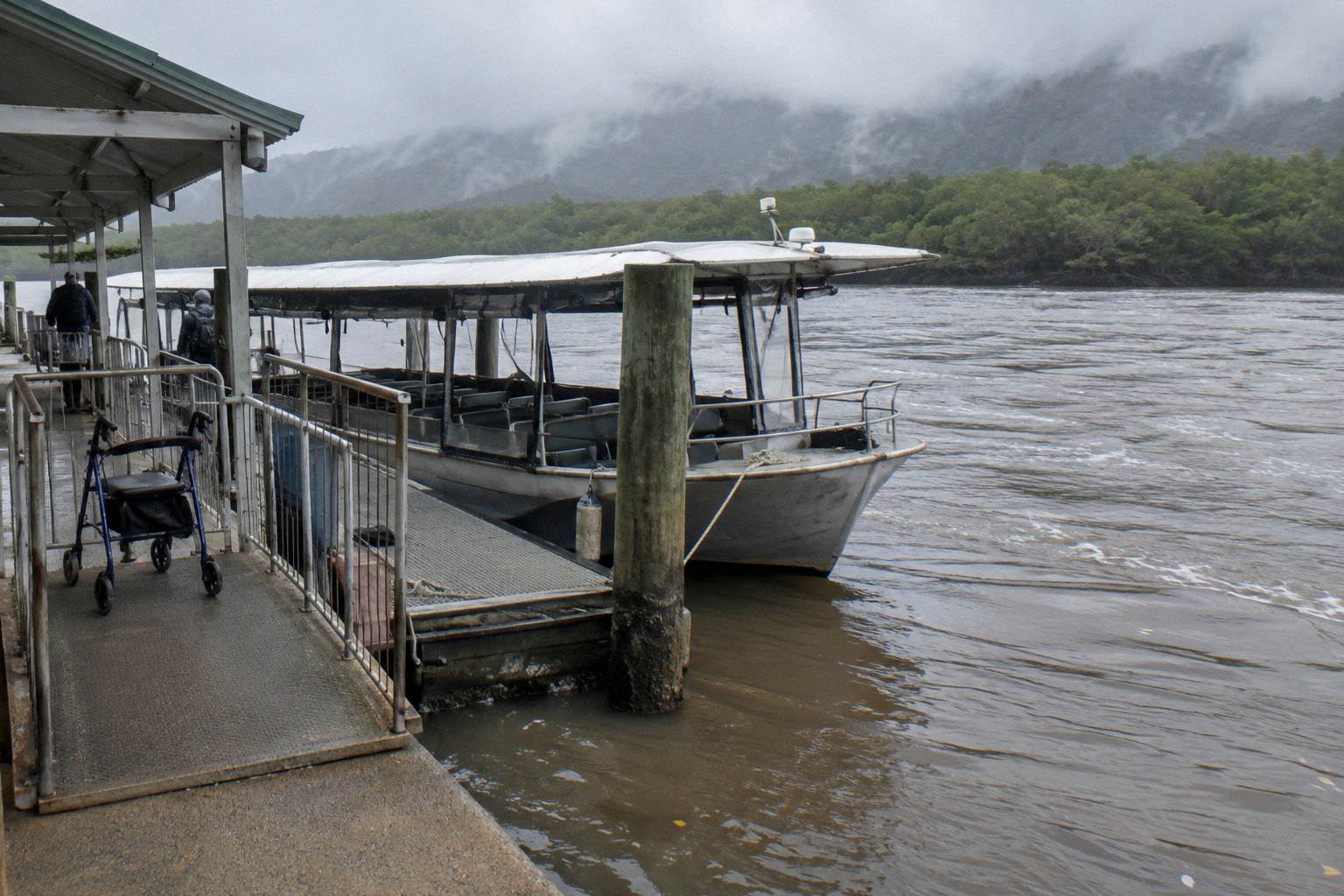
Lady Douglas is the one trip whose booking page says wheelchair accessible, departing a marina pontoon in Port Douglas, with a toilet and pram access on board. The Daintree River trips vary: Crocodile Express and the Daintree River Cruise Centre booking pages mark their trips not suitable for wheelchair users, and Bruce Belcher's involves a 200 m uncovered walk. Call ahead before paying.
A crocodile cruise is a small-boat trip on a tidal river, and that shapes every accessibility question before the boat even leaves the bank. Jetties here are timber structures that rise and fall with the tide, boarding ramps can be steep at low water, and several departure points sit at the end of unpaved or grassed walks. The differences between trips are real and specific: one leaves a superyacht marina pontoon in Port Douglas, another from a private jetty at the end of a 200 m path, and two Daintree Village operators check in on a village street before guests walk to a public boat ramp.
What follows is a trip-by-trip account of boarding, mobility, wheelchairs, prams and seating, using only what each operator states about its own departure. Nothing here is a verdict. Rivers, tides and boats change, so the single most useful step before paying is a phone call to the operator on the day, and the Lady Douglas cruise page is the easiest place to start because its departure point is the most developed of all of them. For the wider decision about which trip suits which traveller, the Daintree River cruises compared guide carries the prices, durations and routes side by side.
What Accessibility Means At A Tidal River Jetty
Every crocodile cruise covered here boards at a fixed jetty, pontoon or boat ramp, and every one of those structures moves with the tide, so the gap between pontoon and deck, the slope of any ramp and the height of each step can differ between the morning and afternoon departure of the same trip. A boarding that is a single flat stride at mid tide can involve a pronounced step down two hours later. Queensland's own crocodile safety guidance reinforces how working waterways behave: crocodiles are highly mobile, especially after heavy rain and floods, and no waterway within their natural range can be considered crocodile free, which is why operators manage the water's edge carefully rather than leaving guests to wander it. The Queensland Government's estuarine crocodile pages set out that context, and the practical upshot for accessibility is simple: boarding is supervised, assisted and done at defined points, not negotiated freely along the bank.
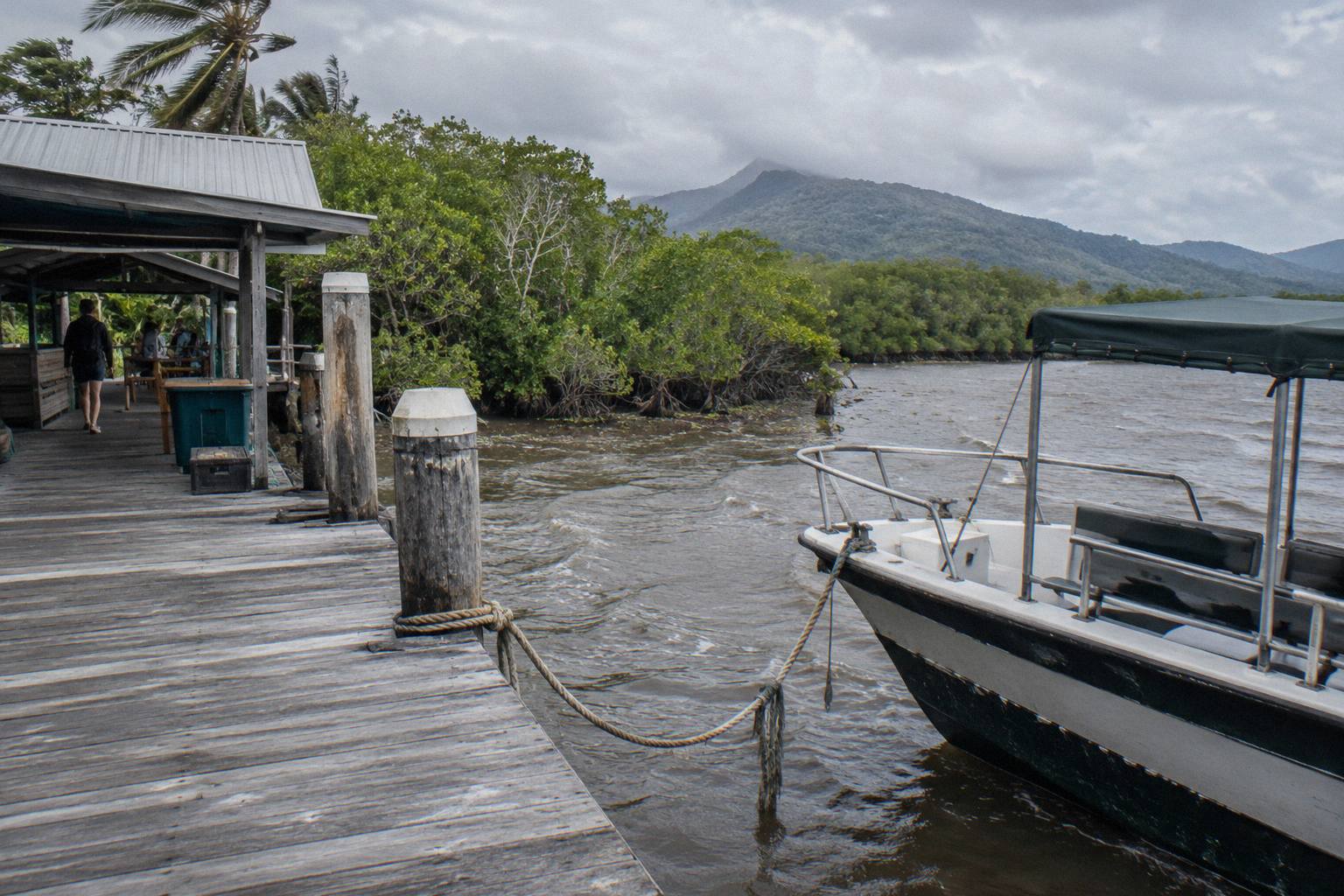
Three physical elements decide whether a given trip will work for a given body. The first is the walk from vehicle to jetty: it ranges from a marina car park to a 200 m uncovered path. The second is the transfer from land to boat: some operators board from a stable pontoon, others from a floating pontoon that rises and falls, others from a ramp where crew steady the vessel. The third is the vessel itself: bench seating with back rests, shelter from sun and rain, space for a folded wheelchair or a pram, and whether a toilet exists on board. Each of those three is covered in its own section below, operator by operator, because no two departure points on the Daintree or in Port Douglas are alike.
The tide deserves a special note because it is the one variable nobody can schedule around with certainty. Operators run in daylight hours across a moving tide cycle, and river and tidal conditions can even affect the Daintree Ferry upstream of the village departure points. If step height or ramp angle matters to you, ask the operator what the tide will be doing at your chosen departure time, and whether crew will be on the jetty to assist. That question takes thirty seconds and answers more than any general description can.
| Boarding element | Why it matters | What to ask the operator |
|---|---|---|
| Vehicle-to-jetty walk | Distance and surface decide walkers, frames and prams | How far, and is it paved, gravel or grass? |
| Land-to-boat transfer | Pontoon versus ramp changes the step height | Is boarding from a pontoon, and is crew there to assist? |
| Tide at your departure time | Gap and slope change through the day | What will the tide be doing at our time? |
| Seating and shelter | Bench type, shade and rain cover vary by boat | Is seating back-rested and sheltered? |
| Toilet on board | Only some vessels carry one | Is there a toilet on the boat, or ashore only? |
Wheelchair Access Trip By Trip
Only Lady Douglas, the 1.5 hour Dickson Inlet cruise from the Crystalbrook Superyacht Marina, has a booking page that says wheelchair accessible, and even then the operator asks passengers to call ahead about limits, because marina pontoons and tide still shape each boarding. The operator describes wheelchair and pram access, a toilet on board and sheltered seating across the whole back deck. The Daintree River trips are a different picture. The Crocodile Express booking page marks the trip not suitable for wheelchair users, and its two departure points, a village jetty at Stewart Street and a kiosk about 300 m before the ferry crossing, are both working boat ramps rather than marina pontoons.
The Daintree River Cruise Centre is the most nuanced case on the river. Its booking page also marks the trip not suitable for wheelchair users, while the operator itself says the Centre, its reception, displays, picnic areas and bathrooms, is wheelchair accessible, and that its jetty and boats may not be suitable for those requiring assistance. The operator's advice is to call ahead, and it welcomes assistance animals, again with a call first. So a visitor can reach the Centre, enjoy its amenities and join morning or afternoon tea, and still find the final step from jetty to boat is the obstacle. That single step is exactly the thing a phone call will settle. Beyond the river trips, the Daintree Experience full day tour is marked not suitable for people with mobility impairments, and the half day tour from Port Douglas runs 12:50pm to 5:30pm with a Mossman Gorge walk and swim on the itinerary, so both bigger tours carry terrain demands of their own beyond the cruise segment.
Wheelchair users are not the only travellers these labels affect. A walker frame, a stiff hip or a fear of uneven ground creates the same practical question at every ramp: how big is the gap, and who is steadying the boat? Crew on all of these trips routinely hold vessels and offer an arm, which is standard practice on small wildlife cruises, but the surface before that moment, gravel, grass, timber boards, varies widely. The table below gathers what each operator states about its own departure, with the source of each statement named so you know whether it comes from a booking page or the operator's own description.
| Trip | Departure point | Wheelchair statement | Who says it |
|---|---|---|---|
| Lady Douglas River Cruise | Crystalbrook Superyacht Marina, 44 Wharf St, Port Douglas | Wheelchair accessible; operator mentions wheelchair and pram access, call ahead for limits | Booking page and operator |
| Crocodile Express Daintree Wildlife Cruise | Cruise 1 at 5 Stewart St, Daintree Village; Cruise 2 kiosk about 300 m before the ferry | Not suitable for wheelchair users | Booking page |
| Daintree River Cruise Centre Wildlife Cruise | 2914 Mossman-Daintree Rd, south side before the village | Not suitable for wheelchair users; Centre itself wheelchair accessible, jetty and boats may not suit those needing assistance, call ahead | Booking page and operator |
| Bruce Belcher's Guided Daintree River Cruise | Private jetty, 2856 Mossman-Daintree Rd, Lower Daintree | 200 m uncovered walk to the boats, non-slip shoes required | Operator |
| Daintree Experience Full Day | Pickup from Port Douglas or Mossman accommodation | Not suitable for people with mobility impairments | Booking page |
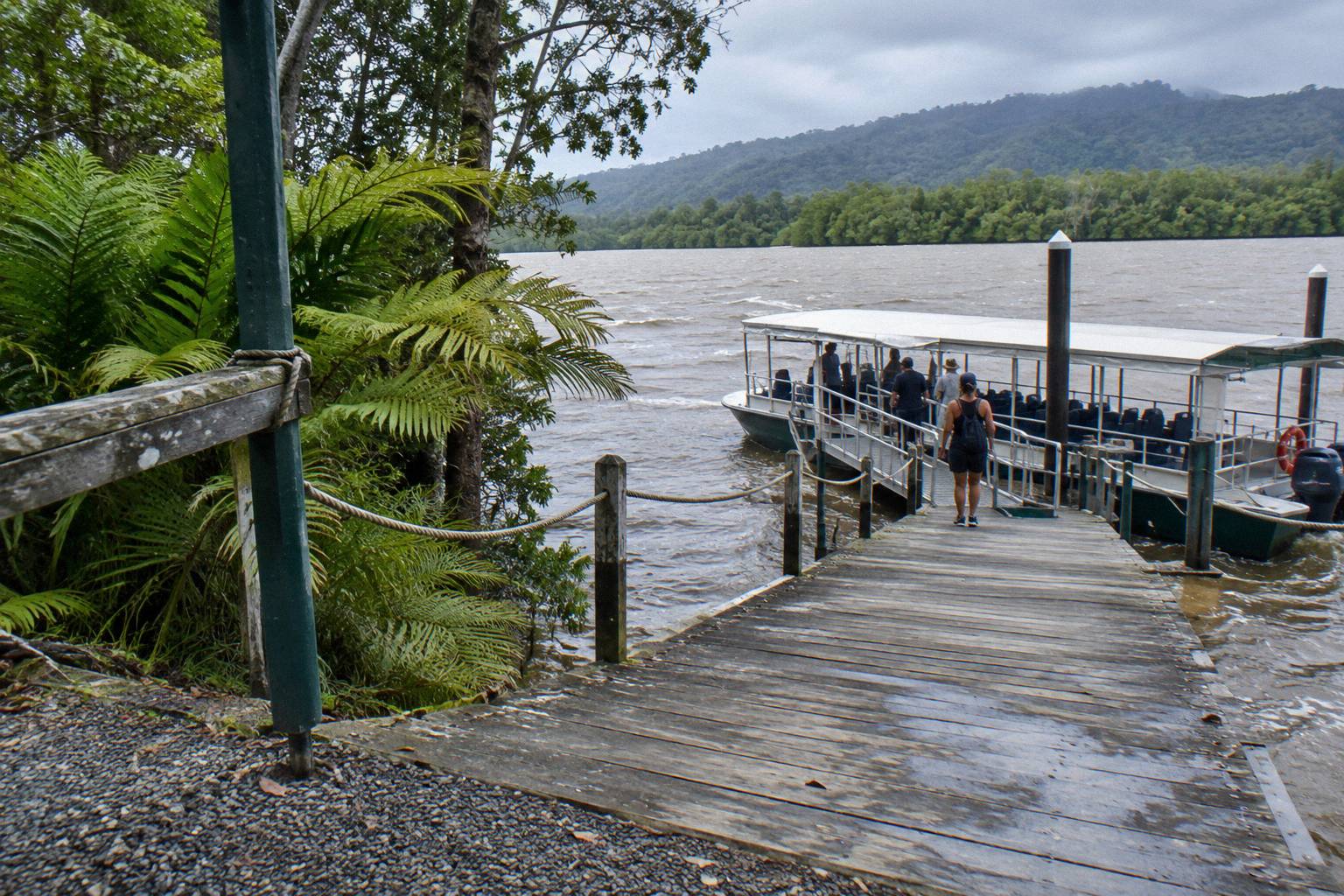
A pattern sits inside that table. The one wheelchair-accessible statement belongs to the one cruise that departs Port Douglas itself rather than the Daintree, because Dickson Inlet boarding happens at a modern marina. Everything on the Daintree River, the village jetties, the south-side cruise centres and the ferry-side ramps, sits at the rustic end of the spectrum. That does not make the river trips impossible for every mobility need, but it does make them trips where the phone call comes before the payment. The Crocodile Express pass also deserves a note: one ticket covers two one-hour cruises on different routes, valid 14 days from first activation, so a traveller could take the easier of the two departures first and judge the second ramp with their own eyes.
The Boarding Walks And Jetties Compared
Bruce Belcher's has the most demanding approach of any trip here: a 200 m uncovered walk from its facility at 2856 Mossman-Daintree Road down to its private jetty, on a path the operator says requires non-slip shoes, with clear screens pulled down on the boats in heavy rain. Two hundred metres is short on a footpath and long on loose ground with a frame, and the uncovered part matters in the tropics: the Bureau of Meteorology's Port Douglas records show mean monthly rainfall of 395 to 429 mm across January to March, so a walk that is pleasant in July can be saturated in February. The Bureau's Port Douglas climate averages give the full month-by-month picture for anyone timing a trip around mobility as well as weather.
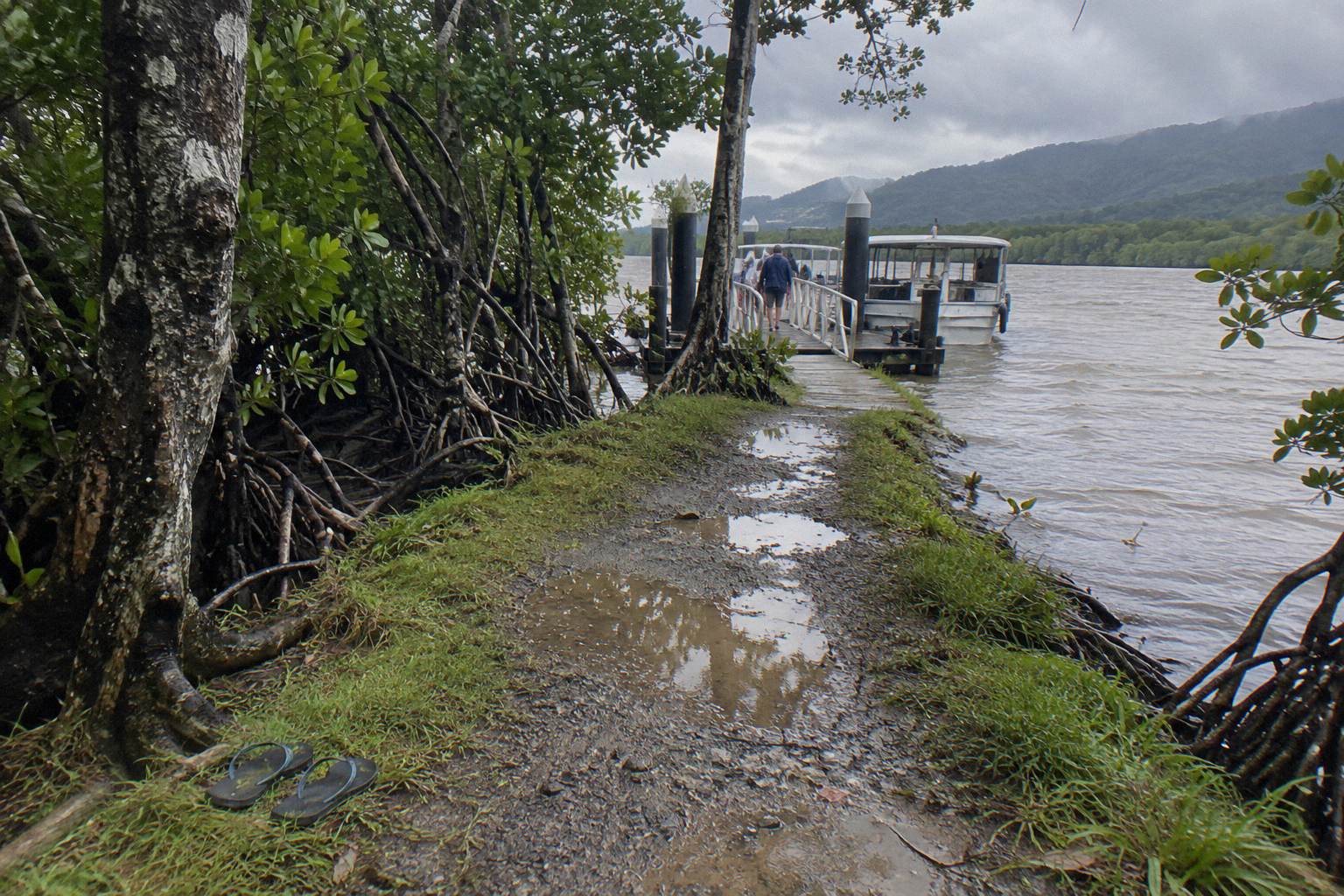
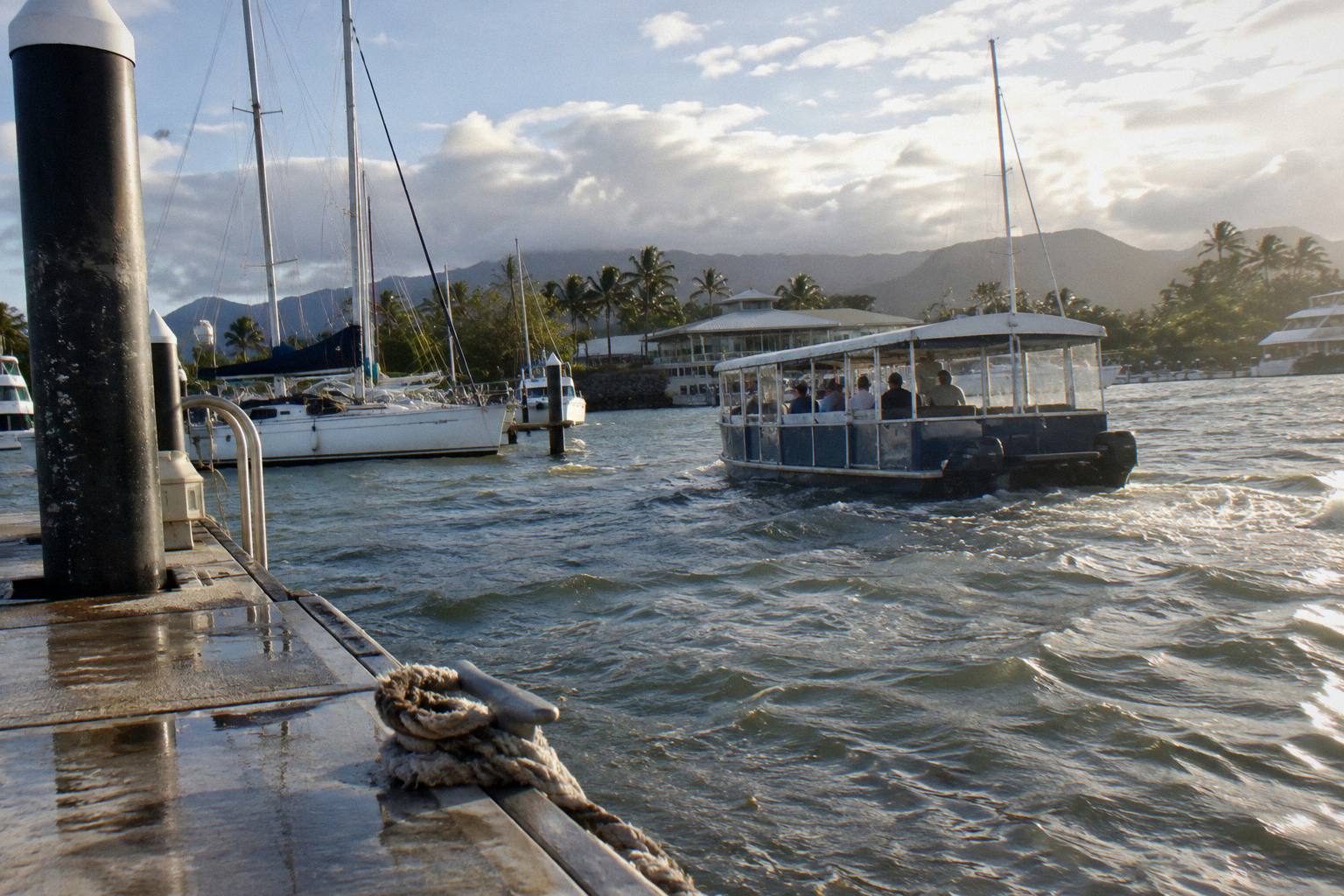
At the village end, Crocodile Express and Daintree Boatman share the same neighbourhood. Crocodile Express Cruise 1 checks in at 5 Stewart Street in Daintree Village before guests walk to the village boat ramp and jetty; the Daintree Boatman sunset cruise departs from the public boat ramp at Stewart Street, inside the Riverview Caravan Park. Public ramps are built for tinnies and trailers, not for marina-grade access, so expect sloped concrete, tidal ramps and a boarding supervised by crew. Solar Whisper's ticket office sits on the Esplanade at Lower Daintree about 400 m before the car ferry, with the boat on the south bank near the crossing, a spot best combined with the advice in whether you need the Daintree Ferry for a croc cruise. The Daintree River Cruise Centre, at 2914 Mossman-Daintree Road, is the only river operator with a built facility around its jetty, and it tells guests not to cross the ferry at all, which keeps the drive simple from the south.
| Departure point | Location | Setting | Ferry crossing needed |
|---|---|---|---|
| Crystalbrook Superyacht Marina | 44 Wharf St, Port Douglas | Paved marina with pontoon berths | No ferry involved |
| Daintree Village boat ramp | Stewart St, Daintree Village | Public ramp and jetty beside the caravan park | No |
| Daintree River Cruise Centre | 2914 Mossman-Daintree Rd, south side | Built facility with jetty, displays and bathrooms | No, guests told not to cross |
| Bruce Belcher's private jetty | 2856 Mossman-Daintree Rd, Lower Daintree | Facility with cafe, then 200 m uncovered walk | No |
| Solar Whisper office | Esplanade, Lower Daintree, about 400 m before the ferry | South bank near the car ferry | No |
| Crocodile Express Cruise 2 kiosk | About 300 m before the ferry crossing | Ferry-side ramp at Cape Tribulation Rd | No |
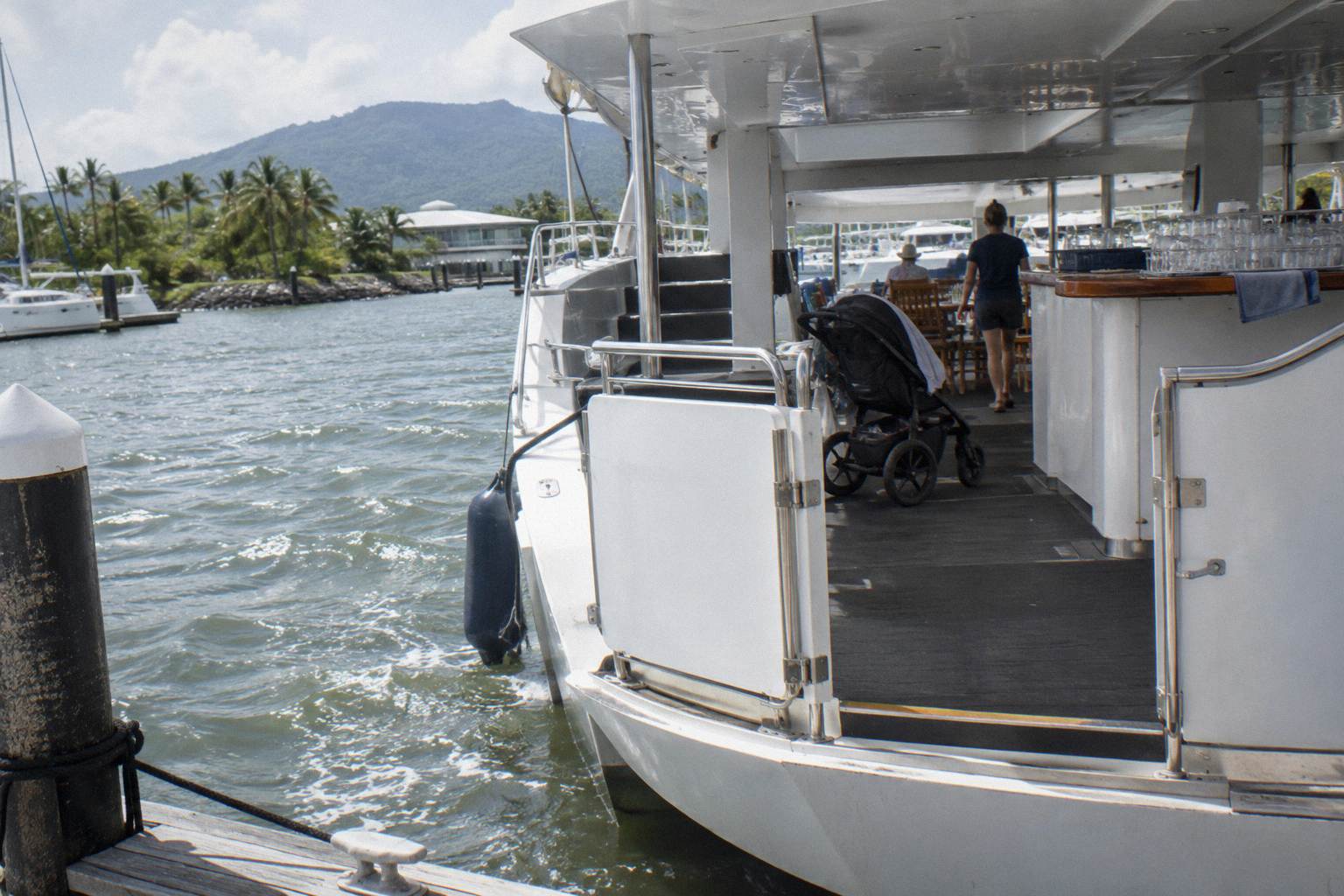
Lady Douglas sits apart from all of this by geography alone. The Crystalbrook Superyacht Marina at 44 Wharf Street is a paved, purpose-built waterfront with parking, level concourses and gangway access to pontoon berths. For a traveller whose priority is the shortest and most predictable path from car to seat, the choice effectively makes itself, and the question worth asking the operator is not whether access exists but what the tide and the specific berth will do to the final step. Hotel pickup is not included on that trip, so plan the short walk or drive to the marina on Wharf Street.
The ferry-side operators, Bruce Belcher's and Solar Whisper, both sit on the south side of the river, before the crossing, so nobody needs to factor ferry queues into an accessible arrival. That matters more than it sounds. The ferry runs continuously between 5 am and midnight and long queues are expected in school holidays, and a delayed, queued arrival is exactly the kind of disruption a carefully planned boarding does not need. Aim to arrive with slack in both directions, and treat the operator's stated check-in time, such as the Cruise Centre's request that guests arrive 15 minutes early, as the real deadline rather than the departure minute.
Seating, Shelter And Toilets On The Water
Once aboard, the accessibility picture shifts from legs to eyes, hands and bladder: Lady Douglas alone states it has a toilet on board, Solar Whisper states its boat has no toilet but an amenities block beside its office, and the remaining river trips are one-hour circuits where facilities sit ashore at the departure point. A one-hour cruise is a different proposition from a 1.5 hour one when a toilet is the question, and it is a fair thing to ask about explicitly, because a marina cruise and a river circuit answer it differently. Lady Douglas also describes sheltered seating across the whole back deck, a licensed bar with a beverage and snacks included, skipper commentary and colouring sheets for children, which together make it the most furnished hour and a half on the water of any trip sold here.
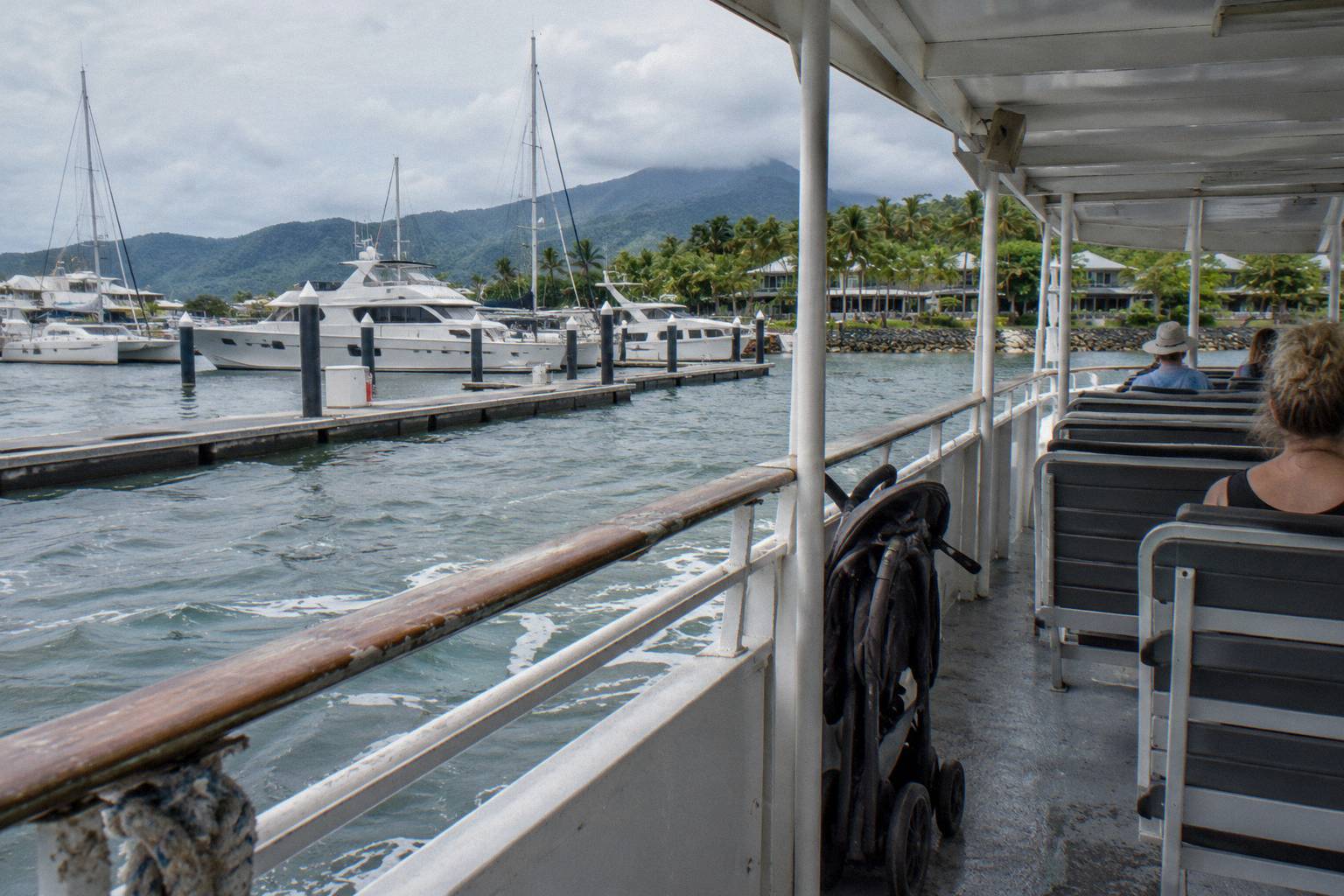
Seating type matters for more than comfort. Bench seating with back rests suits travellers who cannot manage thwart-style seats; shelter matters in both the wet season and the fierce midday sun; and low-freeboard boats with no windows, which is how Solar Whisper describes its roofed solar-electric vessel, give the clearest sightlines for photography from a seated position, a theme explored in photographing crocodiles from a river cruise. Bruce Belcher's pulls clear screens down in heavy rain, the Cruise Centre offers morning or afternoon tea and use of its displays, picnic areas and bathrooms, and Crocodile Express names its cruise ticket as the inclusion, pure and simple. Prams fold differently on each of those, so name yours when you call.
Families weighing prams against carriers will find the trade-offs laid out in croc cruises with kids, ages, seats and safety, including the Lady Douglas infant arrangements, where infants sit on laps and infant seats exist on the booking page. For anyone whose real question is the vessel type itself, from solar-electric to classic riverboat, the Daintree croc cruise boat types guide runs the fleet comparison. The short version for accessibility: bigger, taller boats board more gently but view less closely, and low, open boats view better but step down further.
| Trip | Duration | Seating and shelter stated | Toilet situation |
|---|---|---|---|
| Lady Douglas River Cruise | 1.5 hours | Sheltered seating across the back deck | Toilet on board |
| Crocodile Express Daintree Wildlife Cruise | 1 hour per cruise, two routes on one pass | Cruise ticket only, no extras stated | Facilities ashore at departure points |
| Daintree River Cruise Centre Wildlife Cruise | 1 hour, extended to 1.5 when the schedule permits | Displays, picnic areas and bathrooms at the Centre | Bathrooms at the Centre |
| Bruce Belcher's Guided Daintree River Cruise | 1 hour | Clear screens pulled down in heavy rain | Licensed cafe at the facility |
| Solar Whisper Croc And Wildlife Cruise | 1 hour | Roofed solar-electric boat, no windows | No toilet on the boat, amenities block beside the office |
| Daintree Boatman Sunset Cruise | 2 hours | Owner-run wildlife cruise, bird focus | Facilities ashore in Daintree Village |
The two-hour sunset trip deserves a deliberate pause for anyone with stamina limits. Two hours is double every other river cruise here, it departs late in the day, from 4pm between April and August or 4.30pm between September and January as the operator's own timetable gives it, and its focus is birds: kingfishers, the Papuan frogmouth, the great-billed heron and the shining flycatcher among them. Seated birdwatching from a stable boat can be an excellent low-mobility format, but the length and the hour are the trade. Weigh it against a one-hour daylight circuit before committing.
Access Questions To Ask Before You Pay
Five questions settle almost every accessibility doubt before money changes hands: what surface runs from the car to the jetty, whether boarding is from a pontoon or a ramp, what the tide will be doing at your departure time, whether a toilet is on board, and where a folded wheelchair or pram can travel on the vessel. Ask them of the operator directly, by phone, on the day if you can, because tide and recent weather change answers overnight. Six of the eight trips allow free cancellation up to 24 hours before start on the booking page; check Solar Whisper and Daintree Boatman there, so a confirmation call carries no financial risk: check the detail, then book, and the 24 hour window remains your safety net if the answer disappoints.
Beyond the physical questions, two practical ones round out the picture. The first is companions: crew assist boardings as standard practice, but if a traveller needs a dedicated helper beside them for the whole cruise, say so when booking rather than on the jetty. The second is the drive itself. Daintree Village and Lower Daintree are about 45 minutes from Port Douglas, about 30 minutes from Mossman and about 1.5 hours from Cairns, in the operator-published wording, so an accessible trip needs an accessible journey before it, including a vehicle that suits. The shortest total journey of any trip here is the one that never leaves Port Douglas: Port Douglas Crocodile Cruises exists because Dickson Inlet, the mangrove waterway behind the town, gives visitors a crocodile search without the drive north, and the Lady Douglas boarding sits at its marina edge.
Mistakes at the booking stage tend to follow a pattern, and each is avoidable with one question. The first is assuming all jetties resemble marinas, when several Daintree departures are working boat ramps. The second is reading a wheelchair label as the whole story, when the Cruise Centre's split verdict, accessible facility, possibly unsuitable jetty, shows a trip can be half of each. The third is ignoring the tide, the one variable that changes every ramp every day. The fourth is booking a tour whose wider itinerary, like the Mossman Gorge walk and swim on the half day trip, carries demands the cruise segment alone would not. The fifth is assuming a toilet on a one-hour boat, which only one operator states.
For travellers deciding between a wild river and a contained wildlife park instead of a boat, the choice between a croc cruise and Hartleys Crocodile Adventures lays out the format difference, and paved park paths answer mobility questions differently than tidal jetties do. If your concern is less about boarding and more about the boat itself, croc cruise safety, boats and wild crocs explains why supervised small craft, arms and legs inside the boat, are the accepted way to share a river with a four-metre predator. Both perspectives are worth holding before the final decision.
One final reassurance about the water itself. Queensland's Be Crocwise advice is blunt about edges: stay more than 5 metres from the water's edge, be extra cautious at night, dusk and dawn, and remember that no waterway in range is crocodile free. A boarding jetty is a managed exception to that edge rule, run by operators whose whole business is supervising it, which is why the government's crocodile safety guidance treats boats as the barrier and small craft like kayaks as the thing to avoid. Accessible or not, every trip here shares that same principle of supervised, enclosed boarding.
Choosing The Easiest Boarding For Your Situation
For the smoothest physical path from car to seat, the Lady Douglas marina departure is the clear answer: paved access, a pontoon berth, a stated toilet, and pram access, at from US$32 per person with a 4.6 rating across 571 reviews. For travellers set on the Daintree River itself, the Daintree River Cruise Centre offers the most developed land-side facility, with accessible bathrooms and picnic areas, and an explicit invitation to call ahead about its jetty, at from US$24 per person with a 4.6 rating from 558 reviews. Crocodile Express, from US$27 per person and 4.6 from 477 reviews, splits the difference with two routes on one pass, letting you sample the easier ramp first.
Every accessibility decision here ends the same way: confirm, then pay. The operators state their own limits plainly, the booking pages carry free cancellation up to 24 hours before start on the trips that state a policy, and the tide will answer the last question on the day. A traveller who makes one phone call, arrives with time in hand and states their needs at check-in, such as the Cruise Centre's 15 minute early arrival, has done everything an accessible Daintree or Port Douglas crocodile cruise requires. The rest is the river, the mangroves and whatever the crocodiles decide to do, as the operators themselves are careful to say.
Common Questions About Croc Cruise Boarding And Mobility
Is Any Crocodile Cruise Wheelchair Accessible?
The Lady Douglas booking page says wheelchair accessible, and the operator mentions wheelchair and pram access with a request to call ahead for limits, since it departs a marina pontoon that moves with the tide. The Crocodile Express and Daintree River Cruise Centre booking pages mark their trips not suitable for wheelchair users.
Can I Take A Pram Or Stroller On A Croc Cruise?
Lady Douglas states pram access and carries infant seats, with infants sitting on laps per its booking page. The river trips board from ramps and jetties where a folded pram is easier than an open one; name your pram when you call the operator so they can confirm space on the vessel.
How Far Do You Have To Walk To Board?
Bruce Belcher's states a 200 m uncovered walk from its facility to its private jetty, and requires non-slip shoes. Daintree Village departures involve a short walk from check-in to the public boat ramp, and the Lady Douglas departure from the Crystalbrook Superyacht Marina is the shortest, most developed path of any trip here.
Are There Toilets On The Boats?
Lady Douglas states a toilet on board. Solar Whisper states its boat has no toilet, with an amenities block beside its office. The Daintree River Cruise Centre has bathrooms at its facility, and the remaining river trips run about one hour with facilities ashore at the departure point.
Can I Cancel If The Boarding Will Not Work For Me?
The Lady Douglas, Crocodile Express, Cruise Centre, Bruce Belcher's, half day and full day trips all state free cancellation up to 24 hours before start. Solar Whisper and Daintree Boatman carry no stated cancellation policy, so check the booking page for those two before paying.
Do Any Trips Pick Up From My Accommodation?
Lady Douglas does not include hotel pickup, but the half day and full day Daintree tours both pick up from Port Douglas, with the full day also collecting from Mossman. The Daintree River cruise operators require you to make your own way to their jetties.