
Photographing Crocodiles From A River Cruise: Gear, Light And Settings
A crocodile on a sandbar is one of the harder subjects a wildlife photographer can chase from a boat: low light, moving water, an animal that is mostly eyes and nostrils until it is not. The departure you pick, the seat you take and the month you travel matter more than any camera body.
Short answer
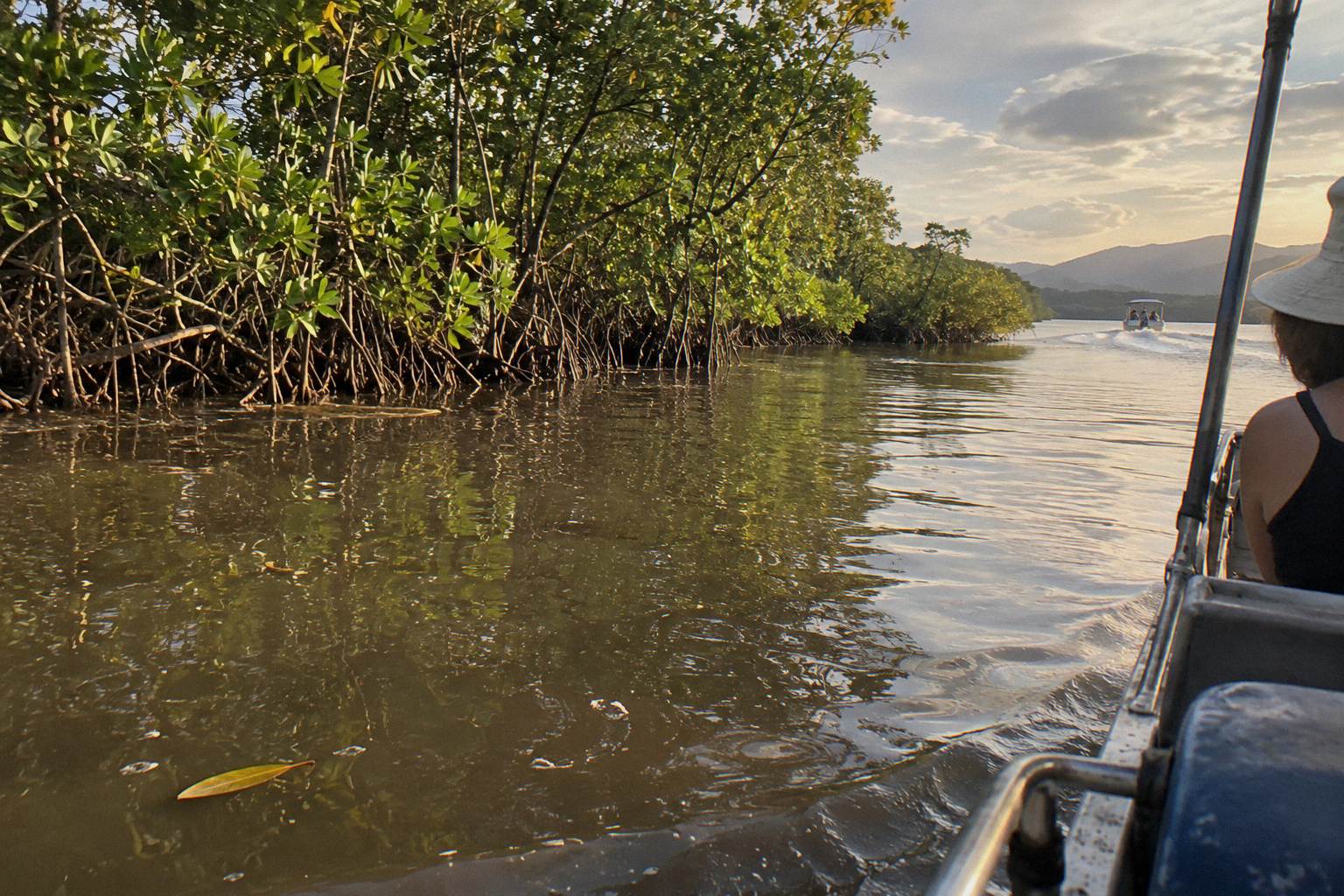
Photographers get the best odds on the Daintree River by riding a dawn or dusk window: Daintree Boatman runs two-hour cruises from 7am or 4pm (April to August) and 6.30am or 4.30pm (September to January), when light is soft and crocodiles are active. In Port Douglas, Lady Douglas lists four daily slots including a 4.30pm sailing. Keep 5 metres back from the water and stay inside the boat.
Wildlife photography on a tidal river rewards preparation far more than equipment. The crocodiles of the Daintree and of Dickson Inlet at Port Douglas are wild animals that decide for themselves when to appear, and the light in the tropics changes faster than most visitors expect. A cruise that leaves at midday gives you harsh overhead sun, glare off the water and a crocodile that is usually a grey log with eyes. A cruise that leaves near dawn or dusk gives you warm side light, still air and an animal on the move.
The planning decisions are the ones that matter. Which departure window, which month, which side of the boat, and how close the law and good sense allow you to be. Everything below works through those decisions using the operators' own published timetables and the Queensland Government's crocodile rules, so the camera bag comes last.
Quick Facts For Photographers
For photographers, the key facts are these: Daintree Boatman runs two-hour dawn and dusk cruises departing around 7am or 4pm in the cooler months and 6.30am or 4.30pm from September to January, while Lady Douglas lists four daily sailings including a 4.30pm slot, and other Daintree operators run hourly loops between roughly 8.30am and 3.30pm.
| Question | Short answer |
|---|---|
| Best light window | Dawn and dusk; Daintree Boatman's two-hour cruises are built around both |
| Port Douglas option | Lady Douglas, 1.5 hours, four listed slots from 10.30am to a 4.30pm sunset sailing |
| Daintree village loops | Hourly, roughly 8.30am to 3.30pm, from several jetties at Stewart Street |
| How close can you get? | Stay more than 5 metres from the water; 10 metres from a basking crocodile is a legal line |
| Longest time on the water | Daintree Boatman, two hours; Solar Whisper also runs two-hour trips, maximum 10 people |
| Will a crocodile pose? | No guarantee exists; two operators offer a free return cruise if none is seen |
Which Light Window Should A Photographer Book?
Book dawn or dusk. Daintree Boatman is the only operator on this stretch scheduling for those windows, with two-hour morning cruises from 7am (April to August) or 6.30am (September to January) and afternoon trips from 4pm or 4.30pm, subject to change. In Port Douglas, Lady Douglas adds a 4.30pm sunset sail alongside its other daytime departures.
The reason is not just aesthetics. The Queensland Government's own advice notes that crocodiles are most active at night, dusk and dawn, so a golden-hour departure overlaps with the animal's own schedule rather than fighting it. The same pages warn people to be extra cautious at those hours near the water, which is exactly why a boat, with the vessel as a barrier, is the sensible way to photograph at that time of day. Keep arms and legs inside the boat, as the Be Crocwise boating advice puts it.
Light on the Daintree also depends on geography. Crocodile Express describes the upper river at the village as narrower and calmer with overhanging trees, and the lower river near the ferry as a wide tidal estuary with mangroves. Overhanging trees at dawn mean deep shade and dark backgrounds that suit a perched bird but swallow a crocodile's texture. The open estuary gives you a clean backdrop and reflected sky, but more glare once the sun climbs.
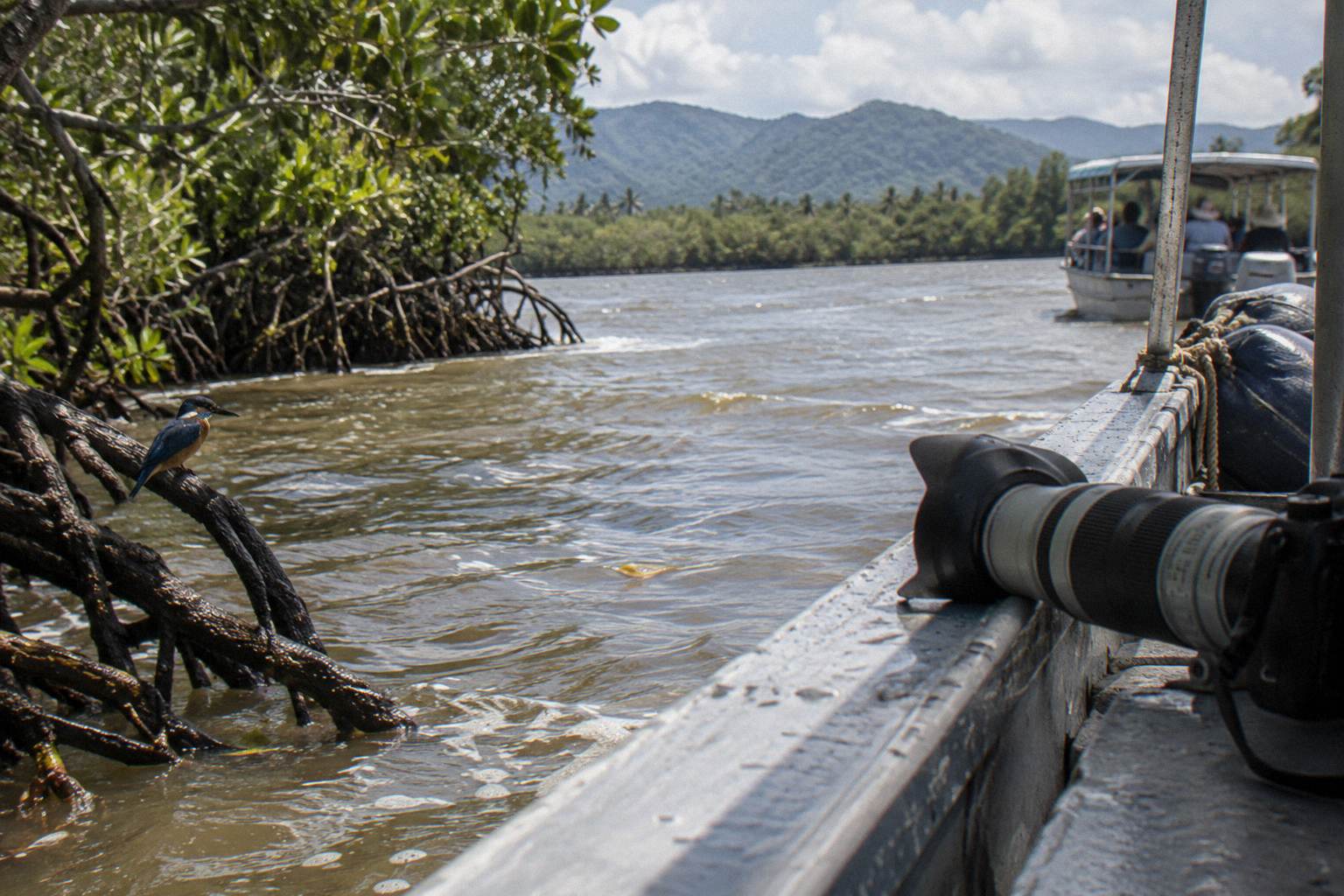
The two-hour block is the quiet advantage of the sunset cruise. An hourly loop gives you one pass past a subject; two hours gives the guide time to wait, drift and reposition while the light drops from gold to pink. The operator's focus is birds, with azure, little and sacred kingfisher, Papuan frogmouth and great-billed heron all named on its own wildlife list, and crocodiles and snakes best between May and October in its words. For a photographer deciding between a dedicated sunset wildlife cruise and an hourly loop, the longer window usually wins.
Which Trip Suits A Camera Best?
For camera work, Daintree Boatman's two-hour sunset cruise and Lady Douglas's 4.30pm sailing from Crystalbrook Superyacht Marina both land you in soft, flattering light. Crocodile Express gives the most shots per dollar, with one ticket covering two one-hour cruises on different stretches of the river, valid 14 days from activation. For variety, the Daintree Experience full-day tour packs a waterfall walk, rainforest light and a one-hour cruise into eight hours from US$165.
Think of it as three formats. A timed light cruise puts you on the water when the picture is actually there. A multi-cruise pass trades golden light for volume: two departures, two habitats, and the freedom to return on a second morning within the 14-day validity if the first pass was quiet. A full-day tour spreads the photography across scenes, from a secluded waterfall to rainforest wildlife to the river search for giant estuarine crocodiles.
| Trip | Format for a photographer | Price from | Rating |
|---|---|---|---|
| Daintree Boatman sunset cruise | Two hours inside the golden hour | check the booking page | no rating printed |
| Crocodile Express pass | Two one-hour cruises, two river stretches, 14-day validity | US$27 | 4.6 from 477 reviews |
| Daintree Experience full day | Eight hours, waterfall to river cruise | US$165 | no rating printed |
| Lady Douglas | 1.5 hours, four listed slots including 4.30pm | US$32 | 4.6 from 571 reviews |
| Solar Whisper | One or two hours, solar-electric boat, maximum 10 people | check the booking page | no rating printed |
Solar Whisper deserves a note from a photographer's point of view. The owner-run operator uses a roofed solar-electric boat with no windows, which removes the single worst enemy of a river-cruise photo: glass between the lens and the subject. The trade is a low, open platform on a wide tidal estuary near the ferry, best in the hour after the office opens rather than at high noon. The operator says about a 99 percent success rate for crocodiles but adds plainly that it cannot 100 percent guarantee, with a free return cruise if none is seen.
Where To Sit On The Boat
Sit on the shaded rail near the bow, claimed before departure, since the Daintree's east-to-west bends mean swapping sides mid-cruise is rarely possible. Ask the skipper where the boat will turn and which bank it will hug. On Solar Whisper's ten-person boat and Daintree Boatman's small-group cruises, arriving early matters more than any other seating choice you make.
The boat itself is part of the optics. Lady Douglas offers covered seating across the whole back deck, which protects gear from the tropical sun and the odd shower, but a roof also blocks the downward angle you want on a crocodile at the waterline. Bruce Belcher's boats are open, with a 200 metre uncovered walk from its private jetty, so a rain cover for the camera bag earns its place. The Daintree River Cruise Centre runs from its own jetty and asks guests to arrive 15 minutes early and check in at reception, which is a good moment to ask the crew about light and seat choice. The wider set of guides lives on Port Douglas Crocodile Cruises.
Stability beats reach. A calm narrow stretch at the village, with the engine cut and the boat drifting, is worth more than a long lens on a choppy estuary. Crocodile Express's village cruise works the narrower, calmer upper river; its second route from the ferry gateway works the open estuary with mangroves behind the subject. If your frame keeps filling with grey water, the answer is usually to wait for the drift, not to zoom further.
How Close Can You Photograph A Crocodile?
Stay at least 5 metres back from the water's edge under Be Crocwise safety advice, while Queensland law makes it an offence to be within 10 metres of a basking crocodile, to approach within 10 metres by boat, or to feed one. On a licensed crocodile cruise, the skipper controls the approach, so your job is simply to keep arms and gear inside the boat and let the vessel be the barrier.
Those numbers are on the Queensland Government's estuarine crocodile pages and the Be Crocwise guidance, and they shape every image that comes off these rivers. A wild estuarine crocodile can grow to over 4 metres, with an average male at 3 to 4 metres and 200 to 300 kilograms, so a full-frame animal at a respectful distance is a photograph worth more than a cropped fright. The same pages note that no waterway in crocodile country can be considered crocodile free and that the animals are highly mobile, especially after heavy rain and floods.
The rules also explain what a Queensland crocodile cruise is not. The feeding shows associated with jumping-crocodile cruises elsewhere are not legal here: deliberately feeding a crocodile is an offence, so every trip on this river is a spotting trip, and the photography is wildlife photography with all its patience attached. If that distinction matters to your planning, the comparison of a jumping crocodile cruise with a Daintree spotting trip works through it in full.
What Does The Light Do Each Month?
Daylight in the Daintree swings from about 11.2 hours in June and July to about 13.1 hours in December, with sunrise ranging from roughly 5:38am in November to 6:47am in July, and sunset falling between about 5:54pm in June and 6:57pm in January. These figures come from a solar calculation for Daintree Village, accurate to a minute or two, and Queensland stays on UTC+10 year round with no daylight saving.
The table below pairs the computed daylight with Bureau of Meteorology rainfall averages for Port Douglas, the nearest long-run station. A photographer reading it should look for the overlap: the months where the golden hour lands at a civilised time, rain is rare, and crocodile sightings hold up.
| Month | Sunrise (about) | Sunset (about) | Mean rain days (1 mm+) |
|---|---|---|---|
| January | 5:58am | 6:57pm | 13.8 |
| March | 6:22am | 6:35pm | 14.4 |
| May | 6:34am | 5:56pm | 8.0 |
| July | 6:47am | 6:02pm | 4.2 |
| September | 6:15am | 6:14pm | 4.4 |
| November | 5:38am | 6:29pm | 7.6 |
Sightings have their own calendar, and the operators each state theirs. Bruce Belcher's says crocodiles are spotted on 98 percent of its trips in the cooler months of June to September and about 50/50 in the warmer months, and Lady Douglas says crocodiles are normally seen on over 90 percent of its trips, especially in the dry season from May to November. The Queensland Government adds a separate, sourced point: male crocodiles become very mobile while searching for a mate in the breeding season, so sightings are more prevalent. None of that is a guarantee, and two operators, Bruce Belcher's and Solar Whisper, offer a complimentary return cruise if no crocodile is seen. The month-by-month detail sits in the guide to the best month for a Daintree cruise, with tide effects covered in how tides shift crocodile sightings.
Which Seat On The Calendar: Seasonal Light And Weather
The dry season from May to November is the practical answer for a photography-first trip: rain days fall from 14 per month in February to 4 in July, the golden hour sits between about 5:56pm and 6:29pm, and the operators' own sighting claims peak in the same window. January to March brings 395 to 429 mm of rain per month, heavy cloud and swollen brown water, which flattens contrast and floods the sandbars crocodiles bask on.
Rain is not a dealbreaker for every operator, though. Solar Whisper operates in rain but not in flood, and Bruce Belcher's pulls clear screens down across its open boats in heavy rain, which keeps passengers dry but puts a sheet between a lens and the subject. Lady Douglas runs a covered back deck on a calm-water inlet, so it is the format that shrugs at a shower. What rain does to the photograph, regardless of boat, is remove the light: a crocodile on a bank under an overcast sky is a grey shape on grey mud.
There is a second, quieter seasonal effect worth knowing. In the warmer months Solar Whisper says the river temperature rises and crocodiles are harder to see, and it calls summer on a high tide the most difficult time of all, because low tide exposes the beaches the animals haul out on. That is a scheduling insight a first-time visitor cannot guess: in the wet half of the year, aim for the earliest or latest departure the operator offers, and check the tide. For the full picture on shoulder seasons, see whether the cruises run in the wet season.
Mistakes Photographers Make On These Cruises
The most common mistakes are simple and avoidable: shooting at eye level into glare, fumbling with settings the moment a crocodile surfaces, and standing up or leaning out for a better angle, which ruins everyone's frame since movement is amplified on small boats. Since these are wild animals with no schedule, the photographers who succeed are those who arrive early, ask the crew about the plan, and let the skipper handle positioning.
| Mistake | What goes wrong | Better habit |
|---|---|---|
| Leaning out for the angle | Breaks the Be Crocwise boat advice; risks gear over water | Brace inside the rail, use the boat as the barrier |
| Midday-only departures | Harsh top light, flat water glare, sleepy crocodiles | Book the earliest loop or a dusk cruise |
| Ignoring the tide | Summer high tide hides the haul-out beaches, as Solar Whisper notes | Ask the operator about tide when booking |
| One cruise, all-or-nothing | A quiet hour ends the trip | Crocodile Express's pass allows a second cruise within 14 days |
| Chasing only crocodiles | The river's birds are reliable subjects even when crocs are not | Learn the kingfisher and heron spots the crew point out |
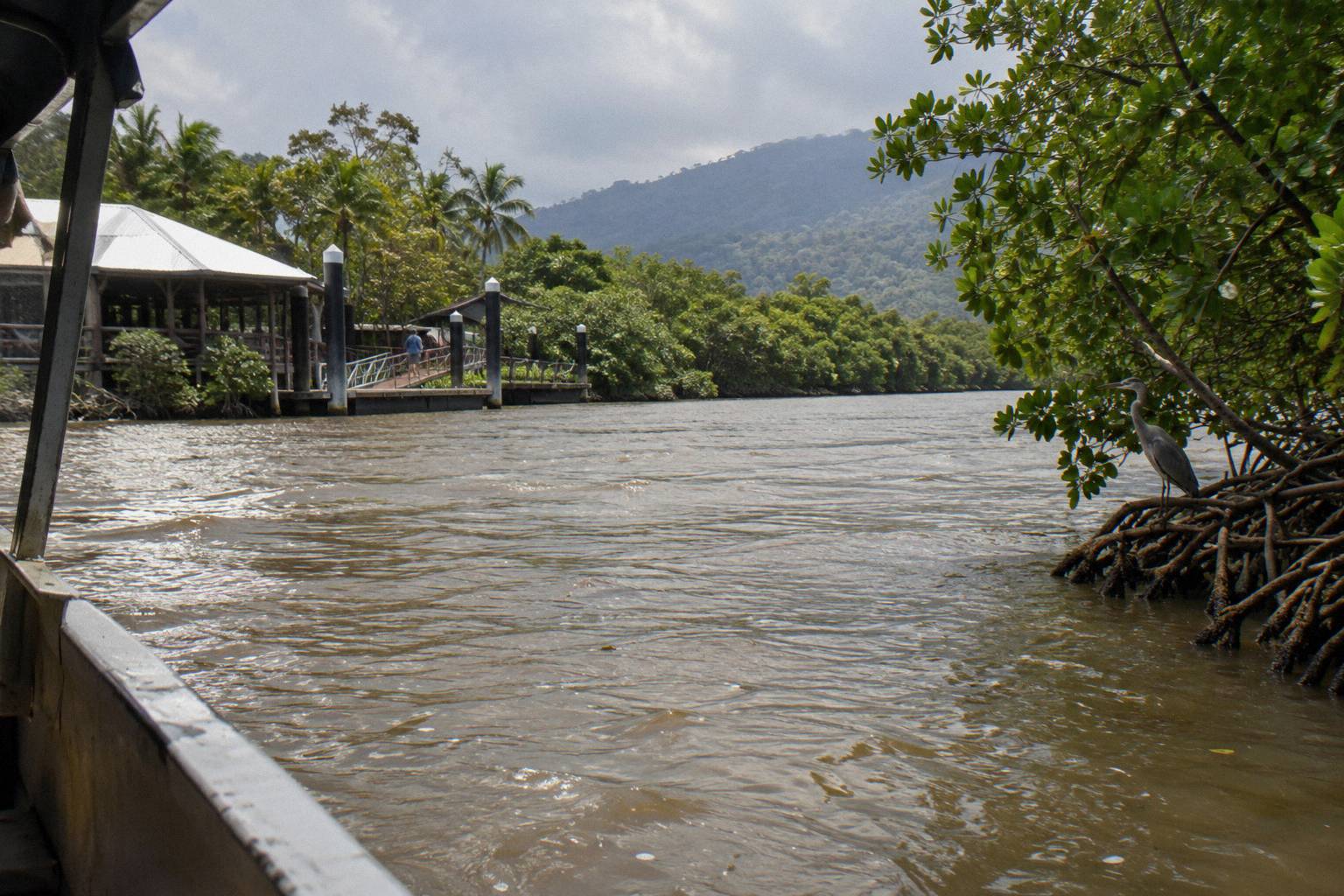
The last row deserves its own paragraph. Every operator here names a bird list, from the great-billed heron, which Crocodile Express calls one of Australia's rarest herons, to the azure and little kingfishers of the overhanging village reach, and the Daintree River Cruise Centre points to over 280 recorded bird species in the region. A two-hour cruise that yields no crocodile photograph can still yield a portfolio, and the photographers who accept that tend to leave with better crocodile pictures too, because they are relaxed when one finally appears. The full species background is in the wildlife guide to the Daintree's birds, snakes and crocs.
Planning The Day Around The Picture
Plan the day around the light you want, then work backwards from the cruise. The Daintree Boatman afternoon trip leaves at 4pm or 4.30pm from the public boat ramp at Stewart Street in Daintree Village, about 45 minutes from Port Douglas, so a photographer can fill the middle of the day nearby and arrive in time for dusk.
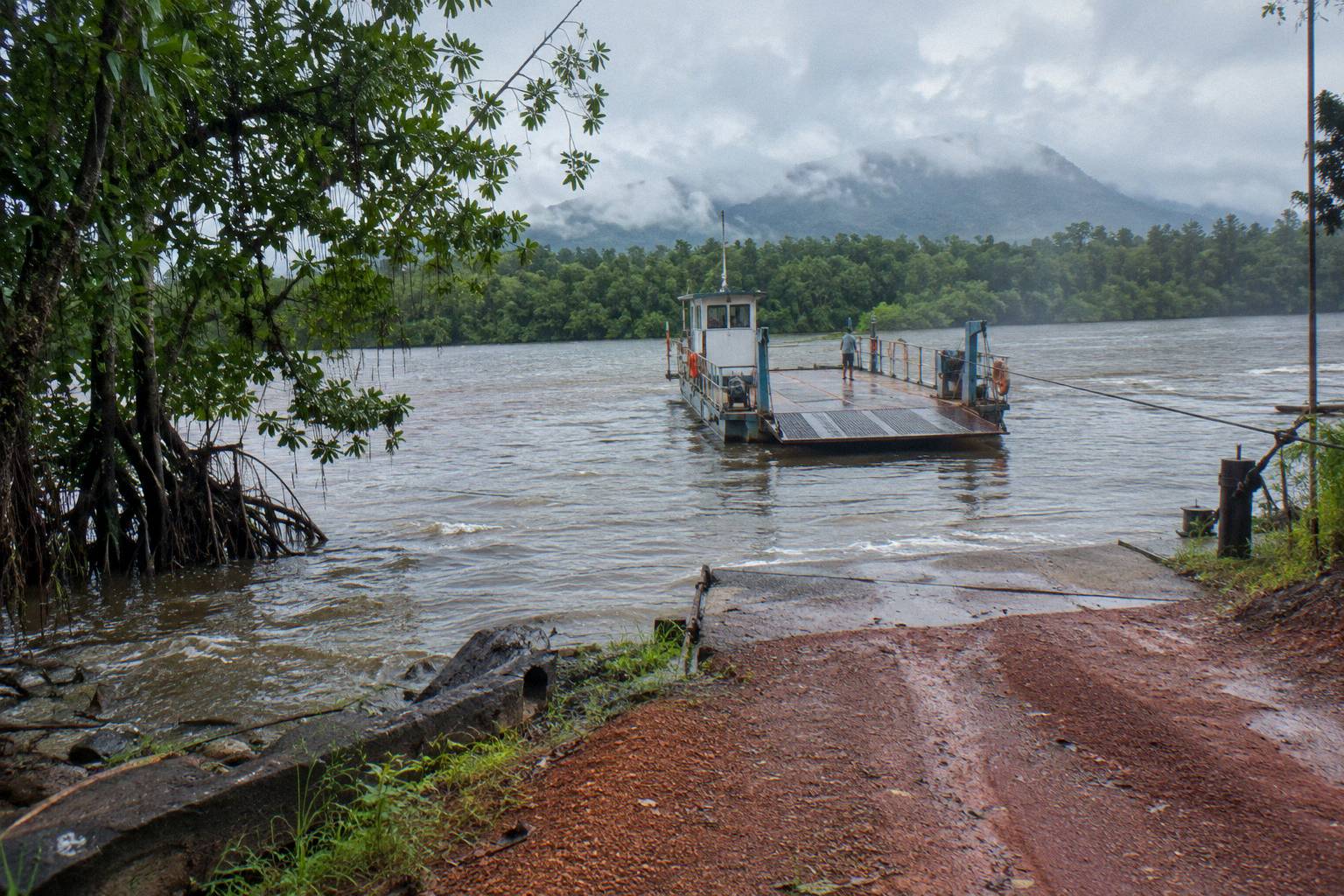
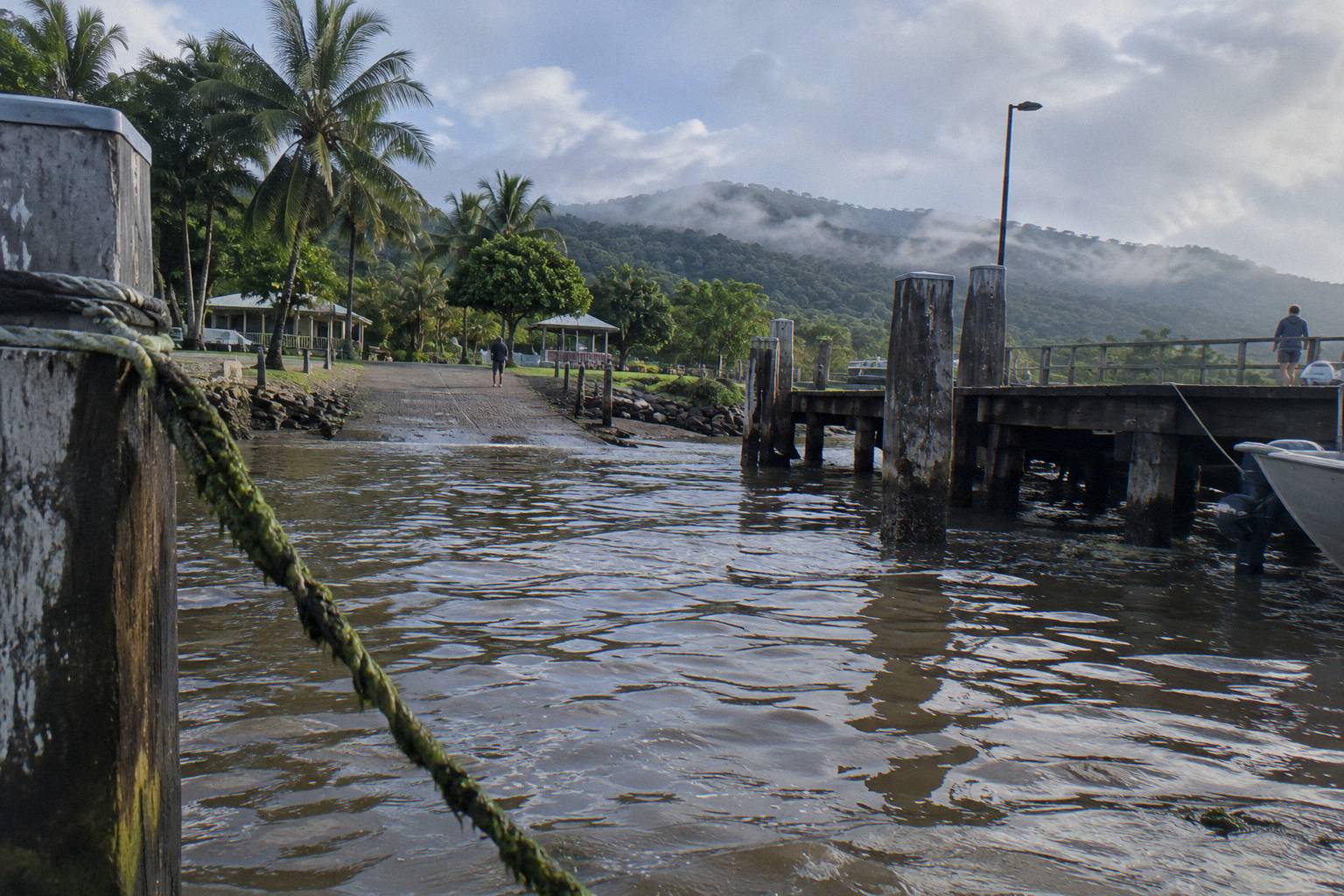
The geography rewards a little homework. Daintree Village and Lower Daintree sit about 45 minutes from Port Douglas, about 30 minutes from Mossman and about 1.5 hours from Cairns, in Solar Whisper's own driving notes. The village jetties cluster at Stewart Street; Bruce Belcher's private jetty is on the Mossman-Daintree Road on the south side, not at the ferry; Solar Whisper's ticket office is about 400 metres before the ferry crossing; and none of these trips crosses the ferry, which runs continuously between 5am and midnight and queues badly in school holidays. The route guide from Port Douglas to the Daintree River and the walkthrough of the village jetties cover the choices stop by stop.
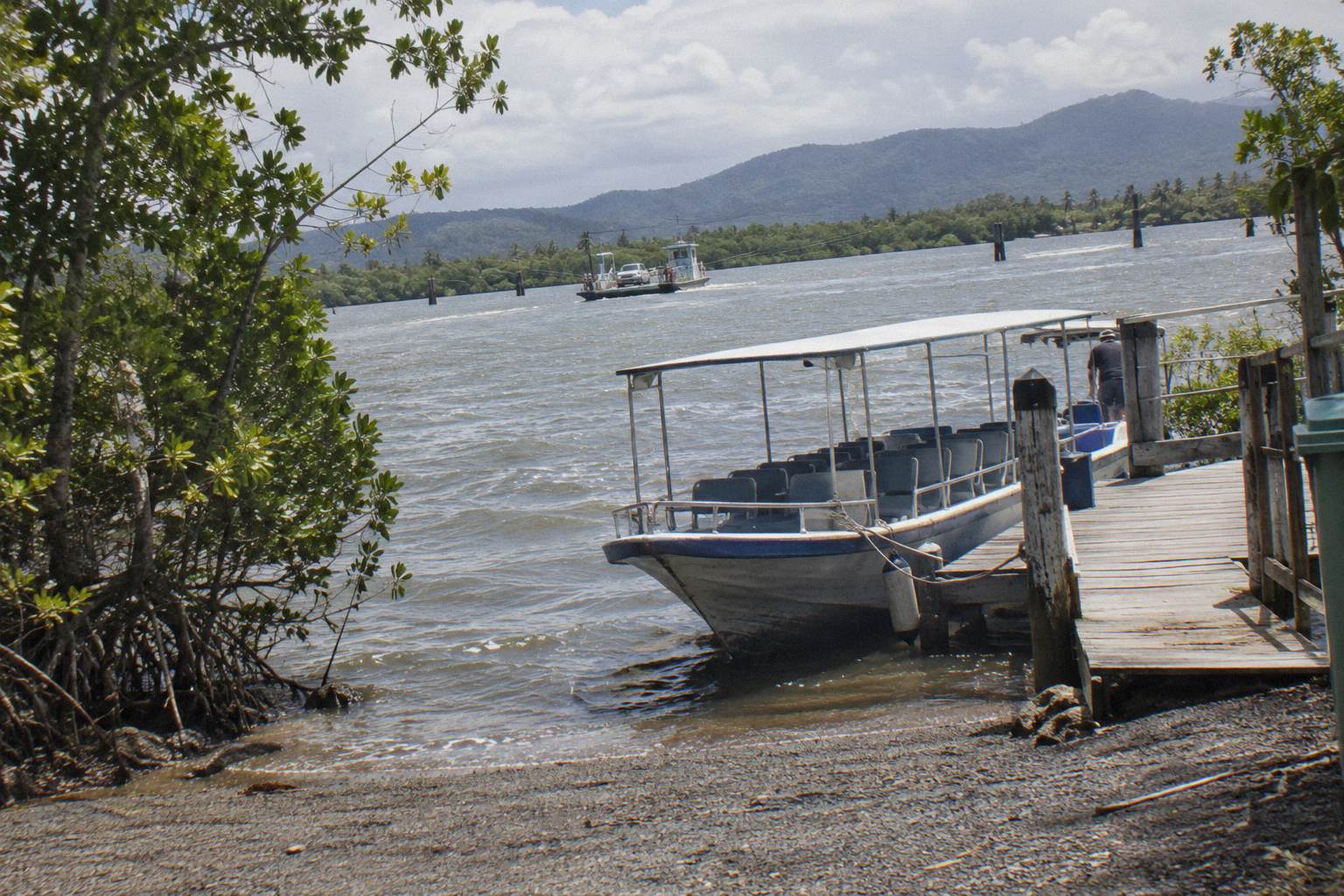
Closures matter to a tight plan. Bruce Belcher's is open March to January, closed all February, and closed Christmas Day and New Year's Day; Crocodile Express runs every day except 25 December; the Cruise Centre lists daily departures from 9.30am to 3.30pm and sometimes extends its hour-long cruises to 1.5 hours when the schedule allows, a small gift to anyone with a camera. Every timetable here is the operator's published pattern, subject to change, and the booking calendar decides the real start. If the whole trip is being planned around one photograph, it pays to read how to book a Daintree cruise before locking dates.
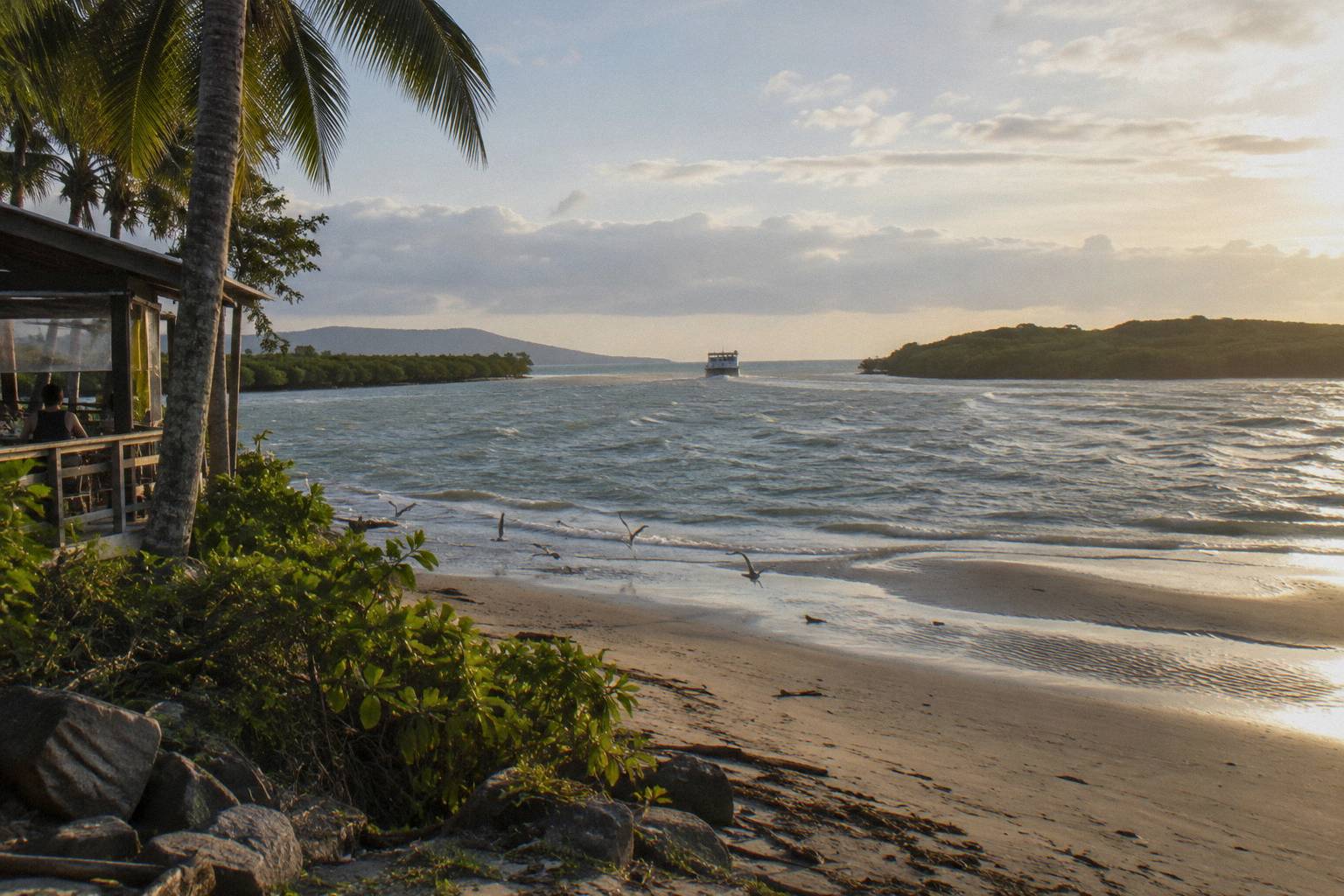
For photographers who want more than one river session, the two-route pass is the efficient shape: an hour at the village among the kingfishers, then an hour at the ferry gateway among the mangroves, on the same ticket and within the same fortnight. It is the closest thing on this river to a second chance, and the 4.6 from 477 reviews it carries reflects a lot of repeated use.
What To Pack, Plainly
Pack for tropical water and moving boats: a camera you can hold one-handed, whatever lens you already own, a dry bag for the run to the jetty, a cloth for spray and salt, and nothing that needs a tripod. More zoom means more shake on the water, and the roofed boats protect gear from sun and rain at the cost of a lower viewing angle, but no special equipment is required.
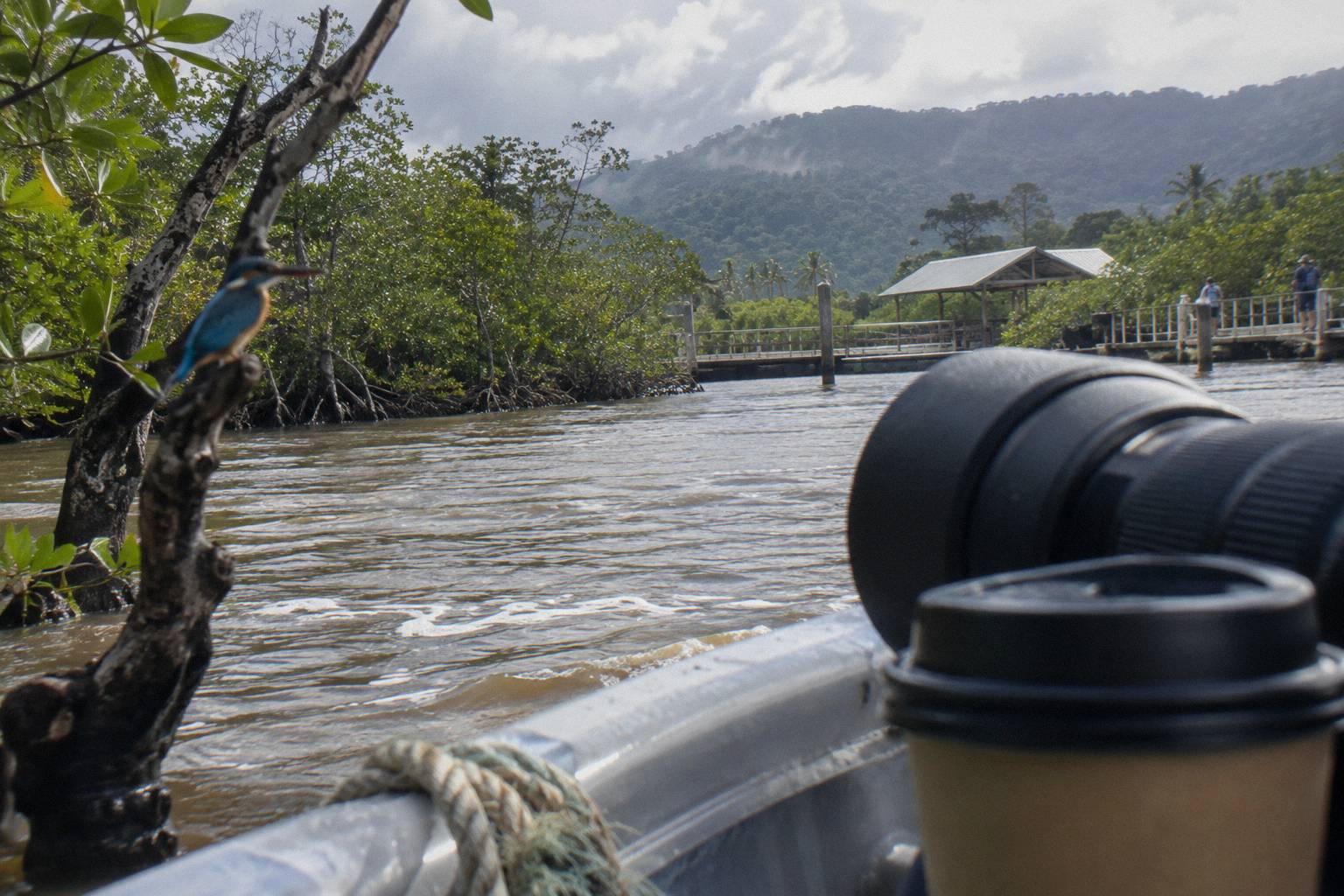
Practical notes from the operators themselves help. Non-slip shoes are required at Bruce Belcher's, where the walk to the boats is 200 metres and uncovered. There is no toilet on Solar Whisper's boat, with an amenities block beside the office, so plan around that rather than around the camera. Lady Douglas has a licensed bar and snacks on board, along with colouring sheets for children, which makes it the cruise where a non-photographer companion is best looked after while you work the rail. On the water, sun protection is on you: the tropics burn exposed skin fast even under cloud.
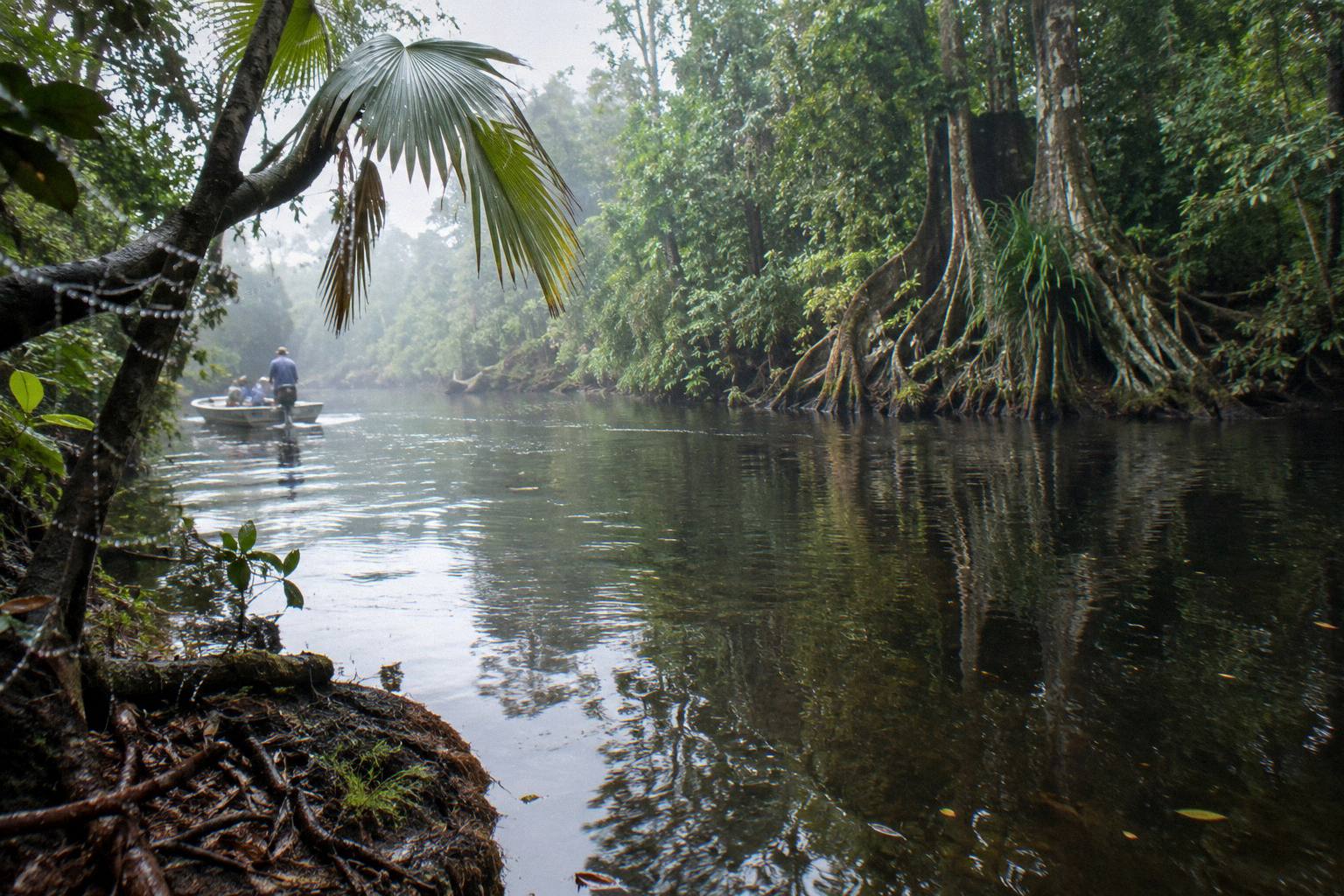
The Wet Tropics backdrop is part of why the frames from this river look the way they do. The region was inscribed on the UNESCO World Heritage List in 1988 and covers about 895,000 hectares holding some of the oldest continuously surviving tropical rainforests on Earth, so even the corners of your photographs that contain no animal carry 100 million years of forest. For everything a first-time visitor needs before the camera comes out, start with what to expect on a Daintree River cruise.
The last piece of advice is the cheapest one: talk to the crew. Skippers on these rivers read the water daily, know which bank held a big male yesterday, and will usually tell a genuinely interested photographer where to sit and when to be ready. That conversation costs nothing and routinely makes the difference between a grey ripple and a picture.
Common Questions About Crocodile Photography Cruises
What Time Of Day Is Best For Crocodile Photos?
Dawn and dusk. Crocodiles are most active at night, dusk and dawn, and Daintree Boatman schedules its two-hour cruises around those windows, from about 7am or 6.30am in the morning and 4pm or 4.30pm in the afternoon, depending on the season.
Can I Use A Flash Or A Drone On A Crocodile Cruise?
No drone or flash guidance applies to these trips, and disturbing a crocodile by approaching within 10 metres, or feeding one, is an offence in Queensland. Photography is from the boat, with the vessel as the barrier and gear kept inside the rail.
Which Cruise Gives The Most Time To Shoot?
The two-hour options: Daintree Boatman's dawn and dusk cruises, and Solar Whisper's two-hour trips, which carry a maximum of 10 people on a roofed solar-electric boat with no windows.
Is A Sunset Cruise Better Than A Daytime Loop?
For light, usually yes. Lady Douglas lists a 4.30pm sailing and Daintree Boatman builds its afternoon cruise into the day's last light. Daytime loops run hourly and suit a flexible second session, and Crocodile Express's pass lets you use two of them within 14 days.
Do Any Cruises Guarantee A Crocodile Photo?
No. Every operator avoids guarantees. Bruce Belcher's and Solar Whisper both offer a free return cruise if no crocodile is seen, and Solar Whisper states plainly that it cannot 100 percent guarantee.
Are The Boats Stable Enough For Long Lenses?
Drifting on the calm upper river is steady enough for careful hand-held work, while the open estuary near the ferry moves more. A covered boat like Lady Douglas protects gear from weather but lowers the viewing angle, so match the lens to the water, not the other way round.