
Tides And Croc Sightings On The Daintree River: What Changes On The Water
Two operators on the Daintree River publish tide advice, and both say low water helps. Here is exactly what each one claims, what the Queensland Government says about crocodile movement, and how to line a booking up with the better window.
Short answer
Solar Whisper says low tide is usually better because more bank is exposed and big crocodiles are hardest to spot on a summer high tide. Bruce Belcher's says low tide can enhance the chances but crocodiles are still seen at high tide. The Queensland Government adds that crocodiles are very mobile during and after high tides and heavy rain.
Estuarine crocodiles are most commonly seen in the tidal reaches of rivers, the Queensland Government notes, and the Daintree is exactly that kind of river: the lower section near the ferry opens into a wide tidal estuary lined with mangroves, while the village end runs narrower and calmer under overhanging trees. Tide moves through both. It raises and lowers the water over the mud banks where crocodiles bask, and it changes how much of a crocodile is above water even when one is there. For a reader fine-tuning a booking date, tide is one of the few variables you can actually plan around, and two operators on the river publish their own advice about it.
Why Tides Change What You See On A Daintree Cruise
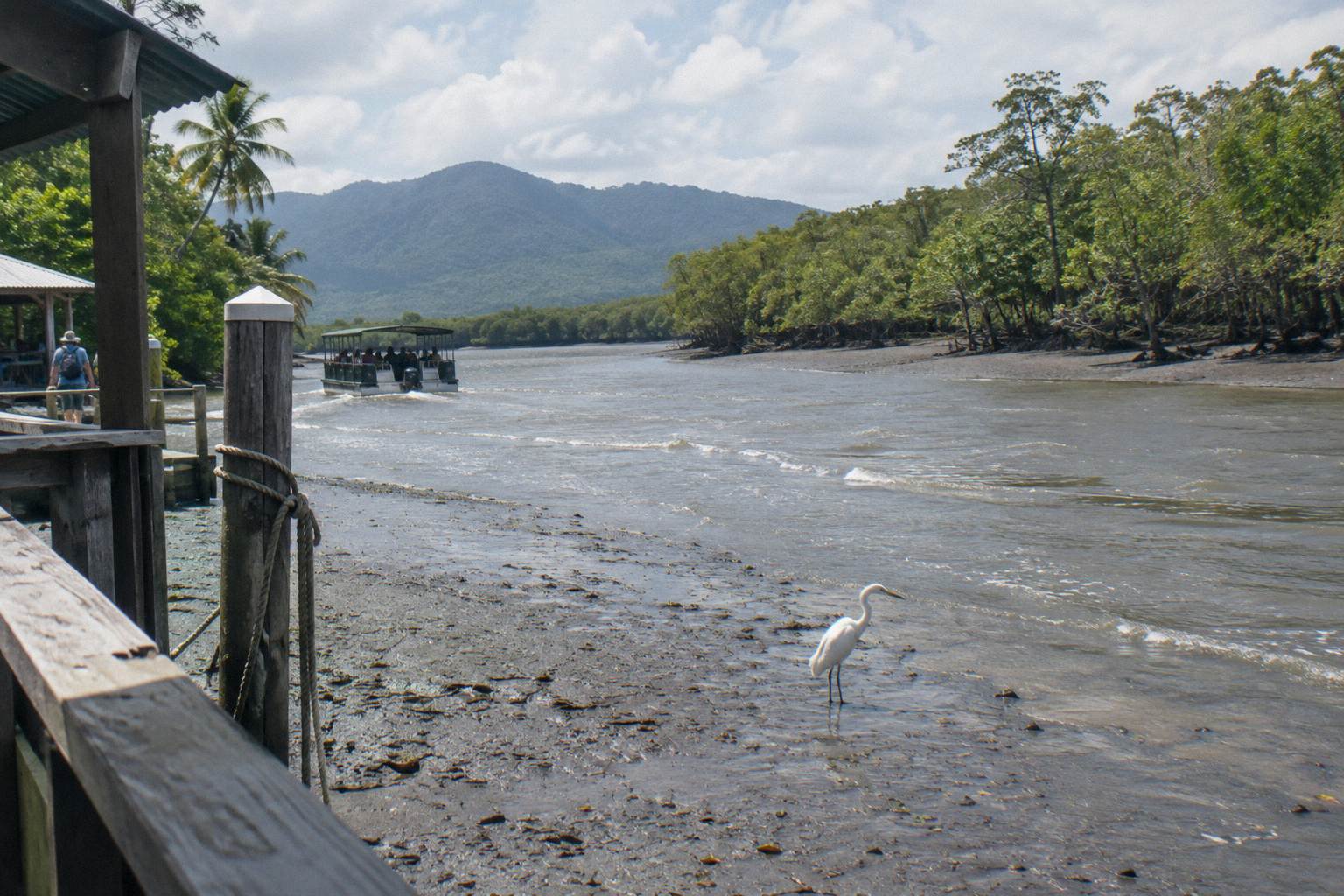
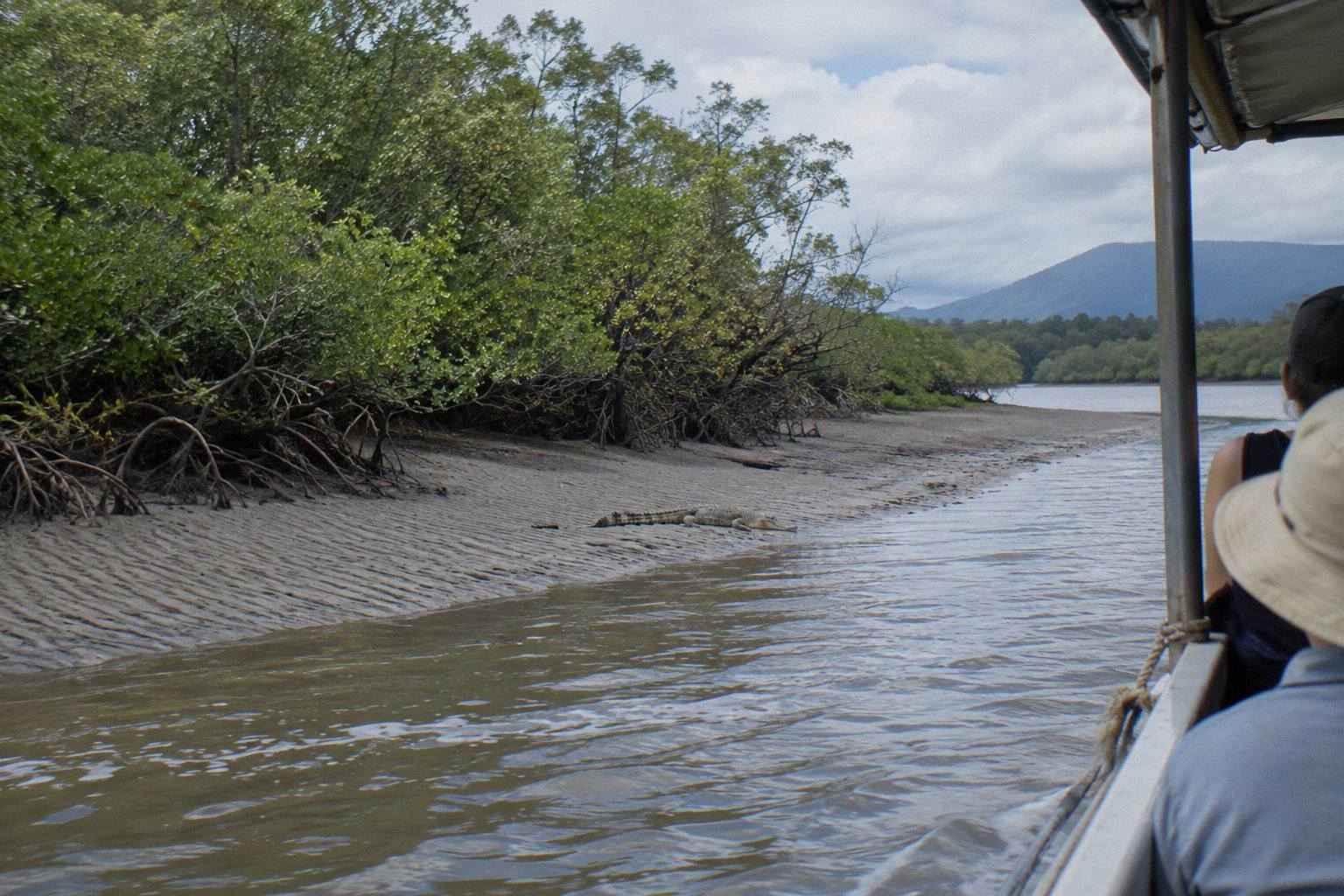
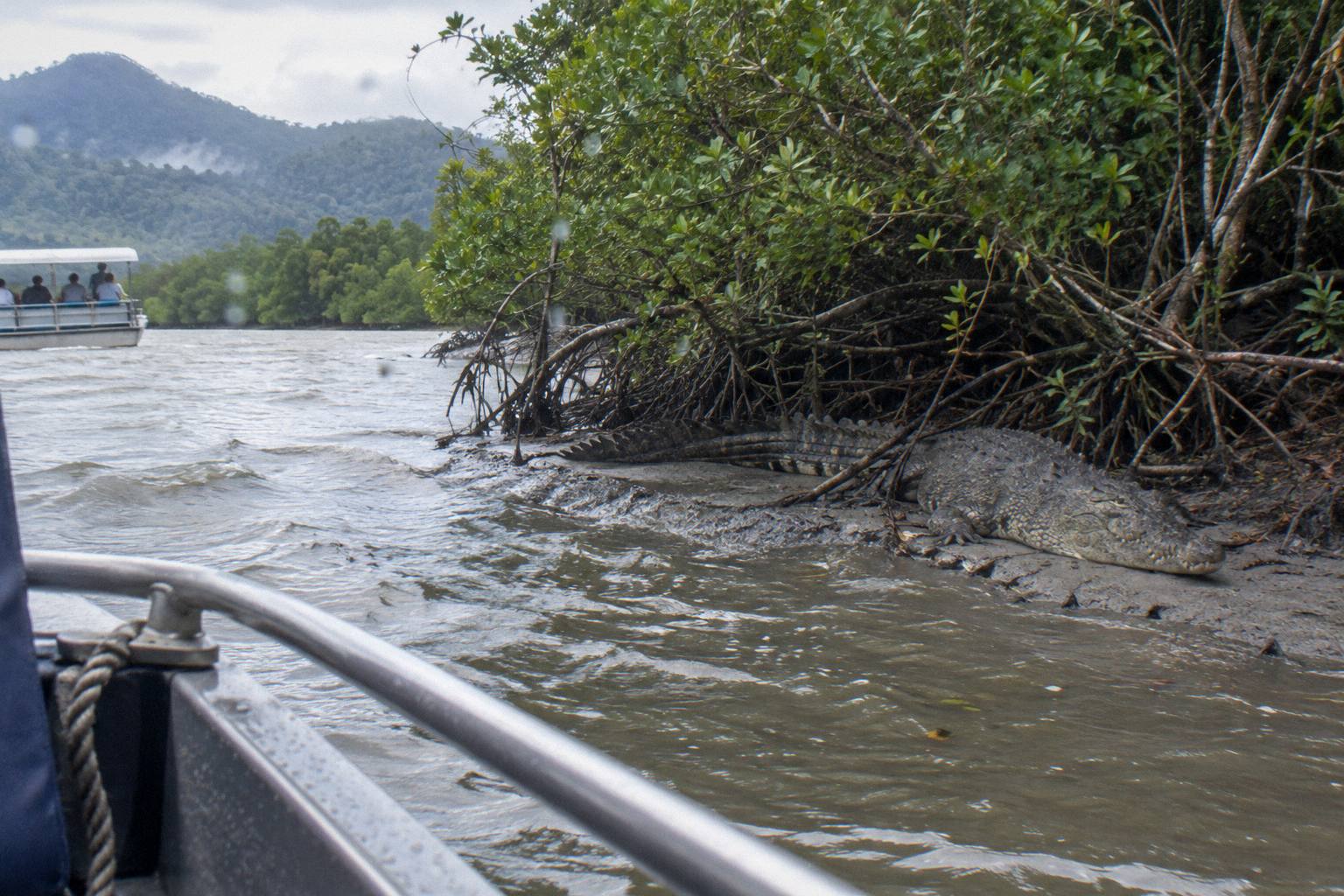
Tide changes the amount of exposed bank, and exposed bank is where crocodiles bask. When the water drops, sandbars and mudflats appear and a crocodile resting on them is visible from a boat. When the water rises, those banks flood and the same animal can float with only its eyes and nostrils showing, or sit unseen in deeper water. Solar Whisper puts it simply: at low tide there are more beaches and less water for a crocodile to hide in.
The mechanism is not mysterious once you have watched a tidal river for an afternoon. A big male that was lying full length on a sandbar at low water becomes a set of nostrils moving slowly upstream at high water. Both states are the same crocodile. What changes is how much of it the boat can see, and how far away it can be seen from.
| Variable | Low tide | High tide |
|---|---|---|
| Exposed bank | Sandbars and mudflats visible | Banks flooded, water meets mangroves |
| Basking crocodiles | Resting on open bank, fully visible | Floating low or hidden in deeper water |
| Solar Whisper advice | Usually better | The most difficult time is a summer high tide |
| Bruce Belcher's advice | Can enhance the chances | Crocodiles are still seen at high tide |
That table is the whole tide argument in four lines, and it is worth reading twice before booking anything. Neither operator treats high tide as a lost cause, and neither promises anything at any tide. Solar Whisper says it cannot guarantee a sighting even on its good days, and Bruce Belcher's says it never guarantees wildlife sightings at all. What the tide advice buys you is a shift in the odds, not a certainty, and any cruise that claims otherwise should be treated with caution.
The Queensland Government adds a piece operators do not mention: crocodiles are very mobile during and after high tides and heavy rain, and they are most active at night, dusk and dawn. In other words, a rising tide does not just hide basking animals, it can also be a period when they are moving between spots. A cruise on a building tide may trade visible banks for a chance of animals in transit. For more on how the season stacks on top of the tide, see the best month for a Daintree croc cruise.
What Each Daintree Operator Actually Says About Tides
Solar Whisper and Bruce Belcher's are the only operators covered here that publish tide advice, and their wording matters. Solar Whisper says about a 99 percent success rate overall, calls small crocodiles very reliable and big ones come and go, and says low tide is usually better. Bruce Belcher's says crocodiles are spotted on 98 percent of trips, that low tide can enhance the chances, and that crocodiles are still seen at high tide. Neither one promises a crocodile.
The similarity of those two numbers is easy to over-read. Both operators report sightings on the high side of 98 percent, but each figure belongs to its own operator on its own stretch of river, and they should never be merged into a single rate for the Daintree. The important difference is the caveat each attaches. Solar Whisper names its hardest condition outright: the most difficult time is the summer on a high tide, when the river is warm and full. Bruce Belcher's spreads its difficulty across the calendar instead, saying sightings are strongest in the cooler months of June to September and about 50/50 in the warmer months, which it ties to breeding season and the wet season.
| Operator | Tide wording | Season wording | If no crocodile is seen |
|---|---|---|---|
| Solar Whisper | Low tide usually better, more beaches and less water to hide in | Warm months: river temperature rises and crocodiles are harder to see | Free return cruise |
| Bruce Belcher's | Low tide can enhance the chances, crocodiles still seen at high tide | 98 percent of trips, especially June to September, about 50/50 in warmer months | Complimentary return trip |
| Lady Douglas | No tide advice published | Crocodiles normally seen on over 90 percent of trips, especially in the dry season May to November | No return-trip offer stated |
| Daintree Boatman | No tide advice published | Crocs and snakes best between May and October, much more difficult outside | No return-trip offer stated |
A return-trip offer belongs only to the operator that states it, and the table above keeps them separate for that reason. Lady Douglas, which cruises Dickson Inlet at Port Douglas rather than the Daintree, and Daintree Boatman, which runs dawn and dusk wildlife trips from the village ramp, both speak in seasons rather than tides. Daintree Boatman's calendar advice points the same direction as everyone else's: the cooler, drier months are better, and the warm months are harder.
Solar Whisper's one-hour cruise is the trip most explicitly built around this conversation. It runs from the Lower Daintree near the ferry, on a roofed solar-electric boat with no windows and space for small groups, and the operator's own home page is where the low-tide and summer-high-tide wording lives. Check availability once you have a date in mind, and read more on the Solar Whisper croc and wildlife cruise page.
Between them, these three trips cover the main ways to be on the water here: the solar boat at the ferry end, a two-hour sunset trip from the village, and the Port Douglas inlet cruise with hotel pickup.
High Tide, Low Tide And The Two Faces Of The River
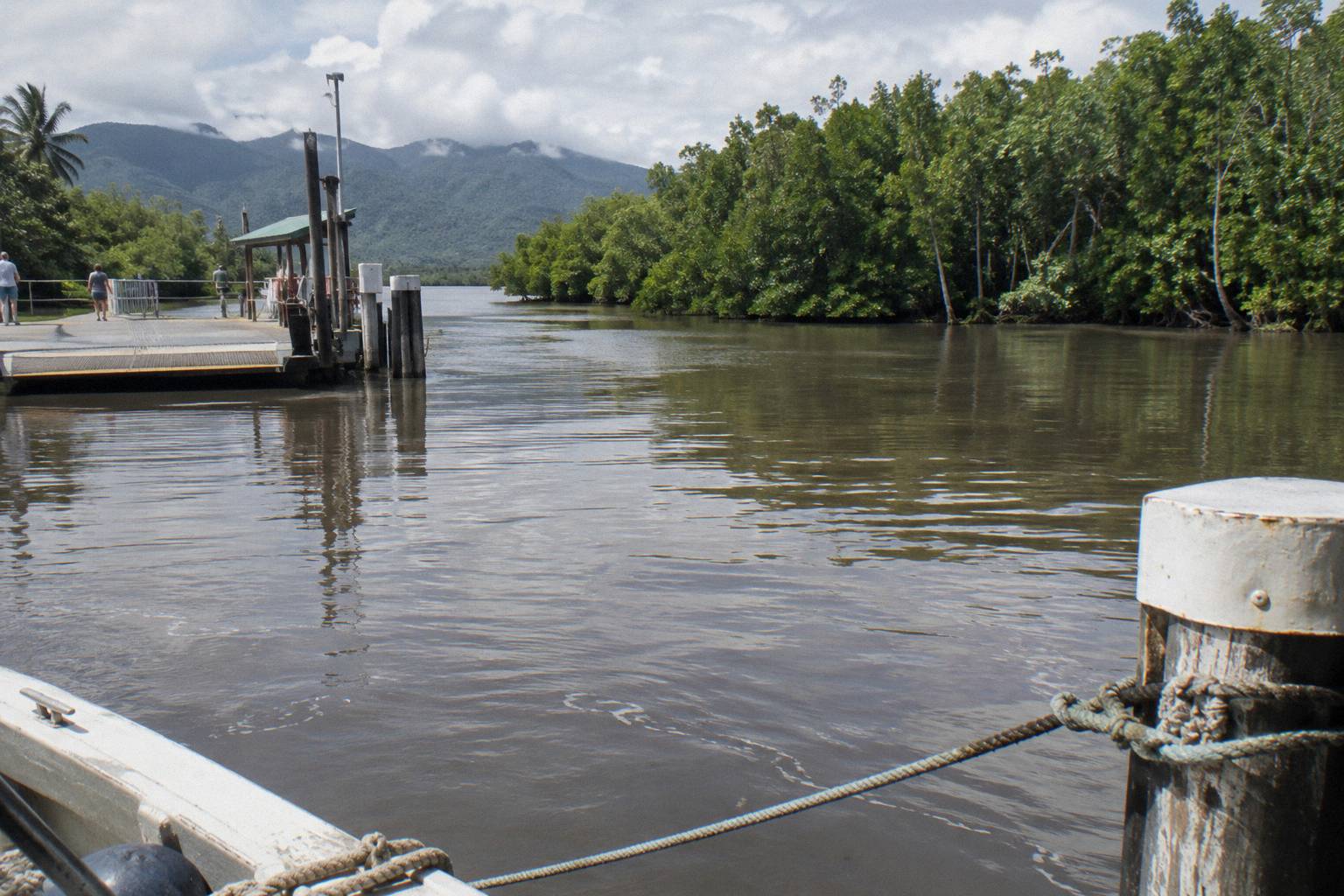
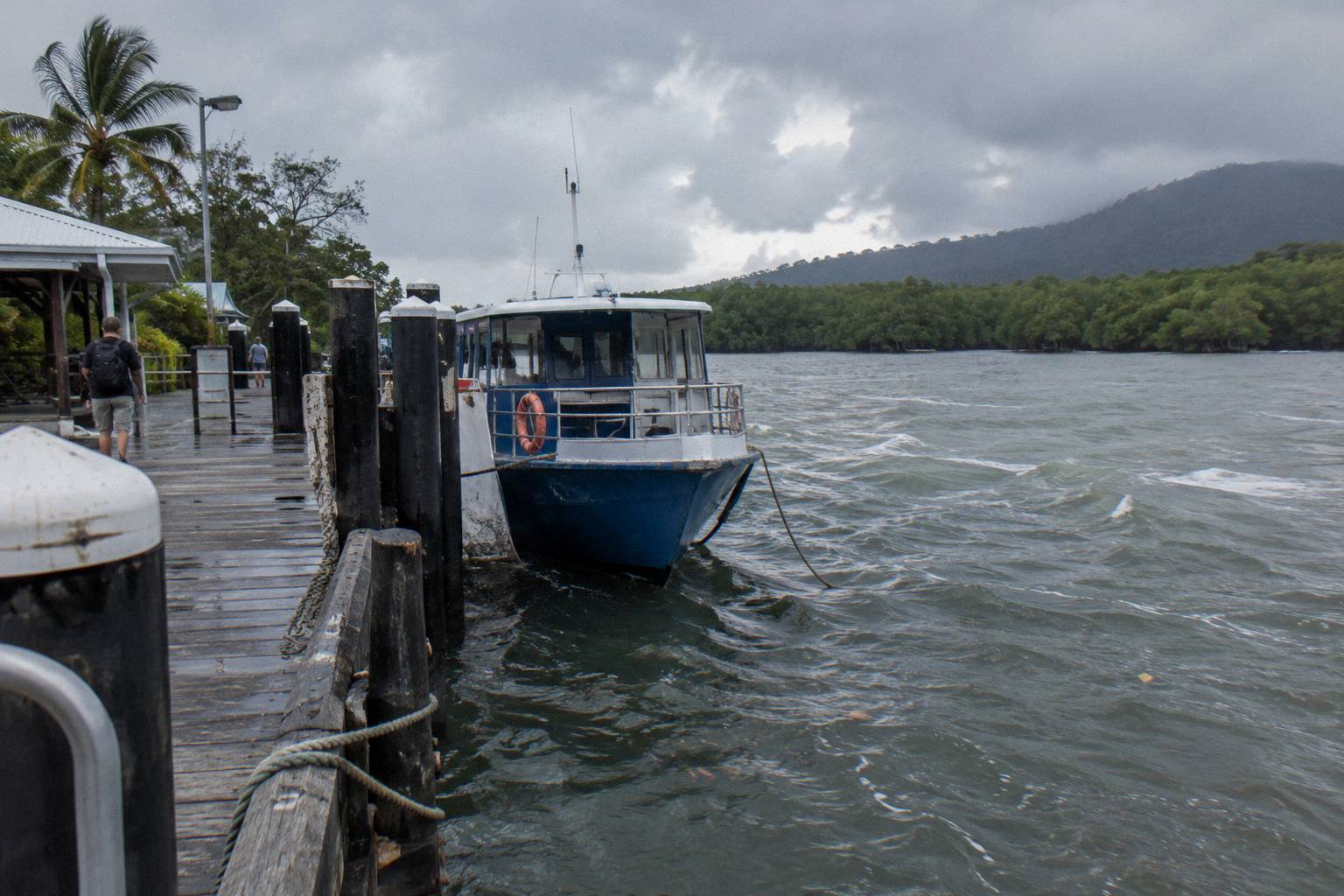
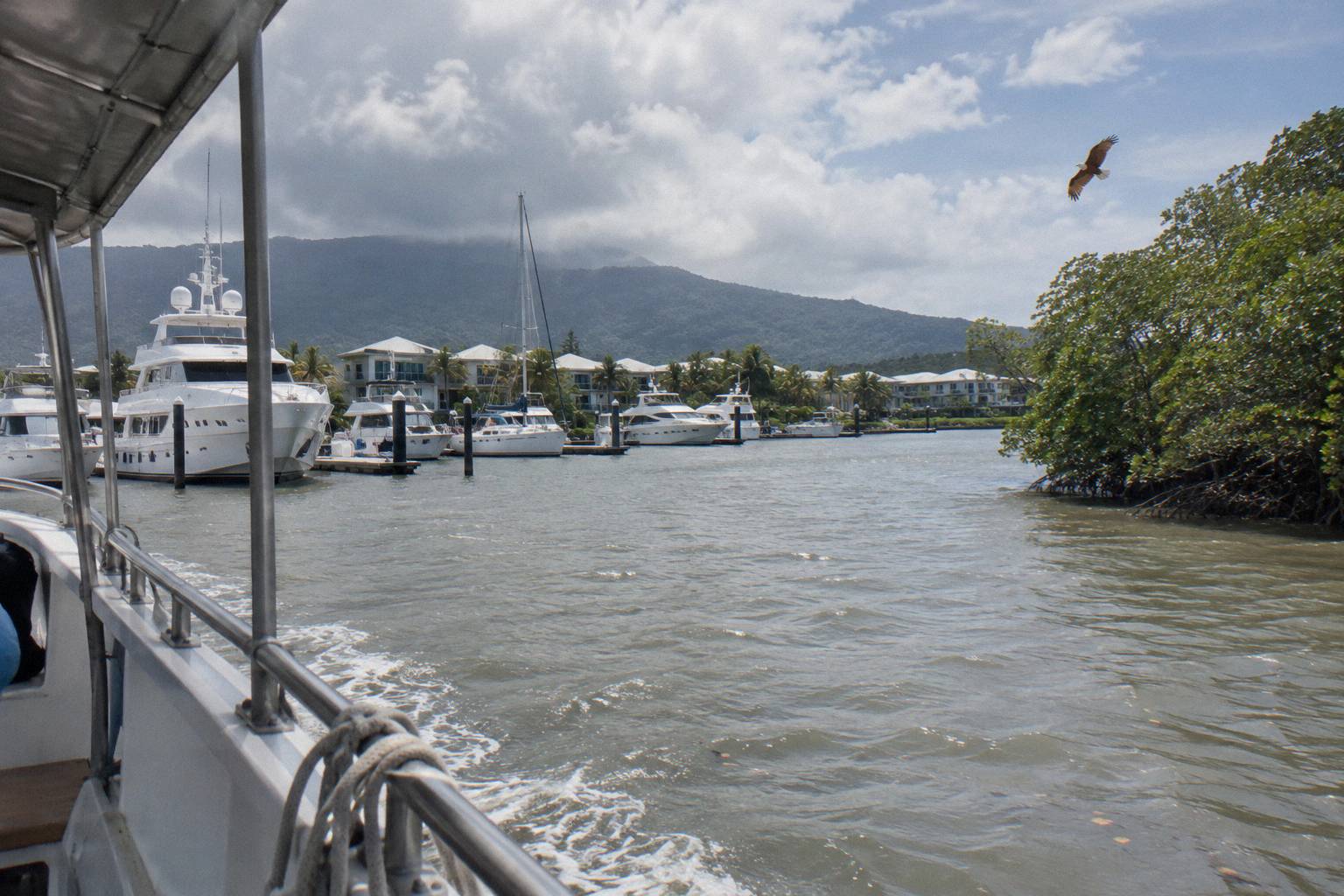
The Daintree River is really two different waterways joined at the middle. Upper Daintree, at the village, is narrower and calmer with overhanging trees. Lower Daintree, at the ferry end, is a wide tidal estuary with mangroves. Tide acts hardest on the lower river, where the flats are widest and the drop exposes the most bank, which is why the operators who talk about tide, Solar Whisper and Bruce Belcher's, both work from the Lower Daintree.
Crocodile Express, which is the wording that describes the two sections, runs from both ends: one cruise from Daintree Village at Stewart Street, and a second from its kiosk about 300 metres before the ferry crossing on Cape Tribulation Road. One ticket covers both, valid 14 days from first activation, so a visitor can effectively sample the narrow upper river and the wide estuary on consecutive days without buying twice. That flexibility is quiet tide management: if the first section disappoints on the day's water level, the second is a different river.
The Daintree River Cruise Centre, on the south side of the road just before the village, and Bruce Belcher's, with its own jetty on the Mossman-Daintree Road in the Lower Daintree, sit on the sections their names suggest. None of these departure points involves crossing the Daintree Ferry, which runs continuously between 5am and midnight daily, including Christmas Day, with queues expected in school holidays. If the ferry is part of your day, the Daintree Ferry before or after a croc cruise guide sorts the sequencing.
Practically, low tide on the lower river means mud: wide grey flats, exposed roots, and crocodiles that can be spotted at range because they are lying on a flat surface in daylight. High tide means water to the mangrove line and a river that looks fuller and greener, with animals either submerged or tucked under cover. Some passengers prefer the look of the full river. But if the purpose of the trip is crocodiles, the exposed-bank state is the one both tide-talking operators point toward, and the state worth aiming for when the calendar allows a choice.
Season, Rainfall And The Water Temperature Layer
Tide sits on top of a bigger pattern. The wet months at Port Douglas, January to March, each average 395 to 429 millimetres of rain, while July to September average just 23 to 32 millimetres, according to the Bureau of Meteorology's long-term Port Douglas climate record. Operators say crocodiles are harder to find in the warm months, and the Government says the animals are highly mobile after heavy rain and floods.
The two effects stack rather than compete. In the wet, the river runs warmer and higher more often, which is the combination Solar Whisper names as its hardest, and heavy rain can move crocodiles out of their usual basking spots entirely. In the dry, from roughly May to October, cooler water, lower river levels and clearer banks line up, which is the window every operator on the river describes as best. Lady Douglas says crocodiles are normally seen on over 90 percent of its trips, especially in the dry season of May to November, and Bruce Belcher's cooler-month wording covers June to September.
| Month | Mean rainfall, mm | Rain days of 1 mm or more | Season signal |
|---|---|---|---|
| January | 395.8 | 13.8 | Wet, warm, hardest water conditions |
| March | 429.4 | 14.4 | Wettest month on the long-term record |
| May | 72.8 | 8.0 | Dry season begins |
| July | 26.4 | 4.2 | Driest stretch of the year |
| September | 32.1 | 4.4 | Cool, dry, strong sighting window |
| November | 106.1 | 7.6 | Building warmth and rain |
The Bureau's figures come from the Port Douglas Warner Street station, with 52 years of temperatures and 124 years of rainfall behind them, and the full Port Douglas climate averages table is published on its own site. These are averages, not forecasts: a dry week in February exists, and a wet week in August exists. What the record tells you is where the odds sit across a year, which is the same question the operators are answering when they name their good months.
There is also a Government-side season worth knowing, separate from rain. Courtship begins in October and November and nesting runs December to April, and during the breeding season male crocodiles become very mobile as they look for a mate, so sightings are more prevalent. That is a Government fact about crocodile biology, not an operator's pitch, and it offers a curious middle path: the early wet is warm, but the males are moving. How that trade-off weighs against the tide and the weather is a judgement no operator makes for you, and reasonably so.
Best Time Of Day, And How The Daylight Constrains It
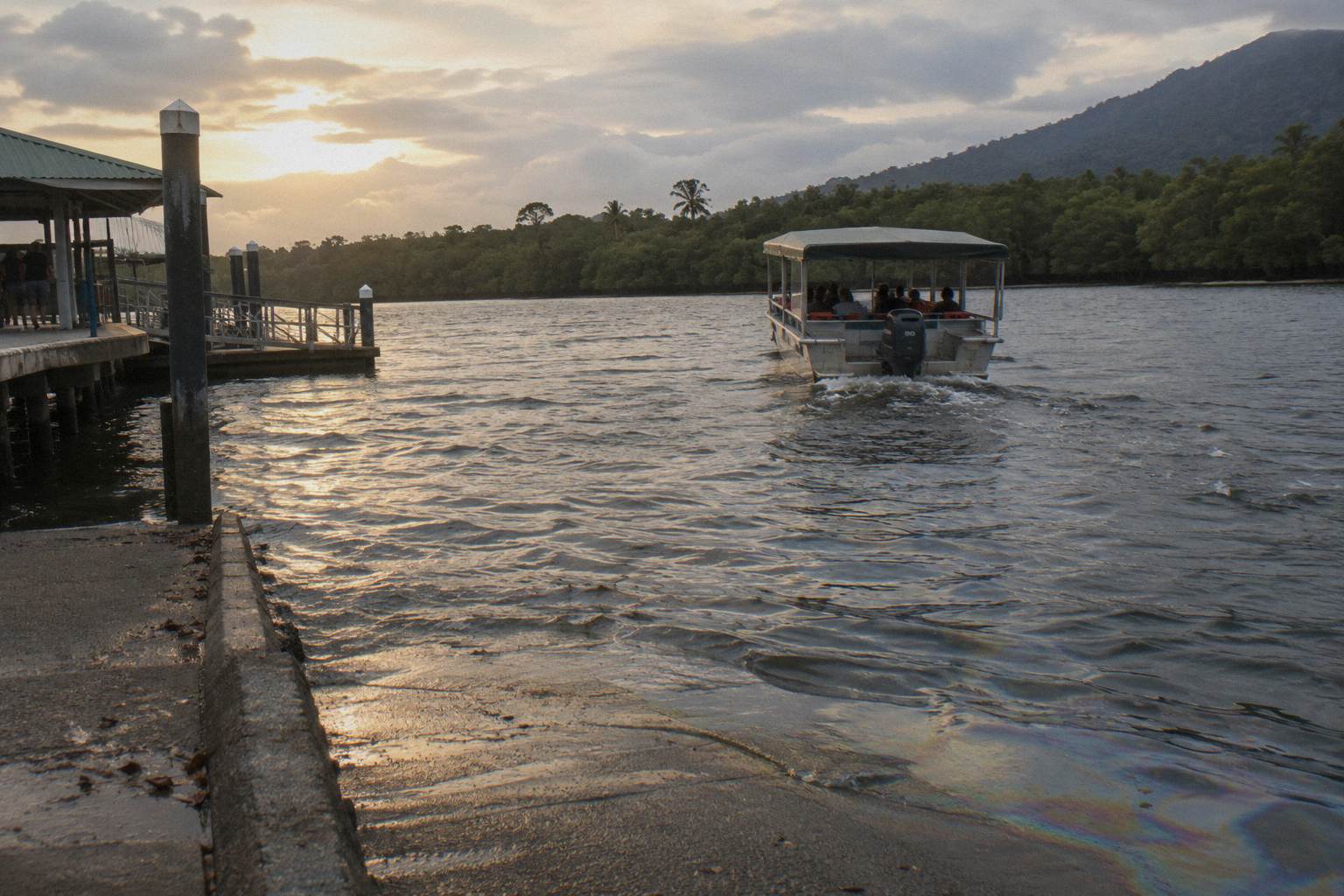
Crocodiles are most active at night, dusk and dawn, the Queensland Government says, and the tide-talking operators run in daylight. That means the dusk-and-dawn advantage belongs mostly to the longer trips: Daintree Boatman runs two-hour cruises from 7am or 4pm (April to August) and 6.30am or 4.30pm (September to January), Lady Douglas keeps a sunset slot at 4.30pm, and most one-hour cruises run between mid-morning and mid-afternoon.
Daylight also sets a hard boundary on the year. Sunrise and sunset at Daintree Village, computed for latitude 16 south, run from about 5:38am and 6:29pm in November to about 6:44am and 5:54pm in June, so the afternoon window shrinks by close to two hours across the seasons. Daintree Boatman's published pattern tracks that shift exactly: afternoon departures at 4pm from April to August and 4.30pm from September to January, because the light gives out earlier in the southern winter. Queensland has no daylight saving, so these times are what they are all year.
The one-hour operators spread their days widely. Crocodile Express lists daily cruises from 8.30am to 3.30pm on both routes, every day except 25 December. The Daintree River Cruise Centre lists daily departures from 9.30am to 3.30pm, sometimes extended to 1.5 hours when the schedule permits. Bruce Belcher's lists cruises from 8:30am to 3pm, open March to January and closed all February, Christmas Day and New Year's Day. Lady Douglas schedules morning, midday, afternoon and sunset slots at 10.30am, 12.30pm, 2.30pm and 4.30pm, dependent on seasonal demand. All of these are the operators' published patterns and subject to change: the booking calendar decides the real start time on the day.
Daintree Boatman's two-hour sunset cruise is the trip that leans hardest into the Government's dusk-activity note, and it departs the public boat ramp at Stewart Street in Daintree Village. The operator's focus is birds, naming azure, little and sacred kingfishers, Papuan frogmouth, great-billed heron, shining flycatcher and black bittern, with common tree snakes and water dragons also listed. Its season advice is the plainest on the river: crocs and snakes are best between May and October and are much more difficult outside this period. Details and dates are on the Daintree Boatman sunset cruise page.
Matching A Tide Window To A Cruise You Can Actually Book
Start from the cruise, not the tide table. Pick the trip that suits your transport and timing first, then take the best available departure on that day, because every operator here runs multiple sailings and the calendar, not the tide, decides what you can join. A one-hour cruise at a poor tide still beats no cruise, and both tide-talking operators report sightings at high water too.
The transport question is the real filter. Only Lady Douglas leaves from Port Douglas itself, boarding at the Crystalbrook Superyacht Marina on Wharf Street, and cruising Dickson Inlet for 1.5 hours at from US$32 per person. The Daintree Village and Lower Daintree departure points are about 45 minutes from Port Douglas, about 30 minutes from Mossman and about 1.5 hours from Cairns, by Solar Whisper's own driving guidance, and several operators offer no transfers at all. Bruce Belcher's asks guests to make their own way to its jetty, and the Cruise Centre excludes transfers from its ticket.
| Trip | Departure point | Duration | From price | Tide relevance |
|---|---|---|---|---|
| Solar Whisper croc and wildlife cruise | Esplanade, Lower Daintree, about 400 m before the ferry | 1 hour | Check the booking page | The operator's tide advice is the most specific on the river |
| Daintree Boatman sunset cruise | Public boat ramp, Stewart Street, Daintree Village | 2 hours | Check the booking page | Dusk timing matches Government activity advice |
| Lady Douglas River Cruise | Crystalbrook Superyacht Marina, Port Douglas | 1.5 hours | US$32 | Four daily slots let you shift departure, on a different waterway |
| Bruce Belcher's guided cruise | Own jetty, 2856 Mossman-Daintree Rd, Lower Daintree | 1 hour | US$30 | Low tide can enhance the chances, crocodiles still seen at high tide |
If tide really is the deciding factor for you, two levers exist. One is departure point: choose a Lower Daintree operator, where the estuary is widest and the low-tide flats are biggest, rather than the village end where the banks are narrower and tree cover is heavier. The other is slot flexibility: Lady Douglas's four daily times and Crocodile Express's 8.30am to 3.30pm span both let you pick the hour after you have seen the day's water, at least in the dry season when demand is high and schedules fill. The how to book a Daintree croc cruise guide walks through the mechanics.
One caution belongs here: no cruise covered in these pages runs at night. Every trip operates in daylight, at dawn or around dusk, which is itself a safety and licensing reality of a wild tidal river rather than a gap in anyone's schedule. If a night spotlight trip is what you are imagining, that is not what these boats sell.
Mistakes Readers Make When Timing A Daintree Croc Cruise
The most common timing mistake is treating an operator's sighting percentage as a personal promise. The second is booking a summer high tide and expecting the winter odds. The third is assuming the tide is the only variable, when season, rainfall, water temperature and the breeding calendar all move the same animals. None of the operators here guarantee a crocodile, and two of them, Solar Whisper and Bruce Belcher's, are explicit about never guaranteeing one.
| Mistake | Why it costs you sightings | Better move |
|---|---|---|
| Reading a 98 percent figure as a guarantee | Each figure belongs to one operator, averaged over its own trips | Treat the number as odds, and keep the free-return offer in your pocket |
| Booking February and expecting the June experience | Warm water and wet-season rain make crocodiles harder to see and more mobile | Travel May to October if the choice exists, or accept a harder trip |
| Ignoring the tide entirely | High water floods the banks where crocodiles bask | Prefer a low or falling tide on the lower river when you can choose |
| Fixating on tide alone | Season and water temperature are the bigger layer | Line up month, then time of day, then tide |
| Expecting a night cruise | Every trip here runs in daylight, dawn or around dusk | Book the Daintree Boatman sunset or dawn cruise for the closest match |
A fourth mistake is quieter: assuming the lower-priced cruise is the weaker one. The Daintree River Cruise Centre's ticket, from US$24 per person, includes morning or afternoon tea and use of the Centre's displays, picnic areas and bathrooms, and the operator records over 280 bird species in the region. Crocodile Express at from US$27 covers two one-hour cruises on two different stretches of river. Price differences here reflect inclusions and route, not a sighting gap, and the ratings, all 4.6 across pools of 154 to 558 reviews, tell the same flat story. The Daintree River cruises compared guide lays the full table out side by side.
The fifth mistake is the most avoidable of all: not asking. Operators on a tidal river watch the water every day, and the tide-talking ones clearly think about it constantly. A quick question when booking, about the day's tide and which departure suits it, costs nothing and often reshuffles the plan toward the better window.
Reading The River Safely While You Watch The Water
Stay at least 5 metres back from the water's edge, be extra cautious at night, dusk and dawn, and remember that no waterway in crocodile country can be considered crocodile free; on a cruise keep arms and legs inside the boat and let the boat be the barrier, while 10 metres from a basking crocodile is a legal requirement in Queensland.
That legal frame explains something about the format of these trips. A Queensland river cruise is a spotting trip from a licensed vessel, not a feeding show: the jumping-crocodile format some visitors know from the Northern Territory does not operate here, and deliberately feeding or disturbing a crocodile is an offence in Queensland. The boats keep their distance, the crocodiles stay wild, and the sighting percentages describe wild animals choosing to be visible. The Queensland Government's estuarine crocodile pages and the Be Crocwise guidance set out the full rules.
The biology behind the advice is worth a minute, because it makes the tide story richer. Estuarine crocodiles grow to over 4 metres, the average male is 3 to 4 metres and 200 to 300 kilograms, and they are expected to live 50 years or more in the wild. They occur naturally between Gladstone and Cape York Peninsula and throughout the Gulf of Carpentaria, and they are most commonly seen in the tidal reaches of rivers. In other words, the Daintree is not unusual for having crocodiles that respond to tide, it is typical: this is the habitat the species is built around. More on the animals themselves is in the saltwater crocodiles of the Daintree River.
For passengers, the practical rules are few. Stay inside the boat's rails, keep the vessel between you and the animal, and leave the kayaks and paddleboards for other waterways, as the Government's boating advice recommends. Every covered operator here runs within these rules as a condition of operating, which is one reason a cruise is the sensible way to see a wild crocodile rather than from a bank. The croc cruise safety on boats guide covers the boarding and vessel side in detail.
Pulling It Together: A Simple Order Of Decisions
Work month first, then time of day, then tide, then the boat. The month sets the water temperature and rainfall, which are the biggest levers. Time of day picks up the dawn and dusk activity the Government describes. Tide refines the choice on the lower river, where the two operators that publish tide advice both work. The boat itself comes last, and matters less than all three before it.
For most visitors the short version is this: in the May-to-October window, on almost any daylight departure, the odds described by every operator here are good, and the tide is a fine-tuning choice rather than a gate. In the wet months, the tide matters more, because the warm-water penalty is already against you and a summer high tide is the specific condition Solar Whisper names as its hardest. That is the one date combination worth actively steering away from if you have any flexibility at all. Port Douglas Crocodile Cruises keeps the full set of Daintree and Port Douglas trips side by side if the tide question has now narrowed your choice to a shortlist.
However you time it, book the trip, not the statistic. The operators' percentages describe their own history, the Government's movement notes describe the species, and the tide describes the water on your particular afternoon. Wild crocodiles owe none of them anything, which is precisely what makes the sighting worth the trip.
Common Questions About Tides And Croc Sightings On The Daintree River
Is Low Tide Really Better For Seeing Crocodiles On The Daintree River?
Solar Whisper says low tide is usually better because more beach is exposed and there is less water for a crocodile to hide in, and Bruce Belcher's says low tide can enhance the chances. Both also say crocodiles are still seen at high tide, so high water is harder, not hopeless.
What Time Of Day Is Best To See Crocodiles?
The Queensland Government says crocodiles are most active at night, dusk and dawn. Every cruise covered here runs in daylight, at dawn or around dusk, so the closest match to that activity window is the Daintree Boatman dawn or sunset cruise.
Do Operators Guarantee A Crocodile Sighting?
No. Solar Whisper says it cannot guarantee a sighting, and Bruce Belcher's says it never guarantees wildlife sightings. Both offer a free return trip if no crocodile is seen, an offer that belongs to each operator alone.
Which Months Are Hardest For Crocodile Sightings?
The wet months of January to March bring 395 to 429 millimetres of rain each on the long-term Port Douglas averages, and operators say crocodiles are harder to see when the river is warm. Solar Whisper names a summer high tide as its most difficult condition.
Does The Breeding Season Help Or Hurt Sightings?
The Queensland Government says that during the breeding season, male crocodiles become very mobile as they look for a mate, so sightings are more prevalent. Courtship begins in October and November and nesting runs December to April.
Can I Check The Tide Before Choosing A Cruise Time?
Yes, and it is worth doing for the lower river. Pick your cruise first, then use the day's tide to choose among that operator's departure times, since operators here run multiple daily sailings and the booking calendar decides the real start.