
Which Month Suits A Daintree Croc Cruise: Dry Season Versus Wet Season
Crocodile spotting on the Daintree River changes with the calendar: rainfall halves the visibility window in the wet months, cooler dry months concentrate crocodiles on the banks, and February even closes one operator entirely. Here is what the climate data and each operator's own seasonal statements say, month by month.
Short answer
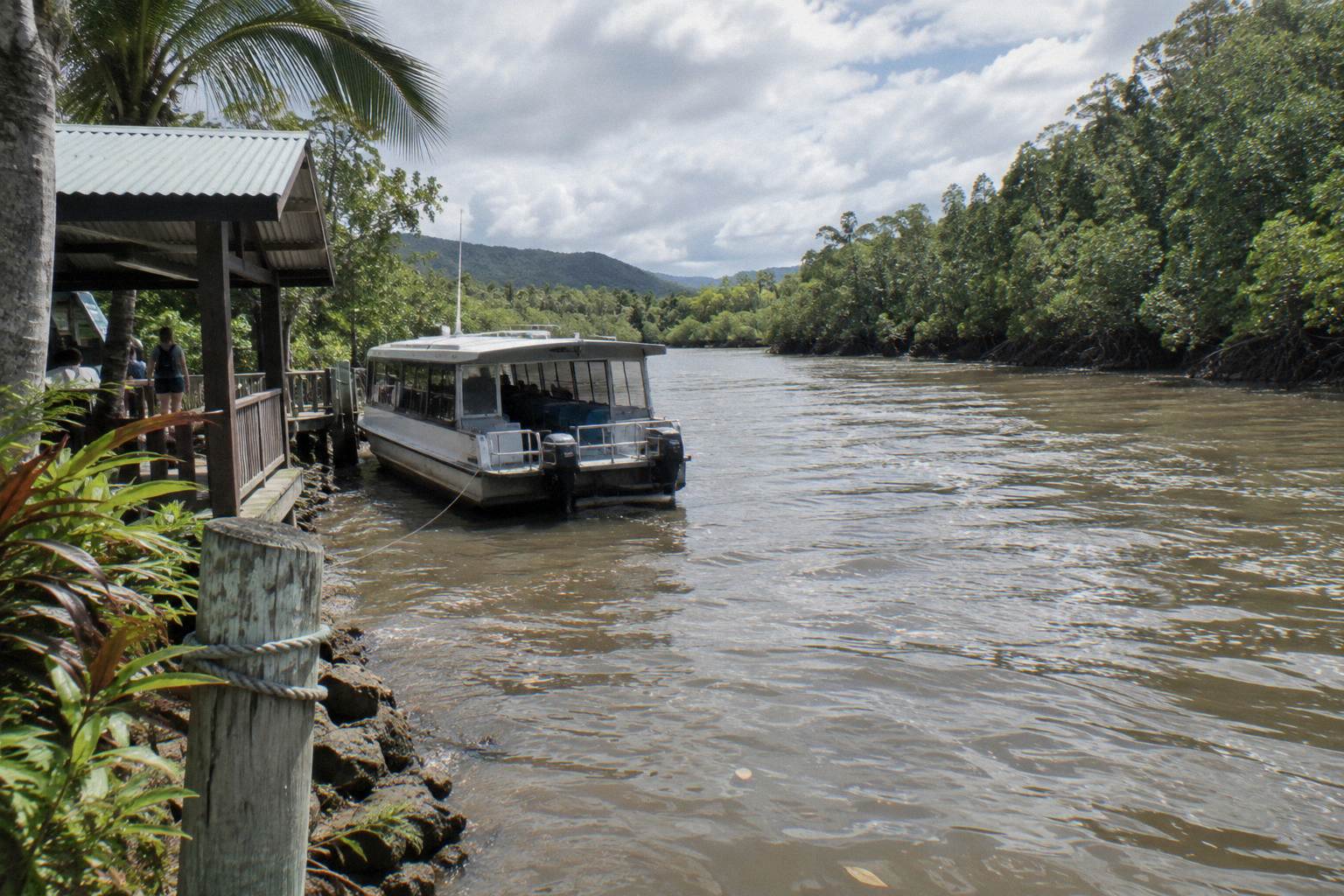
The driest window is July to September, when Port Douglas averages 23 to 32 mm of rain and 4 to 4.4 rain days a month, and Bruce Belcher's says crocodiles are spotted on 98 percent of trips in the cooler months of June to September. In the wet months of January to March, rainfall averages 395 to 429 mm and several operators say crocodiles are harder to find.
Crocodile spotting on the Daintree River is a seasonal proposition, and the calendar you pick shapes almost everything about the trip: how much rain falls on the river, how warm the water runs, how many daylight hours you have, and how likely a big estuarine crocodile is to be hauled out on a bank in plain view rather than submerged. The wet months of January to March dump an average of 395 to 429 mm of rain each on the Port Douglas area; the driest months, July to September, deliver barely 23 to 32 mm. That single contrast drives most of the seasonal advice you will read below.
Three kinds of evidence sit side by side in the sections that follow. First, measured climate data from the Bureau of Meteorology's Port Douglas station, 52 years of temperatures and 124 years of rainfall. Second, each river operator's own published statements about which months suit spotting, always attributed, never blended. Third, the Queensland Government's crocodile biology pages, which explain the breeding-season behaviour that makes some months busier for crocodile movement than others. No month below is promised, and no operator guarantees a sighting.
How The Seasons Change Crocodile Spotting On The Daintree River
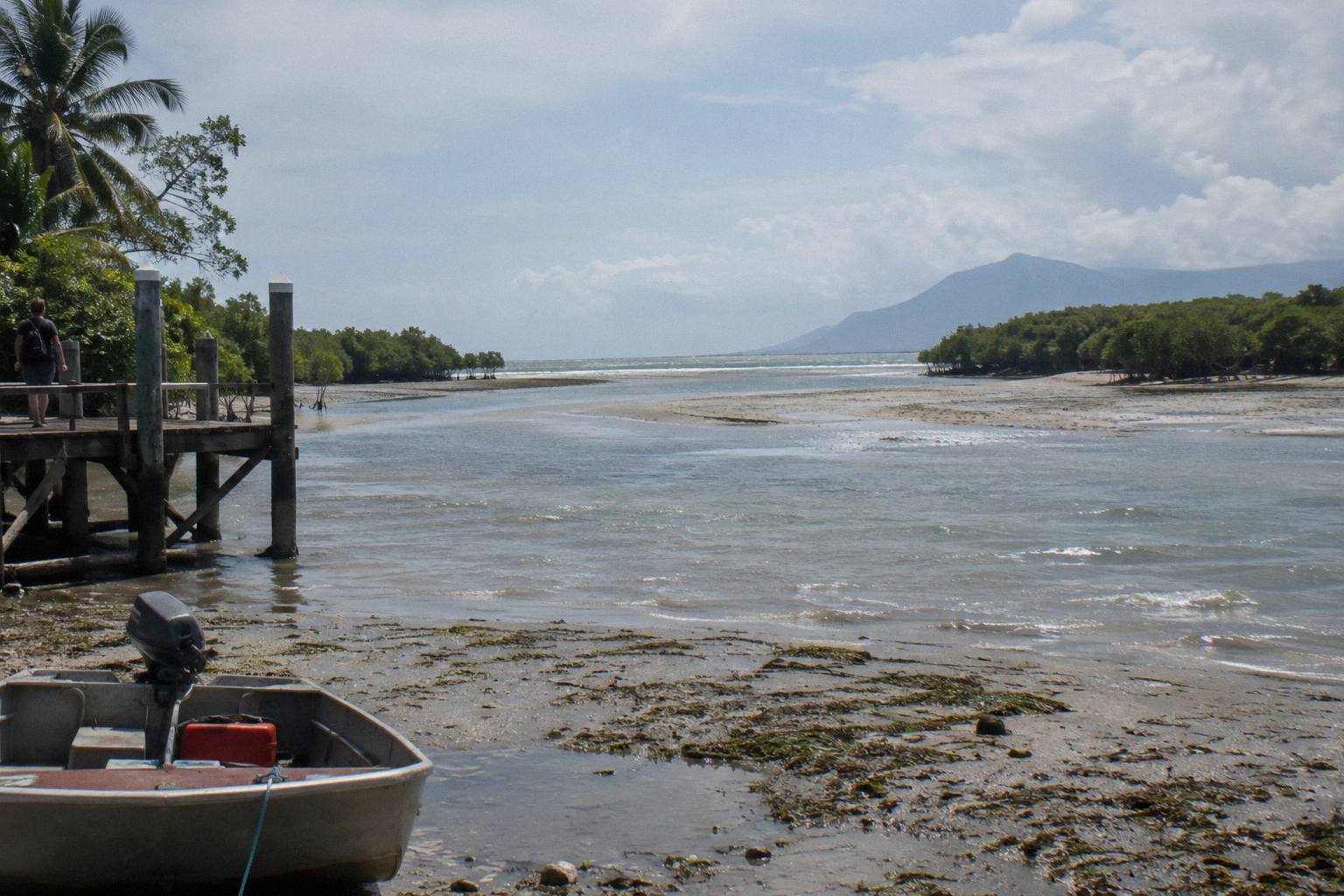
Season matters because rain, water temperature and breeding behaviour move together on this river: the dry months of roughly May to November bring less rain, cooler water and, in several operators' own words, more reliable sightings, while the wet months of January to March bring heavy rain and warmer, harder-to-spot crocodiles. The Queensland Government adds that males roam widely during the breeding season, so sightings are more prevalent then.
The mechanism is simple enough. Crocodiles are cold-blooded, so in the cooler months they spend long stretches basking on sandbars and riverbanks to warm up, which is exactly when a slow river boat can find them. In the warmer months the river water itself becomes comfortable, so crocodiles stay submerged for longer stretches and hunt at night instead. Solar Whisper puts it plainly on its own home page: in the warmer months the river temperature rises and crocodiles are harder to see.
Breeding adds a second layer. The Queensland Government notes that courtship begins in October and November, nesting runs December to April, and that during the breeding season male crocodiles become very mobile as they look for a mate, so sightings are more prevalent. That cuts both ways: more crocodiles moving through the river system, but moving animals are not basking animals, and a travelling crocodile can pass a boat without either noticing the other.
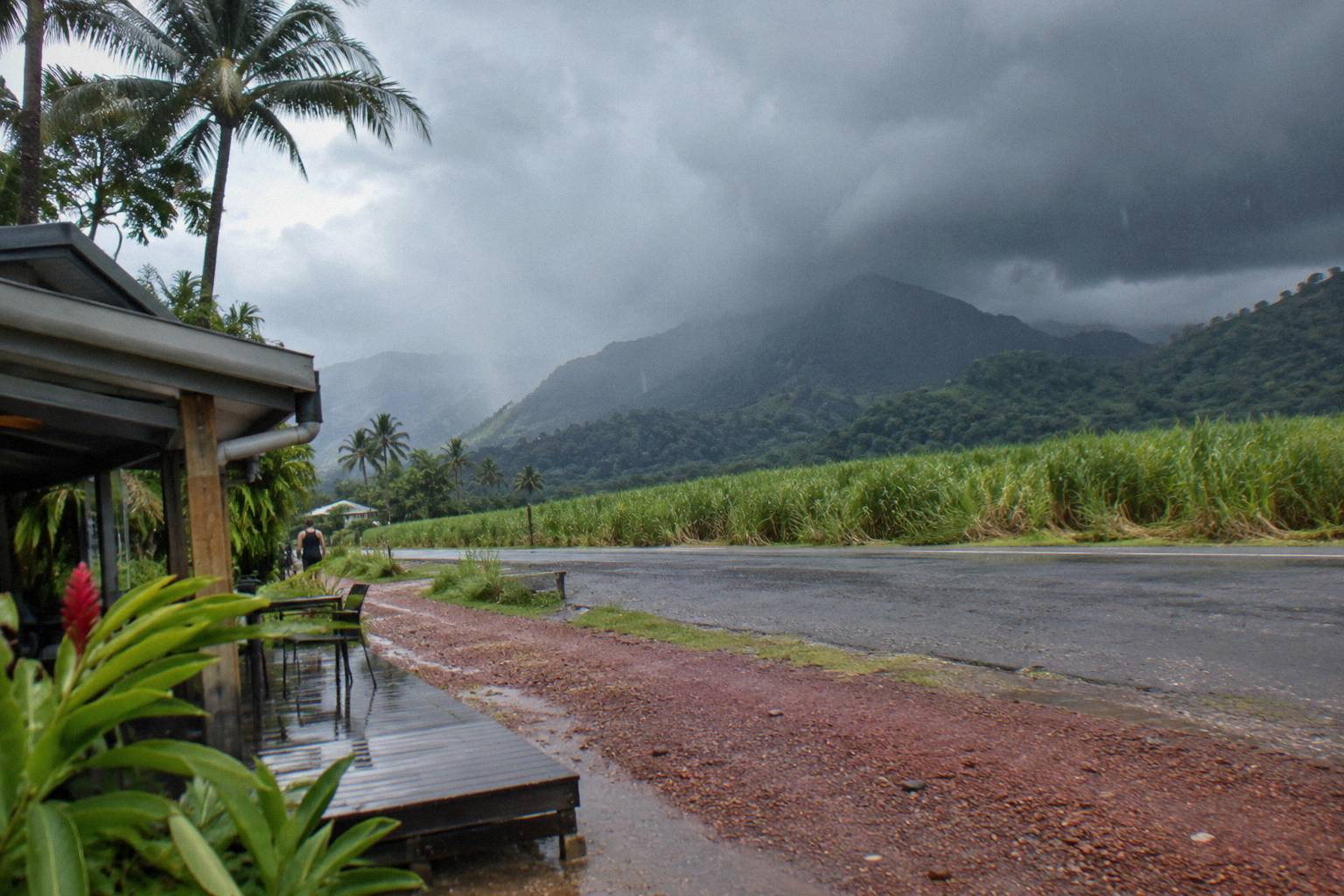
Rain is the third factor, and on the Daintree it is dramatic. Heavy rain and floods make crocodiles highly mobile, in the Government's wording, and a river in flood carries tannin-dark, fast-moving water that hides a submerged crocodile completely. The climate table in the next section shows just how sharply the wet months stand out from the dry ones around them.
For readers planning a first visit, the fuller background on how these trips work is in what to expect on a Daintree River crocodile cruise, and the Daintree River cruises compared guide sets the boats side by side.
The Rainfall And Temperature Numbers, Month By Month
July is the driest month on record at Port Douglas with an average of 26.4 mm of rain across 4.2 rain days, followed closely by August at 23.3 mm and September at 32.1 mm; at the other extreme, March averages 429.4 mm across 14.4 rain days. Mean daily maximum temperatures stay in a narrow band, from 24.6 degrees in July to 30.3 degrees in January and December.
The figures below come from the Bureau of Meteorology's Port Douglas Warner Street station, the closest long-record station to the river. The station carries 52 years of temperature data and 124 years of rainfall data, so the averages are stable, but any individual week can sit well above or below them, and a single wet-season downpour can dump more rain in a day than July sees in a month.
| Month | Mean max (C) | Mean min (C) | Mean rain (mm) | Rain days of 1 mm or more |
|---|---|---|---|---|
| Jan | 30.3 | 23.7 | 395.8 | 13.8 |
| Feb | 30.1 | 23.5 | 422.0 | 14.2 |
| Mar | 29.5 | 22.8 | 429.4 | 14.4 |
| Apr | 28.3 | 21.5 | 203.3 | 11.2 |
| May | 26.7 | 19.5 | 72.8 | 8.0 |
| Jun | 25.1 | 17.7 | 47.7 | 5.7 |
| Jul | 24.6 | 16.8 | 26.4 | 4.2 |
| Aug | 25.3 | 17.1 | 23.3 | 4.0 |
| Sep | 26.7 | 18.6 | 32.1 | 4.4 |
| Oct | 28.3 | 20.8 | 53.1 | 5.3 |
| Nov | 29.5 | 22.3 | 106.1 | 7.6 |
| Dec | 30.3 | 23.3 | 213.5 | 10.1 |
The pattern to read from the table: there is a hard wet peak from January to March, a shoulder in April and December, and a long dry run from May through October before November begins the climb back. A cruise in any month of the year can go ahead, but the dry run gives you the best odds of calm, clear-water conditions on the day, and those conditions are what the operators themselves point to when they talk about their favourite months. You can check the underlying averages on the Bureau's Port Douglas climate averages page.
Whether you travel in the dry or the wet, the choice of boat matters as much as the choice of month, and three trips below cover very different styles of Daintree River day.
What Each Operator Says About The Cooler Months
Bruce Belcher's says crocodiles are spotted on 98 percent of trips in the cooler months of June to September, and about 50/50 in the warmer months; Solar Whisper says about a 99 percent success rate with small crocodiles very reliable and big ones that come and go; Lady Douglas says crocodiles are normally seen on over 90 percent of trips, especially from May to November. Each figure belongs to its operator alone.
Those are the seasonal claims as each operator publishes them, and they line up on one point: the cooler, drier half of the year is the stronger window. Bruce Belcher's ties its warmer-month drop to the breeding season and the wet season, says low tide can enhance the chances but crocodiles are still seen at high tide, and offers a complimentary return trip if none is seen. Solar Whisper says low tide is usually better because there are more beaches and less water to hide in, calls a summer high tide the most difficult time, and also offers a free return cruise if none is seen. Lady Douglas, which cruises Dickson Inlet at Port Douglas rather than the Daintree, gives its over-90-percent figure for the May to November dry season. Daintree Boatman says crocs and snakes are best between May and October and much more difficult outside that period.
| Operator | Its own seasonal statement | Its offer if none is seen |
|---|---|---|
| Bruce Belcher's | Crocodiles spotted on 98 percent of trips in June to September; about 50/50 in the warmer months | Complimentary return trip |
| Solar Whisper | About a 99 percent success rate; big crocodiles come and go; a summer high tide is the most difficult time | Free return cruise |
| Lady Douglas | Crocodiles normally seen on over 90 percent of trips, especially May to November | Check when booking |
| Daintree Boatman | Crocs and snakes best between May and October, much more difficult outside that period | Check the booking page |
Note what these statements are not: none of them is a guarantee, and every operator that publishes a rate also declines to promise a sighting. A return-trip offer belongs only to the operator that states it, so treat each line in the table as that boat's own account of its river and its years on the water. Crocodile Express, which runs one ticket across two river routes from Daintree Village and near the ferry, publishes no seasonal rate at all; its two-routes-one-pass cruise suits travellers who want to sample both the narrow upper river and the wide lower estuary in a single visit.
Breeding Season: When Crocodile Movement Peaks
Courtship begins in October and November and nesting runs December to April, according to the Queensland Government, and during the breeding season male crocodiles become very mobile as they look for a mate, so sightings are more prevalent. Nests hold 40 to 70 eggs with about 90 days of incubation. Male crocodiles mature at about 17 years and 3.3 metres, females at about 12 years and 2.3 metres.
The breeding-season statement is the one piece of seasonal evidence that comes from government biology pages rather than from an operator, and it complicates the tidy dry-season story. On the Government's account, the October-to-April stretch has more crocodile movement in it, and movement is what makes a sighting possible in the first place: a river with no travelling males is a river with fewer crocodiles passing any given jetty. The same Government pages note that estuarine crocodiles grow to over 4 metres in length, that the average male is 3 to 4 metres and 200 to 300 kilograms, and that they are expected to live for 50 years or more in the wild.
Set against that, the operators' warmer-month caution is about visibility, not absence. Warm water lets a crocodile stay under for long periods, and flood water after summer rain hides everything. So a spring or early-summer trip, say October or November, sits in an interesting middle: courtship is beginning, males are moving, and rainfall, at 53.1 mm in October and 106.1 mm in November on average, has not yet reached wet-season intensity. The full behavioural background, including the safety rules that apply year-round, is on the Queensland Government's estuarine crocodile pages.
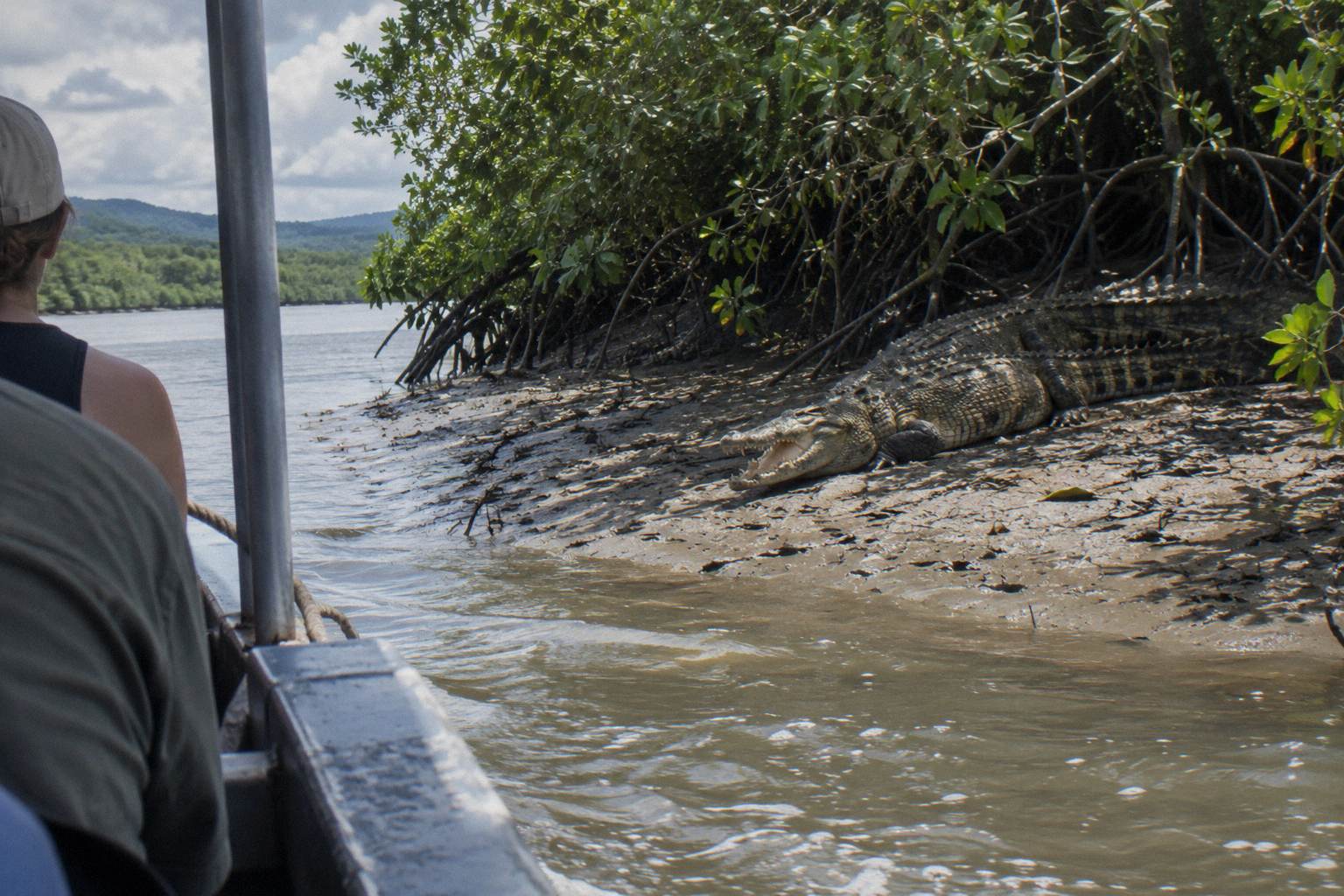
Two things follow for date planning. First, a breeding-season trip is a legitimate choice, not a mistake, provided you accept that the crocodiles you meet are more likely to be swimming than sunning. Second, the Be Crocwise advice that crocodile interactions can occur at any time of the year, and that no waterway within their natural range can be considered crocodile free, applies in every month equally, which is one reason the boating rules matter whatever the calendar says. More on the year-round rules is in croc cruise safety: boats and wild crocs.
Daylight And Tide Windows Change With The Month Too
Daylight on the Daintree runs from about 11.2 hours a day in June and July to about 13.1 hours in December, with sunrise as early as about 5:38am in November and as late as about 6:47am in July, so the morning and late-afternoon departure windows shift by more than an hour across the year. Crocodiles are most active at night, dusk and dawn, and every trip covered here runs in daylight.
The solar figures below are computed for Daintree Village from a standard NOAA solar algorithm, and they matter because several operators build their timetables around the edges of the day. Daintree Boatman's two-hour cruises are the clearest case: its own page lists morning departures from 7am between April and August and from 6.30am between September and January, and afternoon departures from 4pm or 4.30pm on the same split. Those times track sunrise and sunset, which is why they shift with the season.
| Month | About sunrise | About sunset | About daylight |
|---|---|---|---|
| Jan | 5:58am | 6:57pm | 13.0 h |
| Mar | 6:22am | 6:35pm | 12.2 h |
| May | 6:34am | 5:56pm | 11.4 h |
| Jul | 6:47am | 6:02pm | 11.2 h |
| Sep | 6:15am | 6:14pm | 12.0 h |
| Nov | 5:38am | 6:29pm | 12.9 h |
Tide is the other moving piece, and each operator frames it slightly differently: Solar Whisper says low tide is usually better because there are more beaches and less water to hide in, while Bruce Belcher's says low tide can enhance the chances but crocodiles are still seen at high tide. The deeper dive on that is in tides and croc sightings on the Daintree River, and the interaction of tide, month and time of day is covered in the best time of day to see crocodiles.
For a dawn or dusk-centred trip, Daintree Boatman's two-hour sunset cruise from the Riverview Caravan Park boat ramp at Stewart Street in Daintree Village is built exactly for those hours, and the operator's own focus is birds: azure, little and sacred kingfishers, Papuan frogmouth, great-billed heron, shining flycatcher and black bittern, alongside common tree snakes and water dragons.
February Closures And Other Calendar Gaps
February is the standout gap, and it lands in the wettest stretch of the year, which is likely no coincidence: Bruce Belcher's own published calendar runs from March to January. Its cruises run 8:30am to 3pm when open, and the operator also requires a 200 metre uncovered walk to its boats and non-slip shoes, details that matter more in the wet months when that path can be rain-slicked. Crocodile Express lists daily cruises from 8.30am to 3.30pm on both of its routes with the single Christmas closure; the Daintree River Cruise Centre lists daily departures from 9.30am to 3.30pm, extended to 1.5 hours when the schedule permits; Lady Douglas lists four slots at 10.30am, 12.30pm, 2.30pm and 4.30pm dependent on seasonal demand.
| Operator | Its published timetable | Closed dates it lists |
|---|---|---|
| Bruce Belcher's | Cruises 8:30am to 3pm | All of February, Christmas Day, New Year's Day |
| Crocodile Express | Daily 8.30am to 3.30pm, both routes | 25 December |
| Daintree River Cruise Centre | Daily 9.30am to 3.30pm | Check when booking |
| Lady Douglas | Four slots: 10.30am, 12.30pm, 2.30pm, 4.30pm | Subject to seasonal demand |
| Daintree Boatman | Dawn and dusk two-hour cruises, times shifting seasonally | Check the booking page |
The practical rule that falls out of the table: never plan a trip around a printed time alone. Each timetable is that operator's own published pattern, subject to change, and the booking calendar decides the actual start. If your travel dates are locked to a school-holiday window, book early, because the ferry queues and river cruises both fill in the Australian school breaks, and the Daintree Ferry site itself warns of long queues in school holidays even though none of the river cruises covered here need the ferry crossing.
Matching The Month To The Rest Of Your Daintree Day
Most visitors bundle a river cruise into a bigger day: the five-hour half-day tour from Port Douglas runs 12:50pm to 5:30pm and pairs a Mossman Gorge walk and swim with a one-hour cruise, while the eight-hour full-day Daintree Experience adds a waterfall swim, a guided walk, a gourmet lunch and a fruit tasting around its own cruise stop. Rainfall reshapes those add-ons more than the cruise itself.
That asymmetry is worth planning around. A covered river boat with clear screens, like Bruce Belcher's pulls down in heavy rain, keeps a wet-season cruise viable; a rainforest walk or a waterfall swim on the same day is far more pleasant in the May-to-October window when rain days average 4 to 8 a month rather than the 13.8 to 14.4 of January to March. Mossman Gorge swimming, on the half-day tour, is best judged against recent rainfall, and tropical north Queensland can close swimming holes after heavy rain regardless of season.
For families the temperature column of the climate table matters as much as the rain column: mean daily maximums of 24.6 to 26.7 degrees from June to September make for comfortable boats and easy walks, against 29.5 to 30.3 degrees from November to March. The half-day tour is not suitable for children under 3, and the full-day Daintree Experience is not suitable for children under 10 or people with mobility impairments, so the age-and-month combination is worth settling before you book. The croc cruise with kids guide works through ages, seats and safety in detail.
For a calm-water, high-comfort option in any month, the Daintree River Cruise Centre's wildlife cruise includes morning or afternoon tea, runs from a family business that has operated since 1987, and rates 4.6 from 558 reviews. Its operator's own seasonal note is the gentlest of all: while sightings vary, it hopes every guest leaves with a deeper love for the river.
Five Date-Picking Mistakes To Avoid
The recurring mistakes are treating any month as a guaranteed-sighting month, planning around a printed departure time that the booking calendar can move, ignoring February's operator closures, assuming the wet season cancels cruises outright when most boats run in rain, and forgetting that school-holiday crowds fill both the river trips and the ferry queue. Each one is avoidable with a little forward planning.
First, the guarantee trap. No operator on the river guarantees a sighting, and every seasonal rate quoted above comes with that caveat in the same breath. Two operators, Bruce Belcher's and Solar Whisper, soften the risk with a complimentary return trip if none is seen, and those offers are theirs alone. Second, the timetable trap: printed hours are patterns, subject to change, and Lady Douglas describes its own four slots as dependent on seasonal demand, so a 4.30pm sunset slot in a quiet month can simply not run.
Third, the February trap: a traveller who builds an itinerary around one specific jetty should check that jetty's calendar, because Bruce Belcher's dark month lands exactly when the river is at its most unpredictable. Fourth, the rain trap in reverse: rain does not stop most cruises, since these are covered or part-covered boats, and Solar Whisper runs in rain though not in flood; what rain changes is visibility, water clarity and the comfort of the rest of your day. The operators' own accounts are gathered in whether croc cruises run in the wet season. Fifth, the crowd trap: school holidays compress demand into the same weeks everyone else travels, and queues on the Cape Tribulation side of the river are a known hazard even though the cruises themselves depart from the south side.
A short summary of the whole question: Port Douglas Crocodile Cruises exists because the answer changes with the calendar, and the month you pick is the single biggest lever you control. The cool dry middle of the year is the window the operators themselves name; the shoulder months of April, May and October balance thinner crowds against still-favourable conditions; and the wet months remain bookable, with caveats attached to every figure.
Common Questions About Daintree Croc Cruise Months
Which Month Has The Least Rain For A Daintree Croc Cruise?
August is the driest, averaging 23.3 mm of rain over 4.0 rain days, with July at 26.4 mm and September at 32.1 mm close behind, all from the Bureau of Meteorology's Port Douglas station.
Do Operators Say Crocodile Sightings Are Better In Some Months?
Yes, each in its own words: Bruce Belcher's says crocodiles are spotted on 98 percent of trips in June to September, Lady Douglas says over 90 percent of trips especially from May to November, and Daintree Boatman says crocs and snakes are best between May and October. None guarantees a sighting.
Are Crocodile Cruises Cancelled In The Wet Season?
No. The covered boats run in rain; Solar Whisper runs in rain though not in flood, and clear screens come down in heavy rain on some boats. What changes in the wet months is visibility, with warmer water and flood flow making crocodiles harder to spot, in the operators' own descriptions.
Is Any Month Closed For Croc Cruises?
Bruce Belcher's closes for all of February plus Christmas Day and New Year's Day, and Crocodile Express closes on 25 December. Other boats publish year-round patterns, and every timetable is subject to change.
Why Would Crocodile Sightings Rise Around October And November?
The Queensland Government says courtship begins in October and November and that during the breeding season male crocodiles become very mobile as they look for a mate, so sightings are more prevalent, even though warm water can keep submerged crocodiles harder to see.
Which Month Suits A Family Croc Cruise Best?
The June to September stretch combines mean daily maximums of 24.6 to 26.7 degrees with the year's lowest rainfall, which keeps boarding walks and waiting periods comfortable for children; age limits still apply per trip, with the half-day tour not suitable for under-3s and the full-day experience not suitable for under-10s.