
Daintree River Crocodile Cruise: What The Trip Is Really Like
A Daintree River crocodile cruise is a one to two hour boat trip on a tidal rainforest river, and the choice that matters most is where you board: the village and south-bank jetties you drive to yourself, or a departure from Port Douglas that collects you from your hotel.
Short answer
A Daintree River crocodile cruise runs 1 to 2 hours on covered boats from Daintree Village or the south bank, with from prices of US$24 to US$32 per person, or US$121 to US$165 for tours that bundle the cruise with pickup, Mossman Gorge or a waterfall. Operators publish sighting rates from 90 to 99 percent, always as their own claims, and every trip runs in daylight.
The Wet Tropics of Queensland entered the UNESCO World Heritage List in 1988, covering about 895,000 hectares of rainforest that holds some of the oldest continuously surviving tropical rainforests on Earth. The Daintree River cuts through it, and a crocodile cruise is the standard way to see that river: a slow, covered boat moving along mangrove banks while a guide reads the water for crocodiles, kingfishers and herons.
What surprises many first-time visitors is how short and how close the trip is. Most cruises run an hour, departure jetties sit about 45 minutes' drive from Port Douglas, and several operators run the river every day of the week. Only Lady Douglas leaves Port Douglas itself, cruising Dickson Inlet instead of the Daintree, while the half-day and full-day tours from Port Douglas fold a one-hour river cruise into a bigger itinerary. If you are still deciding whether the money and the drive are worth it, whether a Daintree River croc cruise is worth it works through that question directly.
What Happens On A Daintree River Crocodile Cruise?
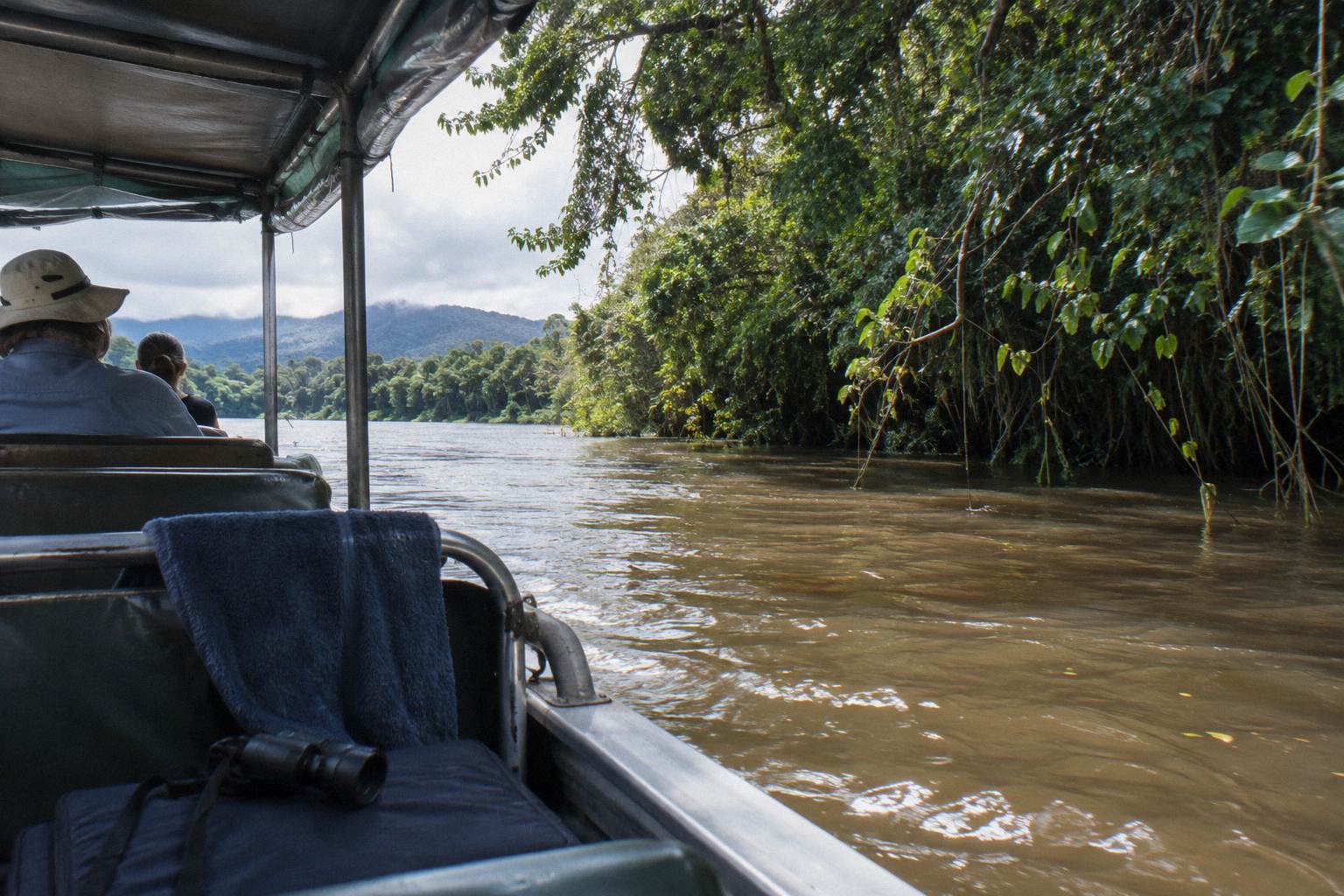
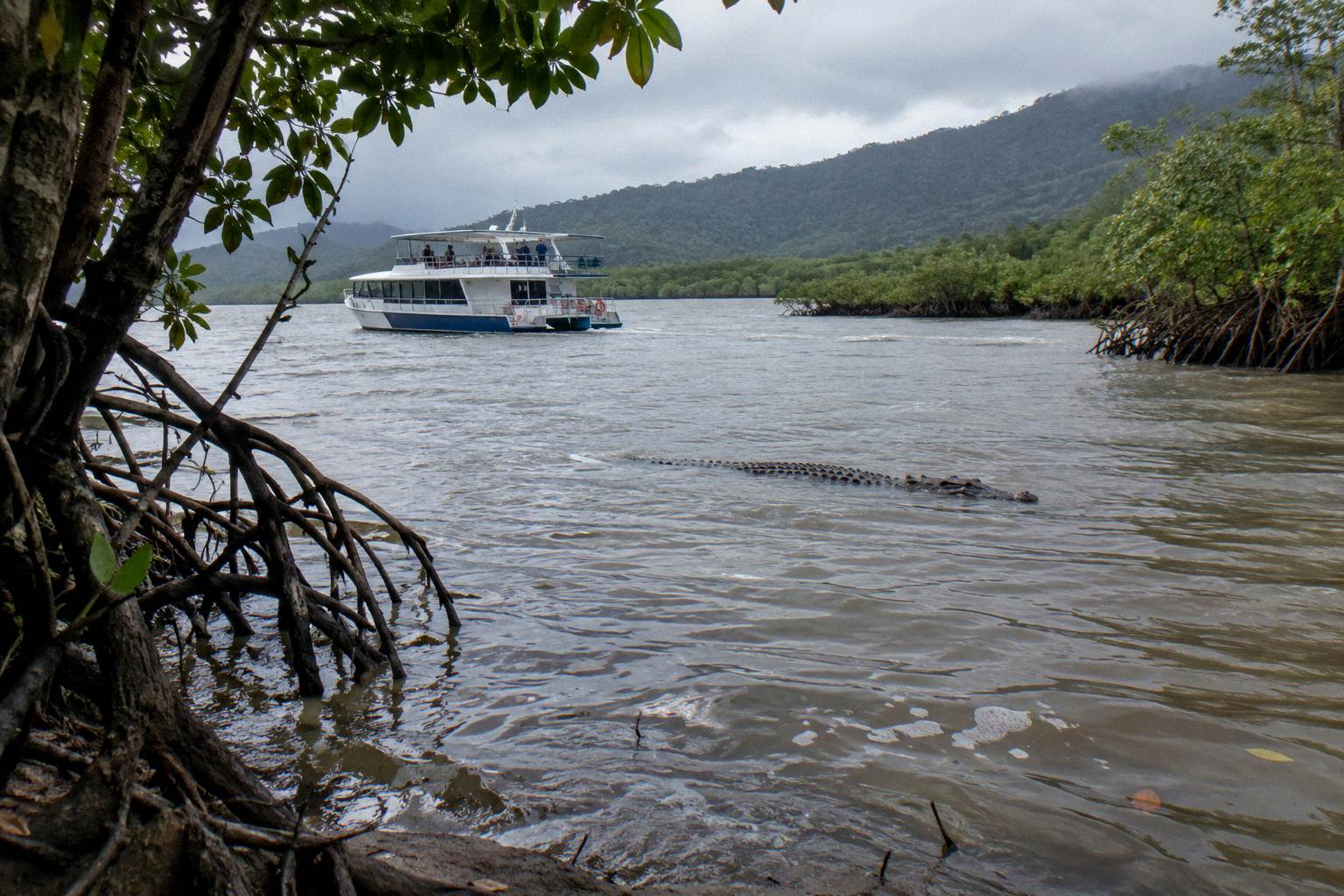
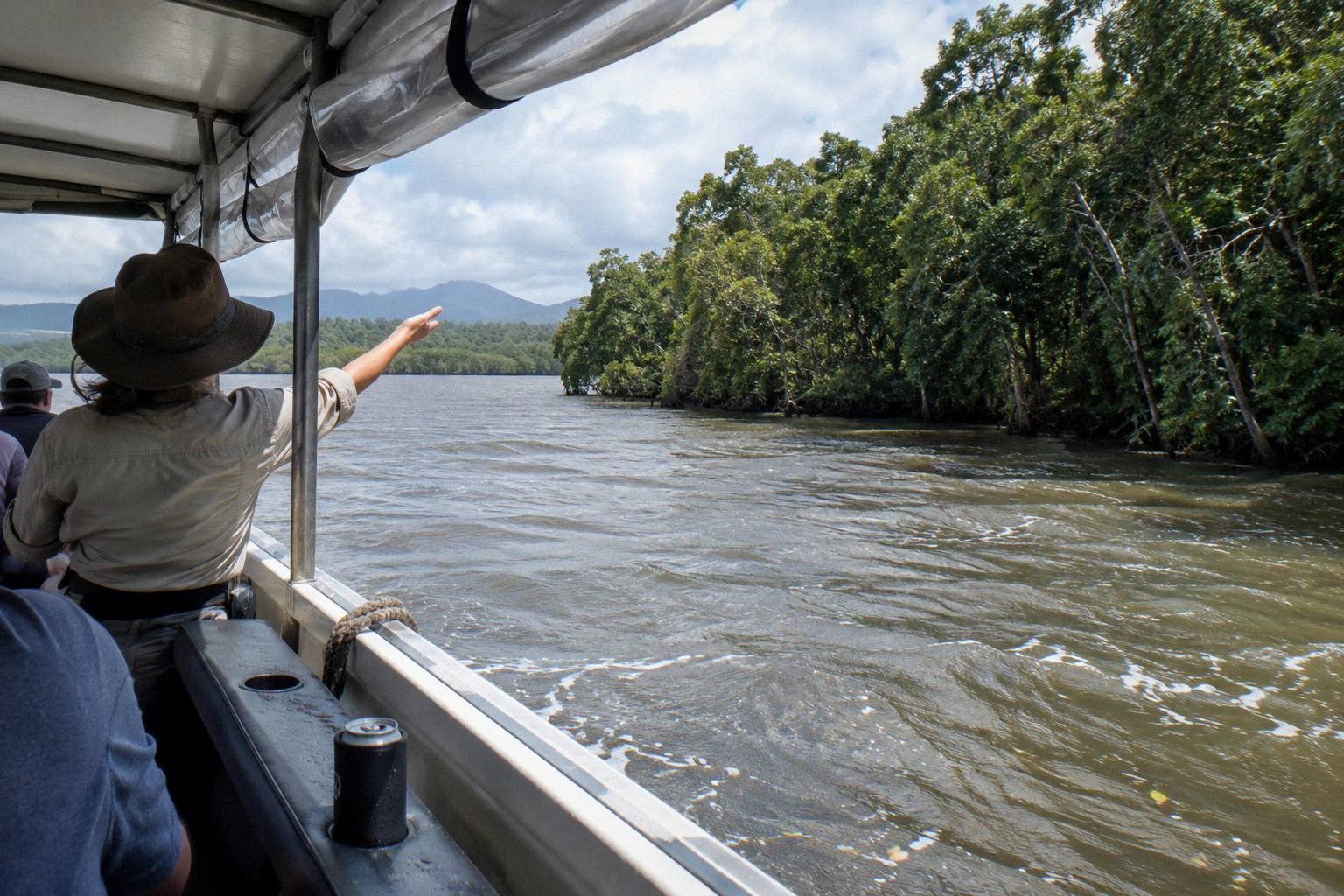
A Daintree River crocodile cruise is a slow, guided boat trip of one to two hours through the tidal reaches of the river, departing from jetties at Daintree Village or the south bank near the ferry. A guide drives and commentates, the boats are covered against sun and rain, and the trip is built around spotting wild estuarine crocodiles and river birds from the water. No cruise here feeds, lures or jumps crocodiles; it is a passive spotting trip.
The rhythm of the trip is simple. You check in at a jetty or kiosk, board a covered vessel with bench or individual seating, and the guide motors out into a river that changes character with the tide. Upper Daintree, the village stretch, is narrower and calmer with overhanging trees; Lower Daintree, the ferry end, is a wide tidal estuary with mangroves, in the words Crocodile Express uses to describe its two routes. The guide slows or cuts the engine wherever a crocodile, a roosting heron or a basking water dragon shows up, and commentary covers the mangroves, the birds, the crocodiles and the river's history.
Everything runs in daylight. Every trip among those sold here runs in the morning, midday, afternoon, dawn or around dusk; no night cruise exists on the river among these operators, so anyone hoping for a spotlight trip will not find one here. Crocodiles themselves are most active at night, dusk and dawn, which is why the dawn and dusk departures carry their own appeal.
| Quick fact | What it is |
|---|---|
| Typical duration | 1 hour on most river boats; 1.5 hours on Lady Douglas; 2 hours on the Daintree Boatman sunset cruise |
| Where you board | Daintree Village jetties, south-bank jetties before the ferry, or Port Douglas marina for Lady Douglas |
| Price range | From US$24 to US$32 per person for a river cruise alone |
| Boat type | Covered, open-sided vessels; Solar Whisper runs a roofed solar-electric boat with no windows |
| Sighting claims | Operators quote 90 to 99 percent on their own trips, always as their own claim, never a guarantee |
| Best months | Dry season, May to November, per operator and climate data |
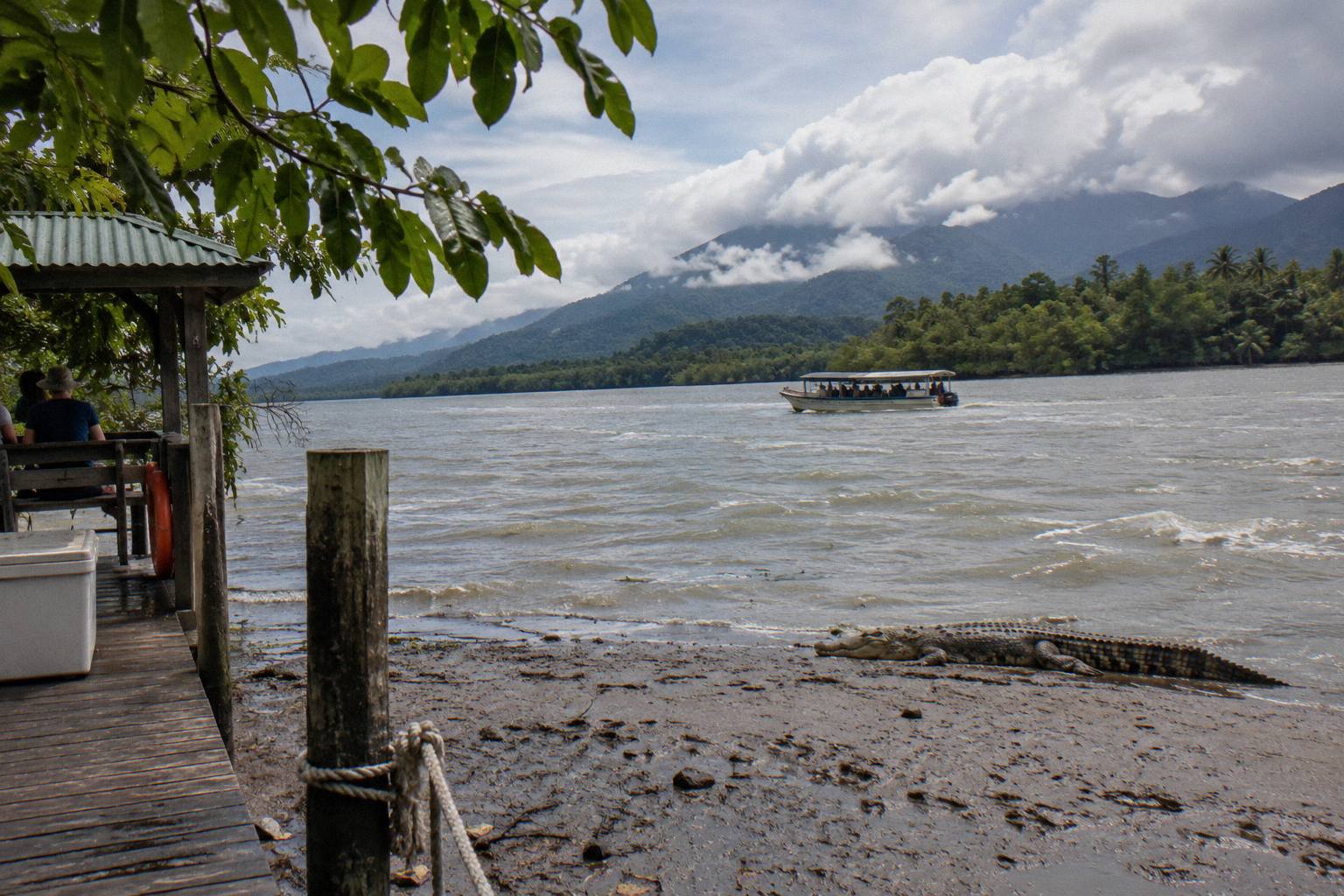
One point worth fixing early: in Queensland this is a spotting trip by law as much as by style. It is an offence to remain within 10 metres of a crocodile basking on a sandbar or riverbank, to disturb one by approaching it in a boat within 10 metres without a reasonable excuse, or to feed one, under the Queensland Government's crocodile rules. Nobody on a licensed river cruise is dangling meat over the side; the crocodiles you see are wild animals behaving as they choose.
What Are The Boats, Guides And Commentary Like?
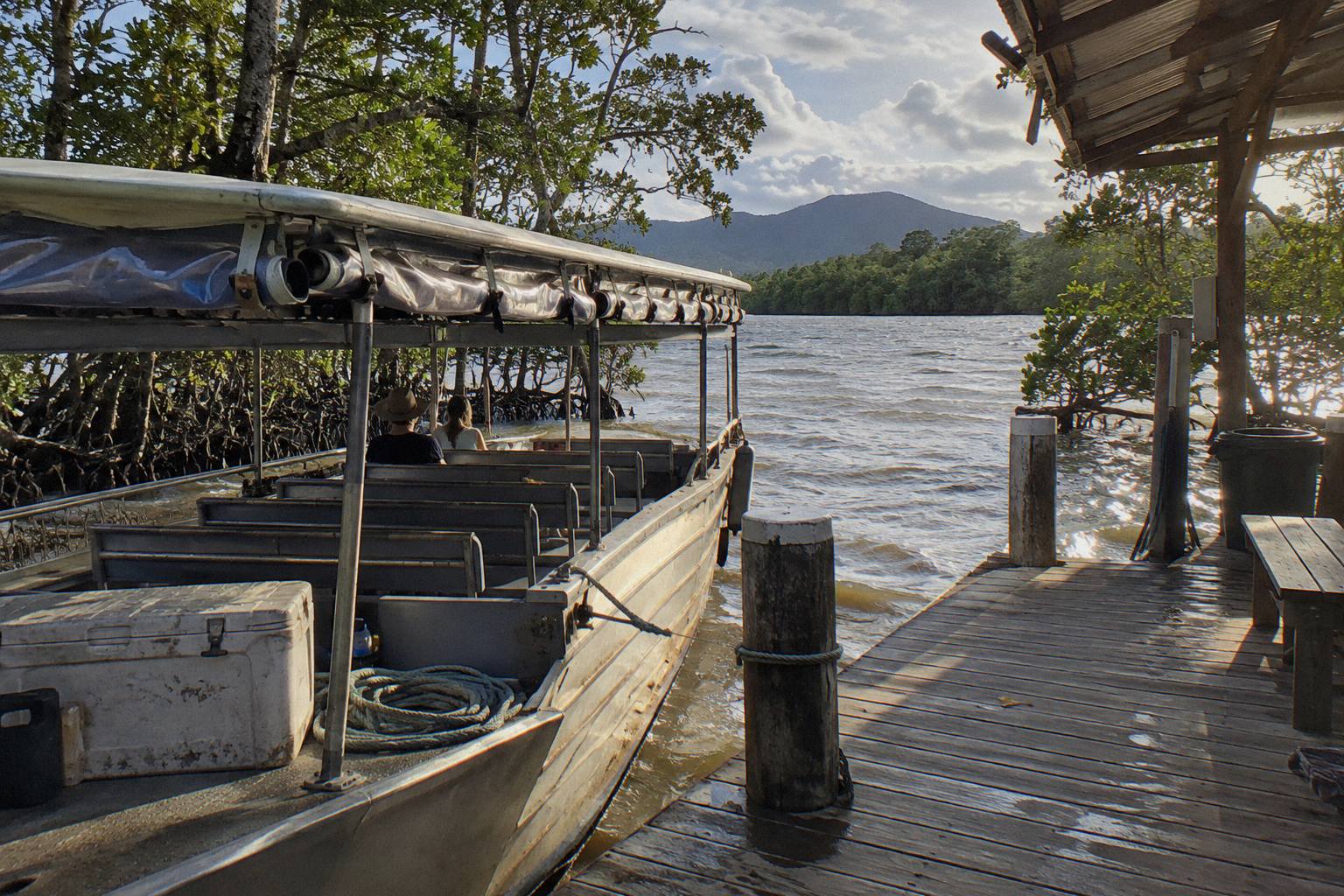
Boats on the Daintree River are covered, open-sided vessels seating small groups, with a guide who both drives and commentates for the full hour. Bruce Belcher's runs from its own private jetty with a guide-led trip, the Cruise Centre uses its own jetty and fleet, and Solar Whisper uses a roofed solar-electric boat with no windows and a maximum of 10 people on its two-hour trips. Commentary is continuous and specific, not a recorded loop.
The boats matter more than you might think, and they differ in ways a photo does not always show. Solar Whisper's vessel is solar-electric and near-silent, which changes how close birds and crocodiles let it drift; it has no windows at all and no toilet on board, with an amenities block beside the office. Bruce Belcher's boats are licensed vessels with clear screens pulled down in heavy rain, reached by a 200 m uncovered walk from its car park, and the operator asks for non-slip shoes. Lady Douglas, on the inlet at Port Douglas, is the largest of the lot: covered seating across the whole back deck, a licensed bar, a toilet, and wheelchair and pram access, with the operator asking you to call ahead about limits.
Guides are the product as much as the boat. Bruce Belcher's has run the river since 1987 and the booking page lists a guide with commentary throughout the cruise; the Daintree River Cruise Centre, a family business since 1987, runs a fully guided wildlife spotting cruise with morning or afternoon tea included; Lady Douglas gives skipper commentary over 1.5 hours on Dickson Inlet. On any of them, the guide is reading the river the whole time: a swirl at a bank, a heron frozen on a root, a nose breaking the surface upstream. When a crocodile is found, the boat holds position so everyone gets a look and a photograph.
Tides shape the hour. Solar Whisper says low tide is usually better because there are more beaches and less water for crocodiles to hide in, and that a summer high tide is the most difficult time; Bruce Belcher's says low tide can enhance the chances but crocodiles are still seen at high tide. Neither promises anything, and both offer a complimentary return trip if no crocodile is seen, each on its own terms. The fuller picture of tide timing sits in how tides affect croc sightings on the Daintree River.
Between the boats there are genuine format differences worth matching to your group. The Cruise Centre trip includes morning or afternoon tea plus use of its displays, picnic areas and bathrooms, which makes it an easy one with children or older travellers. Bruce Belcher's marks its cruise not suitable for pregnant women, people with back problems or people prone to seasickness. If anyone in your party uses a wheelchair, the booking pages for Crocodile Express and the Cruise Centre both say not suitable, and the Cruise Centre's own operator notes say its jetty and boats may not be suitable for those requiring assistance even though the Centre itself is accessible, so call ahead. The full breakdown lives in croc cruise accessibility, mobility and boarding.
Where Does Each Cruise Leave From?
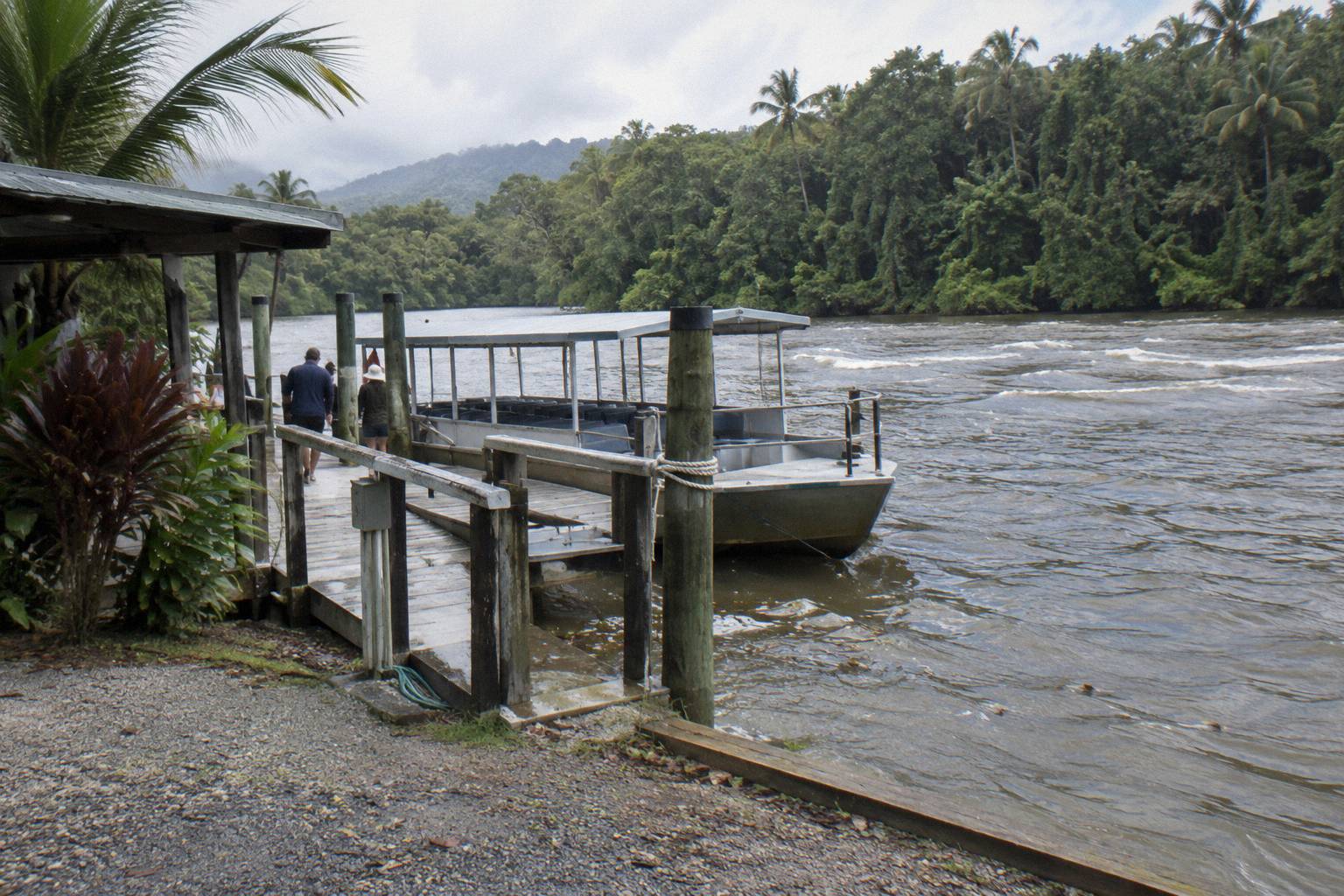
Every Daintree River cruise here boards from Daintree Village or the south bank before the ferry, both reached by self-drive, with no cruise crossing the Daintree Ferry. Lady Douglas is the only scheduled croc cruise that leaves Port Douglas itself, from the Crystalbrook Superyacht Marina at 44 Wharf Street, and it cruises Dickson Inlet, a different waterway from the Daintree River. Tours from Port Douglas with a river cruise included collect you from your accommodation.
The geography decides your morning. Daintree Village is the inland departure: the boat ramp and jetty at Stewart Street, where Crocodile Express Cruise 1, the Cruise Centre's neighbour stretch and the Daintree Boatman ramp all sit. Lower Daintree is the ferry end, where Bruce Belcher's private jetty on Mossman-Daintree Road, Solar Whisper's office about 400 m before the ferry and the Crocodile Express ferry-end kiosk about 300 m before the crossing cluster along the same road. None of them requires the ferry; the Cruise Centre tells its guests not to cross it.
| Trip | Boarding point | Duration | From price | Rating |
|---|---|---|---|---|
| Crocodile Express | Daintree Village plus a second cruise about 300 m before the ferry | 1 hour each | US$27 | 4.6 from 477 reviews |
| Daintree River Cruise Centre | 2914 Mossman-Daintree Rd, south side before the village | 1 hour, extended to 1.5 when the schedule permits | US$24 | 4.6 from 558 reviews |
| Bruce Belcher's | Private jetty, 2856 Mossman-Daintree Rd, Lower Daintree | 1 hour | US$30 | 4.6 from 154 reviews |
| Solar Whisper | Esplanade, Lower Daintree, about 400 m before the ferry | 1 hour | check the booking page | not published |
| Daintree Boatman | Public boat ramp, Stewart Street, Daintree Village | 2 hours | check the booking page | not published |
| Lady Douglas | Crystalbrook Superyacht Marina, Port Douglas | 1.5 hours | US$32 | 4.6 from 571 reviews |
| Half-day Daintree tour | Pickup from Port Douglas accommodation | 5 hours, 12:50pm to 5:30pm | US$121 | 4.5 from 117 reviews |
| Full-day Daintree Experience | Pickup from Port Douglas or Mossman accommodation | 8 hours | US$165 | not published |
Timetables belong to each operator and shift with demand, but the published patterns give a fair picture. The Cruise Centre lists daily departures from 9.30am to 3.30pm; Bruce Belcher's lists cruises from 8:30am to 3pm, open March to January and closed all February; Crocodile Express lists daily cruises from 8.30am to 3.30pm on both routes, every day except 25 December. Lady Douglas schedules four slots, 10.30am, 12.30pm, 2.30pm and 4.30pm, dependent on seasonal demand. The booking calendar decides your real start time, so treat these as the shape of the day rather than a promise. For the drive itself, getting from Port Douglas to the Daintree River covers the route and the timing.
Which Trip Suits You: One Cruise Or A Tour With One Built In?
Buy a single river cruise if you have a car and one clear morning, from US$24 to US$32 per person, or a bundled tour if you would rather not drive: the half-day at US$121 adds hotel pickup and Mossman Gorge, the full day at US$165 adds a waterfall swim, lunch and a guided walk. The Crocodile Express pass is the middle path, two different river cruises on one ticket for one drive.
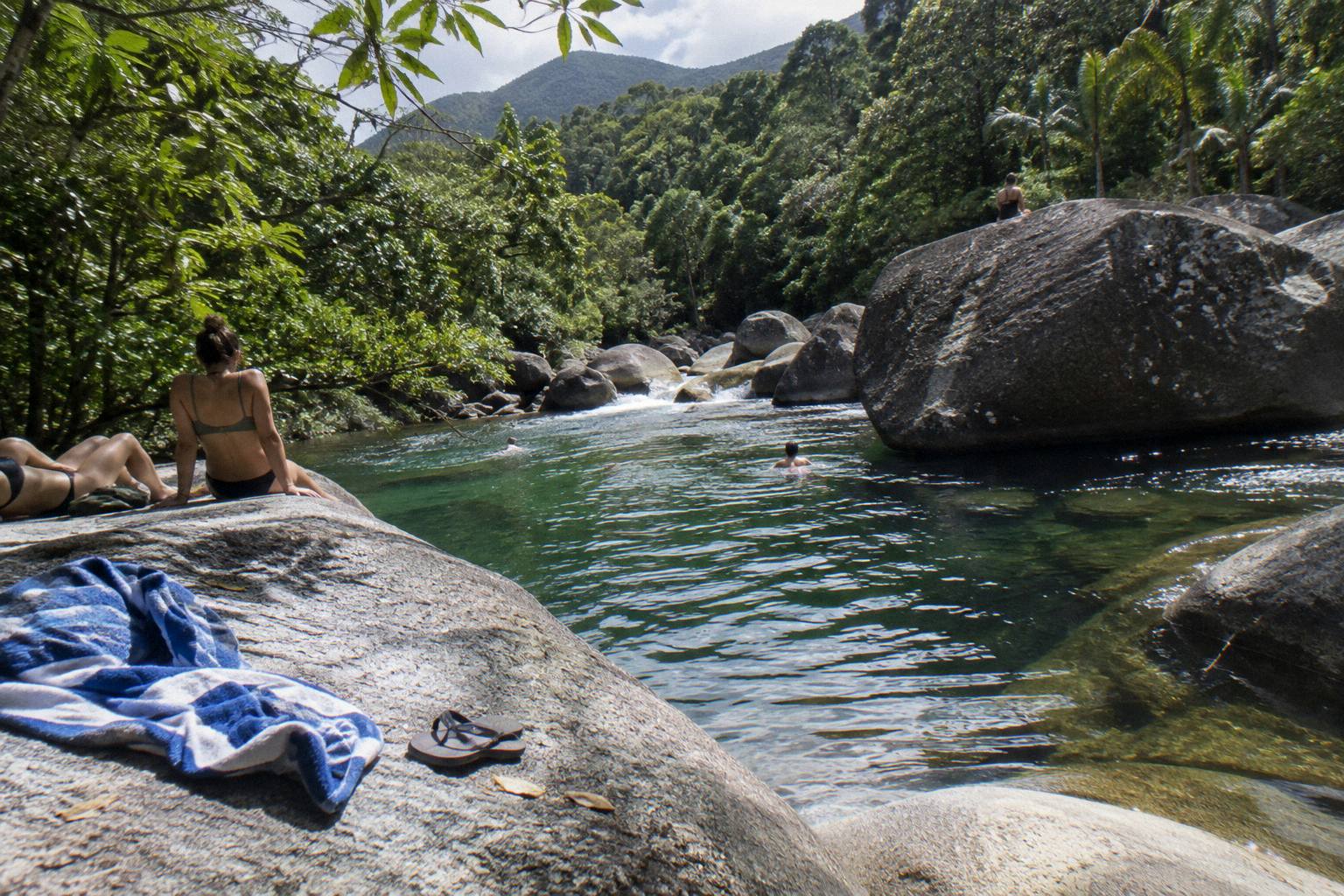
The bundled tours earn their price in logistics more than in the cruise itself. The half-day tour with Daintree Discovery Tours runs 12:50pm to 5:30pm and includes Daintree National Park access, a Mossman Gorge walk and swim, a river cruise with a beer, wine or soft drink and a small snack, chilled water, raincoats, umbrellas and insect repellent, all with pickup and drop-off at Port Douglas accommodation; it is not suitable for children under 3. The full-day Daintree Experience runs 8 hours and adds a swim beneath a secluded waterfall, exclusive access to a secret trail, a gourmet lunch at a rainforest restaurant, tropical fruit tasting and a 1-hour guided walk, with the crocodile search on the river as one stop; it is not suitable for children under 10 or people with mobility impairments.
The Crocodile Express pass rewards a slightly different kind of traveller: the one who wants to see both faces of the river in a single stay. Cruise 1 leaves from the village and covers the narrow, overhung upper stretch; Cruise 2 leaves from the kiosk about 300 m before the ferry crossing and covers the wide mangrove estuary. The booking page says the pass is valid 14 days from first activation, so you can do one cruise, spend the afternoon elsewhere on the south side, and use the second cruise another day. Combo tickets that include Daintree Discovery Centre entry also exist, with the ferry fee extra if you cross. The two passes are compared in more detail in Daintree River cruises compared.
What Can You See Besides Crocodiles?
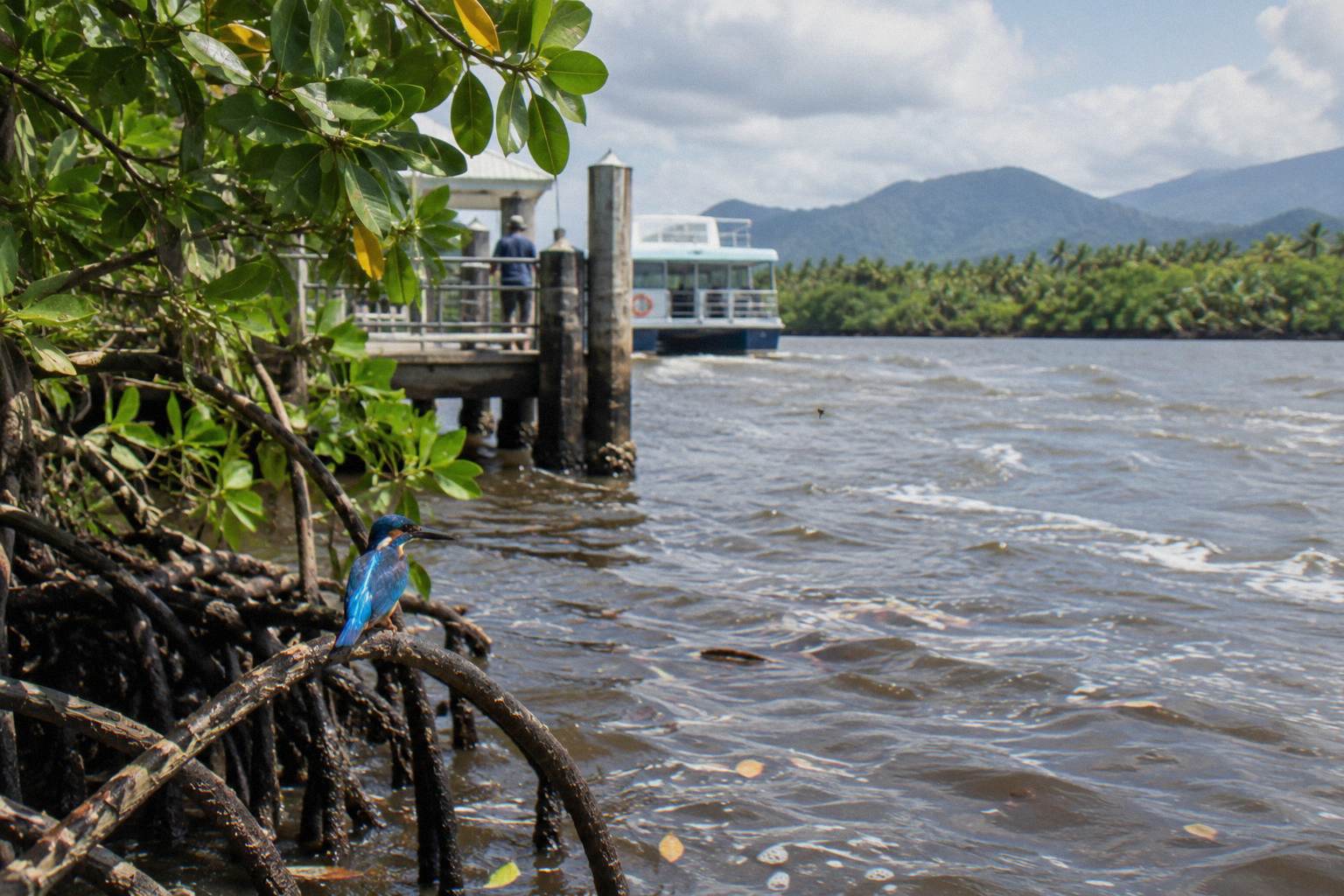
Operators list a wide bird and reptile cast beyond crocodiles: azure, little and sacred kingfishers, great-billed heron, white-bellied sea eagles, ospreys, Papuan frogmouth, shining flycatchers, black bittern, egrets, darters, cormorants, water dragons, amethystine pythons and tree snakes. The Daintree River Cruise Centre says over 280 species have been recorded in the region. None of it is promised; operators list, and what appears depends on the day, the tide and the season.
The birds are, for many returning guests, the reason they come back. Crocodile Express calls the great-billed heron one of Australia's rarest herons, and the Daintree Boatman trip, an owner-run two-hour sunset cruise from the village ramp, is built almost entirely around them: azure, little and sacred kingfisher, Papuan frogmouth, great-billed heron, shining flycatcher and black bittern are its named focus, with common tree snakes and water dragons as the reptile supporting cast. Lady Douglas, on the inlet, names sea eagles, kites, ospreys, kingfishers, herons, waders, crabs, mudskippers and spiders among its sightings. More of these guides are collected on Port Douglas Crocodile Cruises.
| Operator | Wildlife it names on its own trips |
|---|---|
| Crocodile Express | Saltwater crocodiles, water dragons, amethystine pythons, tree snakes, great-billed heron, azure and little kingfisher, white-bellied sea eagles, ospreys, shining flycatchers, egrets, herons, darters, cormorants |
| Daintree Boatman | Azure, little and sacred kingfisher, Papuan frogmouth, great-billed heron, shining flycatcher, black bittern, common tree snake, water dragon |
| Lady Douglas | Sea eagles, kites, ospreys, kingfishers, herons, waders, crabs, mudskippers, spiders, estuarine crocodiles |
| Daintree River Cruise Centre | Over 280 recorded bird species in the region, with the operator naming its cruise the Ultimate Wildlife Experience |
What you actually see moves with the calendar. Daintree Boatman says crocodiles and snakes are best between May and October and much more difficult outside that period. The Queensland Government adds a biological reason to time a trip: courtship begins in October and November, nesting runs December to April, and during the breeding season male crocodiles become very mobile as they look for a mate, so sightings are more prevalent. Male estuarine crocodiles average 3 to 4 metres and 200 to 300 kilograms, females rarely exceed 3.5 metres, and the animals are expected to live 50 years or more in the wild. What animals besides crocodiles you can see unpacks the full cast.
Photography rewards preparation more than luck. A crocodile at eye level on dark water is a contrast problem before it is a distance problem, and the open-sided boats here give you clear sightlines but no stabilisation, so a faster shutter speed beats a long handheld exposure. The overhanging trees of the upper river put kingfishers in dappled shade, which is where the good bird shots live. Photographing crocodiles from a river cruise goes into settings and angles in detail.
When Is The Best Time To Take The Cruise?
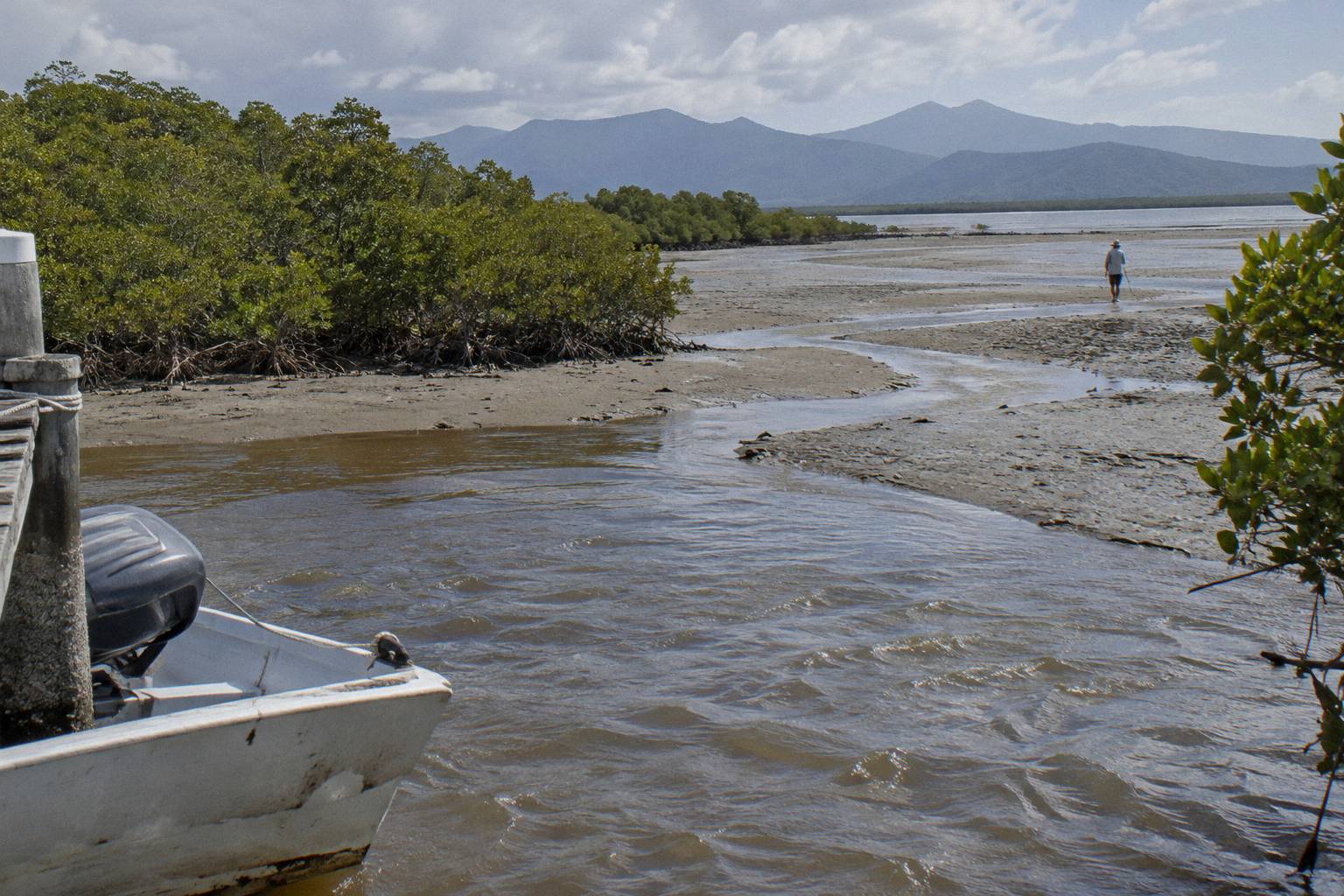
The dry season, May to November, is the strongest window: rainfall drops from a January peak of 395.8 mm to 23 to 32 mm a month between July and September, and operators including Lady Douglas, Bruce Belcher's and Daintree Boatman all tie better crocodile viewing to the cooler, drier months. Time of day matters too, with dawn and dusk the periods crocodiles are most active, and low tide generally better than high tide for spotting.
The climate record is unambiguous about the shape of the year. The Bureau of Meteorology's Port Douglas station, with 52 years of temperatures and 124 years of rainfall behind it, shows the wet months as January to March, each carrying 395 to 429 mm, and the driest as July to September, at 23 to 32 mm. Mean daily maximums still sit at 24.6 to 26.7 degrees across June to September, so the dry season trades the downpours for warm, mild days. Daylight is generous year-round, about 13 hours in January and about 11.2 hours in June and July, with a June sunrise about 6:44am and sunset about 5:54pm for Daintree Village.
Operators put numbers on the seasonal pattern, each speaking only for itself. Bruce Belcher's says crocodiles are spotted on 98 percent of trips in the cooler months of June to September and about 50/50 in the warmer months, which it ties to breeding and the wet season, and it never guarantees a sighting, offering a complimentary return trip if none is seen. Solar Whisper says about a 99 percent success rate, with small crocodiles very reliable and big ones that come and go, and it too offers a free return cruise. Lady Douglas says crocodiles are normally seen on over 90 percent of trips, especially in the dry season from May to November. None of these figures can be merged or generalised, and the month-by-month trade-offs are laid out in the best month for a Daintree croc cruise.
Wet-season trips do still run, with conditions. Solar Whisper operates in rain but not in flood, and the Government warns crocodiles are highly mobile, especially after heavy rain and floods, which cuts both ways for sightings. Whether croc cruises run in the wet season covers what changes between January and March.
What Should You Not Do On The Day?
The common mistakes are avoidable ones: booking a jetty that needs the ferry crossing when none do, arriving without time to check in, expecting a feeding show, dressing for a beach day, and assuming every cruise is wheelchair accessible. The Cruise Centre asks guests to arrive 15 minutes early and check in at reception, and Bruce Belcher's involves a 200 m uncovered walk in non-slip shoes.
A short table of the day's practical traps:
| Mistake | What happens instead |
|---|---|
| Planning around the Daintree Ferry | Every covered jetty sits on the south side or in the village; no cruise needs the crossing |
| Arriving at departure time | The Cruise Centre asks for check-in 15 minutes early; village parking fills in peak season |
| Expecting crocodiles to be lured in | Feeding or deliberately disturbing a crocodile is an offence in Queensland; boats spot, they do not feed |
| Wearing thongs on the river | Bruce Belcher's requires non-slip shoes; jetties and ramps are wet timber and concrete |
| Assuming cancellation everywhere | Free cancellation up to 24 hours applies to six trips; Solar Whisper and Daintree Boatman say check the booking page |
| Leaving arms and legs outside the boat | Be Crocwise advice is to keep limbs inside and use the boat as a barrier |
On accessibility specifically, the booking pages for Crocodile Express and the Cruise Centre both mark their trips not suitable for wheelchair users, and the Cruise Centre says its jetty and boats may not be suitable for those requiring assistance even though the Centre itself is accessible, so calling ahead is the reliable move for any mobility question.
The safety framing deserves a straight sentence. Be Crocwise advice from the Queensland Government says to stay more than 5 metres from the water's edge, be extra cautious at night, dusk and dawn, and treat no waterway within crocodile range as crocodile free; on the water, keep arms and legs inside the boat and avoid kayaks and paddleboards. On a licensed cruise with a guide, the boat is the barrier, which is the entire point of seeing these animals from one. Croc cruise safety, boats and wild crocs covers the same ground for nervous travellers, and no cruise here will ever tell you anywhere is safe to swim.
Two smaller traps close the list. February travellers should check Bruce Belcher's closure before building a day around its jetty, since the operator shuts for the entire month plus Christmas Day and New Year's Day. And families weighing a contained wildlife park against a wild river should know the formats differ completely: a park is fences, boardwalks and scheduled shows, while a river cruise is weather, tide and wild animals on their own terms, a comparison worked through in a croc cruise versus Hartleys Crocodile Adventures.
Port Douglas Departure Or Self-Drive To The River?
Stay in Port Douglas without a car and your workable options are Lady Douglas, which leaves the marina at 44 Wharf Street and cruises Dickson Inlet for 1.5 hours from US$32, or a bundled tour that collects you, from US$121 or US$165. With a car, drive the 45 minutes to the village or the ferry end and pay US$24 to US$32 for the river itself.
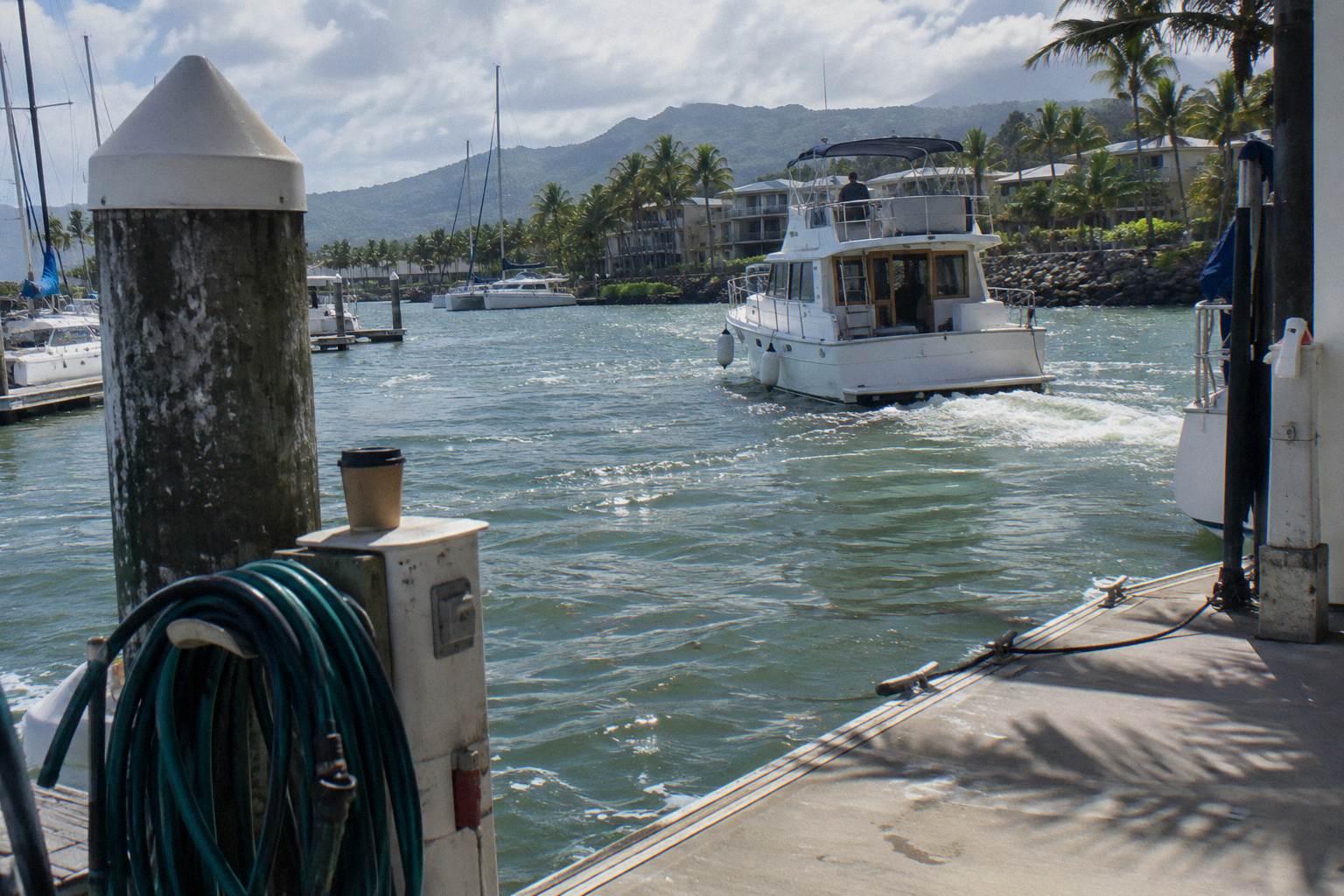
Lady Douglas is a genuinely different outing from the river boats, not a lesser substitute. It cruises Dickson Inlet, a mangrove inlet at Port Douglas and a different waterway from the Daintree, over 1.5 hours, several kilometres of mangrove channels, then the inlet entrance and the Port Douglas waterfront, with substantial time on board spent searching for wild estuarine crocodiles, as the operator puts it. The booking page lists a bar beverage and snacks, skipper commentary, children's colouring sheets, wheelchair access, and a 4.6 rating from 571 reviews, the largest review pool among the cruises here. Family run since 1989, it is also the calmest-water option of the lot, useful with toddlers or anyone unsteady on a gangplank.
The self-drive path buys you the Daintree River itself, the narrower upper stretch or the wide lower estuary, and the freedom to stack a cruise with the village, a lunch stop or the ferry run to Cape Tribulation afterwards. The trade is the drive, the jetty walk, and holding your own timetable against operator schedules. For travellers basing further south, choosing a croc cruise from Cairns or Port Douglas weighs the extra hour of driving, Cairns sitting about 1.5 hours from Daintree Village by Solar Whisper's reckoning. Whichever base you choose, the pairing of jetty and boat matters more than the price gap between them, and the full field of options, including the bird-focused sunset trip and the two-route pass, sits in Daintree crocodile tour options.
Common Questions About Daintree River Wildlife Trips
How Long Is A Daintree River Crocodile Cruise?
Most river cruises run 1 hour: Crocodile Express, the Cruise Centre, Bruce Belcher's and Solar Whisper. Lady Douglas runs 1.5 hours on Dickson Inlet, and the Daintree Boatman sunset cruise runs 2 hours. The Cruise Centre extends its cruises to 1.5 hours when its schedule permits.
Will I Definitely See A Crocodile?
No cruise guarantees a sighting. Bruce Belcher's says crocodiles are spotted on 98 percent of trips in the cooler months, Solar Whisper says about a 99 percent success rate, and Lady Douglas says over 90 percent, each speaking only for itself. Bruce Belcher's and Solar Whisper both offer a complimentary return cruise if none is seen.
Do I Need To Take The Daintree Ferry To Reach A Cruise?
No. Every Daintree River cruise covered here departs from the south side of the river or from Daintree Village, and none crosses the ferry. The Daintree River Cruise Centre tells its guests not to cross the ferry at all.
What Is The Cheapest Daintree River Crocodile Cruise?
The Daintree River Cruise Centre wildlife cruise starts from US$24 per person and includes morning or afternoon tea. Crocodile Express starts from US$27 and covers two cruises, and Bruce Belcher's starts from US$30. Solar Whisper and Daintree Boatman prices are on the booking page.
Can I Do A Crocodile Cruise Without A Car From Port Douglas?
Yes. Lady Douglas leaves the Crystalbrook Superyacht Marina in Port Douglas itself, and the half-day Daintree tour at US$121 collects from Port Douglas accommodation and includes a river cruise plus Mossman Gorge, and the full-day Daintree Experience at US$165 collects from Port Douglas or Mossman.
Are The Cruises Suitable For Children And Wheelchair Users?
Most river cruises welcome children; Lady Douglas lists children's colouring sheets and infant lap seating, while the half-day tour excludes children under 3 and the full-day Daintree Experience excludes children under 10. Wheelchair access is listed for Lady Douglas only; the Crocodile Express and Cruise Centre booking pages mark their trips not suitable for wheelchair users, so call the operator ahead for any mobility question.