
Croc Cruise Safety: How Boats And Guides Handle Wild Crocodiles
Wild estuarine crocodiles grow to over 4 metres, and every cruise here operates in their natural range. Here is what the boats, the guides and Queensland law actually do about that, and what the operators themselves say about the trips.
Short answer
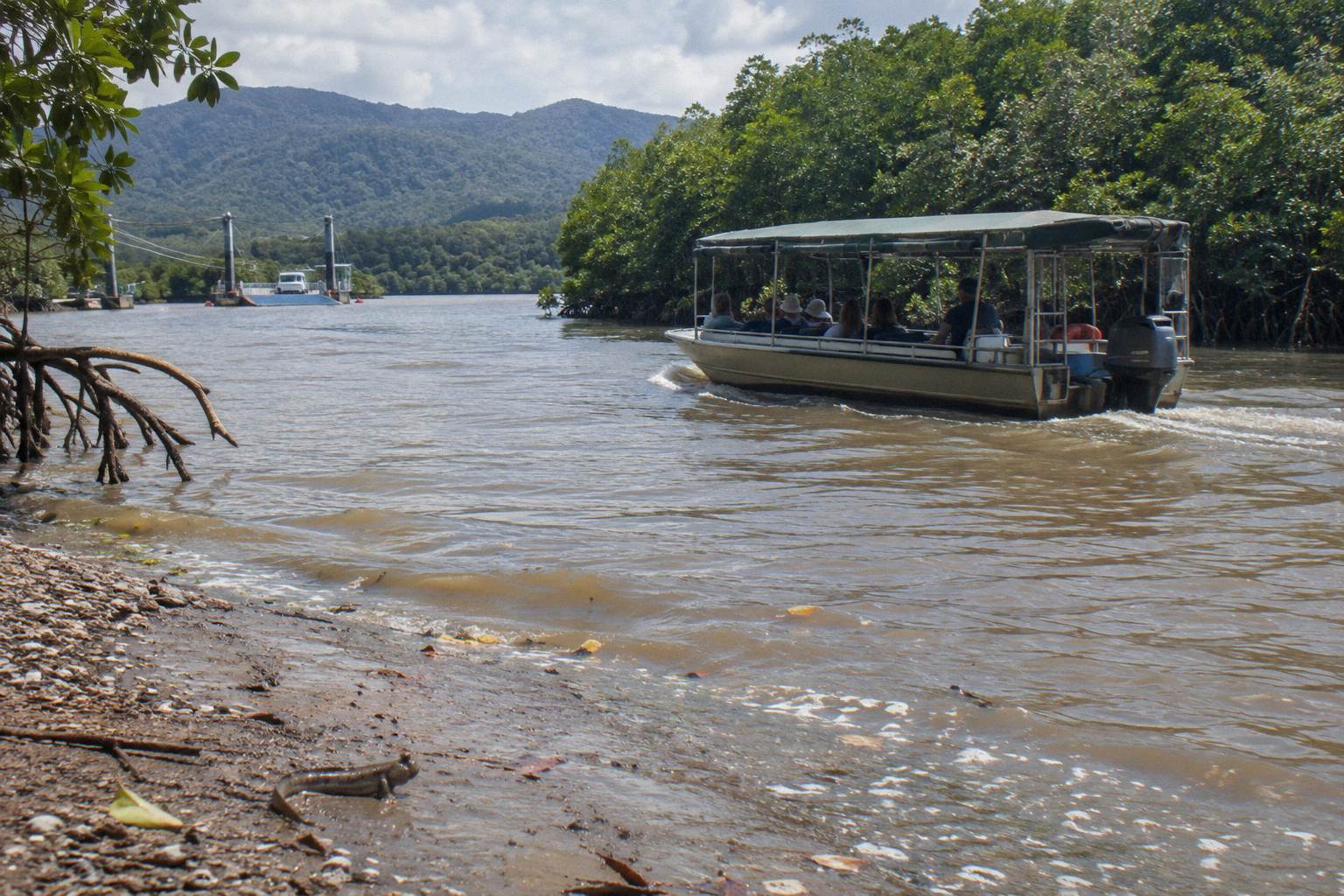
Croc cruises near Port Douglas run on calm water in enclosed or covered boats with a guide on board, and Queensland law forbids boats from approaching within 10 metres of a crocodile. Operators state their own practices: clear screens in heavy rain at Bruce Belcher's, a covered back deck and wheelchair access at Lady Douglas, and calm-water routes throughout. No cruise here offers a guarantee of a sighting, and every booking page lists free cancellation up to 24 hours before start.
Estuarine crocodiles occur in Queensland between Gladstone and Cape York Peninsula, and throughout the Gulf of Carpentaria, and they are most commonly seen in the tidal reaches of rivers, which is exactly where the croc cruises from Port Douglas and Daintree Village operate. That is not a reason to stay ashore. It is the reason the trips exist, and the reason they are run the way they are: enclosed or covered boats, a guide or skipper on board, and a legal framework that keeps vessels and animals apart. The Wet Tropics of Queensland, inscribed on the UNESCO World Heritage List in 1988, covers about 895,000 hectares and holds some of the oldest continuously surviving tropical rainforests on Earth, and the crocodiles in its rivers are a protected, managed part of that system.
For a fuller picture of how a trip runs hour by hour, the companion guide on Port Douglas Crocodile Cruises walks through the departure points, and what to expect on a Daintree River crocodile cruise covers the day itself. Here the focus is narrower: the boats, the handling, the law, and what nervous readers actually want to know before they step aboard.
How Safe Are Croc Cruises Around Wild Crocodiles?
Every cruise covered here travels calm, slow water in a boat with a guide or skipper on board, in daylight hours only, on rivers and inlets these operators have worked since 1987 and 1989 respectively. Lady Douglas has cruised Dickson Inlet since 1989, while Bruce Belcher's and the Daintree River Cruise Centre have each operated on the Daintree since 1987. No night cruise exists among the trips covered here: every one runs in daylight, at dawn or around dusk. Safety on these trips comes from three layers stacked together: the boat and its handling, the guide's local knowledge of where crocodiles rest and bask, and Queensland law, which restricts how close a vessel may go.
It helps to be clear about what a croc cruise is and is not. In Queensland deliberately disturbing or feeding a crocodile is an offence, so a river cruise here is a spotting trip, not a feeding show. Nothing is thrown to the animals, nothing is dangled from the boat, and no operator here calls crocodiles to the vessel. The boat drifts or moves slowly along the bank, the guide scans the water and the sandbars, and passengers watch from a raised, enclosed deck.
That distinction is the single most useful thing a nervous first-timer can hold onto. The trips run in the animal's territory, on its terms, and the boat's job is to be a quiet, predictable object on the water rather than a pursuit vehicle. A crocodile basking on a bank is not being cornered; it is being observed from a distance it can leave whenever it chooses, which is precisely why the animals keep using the same banks trip after trip, season after season.
| Question | The short answer |
|---|---|
| Do the boats get close to crocodiles? | Queensland law prohibits approaching within 10 metres of a crocodile by boat without reasonable excuse |
| Are the trips enclosed? | Operators state covered seating (Lady Douglas), a roofed solar boat (Solar Whisper) and clear rain screens (Bruce Belcher's) |
| Do cruises run at night? | No, every trip covered here runs in daylight, dawn or around dusk |
| Is swimming involved? | No croc cruise includes swimming; the Be Crocwise advice is to stay more than 5 metres from the water's edge |
| What if no crocodile appears? | Bruce Belcher's and Solar Whisper each offer a complimentary return trip if none is seen, on their own terms |
| Can I cancel if I change my mind? | Free cancellation up to 24 hours before start is stated for Lady Douglas, Crocodile Express, Cruise Centre, Bruce Belcher's and the two day tours |
What The Boats And Operators Actually Do On The Water
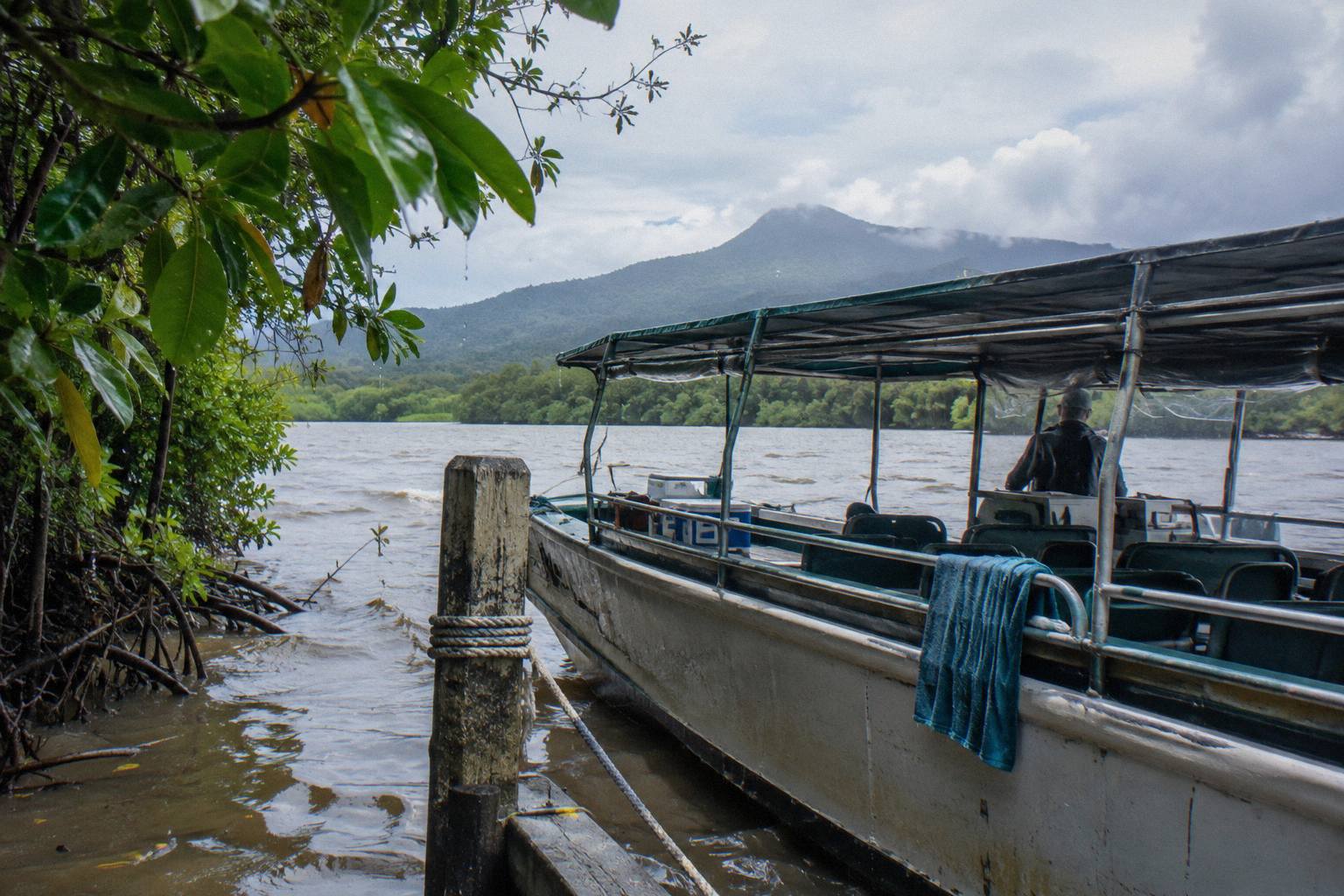
Each operator states its own setup: Lady Douglas has covered seating across the whole back deck, a licensed bar, a toilet and wheelchair and pram access; Bruce Belcher's pulls clear screens down in heavy rain and requires non-slip shoes for a 200 metre uncovered walk to its boats; Solar Whisper runs a roofed solar-electric boat with no windows and no toilet on board. These are not incidental details. On a slow river cruise the boat is the barrier between you and the animal, and Queensland's own boating advice says exactly that: keep arms and legs inside the boat and use the boat as a barrier. A covered or enclosed vessel makes that advice easy to follow, which is one reason the format suits nervous first-timers and families alike.
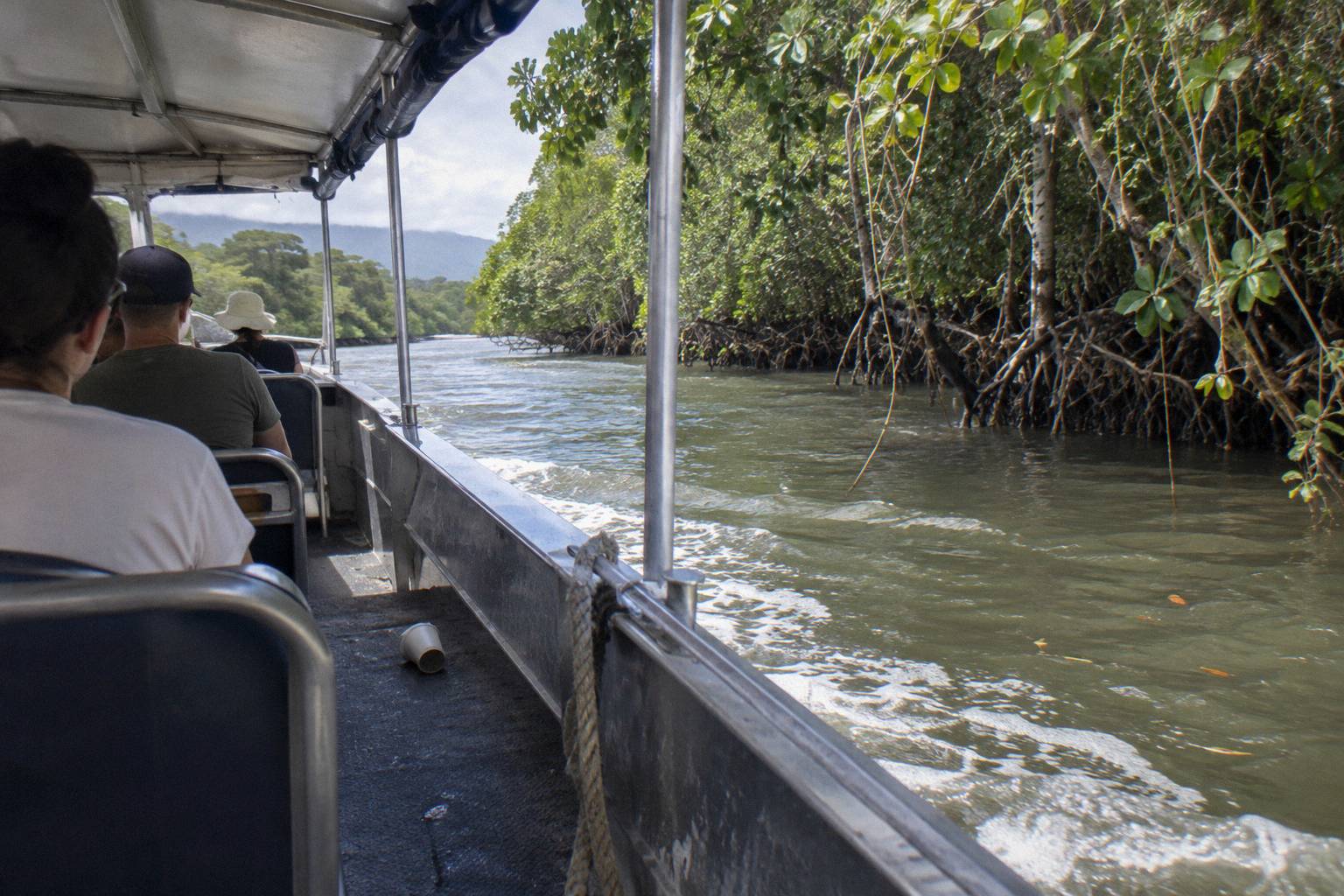
The handling matters as much as the hardware. Guides on these rivers work the same stretch of water daily and read it the way a farmer reads a paddock: which bank holds sun in the morning, which log a big male favours, where the small crocodiles sit at low tide. Bruce Belcher's says low tide can enhance the chances of a sighting but crocodiles are still seen at high tide, and Solar Whisper says low tide is usually better because there are more beaches and less water for a crocodile to hide in. That is a guide steering a schedule around animal behaviour, not a boat chasing an animal. The operator's commentary covers mangroves, crocodiles and local history, and on Lady Douglas substantial time on board is spent searching, quietly, along the mangrove channels of Dickson Inlet.
If the covered-boat format appeals, the Lady Douglas River Cruise is the one trip that leaves Port Douglas itself, boarding at the Crystalbrook Superyacht Marina for a 1.5 hour cruise with a 4.6 rating from 571 reviews and tickets from US$32 per person.
| Operator | Boat and boarding details the operator states |
|---|---|
| Lady Douglas | Covered seating across the whole back deck, licensed bar, toilet, wheelchair and pram access, call ahead for limits; boarding at Crystalbrook Superyacht Marina |
| Bruce Belcher's | Own jetty with a 200 m uncovered walk to the boats; clear screens pulled down in heavy rain; non-slip shoes required; complimentary tea or coffee |
| Daintree River Cruise Centre | Fully guided wildlife spotting cruise from its own jetty; arrive 15 minutes early and check in at reception; tea included |
| Solar Whisper | Roofed solar-electric boat with no windows; maximum 10 people; amenities block beside the office; operates in rain, not in flood |
| Daintree Boatman | Two-hour dawn and dusk cruises from the public boat ramp at Stewart Street, Daintree Village |
The Queensland Rules That Keep Boats And Crocodiles Apart
Queensland law makes it an offence to remain within 10 metres of a crocodile basking on a sandbar or riverbank, to disturb one by approaching it in a boat or vehicle within 10 metres without a reasonable excuse, or to feed one. The 10 metre line is a legal distance. Separately, the Queensland Government's Be Crocwise advice tells people to stay more than 5 metres away from the water's edge, to be extra cautious at night, dusk and dawn, and to remember that no waterway within crocodile natural range can be considered crocodile free. Cruise boats operate on the water under the 10 metre rule; the 5 metre line is advice for people on land. The two numbers serve different purposes and are never interchangeable.
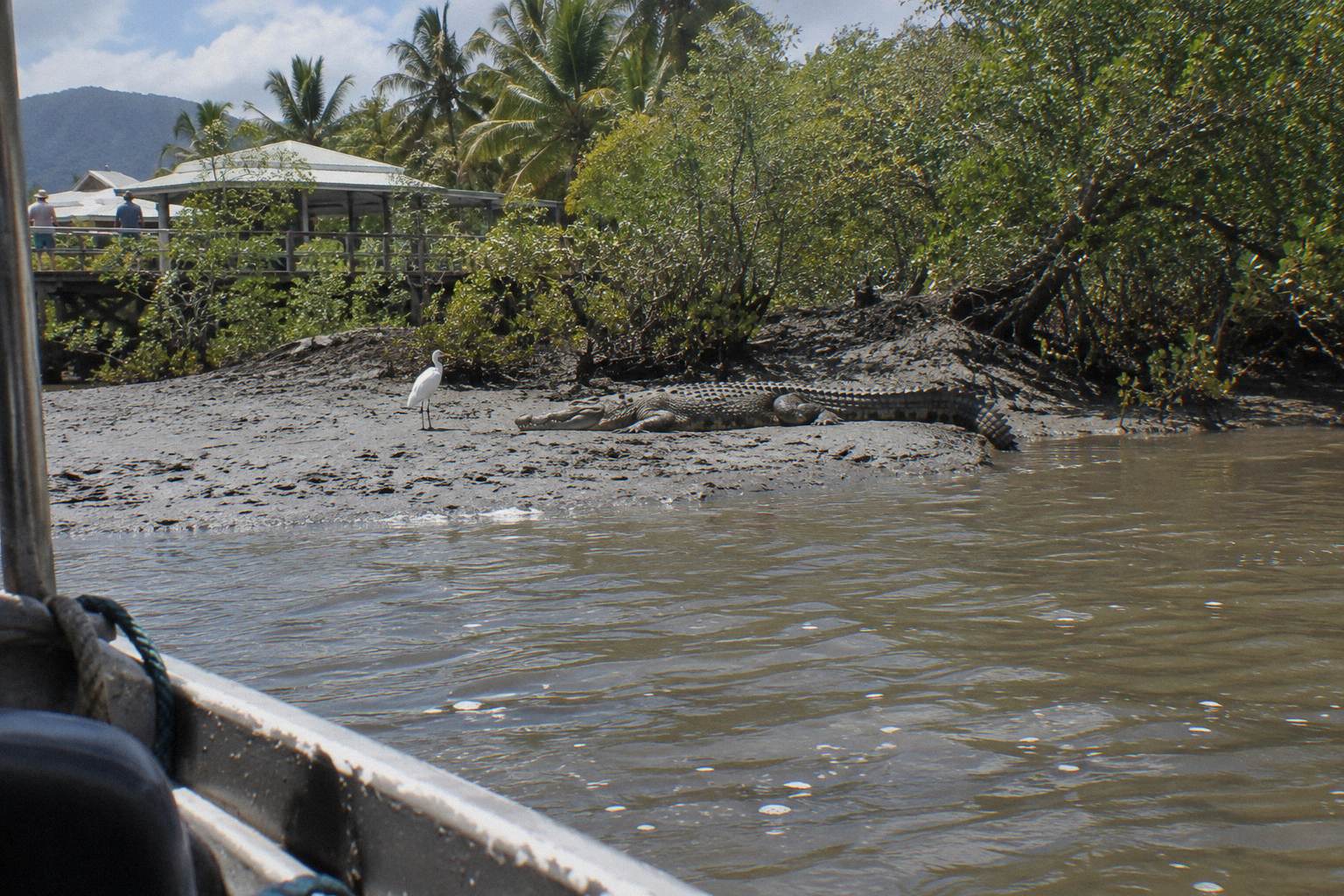
The Queensland Government also advises boaters to keep arms and legs inside the boat, use the boat as a barrier, and avoid kayaks, paddleboards and other small craft. A purpose-built cruise vessel is the opposite of a paddleboard: high-sided, slow, guide-driven and, on most of these trips, covered. Crocodiles are most active at night, dusk and dawn, and are very mobile during and after high tides and heavy rain, which is why every departure covered here sits inside daylight and why the two Daintree Boatman dawn and dusk trips are still full daylight affairs in a state with no daylight saving.
For the wider wildlife picture rather than the safety one, the birds, snakes and crocodiles of a Daintree River wildlife cruise lists what operators name on their own trips, from azure kingfishers to amethystine pythons.
| Line or rule | What it means | Who it applies to |
|---|---|---|
| 10 metres from a basking crocodile | It is an offence to remain within 10 m of a crocodile on a sandbar or riverbank | Everyone, including boats |
| 10 metres approaching by boat or vehicle | It is an offence to disturb a crocodile by approaching within 10 m without reasonable excuse | Everyone |
| Feeding a crocodile | It is an offence in Queensland | Everyone |
| More than 5 metres from the water's edge | Be Crocwise safety advice on land | People on riverbanks |
| Arms and legs inside the boat | Be Crocwise boating advice | Everyone on the water |
When Crocodiles Are Active, And Why Trips Run When They Do
Crocodiles are most active at night, dusk and dawn, and very mobile during and after high tides and heavy rain, according to the Queensland Government, while the operators each publish their own season patterns: Bruce Belcher's says crocodiles are spotted on 98 percent of trips in the cooler months of June to September and about 50/50 in the warmer months. Courtship begins in October and November and nesting runs December to April, and during the breeding season male crocodiles become very mobile as they look for a mate, so sightings are more prevalent. That is government wording on why the shoulder season can be productive on the water. It is also, incidentally, why a calm daylight cruise with a guide is a more sensible way to see a crocodile than walking a riverbank alone.
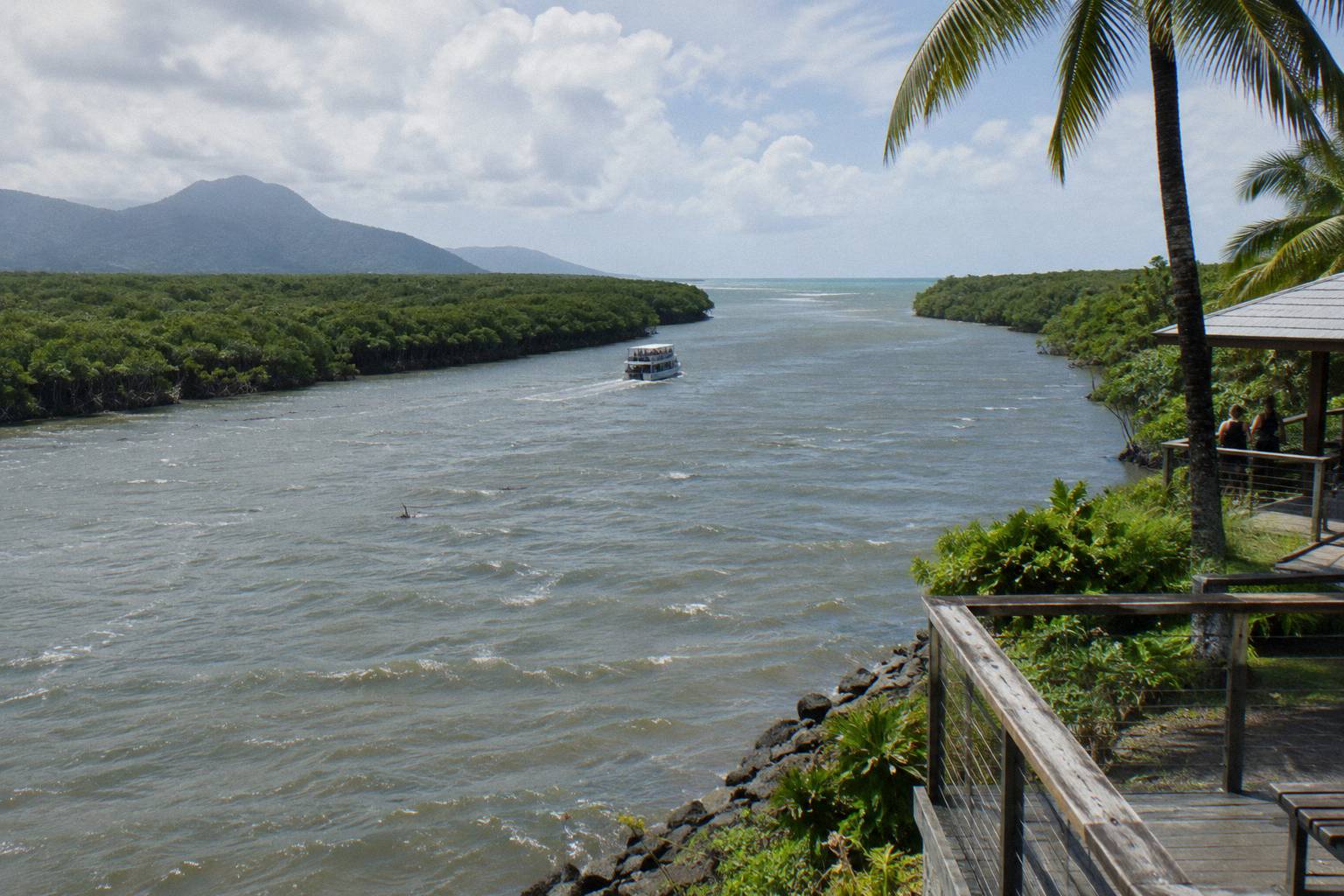
The climate shapes the calendar. Bureau of Meteorology averages from the Port Douglas Warner Street station, drawn from 52 years of temperatures and 124 years of rainfall, put the wet months at January to March with 395 to 429 mm each, and the driest at July to September with 23 to 32 mm. Solar Whisper says that in the warmer months the river temperature rises and crocodiles are harder to see, and Daintree Boatman says crocs and snakes are best between May and October. None of that is a safety warning, it is simply animal behaviour, and the operators plan their schedules around it rather than against it.
Daylight length changes only modestly this close to the equator. A computed solar table for Daintree Village puts sunrise at about 5:58am in January and about 6:44am in June, with sunset ranging from about 5:54pm in June to about 6:57pm in January, giving between roughly 11.2 and 13.1 hours of daylight across the year. Every cruise departure covered here sits comfortably inside that window, and the two Boatman dusk trips finish before the light is gone rather than chasing animals into the hours when the Government says crocodiles are most active.
| Month | Mean max C | Mean min C | Mean rainfall mm |
|---|---|---|---|
| January | 30.3 | 23.7 | 395.8 |
| April | 28.3 | 21.5 | 203.3 |
| July | 24.6 | 16.8 | 26.4 |
| October | 28.3 | 20.8 | 53.1 |
| December | 30.3 | 23.3 | 213.5 |
For choosing dates, the best month for a Daintree croc cruise unpacks the season question in full, and tides and croc sightings on the Daintree River covers what the operators say about low tide versus high.
The Daintree River Cruise Centre is a steady choice in this frame: a family business since 1987 on the south side of the river, a 4.6 rating from 558 reviews, tickets from US$24 per person, and a morning or afternoon tea included with the guided cruise.
Mistakes Nervous Passengers Make Before Boarding
The most common mistakes are all made before the boat leaves the jetty: wearing thongs on a 200 metre uncovered walk at Bruce Belcher's, booking a Daintree trip and planning to cross the ferry when the cruises depart from the south side, expecting a guarantee no operator gives, and reading the 5 metre land advice as a boat rule. None of these are dangerous in themselves, but each one turns a calm trip into an anxious one, and each is easy to avoid with five minutes of planning. Bruce Belcher's asks for non-slip shoes because its jetty walk is uncovered; the Daintree River Cruise Centre tells guests not to cross the ferry, and its own address on the Mossman to Daintree Road is before the crossing.
Practical preparation looks like this. Check where your trip boards: only Lady Douglas leaves from Port Douglas itself, at the Crystalbrook Superyacht Marina, 44 Wharf Street; the Daintree operators board from the south side of the river or from Daintree Village, which Solar Whisper's own FAQ puts at about 45 minutes from Port Douglas and about 30 minutes from Mossman. Arrive early where the operator says so, which is 15 minutes at the Cruise Centre. Expect weather: Bruce Belcher's pulls clear screens down in heavy rain, Solar Whisper operates in rain but not in flood. And go with the stated start times rather than assumptions: the booking calendar decides the real start for every cruise here, with the half-day Daintree tour fixed at 12:50pm to 5:30pm.
A second layer of preparation is knowing who each trip suits. Bruce Belcher's booking page lists pregnant women, people with back problems and people prone to seasickness among those its cruise is not suitable for. The half-day Daintree tour is not suitable for children under 3, and the full-day Daintree Experience excludes children under 10 and people with mobility impairments. The Daintree River Cruise Centre welcomes assistance animals, though it asks passengers to call first, and notes that while the Centre itself is wheelchair accessible, its jetty and boats may not suit everyone requiring assistance. None of these are judgements about the water; they are plain statements about boats, walkways and seating, and reading them before booking removes the last surprise from the day.
| Mistake | What to do instead |
|---|---|
| Thongs or smooth-soled shoes | Non-slip shoes, required at Bruce Belcher's for the uncovered jetty walk |
| Planning to cross the Daintree Ferry for a cruise | The cruises covered here depart from the south side or Daintree Village and do not cross the ferry |
| Expecting a guaranteed crocodile | No operator guarantees a sighting; two offer a complimentary return trip if none is seen |
| Booking without checking boarding point | Only Lady Douglas leaves Port Douglas; the Daintree trips board at village or south-side jetties |
| Leaning out for a photo | Keep arms and legs inside the boat, per Queensland boating advice |
What The Operators Say About Sightings, In Their Own Words
Sighting figures belong to the operators alone and are never guarantees: Bruce Belcher's says 98 percent of trips in the cooler months and about 50/50 in the warmer months; Solar Whisper says about a 99 percent success rate but we cannot 100 percent guarantee; Lady Douglas says crocodiles are normally seen on over 90 percent of trips, especially in the dry season from May to November. Each of those statements carries an if-no-show policy at the operator that states it. Bruce Belcher's offers a complimentary return trip if none is seen, and so does Solar Whisper. The Daintree River Cruise Centre takes a different line entirely: while sightings vary, it says, it hopes every guest leaves with a deeper love for the river.
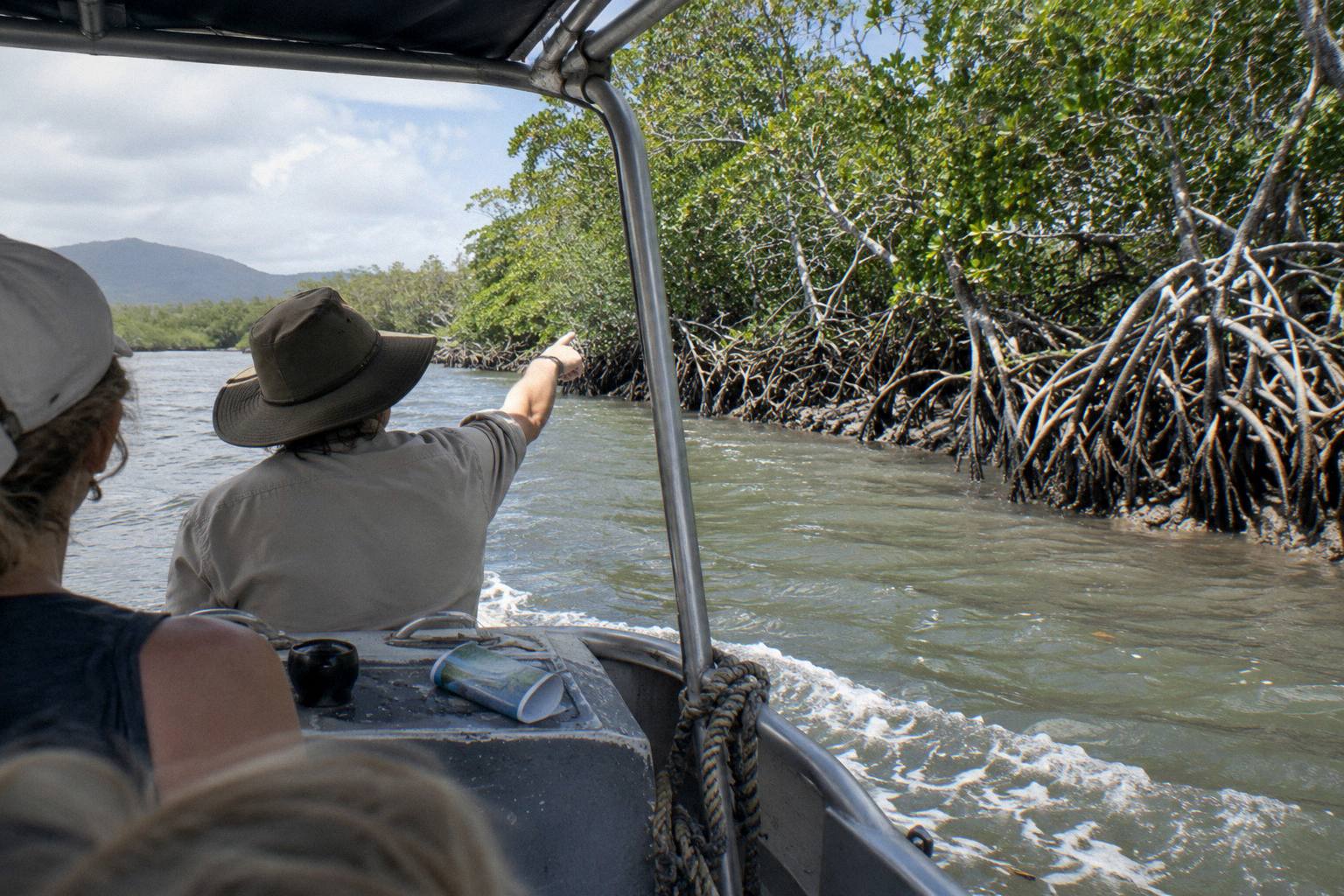
For a nervous reader, the psychology matters as much as the percentage. A cruise is a bounded experience: a set duration of one to two hours, a set route, a guide whose job is to find animals without pressing them, and a boat between you and the water the whole time. Estuarine crocodiles grow to over 4 metres in length, the average male 3 to 4 metres and 200 to 300 kilograms, females rarely exceeding 3.5 metres, and wild lifespan is expected to be 50 years or more. Seeing an animal like that from a covered deck, on its own river, with someone who has worked that water for decades, is about as controlled as a wild encounter gets.
| Operator | What the operator says about sightings |
|---|---|
| Bruce Belcher's | Crocodiles spotted on 98 percent of trips, especially June to September; about 50/50 in warmer months; complimentary return trip if none is seen |
| Solar Whisper | About a 99 percent success rate; small crocodiles very reliable, big ones come and go; cannot 100 percent guarantee; free return cruise if none seen |
| Lady Douglas | Crocodiles normally seen on over 90 percent of trips, especially in the dry season from May to November |
| Daintree Boatman | Crocs and snakes are best between May and October, much more difficult outside this period |
| Daintree River Cruise Centre | While sightings vary, the operator hopes every guest leaves with a deeper love for the river |
The quietest option on the river is worth a mention here. The Solar Whisper Croc and Wildlife Cruise runs a roofed solar-electric boat with no windows and a maximum of 10 people on its two-hour trips, boarding about 400 metres before the car ferry on the Esplanade at Lower Daintree; the trip covered here is the one-hour cruise, and the booking page carries the price.
Whether a calm, quiet electric boat suits you better than a larger covered vessel is mostly a question of temperament, and comparing the Daintree River cruises lays the differences side by side.
Timing explains most of the variation in those numbers. Crocodiles are cold-blooded, so they bask on the banks to warm up when conditions are cooler and spend the hotter months mostly in the water or hidden in the mangroves, which is why the dry-season windows of May to October or November come up again and again in the operators' own descriptions. The big crocodiles, as Solar Whisper notes, come and go, and younger animals tend to hold more predictable territory. There is no night cruising on the river: operators run daylight trips, and crocodiles are most often seen basking on the banks in the morning, and hunting at night.
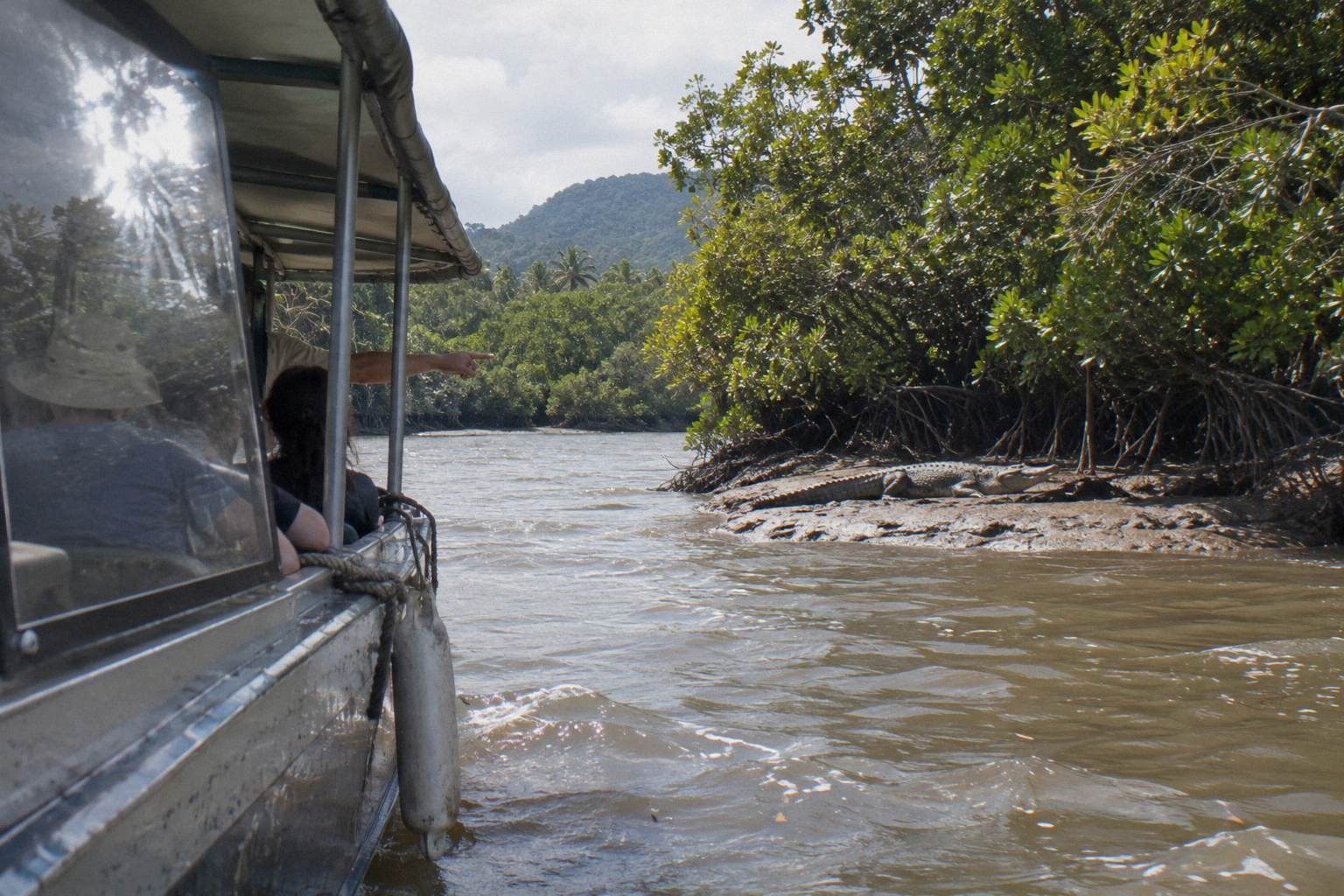
It also helps to know what the rules require of the boats themselves. Queensland law keeps vessels at least 10 metres from crocodiles in the wild, which is why guides idle at a distance rather than closing in for a better look, and travellers are advised to stay at least 5 metres from the edge of the water on land. Every operator above works inside those limits, so a sighting means the crocodile has been spotted and identified from a legal distance, not lured or cornered. If seeing one matters to you, book inside the dry-season window, take a morning departure, and treat the percentage as a strong likelihood rather than a promise.
Common Questions About Croc Cruise Safety
Do Crocodile Cruises Get Close To The Crocodiles?
No cruise here approaches an animal. Queensland law makes it an offence to approach within 10 metres of a crocodile by boat without reasonable excuse, so the boats hold a viewing distance and let the guide's positioning do the work.
Are The Boats Enclosed Or Open?
It varies by operator and each states its own setup: Lady Douglas has covered seating across the whole back deck, Solar Whisper runs a roofed solar-electric boat with no windows, and Bruce Belcher's pulls clear screens down in heavy rain over open seating.
Is There Any Risk Of A Crocodile Attacking A Cruise Boat?
No incident statistic exists among the facts these operators and the Queensland Government publish, and none is invented here. What can be stated is the framework: licensed operators, guide-led trips, daylight-only departures, and a legal 10 metre approach limit that keeps boat and animal apart.
What If I Am Nervous Or Prone To Seasickness?
These are calm-water trips, and Lady Douglas calls its cruise exactly that. Bruce Belcher's booking page lists people prone to seasickness among those its trip is not suitable for, so check that page before booking if motion is a concern.
Can Children And Wheelchair Users Board?
Lady Douglas lists wheelchair and pram access, call ahead for limits, and provides children's colouring sheets. Crocodile Express and the Daintree River Cruise Centre mark their trips not suitable for wheelchair users, and the half-day Daintree tour is not suitable for children under 3.
Do Cruises Run In Rain Or The Wet Season?
Solar Whisper operates in rain but not in flood, and Bruce Belcher's pulls clear screens down in heavy rain. The Daintree Boatman dawn and dusk trips run on a seasonal timetable, and every booking calendar decides the real start date by date.