
Daintree River Wildlife Cruise: Birds, Tree Snakes And Crocs
A Daintree River cruise is sold on crocodiles, but the birds arrive first. Here is what each operator names on its own boat, and how to pick the trip that matches what you want to see.
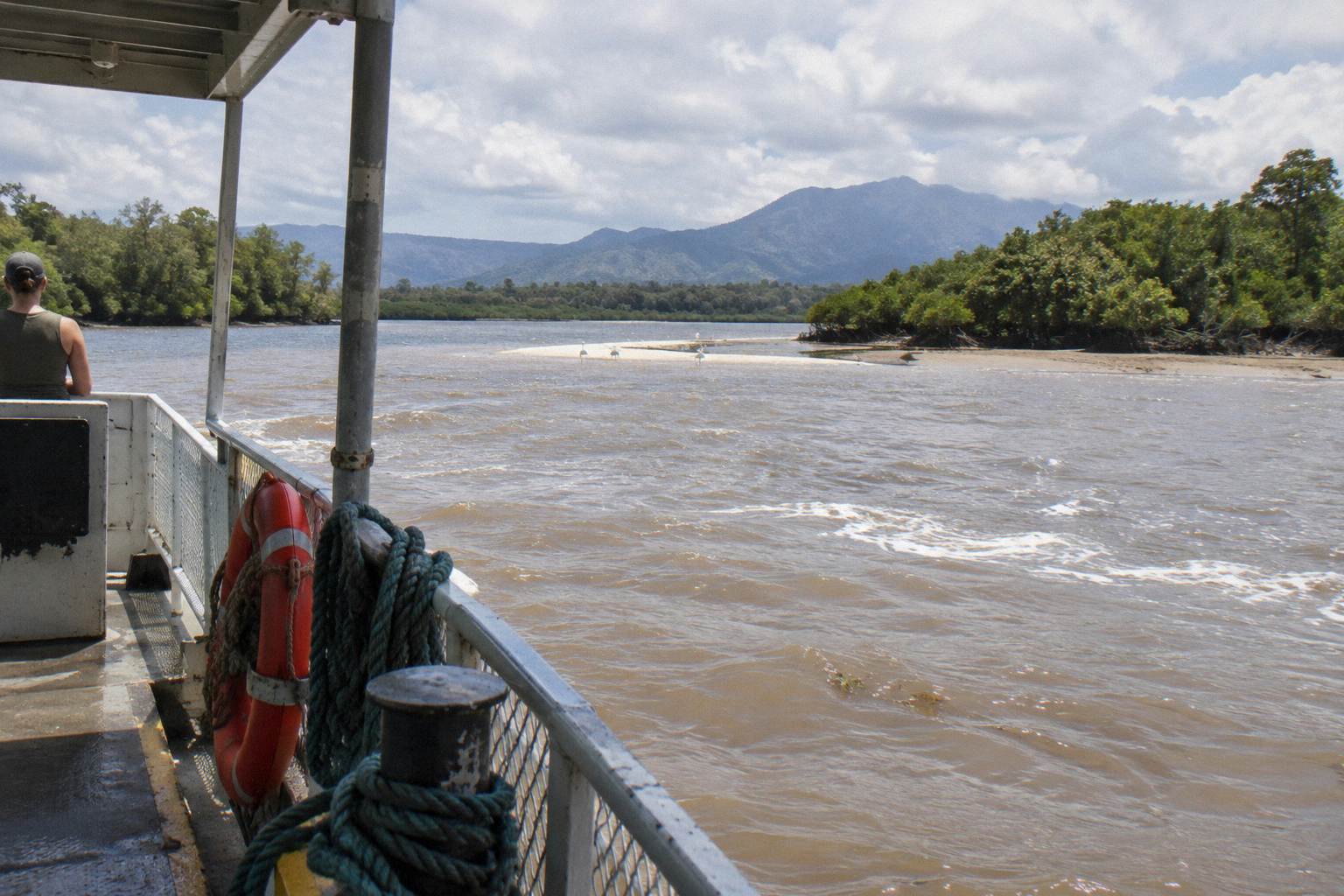
Short answer
A one-hour Daintree River wildlife cruise starts from US$24 per person, and operators name kingfishers, herons, sea eagles, tree snakes and water dragons alongside estuarine crocodiles. The two-hour Daintree Boatman sunset cruise is the birding-led trip, while Crocodile Express lists the widest bird list and Bruce Belcher's says crocodiles appear on 98 percent of its trips.
What Wildlife Appears On A Daintree River Cruise?
A Daintree River wildlife cruise is a one-hour or two-hour boat trip on a tidal tropical river where operators name kingfishers, herons, egrets, sea eagles, tree snakes, pythons, water dragons and estuarine crocodiles among the animals on their routes. Every trip here runs in daylight, at dawn or around dusk, and no night cruise exists among them. A one-hour cruise starts from US$24 per person.
The river splits into two quite different stretches, and the wildlife changes with them. Upper Daintree, departing from Daintree Village at Stewart Street, is narrower and calmer, with overhanging trees that hold birds and tree snakes close to the water. Lower Daintree, at the ferry end on Cape Tribulation Road, is a wide tidal estuary of mangroves, and that is where the bigger reptiles and the wading birds concentrate. Crocodile Express, which runs boats on both stretches with one ticket, uses exactly that distinction to sell its two-route pass.
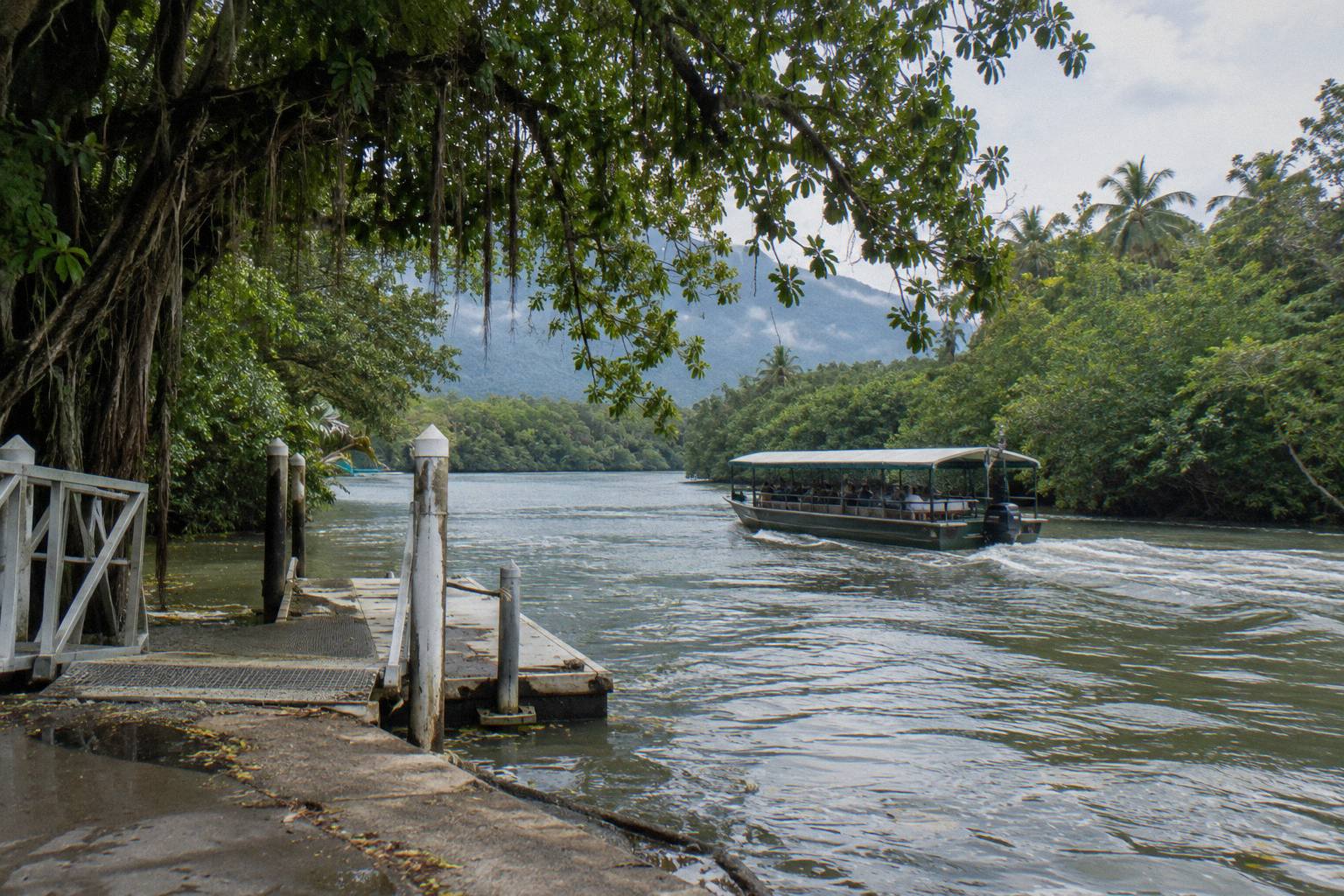
The estuarine crocodile is the headline animal. Queensland Government guidance describes estuarine crocodiles growing to over 4 metres, with the average male 3 to 4 metres and 200 to 300 kilograms, and most commonly seen in the tidal reaches of rivers, which is precisely where these boats travel. Courtship begins in October and November and nesting runs December to April, and the Government notes that male crocodiles become very mobile in the breeding season as they look for a mate, so sightings are more prevalent then. If you are weighing the crocodile side of the trip on its own, the guide to saltwater crocodiles of the Daintree River goes deeper on the biology and the rules.
| Wildlife cruise fact | Detail |
|---|---|
| Cheapest one-hour cruise | Daintree River Cruise Centre, from US$24 per person |
| Birding-led trip | Daintree Boatman two-hour sunset cruise |
| Two-route pass | Crocodile Express, Cruise 1 from Daintree Village and Cruise 2 from about 300 m before the ferry |
| Village departure point | Boat ramp and jetty at Stewart Street, Daintree Village |
| Lower Daintree departure | Cape Tribulation Road beside the car ferry |
| Night trips | None; every cruise runs in daylight, dawn or around dusk |
Every operator named here runs a spotting trip, not a feeding show. In Queensland it is an offence to feed a crocodile or to disturb one by approaching within 10 metres in a boat without a reasonable excuse, per the Queensland Government's estuarine crocodile page, so the boats hold a watching distance and the animals stay wild.
Which Birds Do The Operators Name?
Crocodile Express names the longest bird list: great-billed heron, which it calls one of Australia's rarest herons, azure and little kingfisher, white-bellied sea eagle, osprey, shining flycatcher, egrets, herons, darters and cormorants. Daintree Boatman names azure, little and sacred kingfisher, Papuan frogmouth, great-billed heron, shining flycatcher and black bittern. Lady Douglas names sea eagles, kites, ospreys, kingfishers, herons and waders on its Dickson Inlet route in Port Douglas.
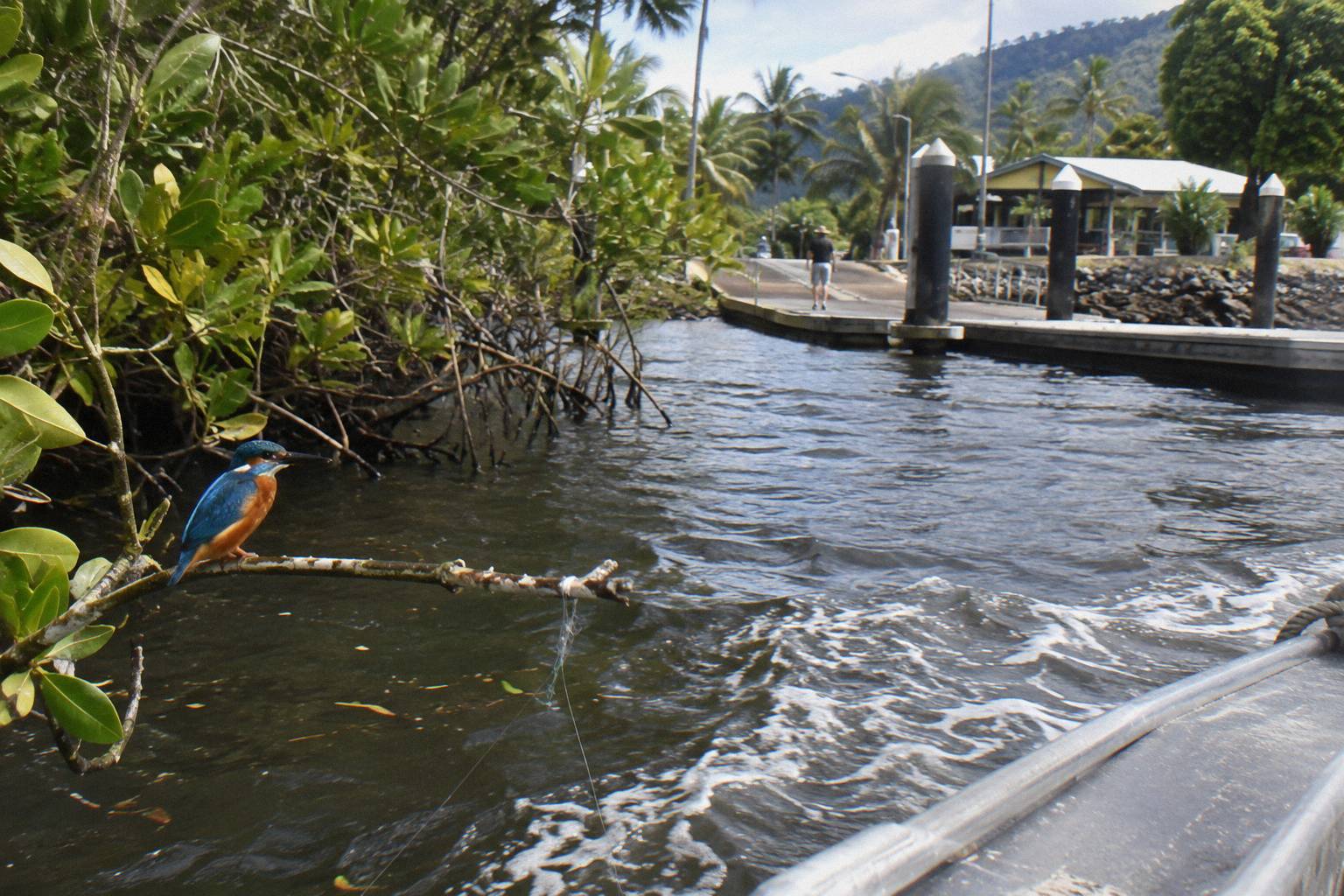
The kingfishers are the birds most people come off the river talking about. The azure kingfisher is small, orange-chested and fast, and it perches on the low mangrove branches of the upper river, which is why the village-based boats and the two-hour sunset cruise both list it. The little kingfisher is harder, rarer and smaller again. The great-billed heron is the trophy bird of the Daintree: a large, slow, grey heron of shaded riverbanks that Crocodile Express calls one of Australia's rarest herons, and that Daintree Boatman also names as a target species.
Raptors work the wide lower estuary. White-bellied sea eagles and ospreys fish the tidal reaches, and on the Port Douglas side Lady Douglas names sea eagles, kites and ospreys around Dickson Inlet. The difference between the two waterways matters more than the difference between boats: Dickson Inlet is a mangrove inlet inside Port Douglas town, a different waterway from the Daintree River entirely, and its bird mix leans toward waders and herons rather than the rainforest species of the upper Daintree. The guide to a mangrove wildlife cruise near Port Douglas covers that inlet route in detail.
| Operator | Birds named on its route | Where it departs |
|---|---|---|
| Crocodile Express | Great-billed heron, azure and little kingfisher, white-bellied sea eagle, osprey, shining flycatcher, egrets, herons, darters, cormorants | Daintree Village and about 300 m before the ferry |
| Daintree Boatman | Azure, little and sacred kingfisher, Papuan frogmouth, great-billed heron, shining flycatcher, black bittern | Public boat ramp, Stewart Street, Daintree Village |
| Lady Douglas | Sea eagles, kites, ospreys, kingfishers, herons, waders | Crystalbrook Superyacht Marina, Port Douglas |
| Daintree River Cruise Centre | Over 280 bird species recorded in the region, operator wording | South side of the river before Daintree Village |
Birders should weight the two-hour trips over the one-hour ones. A one-hour circuit gives you the birds on the route; a two-hour dawn or dusk run with an owner-operator who names Papuan frogmouth and black bittern as targets gives you time to stop and wait for them.
The sunset cruise in that selection is the birding-led option. Daintree Boatman Wildlife Cruises is owner-run, departs the Riverview Caravan Park public boat ramp at Stewart Street in Daintree Village, and runs two-hour dawn and dusk trips: mornings from 7am between April and August or 6.30am between September and January, and afternoons from 4pm or 4.30pm on the same seasonal split, as the operator's own timetable gives it. Its focus is birds first, with common tree snakes and water dragons named alongside them.
What About Tree Snakes, Pythons And Other Reptiles?
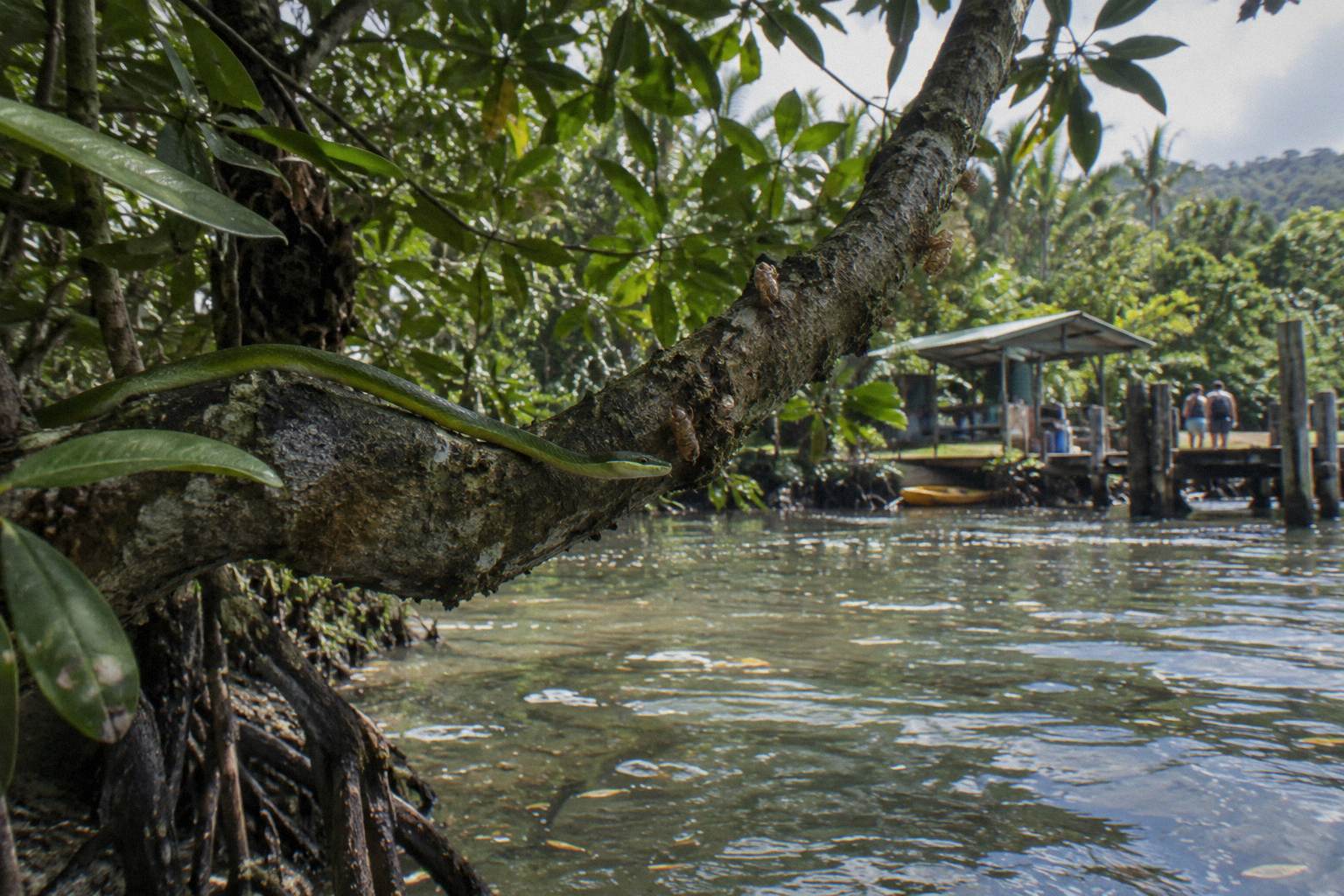
Crocodile Express names saltwater crocodiles, water dragons, amethystine pythons and tree snakes among its reptiles, and Daintree Boatman names the common tree snake and the water dragon. Amethystine pythons are Australia's largest snake species and are seen coiled on branches over the water; tree snakes hunt along the mangrove fringe by day. Operators list these animals, and no operator promises a specific sighting.
The amethystine python is the reptile surprise of the Daintree for most visitors. It is a large rainforest python that soaks up warmth on horizontal branches above the river, and from a boat it can be spotted as a pale, patterned coil in the green. Tree snakes are thinner, faster and more common, moving along the mangrove edge hunting frogs and small lizards. Water dragons sit on sunken logs and drop into the water when a boat gets close, which makes them one of the easier reptile ticks on any trip.
Reptile watching follows the sun. The Bureau of Meteorology's Port Douglas records put mean maximum temperatures between 24.6 and 30.3 degrees Celsius across the year, and cold-blooded animals bask more in the cooler, drier months of July to September, when mean rainfall drops to between 23.3 and 32.1 mm per month. In the wet months of January to March, when each month averages 395 to 429 mm of rain, the banks flood, the basking sites disappear and reptile watching gets harder. The guide to the best month for a Daintree croc cruise works through the same seasonal logic for the crocodiles themselves.
| Reptile | Named by | Typical spot |
|---|---|---|
| Amethystine python | Crocodile Express | Branches overhanging the water |
| Tree snake | Crocodile Express, Daintree Boatman | Mangrove fringe, low branches |
| Water dragon | Crocodile Express, Daintree Boatman | Sunken logs and the waterline |
| Estuarine crocodile | All operators | Sandbars, banks and tidal shallows |
Safety around the reptiles is simple on a boat and demanding on foot. Be Crocwise advice from the Queensland Government's crocodile safety pages says to stay more than 5 metres from the water's edge, to be extra cautious at night, dusk and dawn, and to remember that no waterway within the crocodile's natural range can be considered crocodile free. On the boats, keep arms and legs inside the vessel and let the boat be the barrier.
How Does Crocodile Spotting Fit A Wildlife Cruise?
Every cruise here spots crocodiles as part of a wider wildlife run, and sighting claims stay with the operator making them. Bruce Belcher's reports crocodiles on 98 percent of trips, especially June to September, and about 50/50 in warmer months. Solar Whisper claims a 99 percent success rate and offers a free return cruise if none is seen, while Lady Douglas says crocodiles appear on over 90 percent of its trips in the dry season.
None of those figures is a guarantee, and each operator says so in its own words. Bruce Belcher's states plainly that it never guarantees wildlife sightings and offers a complimentary return trip if none is seen. Solar Whisper says it cannot 100 percent guarantee sightings and that small crocodiles are very reliable while the big ones come and go. Low tide usually helps, as Solar Whisper puts it, because there are more beaches and less water for a crocodile to hide in, though Bruce Belcher's notes crocodiles are still seen at high tide. The interaction of tide, season and time of day is unpacked in tides and croc sightings on the Daintree River.
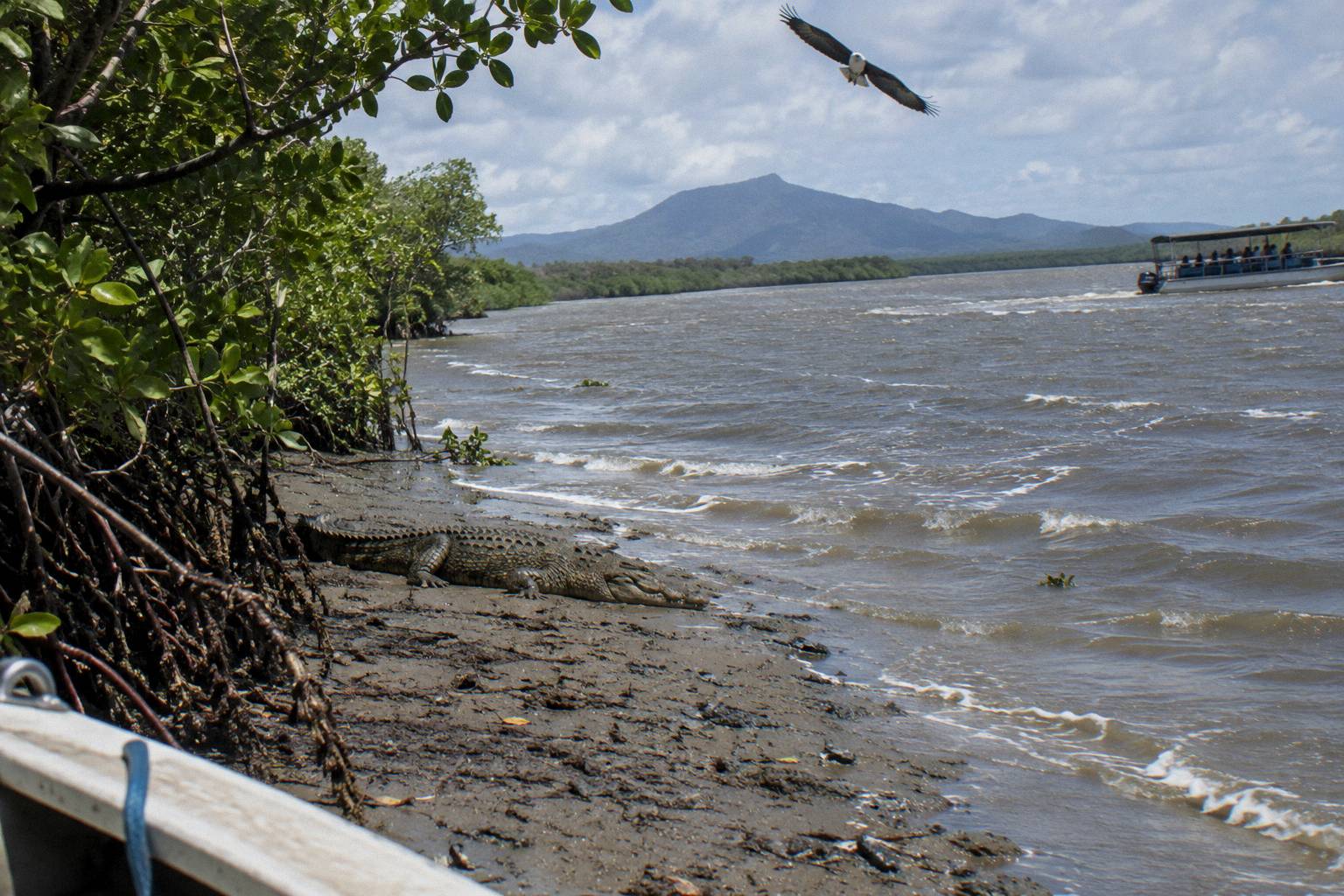
Bruce Belcher's is the guide-led one-hour option in that mix. It has run since 1987 from its own jetty at 2856 Mossman-Daintree Road on the south side of the river, before the ferry, with a guide and commentary throughout, access to a private wildlife boutique facility, and a complimentary Daintree tea or coffee. The booking page shows it from US$30 per person, rated 4.6 from 154 reviews, with free cancellation up to 24 hours before start. Its own page lists cruises from 8:30am to 3pm, open March to January and closed all February, plus Christmas Day and New Year's Day. Guests make their own way to the jetty; there is a 200 m uncovered walk to the boats, so non-slip shoes are required.
The comparison worth making before you book is crocodile-first versus wildlife-first. A crocodile-first visitor picks the operator with the sighting claim they trust and a one-hour slot; a wildlife-first visitor picks the two-hour sunset run where the bird list is the point and the crocodile is a bonus. Both get the same river. If the crocodile side is genuinely the whole reason for the trip, start with what to expect on a Daintree River crocodile cruise and work backwards to the birds.
| Trip | Length | From | Sighting wording, each operator's own |
|---|---|---|---|
| Bruce Belcher's | 1 hour | US$30 | 98 percent of trips, cooler months; free return trip if none seen |
| Solar Whisper | 1 hour | Check the booking page | About 99 percent success rate; free return cruise if none seen |
| Lady Douglas | 1.5 hours | US$32 | Normally seen on over 90 percent of trips, dry season May to November |
| Daintree Boatman | 2 hours | Check the booking page | Crocs and snakes best between May and October |
| Daintree River Cruise Centre | 1 hour, extended to 1.5 when the schedule permits | US$24 | Sightings vary, operator wording |
Why Do Dawn And Dusk Cruises See More?
Crocodiles are most active at night, dusk and dawn, per Queensland Government guidance, and both of Daintree Boatman's two-hour cruises are built around those windows: dawn from 7am or 6.30am and dusk from 4pm or 4.30pm, depending on the season. The sunset trip is the birding-led one, and it finishes as the day's light closes rather than running into darkness.
Those sunset figures come from a solar calculation for Daintree Village, accurate to about a minute or two, and they matter because the 4pm and 4.30pm starts mean the two-hour afternoon cruise rides directly into the best light of the day. Computed sunset times for Daintree Village run from about 5:54pm in June to about 6:57pm in January. Birds feed hard in the last hour before dark, the frogmouths and bitterns begin to shift, and the water goes still after the day-tripper boats have left. There is no daylight saving in Queensland, so the seasonal shift is all in the sun itself.
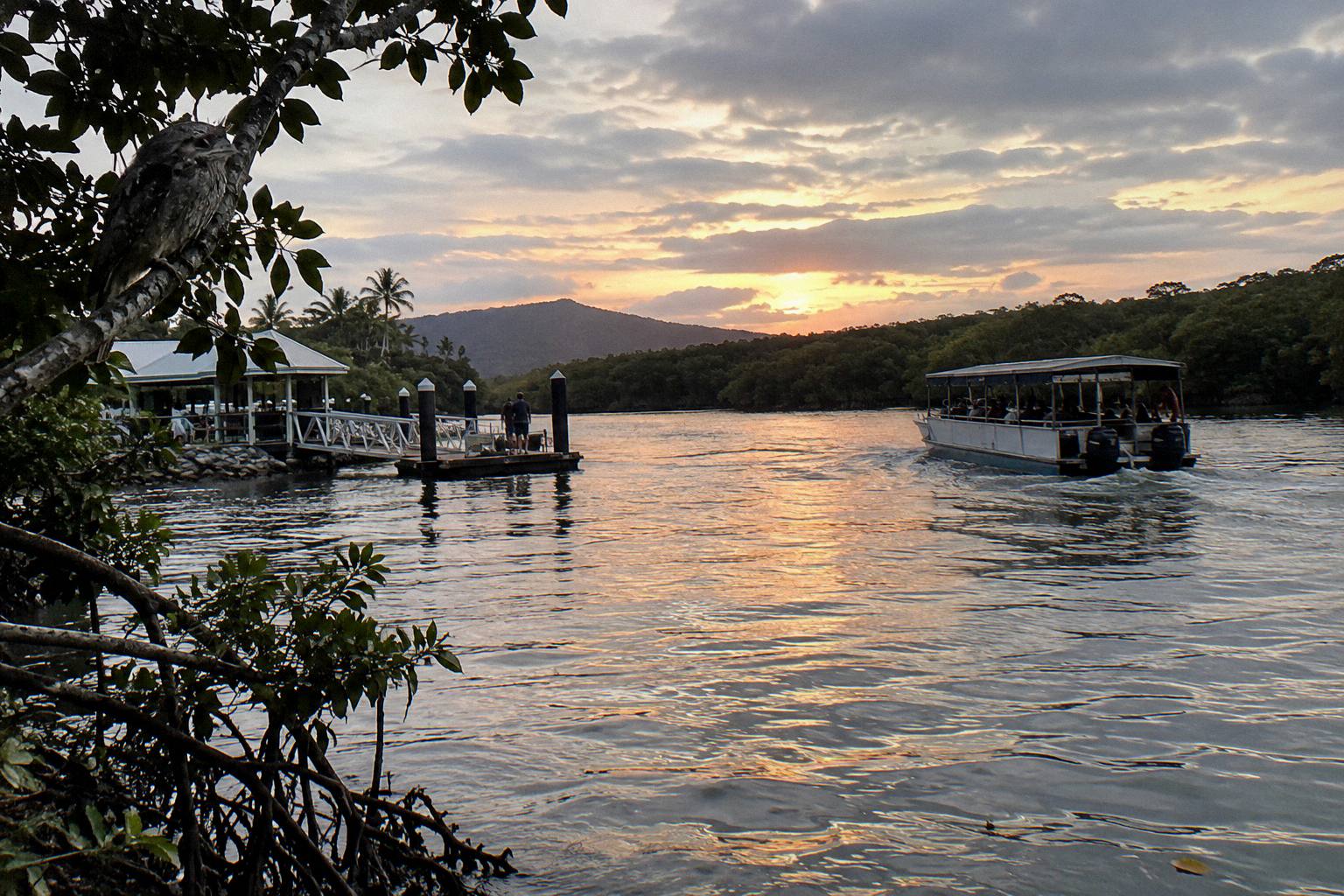
The evening animals are a different cast from the midday one. Papuan frogmouths, which Daintree Boatman names, are nocturnal roosters-by-day birds that a slow dusk boat can pick out on a bare horizontal branch. Black bitterns, another of its named species, work the mangrove shadows at first and last light. The operator says crocs and snakes are best between May and October and are much more difficult outside that period, which lines up with the same dry-season pattern every other operator describes.
For readers building a full day around wildlife rather than a single boat trip, the half-day option bundles the river with Mossman Gorge. The Port Douglas Daintree Half Day Tour With River Cruise runs 5 hours from 12:50pm to 5:30pm, picks up from Port Douglas accommodation, and includes Daintree National Park access, a Mossman Gorge walk and swim, and a one-hour river cruise with a beer, wine or soft drink and a small snack. It is rated 4.5 from 117 reviews, from US$121 per person, with free cancellation up to 24 hours before start. The Daintree day tours with a croc cruise guide compares it against the full-day alternatives.
Which Cruise Suits A Wildlife-First Visitor?
A wildlife-first visitor has three real shapes of trip: the two-hour Daintree Boatman sunset cruise from Daintree Village for birds, the one-hour Crocodile Express two-route pass from US$27 to sample both the narrow upper river and the wide lower estuary, or the half-day tour from US$121 that wraps a one-hour cruise inside Mossman Gorge. Pick by length of attention, not by headline animal.
The two-route pass deserves a second look from birders, because it is effectively two habitats for one ticket. Crocodile Express runs Cruise 1 from Daintree Village, checking in at 5 Stewart Street, and Cruise 2 from the Daintree Ferry Gateway kiosk about 300 m before the ferry crossing, with daily cruises from 8.30am to 3.30pm on both routes and the pass valid 14 days from first activation. It is rated 4.6 from 477 reviews, and the booking page marks the trip not suitable for wheelchair users. Free cancellation applies up to 24 hours before start.
Practical constraints narrow the field fast. Only Lady Douglas leaves from Port Douglas itself, boarding at the Crystalbrook Superyacht Marina at 44 Wharf Street, and everything else on the Daintree requires a drive of about 45 minutes from Port Douglas or about 30 minutes from Mossman, in Solar Whisper's own driving guidance. Daintree Village and the Lower Daintree departure points sit on the south side of the river, so none of these cruises needs the ferry. For a closer look at the port-side alternative, the comparison of Port Douglas river cruises, croc spotting or scenic sets the two waterways side by side.
| If you want | Best fit | Length | From |
|---|---|---|---|
| Birds first, crocs second | Daintree Boatman sunset cruise | 2 hours | Check the booking page |
| Both river habitats, one pass | Crocodile Express | 2 x 1 hour | US$27 |
| Cheapest one-hour cruise with tea | Daintree River Cruise Centre | 1 hour | US$24 |
| A guide-led cruise with its own jetty | Bruce Belcher's | 1 hour | US$30 |
| Cruise plus Mossman Gorge, door to door | Port Douglas half-day tour | 5 hours | US$121 |
What Mistakes Cost You Wildlife On The River?
The four mistakes that cost the most sightings are cruising at midday in the wet season, expecting a crocodile count or a guarantee, arriving at the wrong departure point, and booking a one-hour cruise expecting a two-hour birding pace. Each is avoidable with a calendar check, a map check and a realistic read of what one hour on a tidal river buys.
Midday in the wet season is the weakest combination on the calendar. January to March each average 395 to 429 mm of rain at Port Douglas, the banks flood, and Daintree Boatman says crocs and snakes are much more difficult outside the May to October window. Solar Whisper adds its own caution that summer on a high tide is the most difficult time, since rising river temperatures make crocodiles harder to see. Flip it around and the July to September window, with 23.3 to 32.1 mm of mean monthly rain, is the strongest.
The departure-point mistake is the one that makes people miss boats. The village departure is the boat ramp and jetty at Stewart Street in Daintree Village; Bruce Belcher's is its own jetty at 2856 Mossman-Daintree Road on the south side, before the ferry; Solar Whisper's ticket office sits about 400 m before the car ferry on the Esplanade at Lower Daintree. None of them is across the river, and the Daintree Ferry, which runs continuously between 5 am and midnight daily, is not part of any of these trips.
| Mistake | What it costs | Fix |
|---|---|---|
| Midday cruise in the wet season | Flooded banks, fewer basking reptiles | Book the dry-season window or a dawn slot |
| Expecting a sighting guarantee | Operators explicitly do not guarantee | Read each operator's own wording, including return-trip offers |
| Wrong departure point | A missed check-in and a lost hour | Match the operator to Stewart Street, the south-side jetties or the ferry approach |
| One hour for a serious bird list | No time to stop and wait | Take the two-hour sunset cruise |
Finally, temper expectations about what a wildlife cruise is. It is a slow boat on a wild tidal river with a guide who knows where things tend to be, not a zoo run. The operators themselves frame it that way, from the Daintree River Cruise Centre's line that sightings vary and its hope that every guest leaves with a deeper love for the river, to Bruce Belcher's blunt refusal to guarantee anything while backing its trips with a free return. For a fuller picture of the whole decision, Port Douglas Crocodile Cruises compares every trip from both departure bases.
Common Questions About Daintree River Wildlife
What Animals Besides Crocodiles Will You See On A Daintree River Cruise?
Operators list kingfishers, herons, egrets, sea eagles, ospreys, tree snakes, amethystine pythons, water dragons and crocodiles on their routes. Crocodile Express names the widest bird list including the great-billed heron, which it calls one of Australia's rarest herons. No operator promises a specific sighting.
Which Daintree River Cruise Is Best For Birds?
The Daintree Boatman two-hour sunset cruise from Daintree Village is the birding-led trip, with an owner-operator who names azure, little and sacred kingfisher, Papuan frogmouth, great-billed heron, shining flycatcher and black bittern as focus species.
Are There Snakes On The Daintree River Cruise Route?
Crocodile Express names amethystine pythons and tree snakes among its wildlife, and Daintree Boatman names the common tree snake. Pythons are typically seen as coils on branches overhanging the water; tree snakes work the mangrove fringe by day.
What Is The Best Time Of Day For Wildlife On The River?
Dawn and dusk. Queensland Government guidance says crocodiles are most active at night, dusk and dawn, and Daintree Boatman builds its two-hour cruises around those windows, departing at dawn and in the late afternoon. Every cruise covered here runs in daylight or around dusk.
How Long Is A Daintree River Wildlife Cruise?
The one-hour cruises are the standard: Crocodile Express, Daintree River Cruise Centre, Bruce Belcher's and Solar Whisper all run one hour, with Lady Douglas at 1.5 hours on Dickson Inlet. Daintree Boatman's dawn and dusk cruises run two hours, and the Centre extends to 1.5 hours when its schedule permits.
Do Daintree River Cruises Guarantee Crocodile Sightings?
No. Each operator states its own record: Bruce Belcher's says 98 percent of trips and a free return if none is seen, Solar Whisper says about 99 percent with the same free-return offer, and Lady Douglas says crocodiles are normally seen on over 90 percent of trips. Every one of them also says it cannot guarantee wildlife.