
Mangrove Wildlife Cruises Near Port Douglas: What You Can Spot
Two very different mangrove waterways sit within reach of Port Douglas: Dickson Inlet, right in town, and the wide tidal estuary at the Lower Daintree. Both are worked by wildlife cruises, and both carry crocodiles, kingfishers, herons and the odd python, though no operator promises any of it.
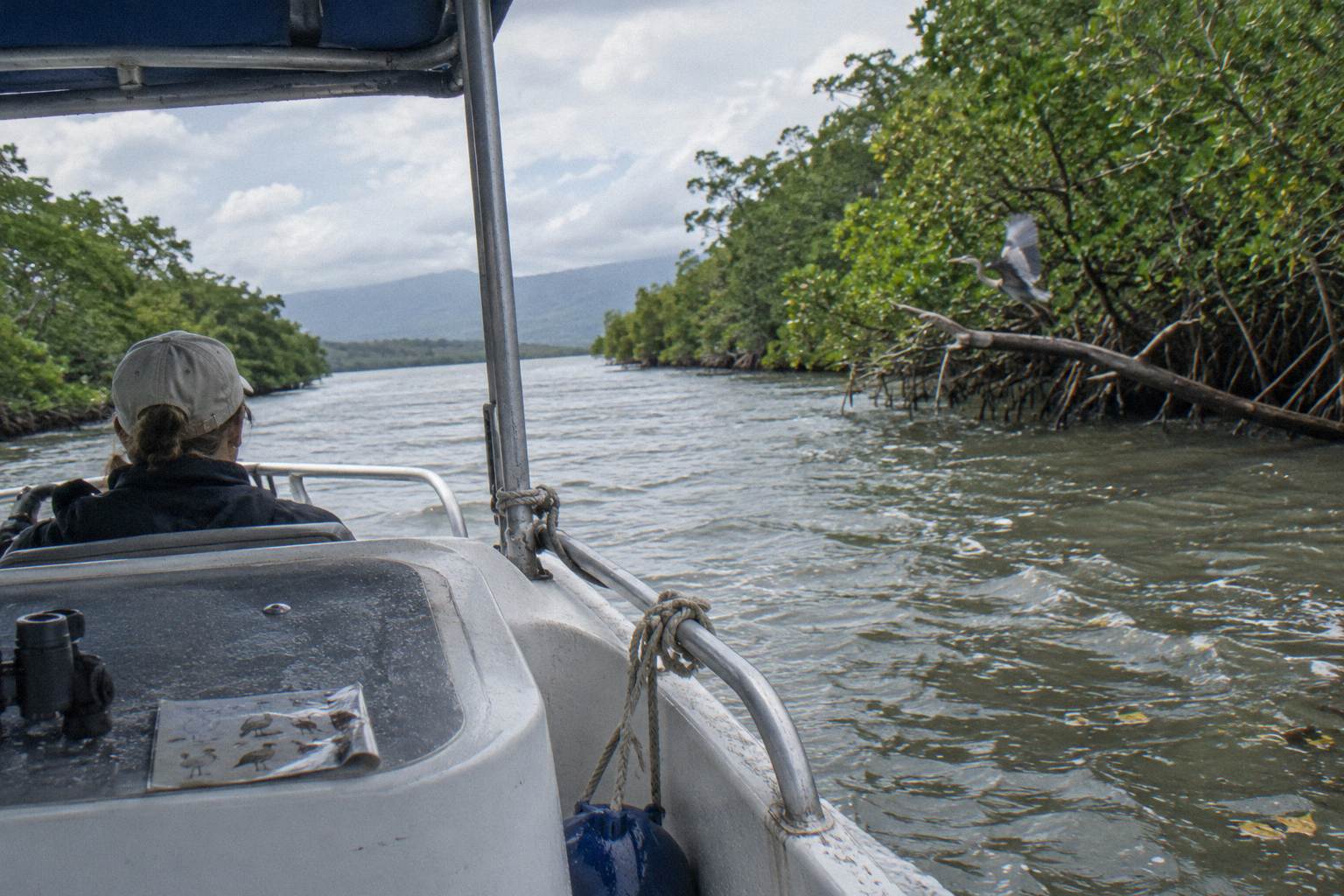
Short answer
The only scheduled croc and wildlife cruise leaving Port Douglas itself is the Lady Douglas, from US$32 per person for 1.5 hours on Dickson Inlet. Daintree River alternatives start from US$24 per person for one hour, about 45 minutes' drive away. Operators name kingfishers, herons, sea eagles, crabs, mudskippers and snakes, and crocodiles are normally seen on over 90 percent of Lady Douglas trips, the operator says.
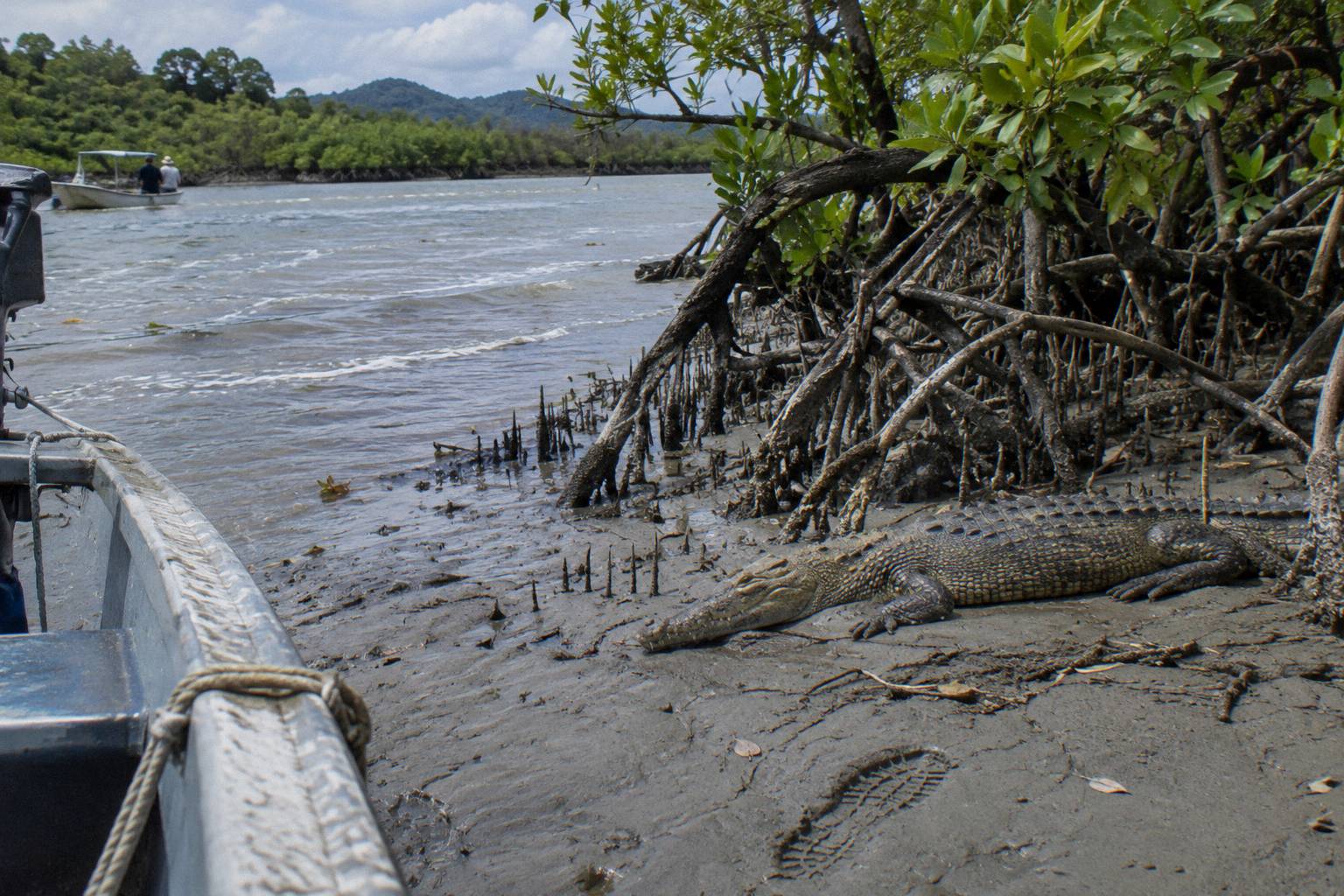
Estuarine crocodiles live in exactly the habitat a mangrove boat tour travels through: the tidal reaches of rivers, where mangrove roots, mud banks and overhanging trees give a big reptile somewhere to hide and a patient hunter somewhere to wait. Queensland's own wildlife advice notes that crocodiles occur between Gladstone and Cape York Peninsula and are most commonly seen in those tidal reaches, which is why the cruise boats that work the mangroves around Port Douglas spend so much of their time looking at the banks rather than the middle of the channel.
The boats do far more than hunt crocodiles, though. Mangrove systems are some of the richest bird habitat in the tropics, and the operators working these waterways publish long species lists: kingfishers in three sizes, herons that stand like statues in the shallows, sea eagles turning overhead, tree snakes draped in the branches, mudskippers and crabs working the mud at low water. A good mangrove cruise is a slow, quiet drift through all of that, with a skipper who knows where each animal tends to sit.
Two Mangrove Waterways, Two Very Different Trips
A mangrove boat tour near Port Douglas runs on one of two waterways: Dickson Inlet, the mangrove system inside Port Douglas itself, or the Daintree River estuary about 45 minutes' drive north. Dickson Inlet is narrow, calm and sheltered, cruised by one boat, the Lady Douglas. The Daintree's lower reaches are a wide tidal estuary lined with mangroves, worked by several operators. The wildlife overlap is real but the settings differ.
Dickson Inlet is a working inlet with a superyacht marina at one end and several kilometres of mangrove channels at the other. The Lady Douglas, a family-run operation cruising the inlet since 1989, runs a 1.5-hour loop through those channels, past the inlet entrance and along the Port Douglas waterfront, with commentary on the mangroves, the crocodiles and the town's history. Substantial time on board is spent searching for wild estuarine crocodiles, and the operator says crocodiles are normally seen on over 90 percent of trips, especially in the dry season from May to November.
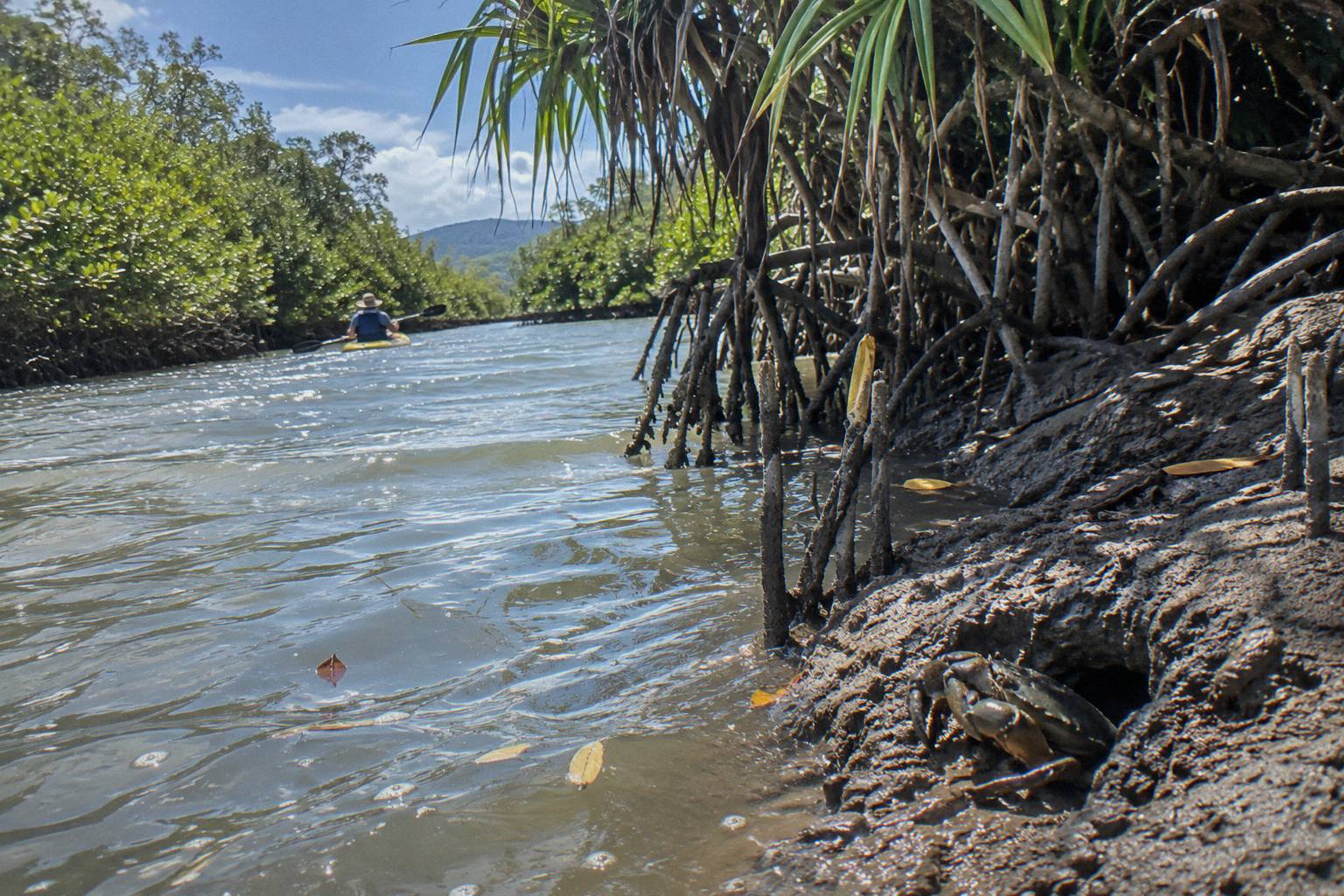
The Lower Daintree, by contrast, is what Crocodile Express describes as a wide tidal estuary with mangroves, quite different from the narrower, calmer upper river near the village with its overhanging trees. Tide shapes the whole trip: at low water the mud banks widen out and the mangrove roots stand exposed, at high tide the water climbs into the lower branches. If you are weighing the two styles of water against each other, the Dickson Inlet croc and wildlife cruise guide breaks down the inlet option in detail, and the wider Daintree River cruises compared guide covers the river side.
Neither trip crosses to the far side of the Daintree River. The Daintree River cruises covered here all depart from the south side of the river or from Daintree Village, before the car ferry, so a mangrove cruise never commits you to a ferry crossing.
Dickson Inlet: The Mangrove Cruise That Never Leaves Town
The Lady Douglas River Cruise is the only scheduled crocodile cruise departing from Port Douglas itself, boarding at the Crystalbrook Superyacht Marina at 44 Wharf Street. The 1.5-hour cruise costs from US$32 per person, runs to a 4.6 rating from 571 reviews, and includes a bar beverage, snacks, skipper commentary and children's colouring sheets. It has wheelchair and pram access if you call ahead about limits.
That combination, a boarding point you can walk to from half the town's accommodation and a calm-water inlet rather than an open river, makes the Lady Douglas the natural pick for anyone who wants mangrove wildlife without giving up half a day to driving. Four departure slots are listed, dependent on seasonal demand, with start times at 10.30am, 12.30pm, 2.30pm and 4.30pm, the last of which catches the inlet in late-afternoon light. Free cancellation applies up to 24 hours before the start for a full refund.
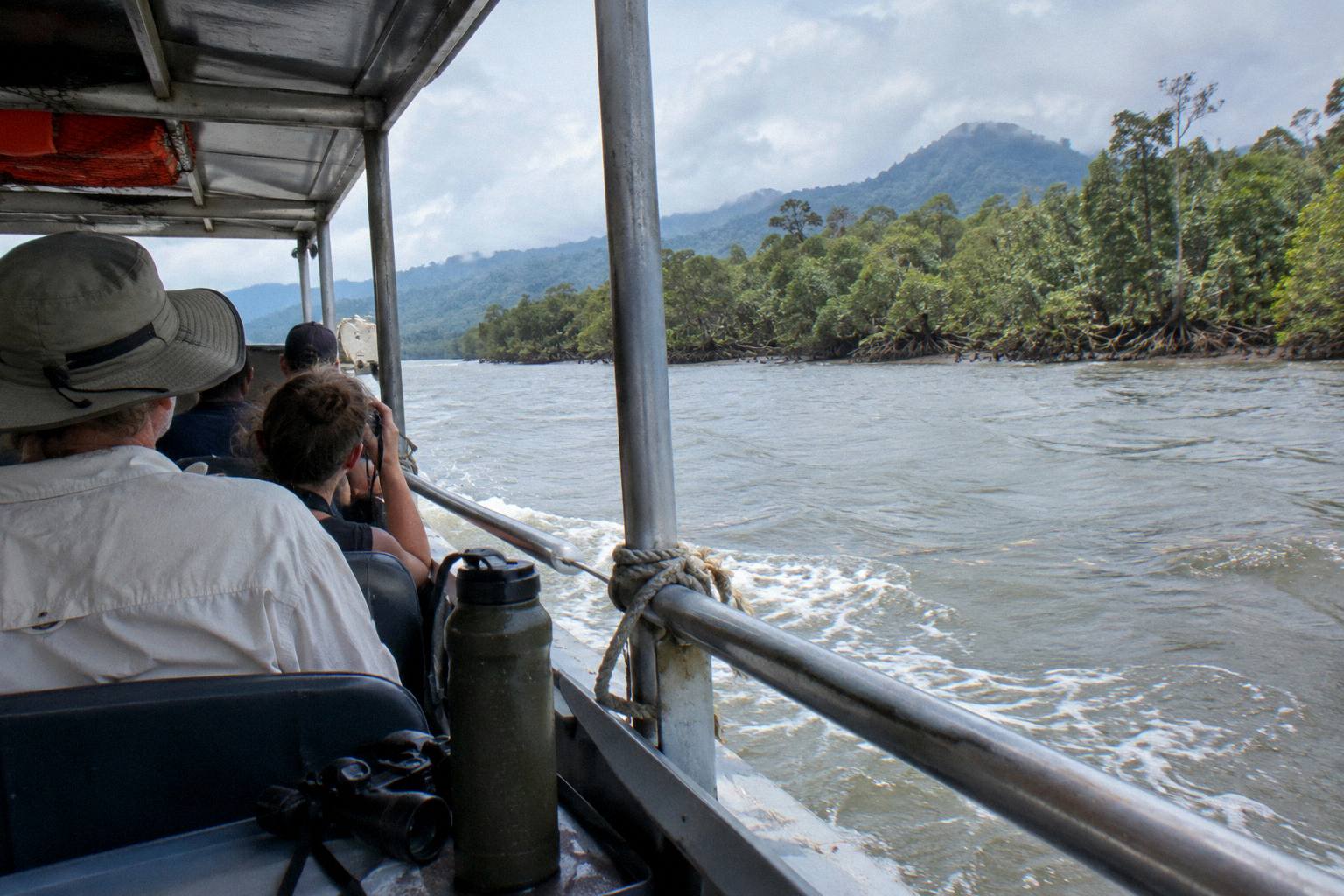
The boat itself is built for the trip: covered seating across the whole back deck, a licensed bar, a toilet, and a pace slow enough that photographers get more than a two-second window at each bird. The route spends its middle stretch deep in the mangrove channels where the inlet narrows, then opens out at the entrance and the waterfront, so the cruise shifts between enclosed green tunnel and open water in a single loop.
The same trip doubles as a family option. Colouring sheets are handed out on board, infants sit on laps with infant seats available, and the operator names the small creatures children actually engage with fastest: crabs working the mud and mudskippers hoisting themselves along the waterline. If you are planning around younger kids, the croc cruise with kids, ages, seats and safety guide covers the practical questions, and the crocodile tours from Port Douglas guide places the Lady Douglas among the trips that leave from town.
What Wildlife Do Operators Actually Name?
No operator on these waterways promises a species, and none of them should. What they publish instead are lists of animals seen on their trips: Lady Douglas names sea eagles, kites, ospreys, kingfishers, herons, waders, crabs, mudskippers and spiders; Crocodile Express adds amethystine pythons, tree snakes, the great-billed heron and both the azure and little kingfisher; the Daintree River Cruise Centre puts the regional bird list at over 280 recorded species. Birders often leave with the longer list.
The table below gathers the operator-named wildlife into one view. Every entry is an animal the operator itself lists, never a guarantee of what any single trip will find.
| Wildlife group | Species operators name | Named by |
|---|---|---|
| Kingfishers | Azure kingfisher, little kingfisher, sacred kingfisher | Crocodile Express, Daintree Boatman |
| Herons and allies | Great-billed heron, white-faced and other herons, egrets, darters, cormorants, black bittern | Crocodile Express, Lady Douglas, Daintree Boatman |
| Raptors | White-bellied sea eagle, osprey, kite | Crocodile Express, Lady Douglas |
| Reptiles | Estuarine crocodile, amethystine python, common tree snake, water dragon | Crocodile Express, Daintree Boatman |
| Smaller fare | Mudskippers, crabs, spiders, shining flycatchers, waders | Lady Douglas, Crocodile Express |
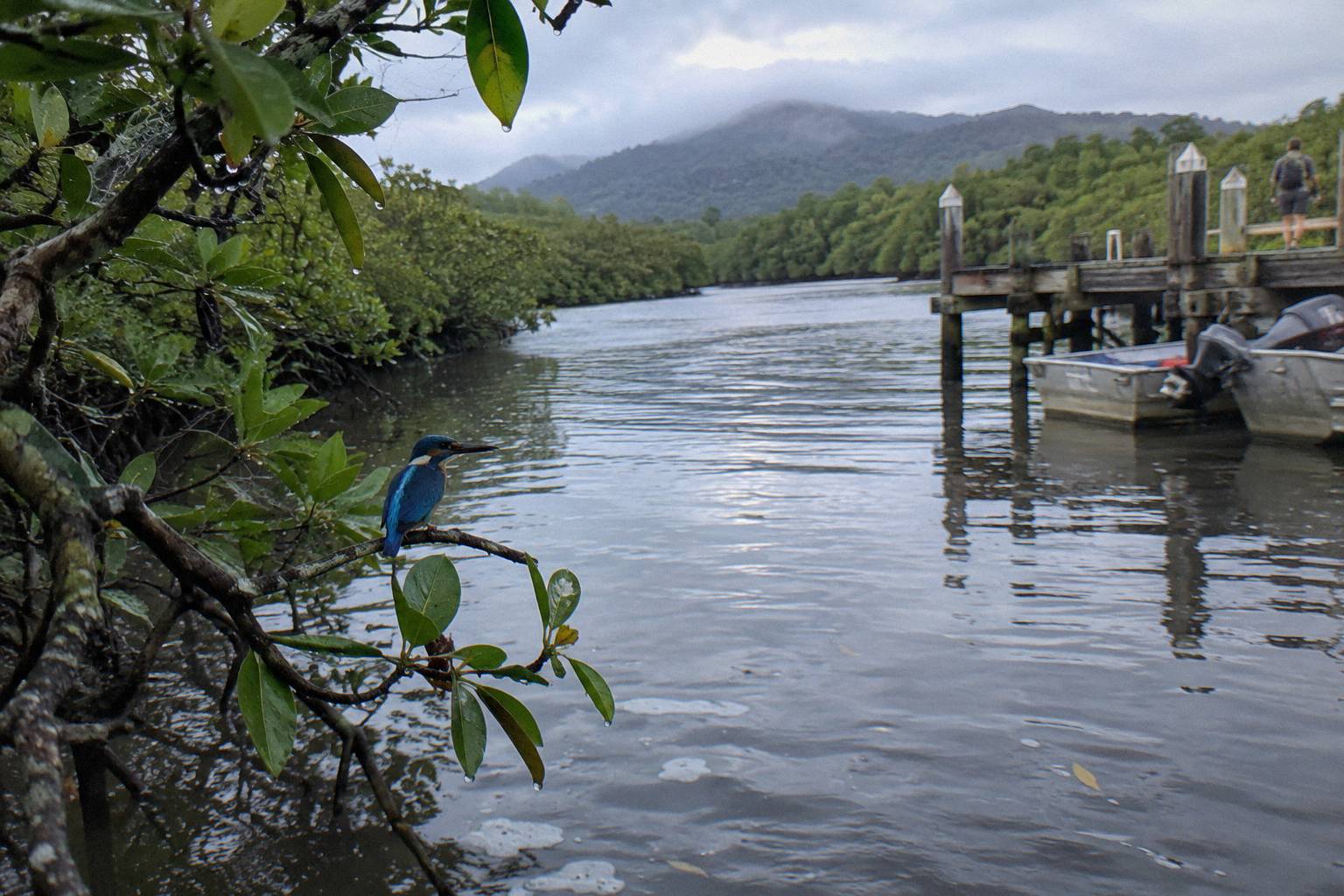
Two entries deserve their own sentence. Crocodile Express calls the great-billed heron one of Australia's rarest herons, a grey, slow, mangrove-dependent bird that dedicated twitchers travel for. And the Daintree Boatman operation, whose two-hour sunset cruise works the same village stretch of river, builds its whole identity around birds: azure, little and sacred kingfishers, the Papuan frogmouth, the great-billed heron, the shining flycatcher and the black bittern are all on its published list, alongside the common tree snake and water dragon.
For a wider account of the non-crocodile side of these trips, the Daintree River wildlife cruise: birds, snakes and crocs guide goes deeper, and the blog post on what animals besides crocodiles you can see on a Daintree cruise covers the same question for readers deciding whether the wildlife justifies the trip on its own.
Photography rewards preparation here. The light under mangrove canopy is patchy and the birds are small, so a long lens and a high shutter speed earn their keep; the photographing crocodiles from a river cruise guide has the detail. The Lady Douglas runs the same water daily, which is a genuine advantage if you want a second pass at a bird you missed: the Lady Douglas River Cruise and check availability sit side by side for quick comparison.
The Lower Daintree Estuary: Mangroves On A Grand Scale
The mangrove forests of the lower Daintree River are bigger, wilder and more exposed to tide than anything in Dickson Inlet, and Crocodile Express works them from both ends: one ticket covers a one-hour cruise from Daintree Village and a second from its kiosk about 300 metres before the ferry crossing, valid for 14 days from first activation. From US$27 per person and rated 4.6 from 477 reviews, it is the cheapest way onto the mangrove estuary.
The two-route design matters more than it first looks. The village cruise travels the narrower upper river with its overhanging trees; the ferry-gateway cruise works the wide, tidal, mangrove-lined estuary. Because the pass stays live for a fortnight, you can take one cruise in the morning, keep the second for another day entirely, or split the two between an outbound and return leg of a Daintree trip. A bonus cruise is valid 14 days too, though it cannot be booked online, and combo tickets that include Daintree Discovery Centre entry carry the ferry fee as an extra.
Crocodile Express lists daily cruises from 8.30am to 3.30pm on both routes and runs every day except 25 December, and its wildlife list is one of the longest on the river: saltwater crocodiles, water dragons, amethystine pythons and tree snakes on the reptile side, plus the great-billed heron, both smaller kingfishers, sea eagles, ospreys, shining flycatchers, egrets, herons, darters and cormorants. The booking page covers the cruise ticket only, and the trip is marked not suitable for wheelchair users. Free cancellation applies up to 24 hours before the start.
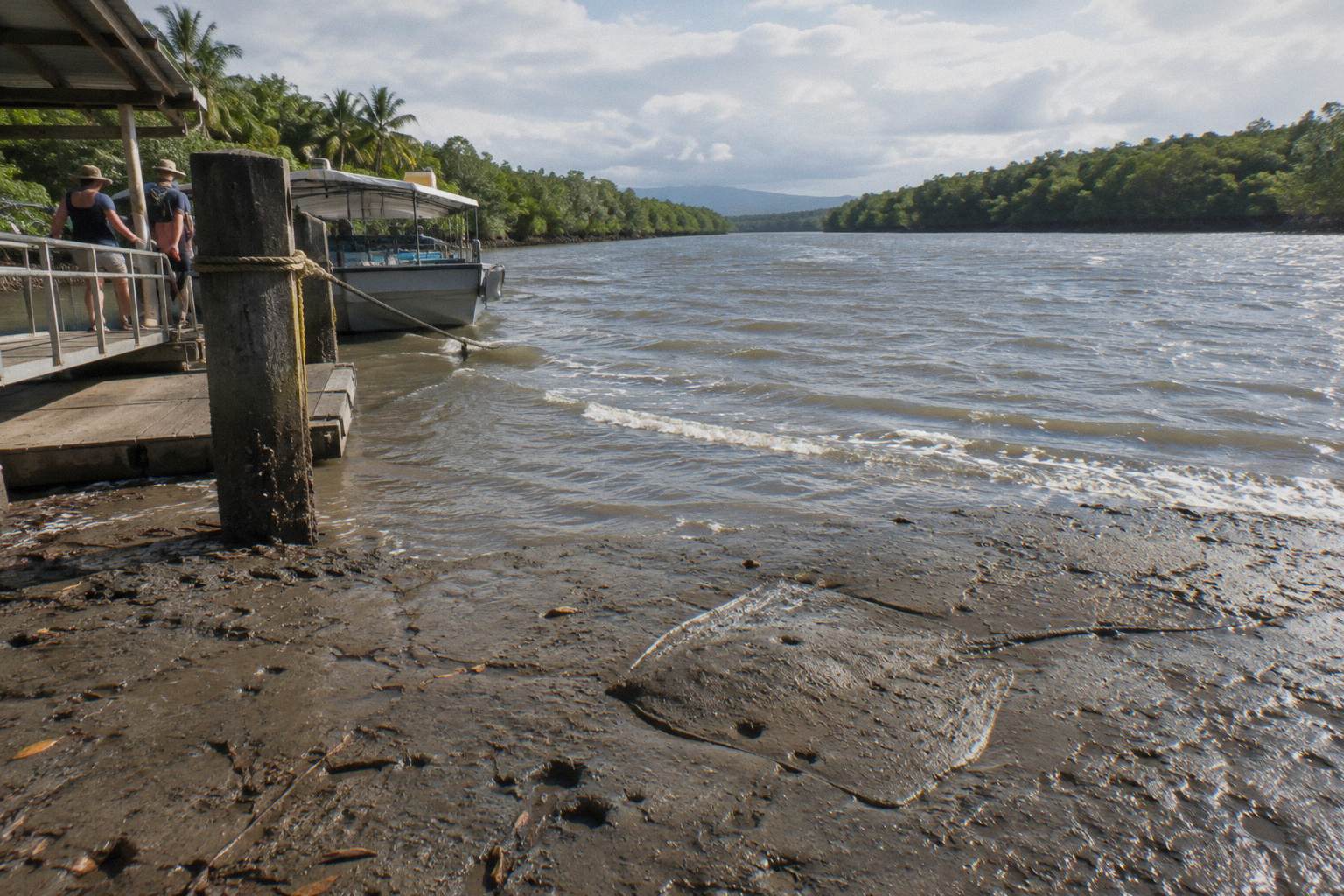
Other operators work the same estuary from their own jetties. Bruce Belcher's runs one-hour cruises from its private jetty at 2856 Mossman-Daintree Road, from 8:30am to 3pm, open March to January and closed all February, Christmas Day and New Year's Day; the Daintree River Cruise Centre sits on the south side just before the village, with daily departures listed from 9.30am to 3.30pm; Solar Whisper's roofed solar-electric boat departs the Esplanade at Lower Daintree, its ticket office about 400 metres before the ferry. The Daintree Village croc cruise jetties guide maps exactly where each one boards.
Quick Facts: Prices, Durations And Inclusions
Mangrove wildlife cruises in the area run from US$24 to US$32 per person for the standalone river and inlet trips, with day tours that bundle a cruise running from US$121 to US$165. Every priced trip below carries free cancellation up to 24 hours before the start for a full refund. Durations split into one hour for most river boats, 1.5 hours for the Lady Douglas and two hours for the Daintree Boatman sunset cruise.
| Trip | From price | Duration | Rating | What the booking page includes |
|---|---|---|---|---|
| Lady Douglas River Cruise | US$32 | 1.5 hours | 4.6, 571 reviews | Cruise, commentary, bar beverage, snacks |
| Crocodile Express Daintree Wildlife Cruise | US$27 | 1 hour | 4.6, 477 reviews | Cruise ticket, two routes, 14-day validity |
| Daintree River Cruise Centre Wildlife Cruise | US$24 | 1 hour | 4.6, 558 reviews | Guided cruise, morning or afternoon tea, centre amenities |
| Bruce Belcher's Guided Daintree River Cruise | US$30 | 1 hour | 4.6, 154 reviews | Cruise, guide, commentary, wildlife boutique access, food and drinks |
| Port Douglas Daintree Half-Day Tour | US$121 | 5 hours | 4.5, 117 reviews | Mossman Gorge walk and swim, river cruise with a drink, transfers |
| Daintree Experience Full Day | US$165 | 8 hours | – | Waterfall swim, lunch, fruit tasting, guided walk, croc cruise |
Solar Whisper and the Daintree Boatman sunset cruise carry no published price here, so check the booking page for those two. The half-day and full-day tours suit travellers who want the mangrove cruise as one chapter of a bigger day: the half-day runs 12:50pm to 5:30pm with a Mossman Gorge walk and swim, while the full day adds a waterfall swim, a gourmet rainforest-restaurant lunch, tropical fruit tasting and a guided walk around its one-hour Daintree River cruise.
Prices change, so treat every figure above as the booking page price rather than a fixed fare, and read the Daintree croc cruise prices and inclusions guide before paying for anything with extras attached.
When To Go: Tides, Seasons And Light
Tide and season shape a mangrove cruise more than the clock does. Solar Whisper says low tide is usually better because more banks stand clear and there is less water for crocodiles to hide in, and Bruce Belcher's says low tide can enhance the chances while crocodiles are still seen at high tide. Bruce Belcher's reports crocodiles on 98 percent of trips in the cooler months of June to September and about 50/50 in the warmer months.
Those claims belong to their operators and none is a guarantee. Bruce Belcher's offers a complimentary return trip if no crocodile is seen; Solar Whisper quotes about a 99 percent success rate, calls small crocodiles very reliable and big ones come and go, says summer on a high tide is the most difficult time, and offers a free return cruise if none is seen. Lady Douglas ties its over-90-percent figure to the dry season from May to November, and the Daintree Boatman says crocs and snakes are best between May and October and much more difficult outside that window.
The breeding season adds its own effect, and the Queensland Government explains it in biological terms: male crocodiles become very mobile as they look for a mate, so sightings are more prevalent. Courtship begins in October and November and nesting runs December to April, with nests holding 40 to 70 eggs and about 90 days of incubation.
| Month | Mean max (C) | Mean min (C) | Mean rain (mm) | Rain days 1mm+ |
|---|---|---|---|---|
| January | 30.3 | 23.7 | 395.8 | 13.8 |
| April | 28.3 | 21.5 | 203.3 | 11.2 |
| July | 24.6 | 16.8 | 26.4 | 4.2 |
| October | 28.3 | 20.8 | 53.1 | 5.3 |
The Bureau of Meteorology's Port Douglas station, with 52 years of temperature records and 124 years of rainfall, shows the pattern behind those operator claims: January to March each average 395 to 429 mm of rain, while July to September average just 23 to 32 mm. The best month for a Daintree croc cruise guide works through the trade-offs month by month, and the tides and croc sightings on the Daintree River guide covers the tide question in full.
Daylight matters too, since no night cruise exists among these trips: every one runs in daylight, at dawn or around dusk. A computed solar table for Daintree Village puts June sunrise about 6:44am and sunset about 5:54pm, against December's about 5:41am and 6:46pm, so a 4.30pm Lady Douglas departure or a 4pm Daintree Boatman afternoon cruise finishes in the richest light of the afternoon. The what time of day is best to see crocodiles blog post unpacks the timing question.
Five Mistakes That Sink A Mangrove Cruise
The commonest mistakes are crossing the ferry when your jetty is before it, booking a Daintree trip when you wanted the one cruise that leaves Port Douglas itself, assuming a wheelchair-accessible boat when most river jetties are not, wearing the wrong shoes for a walk to a river jetty, and expecting a guaranteed crocodile when every operator states plainly that wildlife cannot be promised. Each is avoidable with one check before you book.
The ferry mistake is the most expensive in time. The Daintree Ferry runs continuously between 5am and midnight and long queues build in school holidays, yet the Cruise Centre tells guests not to cross it and Bruce Belcher's jetty sits before the crossing, so a wrong turn can cost an hour. The do you need the Daintree Ferry for a croc cruise blog post settles the question, and the Daintree River ferry before or after a croc cruise guide covers the itinerary side.
Accessibility comes second. The Lady Douglas is listed as wheelchair accessible with a toilet on board, while the Crocodile Express and Cruise Centre boats are marked not suitable for wheelchair users, and the Cruise Centre adds a caution of its own: its centre is accessible but the jetty and boats may not suit those needing assistance, so call ahead. Bruce Belcher's requires a 200 metre uncovered walk to its boats and non-slip shoes. The croc cruise accessibility and boarding guide works through every operator.
| Trip | Wheelchair access | Children | Cancellation |
|---|---|---|---|
| Lady Douglas River Cruise | Listed wheelchair accessible, call ahead | Infants on laps, colouring sheets | Free up to 24 hours before |
| Crocodile Express | Not suitable for wheelchair users | No age limit stated | Free up to 24 hours before |
| Daintree River Cruise Centre | Jetty and boats may not suit, call ahead | No age limit stated | Free up to 24 hours before |
| Bruce Belcher's | 200 metre walk to boats | No age limit stated | Free up to 24 hours before |
| Half-Day Daintree Tour | Ask the operator | Not suitable under 3 years | Free up to 24 hours before |
| Full-Day Daintree Experience | Not suitable for mobility impairments | Not suitable under 10 years | Free up to 24 hours before |
The rest is wardrobe and expectation. Weather in the tropics turns fast, so the advice in what to wear on a Daintree River cruise earns its keep even on an inlet cruise; crocodiles are wild animals in a tidal system, so treat every sighting rate as one operator's own claim; and remember the government rule that applies to everyone on the water, keep arms and legs inside the boat and use it as a barrier, because remaining within 10 metres of a basking crocodile is an offence in Queensland. The croc cruise safety: boats and wild crocs guide has the full picture.
Matching The Cruise To Your Day
Pick by geography first: with no car or just one spare afternoon, the Lady Douglas on Dickson Inlet gives you mangrove channels without leaving town, while the Daintree village or south bank river cruises slot neatly into an existing Daintree drive. Birders do best on the two-hour Daintree Boatman sunset cruise, families on the 1.5-hour inlet trip with colouring sheets and a bar, and anyone wanting crocodiles with waterfalls or lunch should book a bundled day tour.
The bundled options deserve their own line of arithmetic. The half-day tour from US$121 packs Mossman Gorge, a swim, a river cruise with a drink and every transfer into five hours from 12:50pm, not suitable for children under 3. The full-day Daintree Experience at US$165 adds a secluded waterfall swim, a secret trail, a gourmet rainforest lunch, tropical fruit tasting and a guided walk around its croc-searching hour on the river, with pickup from Port Douglas or Mossman, not suitable for children under 10 or people with mobility impairments.
Standalone, the decision is mostly about which waterway and which boarding point suit your day, since four river operators all rate 4.6 and the price gap between the cheapest and dearest is eight US dollars. Whatever you choose, book the date before you book anything downstream of it, and hold the free-cancellation window until your plans lock in. Port Douglas Crocodile Cruises keeps every option above in one place for the comparing stage.
Common Questions About Mangrove Wildlife Cruises
Can You See Crocodiles On A Mangrove Boat Tour Near Port Douglas?
Yes, crocodiles live in both waterways. Lady Douglas says crocodiles are normally seen on over 90 percent of its Dickson Inlet trips, especially from May to November, and Bruce Belcher's reports 98 percent of trips in the cooler months. No operator guarantees a sighting, and Bruce Belcher's and Solar Whisper both offer a complimentary return cruise if none is seen.
Which Mangrove Cruise Leaves From Port Douglas Itself?
Only the Lady Douglas departs from Port Douglas, boarding at the Crystalbrook Superyacht Marina at 44 Wharf Street and cruising Dickson Inlet, a mangrove inlet that is a different waterway from the Daintree River. Every Daintree River cruise departs from Daintree Village or the south side of the river, about 45 minutes' drive away.
What Wildlife Besides Crocodiles Can A Mangrove Cruise Find?
Operators name sea eagles, kites, ospreys, azure and little kingfishers, herons including the great-billed heron, egrets, darters, cormorants, black bitterns, shining flycatchers, amethystine pythons, tree snakes, water dragons, crabs, mudskippers and spiders. The Daintree River Cruise Centre puts the regional bird list at over 280 recorded species.
How Much Does A Mangrove Wildlife Cruise Cost?
Standalone trips run from US$24 to US$32 per person: the Daintree River Cruise Centre from US$24, Crocodile Express from US$27, Bruce Belcher's from US$30 and the Lady Douglas from US$32. Bundled day tours that include a croc cruise run from US$121 for the half day to US$165 for the full day. Solar Whisper and the Daintree Boatman sunset cruise publish no price here, so check the booking page.
Is A Low Tide Better For A Mangrove Cruise?
Often, according to the operators themselves. Solar Whisper says low tide is usually better because more banks stand clear and there is less water to hide in, and Bruce Belcher's says low tide can enhance the chances while crocodiles are still seen at high tide. The hardest combination, Solar Whisper says, is a summer high tide.
Are Mangrove Cruises Suitable For Children And Wheelchairs?
The Lady Douglas carries children's colouring sheets and lists wheelchair access, with call-ahead advice for limits. The half-day tour is not suitable for children under 3 and the full-day Daintree Experience not for children under 10. The Crocodile Express and Cruise Centre boats are marked not suitable for wheelchair users, and Bruce Belcher's requires a 200 metre walk to its boats.