
Dickson Inlet Croc And Wildlife Cruise From The Marina
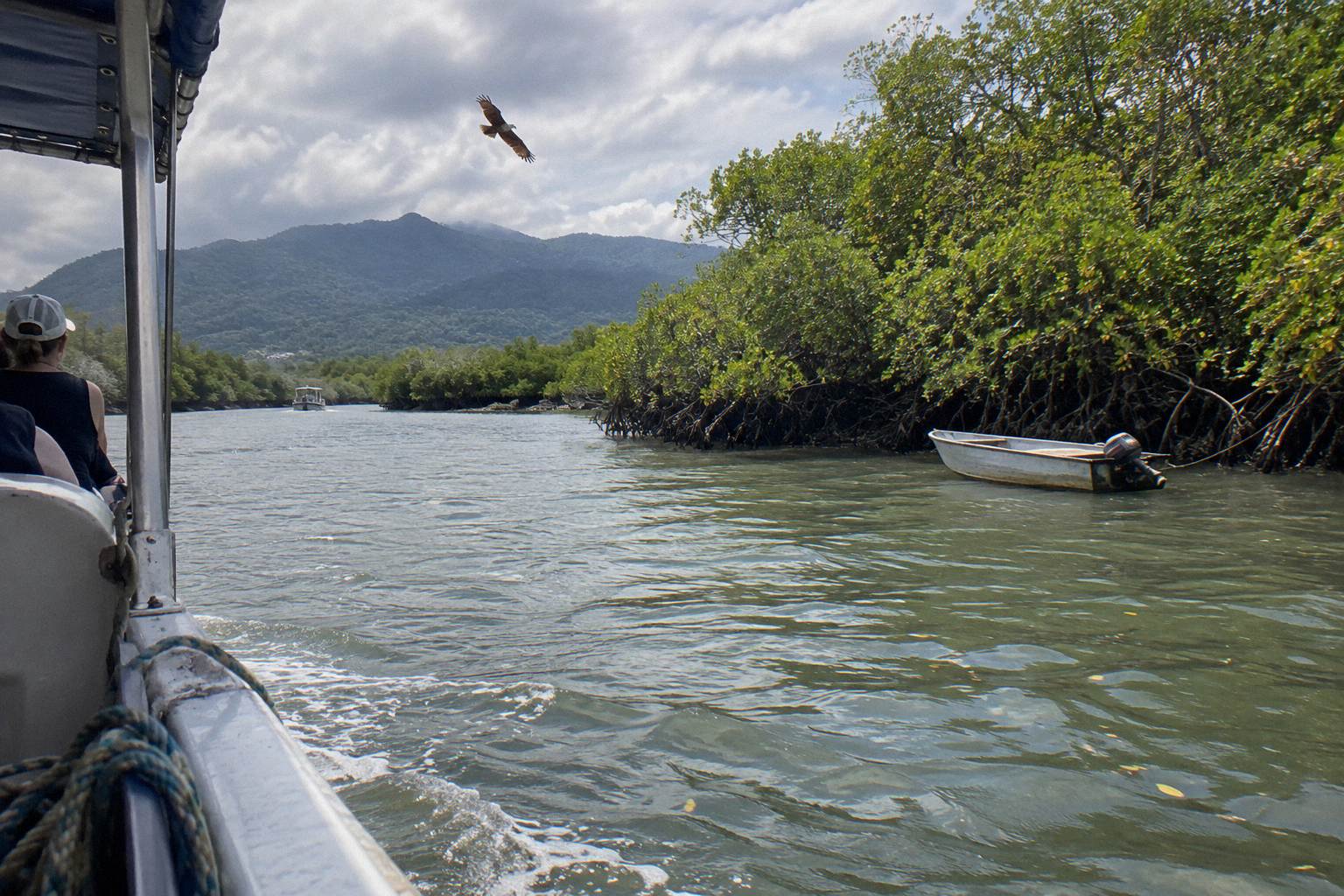
Dickson Inlet is the mangrove waterway that curls behind Port Douglas, and one scheduled cruise searches it for wild estuarine crocodiles: the Lady Douglas, a family-run vessel boarding at the Crystalbrook Superyacht Marina since 1989.
Short answer
One cruise runs on Dickson Inlet: the Lady Douglas, a 1.5-hour calm-water trip from the Crystalbrook Superyacht Marina at 44 Wharf Street, Port Douglas. Tickets start from US$32 per person, the cruise is rated 4.6 from 571 reviews. The operator says crocodiles are normally seen on over 90 percent of trips.
Dickson Inlet is a mangrove inlet at Port Douglas, a different waterway from the Daintree River, and it is the one place in town where a scheduled boat spends substantial time searching for wild estuarine crocodiles. The vessel that does it is the Lady Douglas, a family-run cruise operation that has worked the inlet since 1989. Its boarding point is the Crystalbrook Superyacht Marina at 44 Wharf Street, a short walk from most of the town's restaurants and a world away from the 45-minute drive to Daintree Village. For a reader staying near the marina, that is the whole appeal: you board a croc-spotting cruise and are back on Macrossan Street within two hours.
Only one cruise on Dickson Inlet is bookable through Port Douglas Crocodile Cruises, and it is the Lady Douglas. No other operator runs a scheduled croc cruise on the inlet, and none is sold here, so everything below describes one boat, one route and one set of inclusions. That simplicity is part of the draw. Where the Daintree River spreads its departures across village jetties and ferry-side ramps, Dickson Inlet concentrates a wildlife cruise inside the town boundary.
| Quick fact | Detail |
|---|---|
| Cruise | Lady Douglas River Cruise, 1.5 hours |
| Boarding | Crystalbrook Superyacht Marina, 44 Wharf St, Port Douglas |
| Price | From US$32 per person |
| Rating | 4.6 from 571 reviews |
| Waterway | Dickson Inlet, a mangrove inlet at Port Douglas |
| Operator | Lady Douglas, family run since 1989 |
| Cancellation | Free up to 24 hours before start |
| Pickup | Not included; board at Crystalbrook Superyacht Marina, 44 Wharf Street |
Where Does The Dickson Inlet Cruise Go?
The Lady Douglas cruises several kilometres through the mangrove channels of Dickson Inlet, past the inlet entrance, and along the Port Douglas waterfront before circling back to the marina berth where the cruise began, giving passengers a relaxed look at the inlet's waterways and the town's harbour edge in a single loop. Commentary runs the whole way, covering mangroves, crocodiles and local history, and the operator describes substantial time on board spent searching for wild estuarine crocodiles among the roots and mud banks. It is a calm-water cruise with no open-sea legs, which is why the boat suits families, prams and wheelchairs alike. The route stays inside Port Douglas the entire time, so nothing about the trip depends on a ferry, a hire car or a highway.
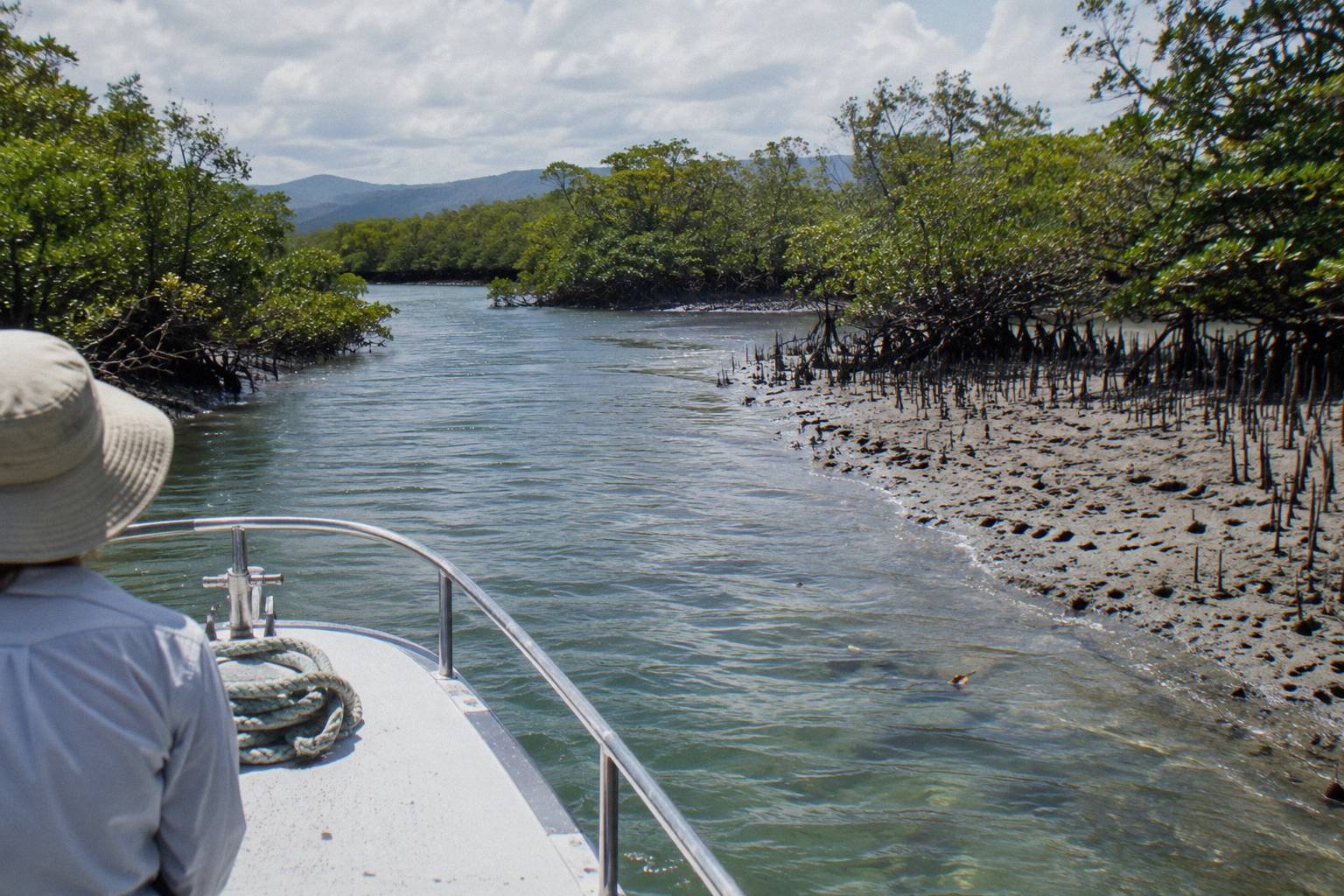
The inlet itself is a working ecosystem rather than a scenic pond. Mangrove forest lines the banks, and the tide moves through it twice a day, exposing mudflats where crocodiles haul out to warm themselves. The skipper's commentary explains how the mangroves filter the water and hold the shoreline, and how the inlet's history is tied to the town, from its fishing-industry years to the marina it is today. Because the channels are narrow and slow, the boat can drift close to the vegetation where birds and crabs are working.
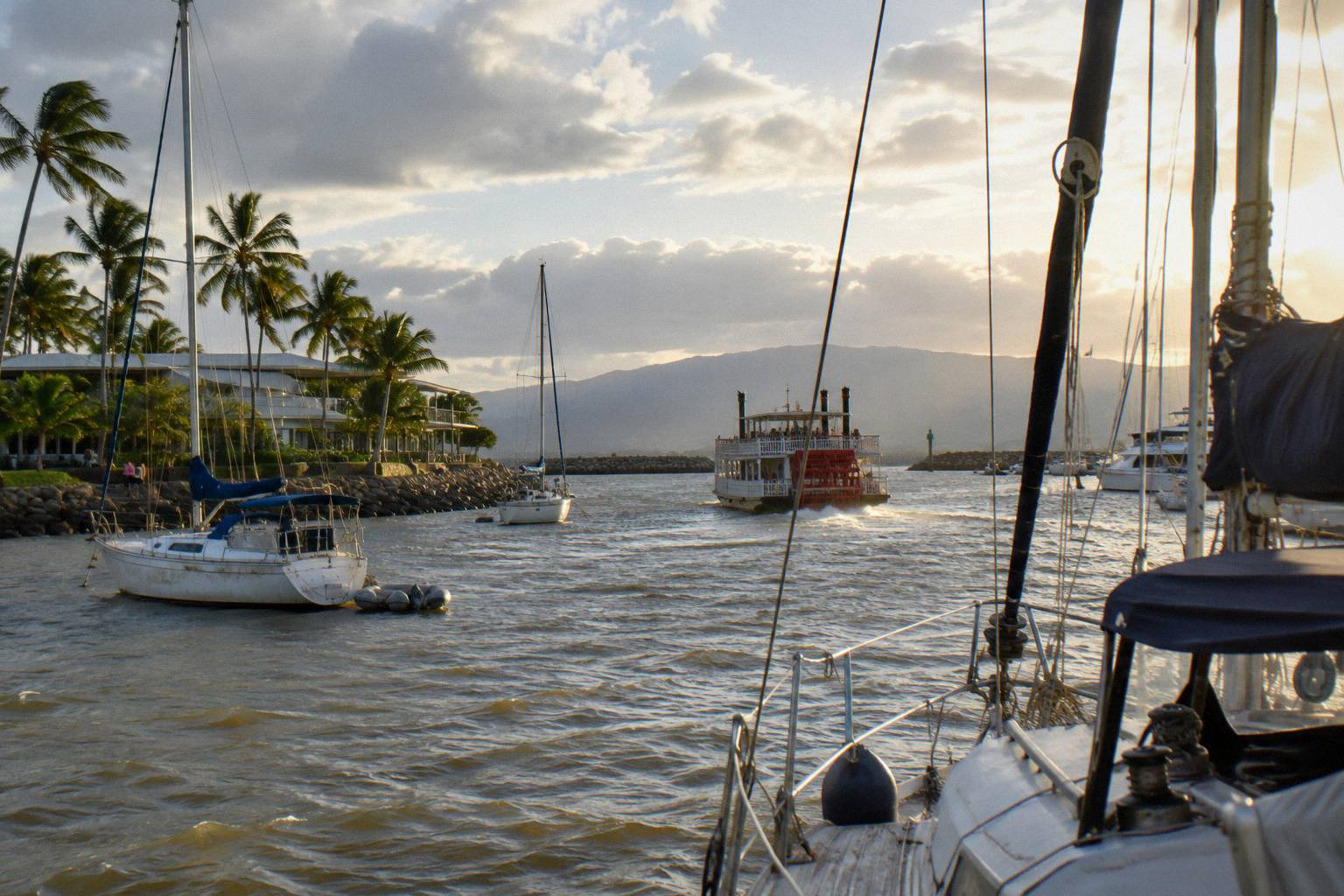
The final stretch widens out. At the inlet entrance the boat passes the breakwater, and the Port Douglas waterfront opens up: Four Mile Beach to the south, the headland to the north, and often the masts of superyachts back at the marina. Photographers get two completely different scenes on one trip, dense green mangrove walls early on and open water and sky at the end. It is a shape of cruise the Daintree River cannot copy, because the Daintree operators are confined to the river and never reach open water.
Readers weighing the two waterways can dig into the differences in what a Daintree River cruise is actually like, which covers the narrower, overhung channels upstream of the village.
What Is The Boat Like, And Who Can Board?
The Lady Douglas is a riverboat with covered seating across the entire back deck, plus a licensed bar and a toilet on board. It offers wheelchair and pram access, though the operator advises passengers who need specific access arrangements to call ahead, as there may be limits. The booking page lists a bar beverage and snacks for each passenger, skipper commentary throughout, and children's colouring sheets. Infants sit on laps and infant seats are available. It is a casual, family-oriented boat rather than an expedition vessel, and the cruise is sold as calm water from start to finish, which shapes who it suits and who should look elsewhere.
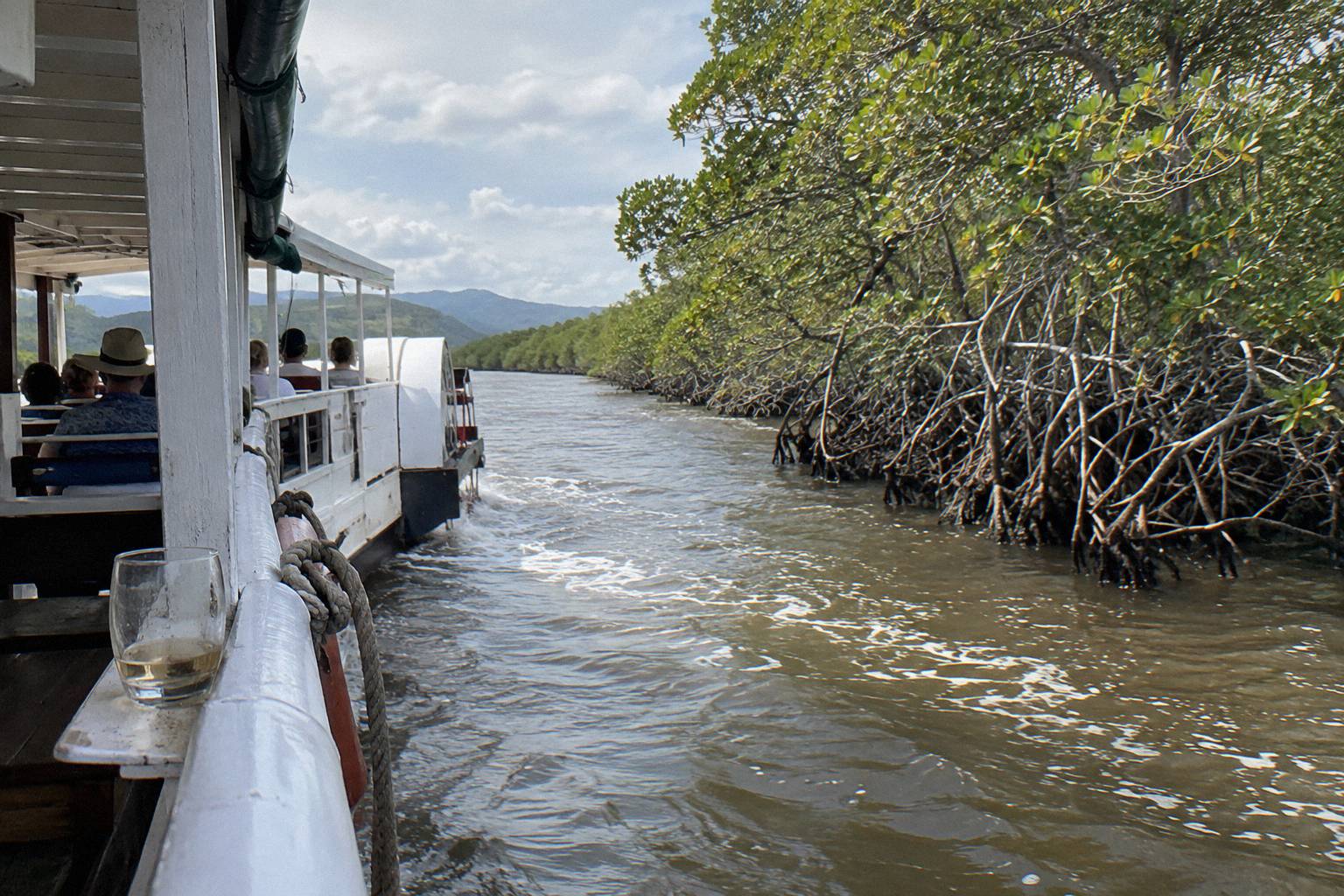
The covered back deck matters more than it sounds. Port Douglas averages a mean maximum above 29 degrees from October through April, and rain days climb toward fourteen a month in the first quarter of the year, so shade and shelter decide whether a 90-minute cruise is comfortable. The Bureau of Meteorology's Port Douglas climate averages show the pattern clearly: the driest stretch runs July to September with 23 to 32 millimetres per month, while January to March each deliver around 400 millimetres or more.
Accessibility is stronger here than on the Daintree River. The booking page for the Lady Douglas states the cruise is wheelchair accessible, while three of the Daintree operators mark their trips not suitable for wheelchair users, and one also excludes pregnant women and people with back problems. Families with small children get similar treatment: the Lady Douglas supplies colouring sheets, and the only age restriction in the Port Douglas category belongs to the two bus tours, which exclude under-3s and under-10s respectively. Anyone with specific mobility questions can compare the options in croc cruise accessibility and boarding.
For travellers whose priority is simply getting on the water with the least friction, the choice looks like this.
The Lady Douglas fills the first role. For a one-hour river alternative, the Daintree River Cruise Centre wildlife cruise runs from a south-side jetty with morning or afternoon tea included, from US$24 per person.
What Does The Cruise Cost, And What Is Included?
The Lady Douglas starts from US$32 per person, a from-price shown on the booking page, and that fare includes the full 1.5-hour cruise, skipper commentary, one beverage from the licensed bar, snacks, and children's colouring sheets. Free cancellation applies up to 24 hours before the start for a full refund, which gives late planners room to move. The rating stands at 4.6 from 571 reviews, the largest review pool of any cruise in the region covered here. Times are chosen on the booking calendar, and the operator's timetable follows demand.
Location is the quiet advantage: the marina is in town, though hotel pickup is not included. Among the cruises sold here, only the two bus tours collect from accommodation, and both cost several times more. The four Daintree River operators either suggest driving yourself or, in Bruce Belcher's case, state plainly that guests make their own way to the jetty. Anyone undecided between the two models can read how to choose crocodile tours from Port Douglas.
| Inclusion | Lady Douglas | Daintree River Cruise Centre | Bruce Belcher's |
|---|---|---|---|
| Price (from, per person) | US$32 | US$24 | US$30 |
| Duration | 1.5 hours | 1 hour | 1 hour |
| Beverage or food | Bar drink and snacks | Morning or afternoon tea | Complimentary tea or coffee |
| Hotel pickup | Not included, marina in town | Excluded, transfers own arrangement | No transfers offered |
| Wheelchair access | Booking page says accessible | Booking page says not suitable | Booking page says not suitable |
The table shows why the Lady Douglas earns its premium over the cheaper river cruises: it is half again as long, it boards in town, and it is the only one of the three whose booking page promises wheelchair access. Whether those extras matter depends entirely on where you are staying. A reader in a Daintree Village caravan park gains little from a Port Douglas marina departure and would rationally pick the cheaper jetty cruise.
One caution on pricing: the figure above is the booking page's from-price, and it moves with season and demand. Nothing here converts it to Australian dollars or adds fees, because those change too. Check the live price when you pick a date, which is also the moment you will see which of the four daily departure slots still have seats.
Which Crocodiles And Wildlife Will You See?
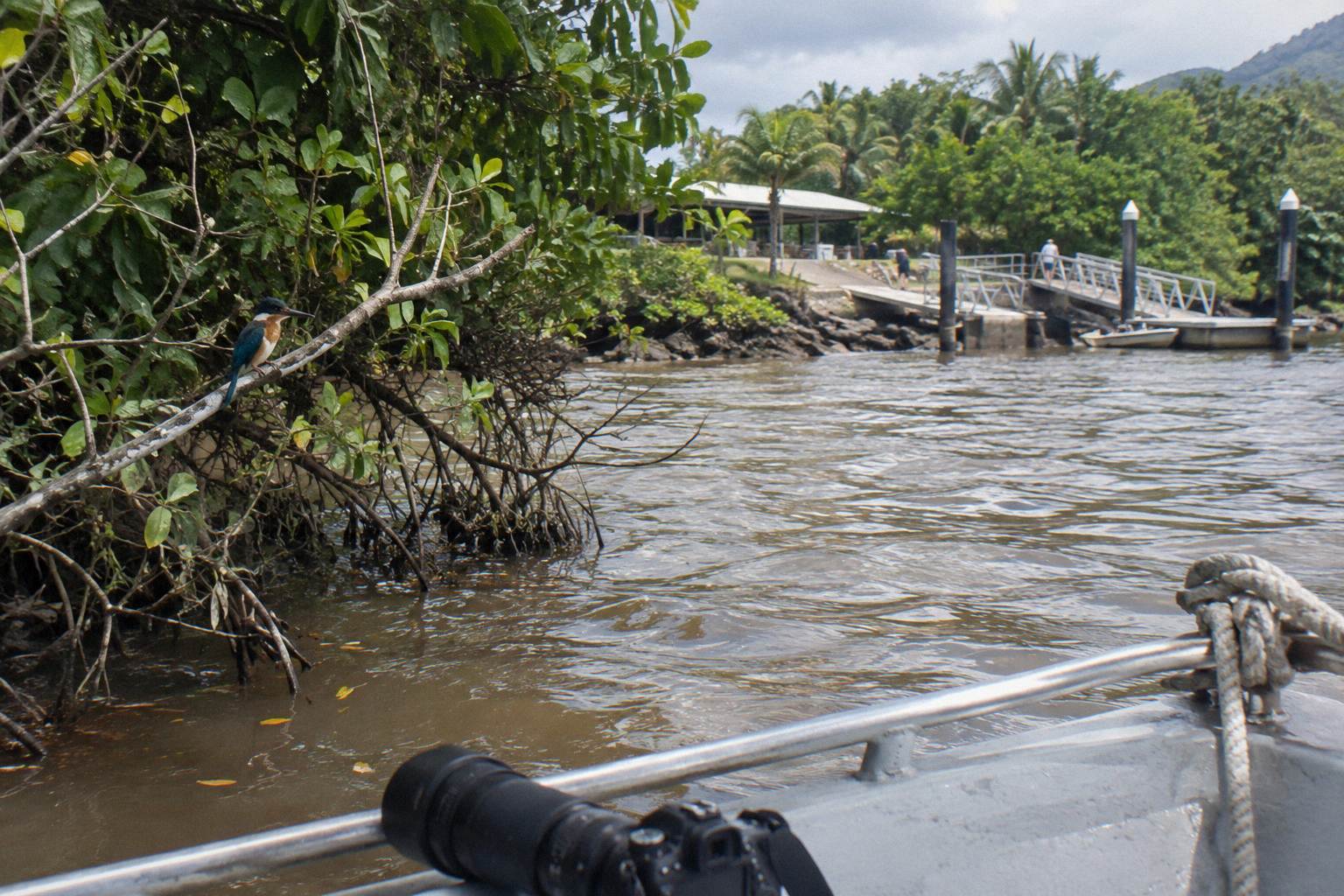
You will most likely see crocodiles, as the operator reports sightings on over 90 percent of trips, especially during the dry season from May through November. No sighting is ever guaranteed, however, because these are wild animals that move freely, so keep expectations flexible and enjoy whatever wildlife appears on your journey. Dickson Inlet is home territory for wild estuarine crocodiles, the same species that lives in the Daintree River, and the boat spends substantial time searching the mangrove banks for them. Beyond the crocs, the operator names sea eagles, kites, ospreys, kingfishers, herons, waders, crabs, mudskippers and spiders among the inlet's regular residents, so a trip with no crocodile still has plenty to watch.
The 90 percent figure is the operator's own claim, and it deserves that framing. Estuarine crocodiles are mobile animals, and the Queensland Government notes that males move around heavily during the breeding season, when courtship begins in October and November and nesting runs December to April, so sightings become more prevalent in that period. The same government guidance is blunt about the limits: no waterway within the species' natural range can be considered crocodile free, and crocodiles are highly mobile, especially after heavy rain and floods. A percentage is a pattern, not a promise.
Context helps too. Estuarine crocodiles grow to over 4 metres, the average male reaching 3 to 4 metres and 200 to 300 kilograms, and they are expected to live 50 years or more in the wild, according to the Queensland Government's estuarine crocodile page. Seeing one from a boat, on its own terms, in a mangrove channel behind a resort town, is a genuine wildlife encounter rather than a staged one. In Queensland it is an offence to feed a crocodile or to approach within 10 metres of one basking on a bank, so no legal cruise lures animals with food: what you watch is wild behaviour.
| Estuarine crocodile fact | Figure (Queensland Government) |
|---|---|
| Maximum length | Over 4 metres |
| Average male | 3 to 4 metres, 200 to 300 kilograms |
| Average female | Rarely over 3.5 metres, up to 150 kilograms |
| Male maturity | About 17 years, at about 3.3 metres |
| Female maturity | About 12 years, at about 2.3 metres |
| Clutch size | 40 to 70 eggs, about 90 days incubation |
| Breeding season | Courtship October to November, nesting December to April |
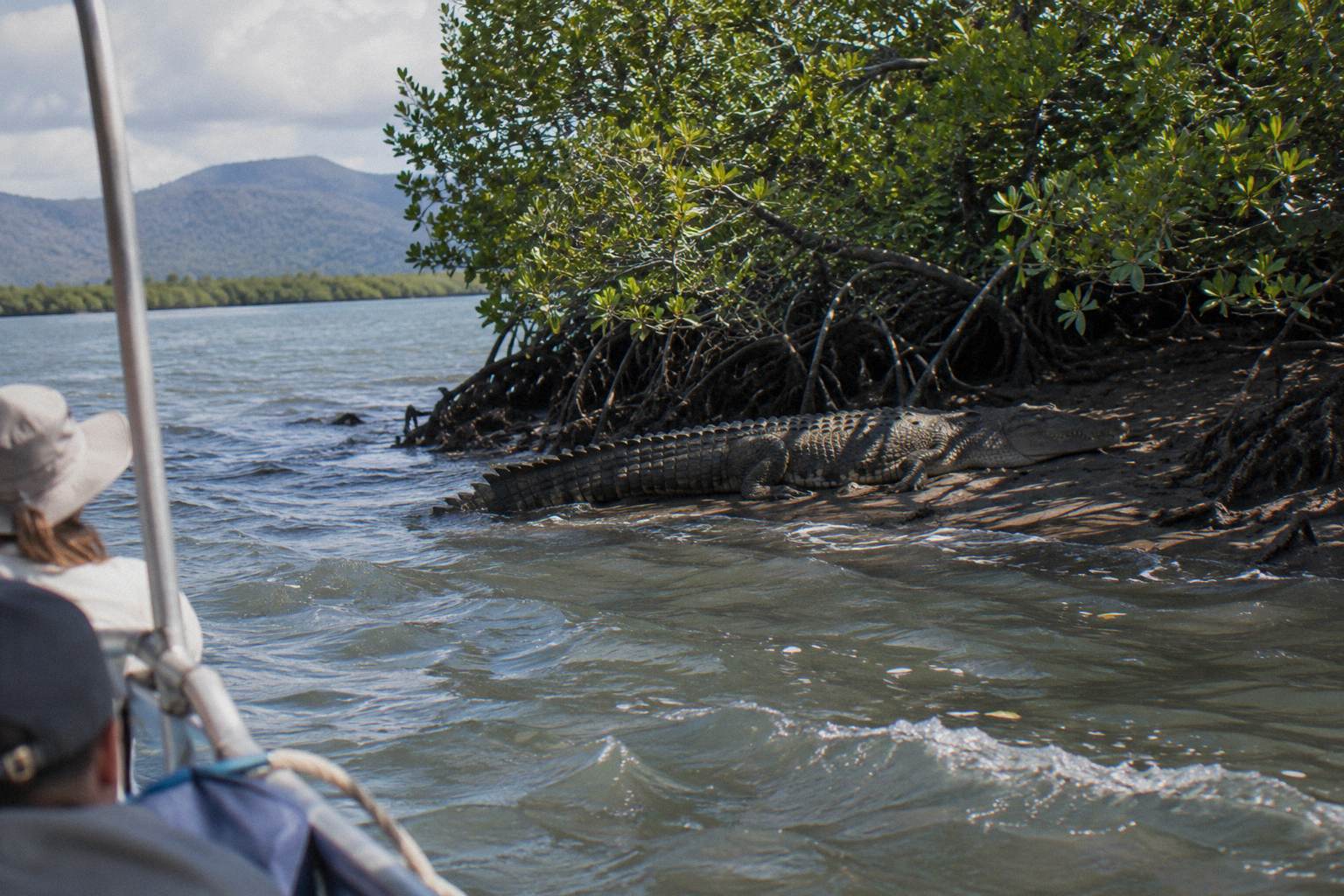
Birders should manage expectations in one direction only. The Daintree operators list a longer bird cast, including the great-billed heron, which Crocodile Express calls one of Australia's rarest herons, and the Daintree River Cruise Centre speaks of over 280 recorded bird species in its region. Dickson Inlet's list is shorter but respectable, and its raptors, sea eagles, kites and ospreys, are hunting birds you often see at close range over open water. The comparison is explored in Daintree River wildlife cruises for birds, snakes and crocs, for readers deciding between the two waterways on wildlife grounds.
For readers who want the deeper bird experience, one owner-run option is the Daintree Boatman sunset cruise, a two-hour dusk trip from the Stewart Street boat ramp whose operator focuses on kingfishers, the Papuan frogmouth and the black bittern. It is a different, slower product from a marina family cruise, and its price is on the booking page.
When Does The Cruise Run, And When Is Best?
The operator lists four daily slots, morning, midday, afternoon and a sunset departure with start times of 10.30am, 12.30pm, 2.30pm and 4.30pm, all dependent on seasonal demand, and the booking calendar decides what actually runs on your date. Sightings are strongest, the operator says, in the dry season from May to November. Weather follows the same calendar: July to September bring the driest, mildest conditions of the year, with mean maximums under 27 degrees and only four or five rain days a month.
The four-slot timetable is unusually flexible compared with the river operators. Daintree River Cruise Centre lists departures from 9.30am to 3.30pm, Bruce Belcher's runs 8.30am to 3pm but closes for all of February, and Crocodile Express runs 8.30am to 3.30pm daily except Christmas Day. The Lady Douglas's 4.30pm slot is the only one among the marina and village options that ends near sunset, about 5:54pm in June and about 6:46pm in December at Daintree's latitude. Crocodiles are most active at night, dusk and dawn, per Queensland Government guidance, so the late slot has a biological argument behind it as well as a photographic one.
| Month | Mean max (C) | Mean rain (mm) | Rain days (1mm+) | Sunset, about |
|---|---|---|---|---|
| January | 30.3 | 395.8 | 13.8 | 6:57pm |
| March | 29.5 | 429.4 | 14.4 | 6:35pm |
| May | 26.7 | 72.8 | 8.0 | 5:56pm |
| July | 24.6 | 26.4 | 4.2 | 6:02pm |
| September | 26.7 | 32.1 | 4.4 | 6:14pm |
| November | 29.5 | 106.1 | 7.6 | 6:29pm |
The wet season is not a write-off, but it changes the odds. The operator ties its strongest sighting months to the dry season, May to November, and the warm months bring both heavier rain and the breeding season, when males move and sightings grow more prevalent but less predictable in any single channel. Readers planning around the calendar can go deeper with choosing the best month for a Daintree croc cruise, and anyone curious about how the tide reshapes the banks can read tides and croc sightings on the Daintree River.
How Does A Marina Cruise Compare With The Daintree River?
A Dickson Inlet cruise trades remoteness for convenience: the waterway is smaller and the bird list shorter, but the boarding point is in Port Douglas, the trip runs 1.5 hours, and the review pool of 571 is the largest of any cruise sold here. The Daintree River offers wilder, bigger-country cruising across two distinct zones, the narrow overhung village reaches and the wide mangrove estuary by the ferry, but every one of its operators requires the drive north. Neither is objectively better; they solve different itineraries.
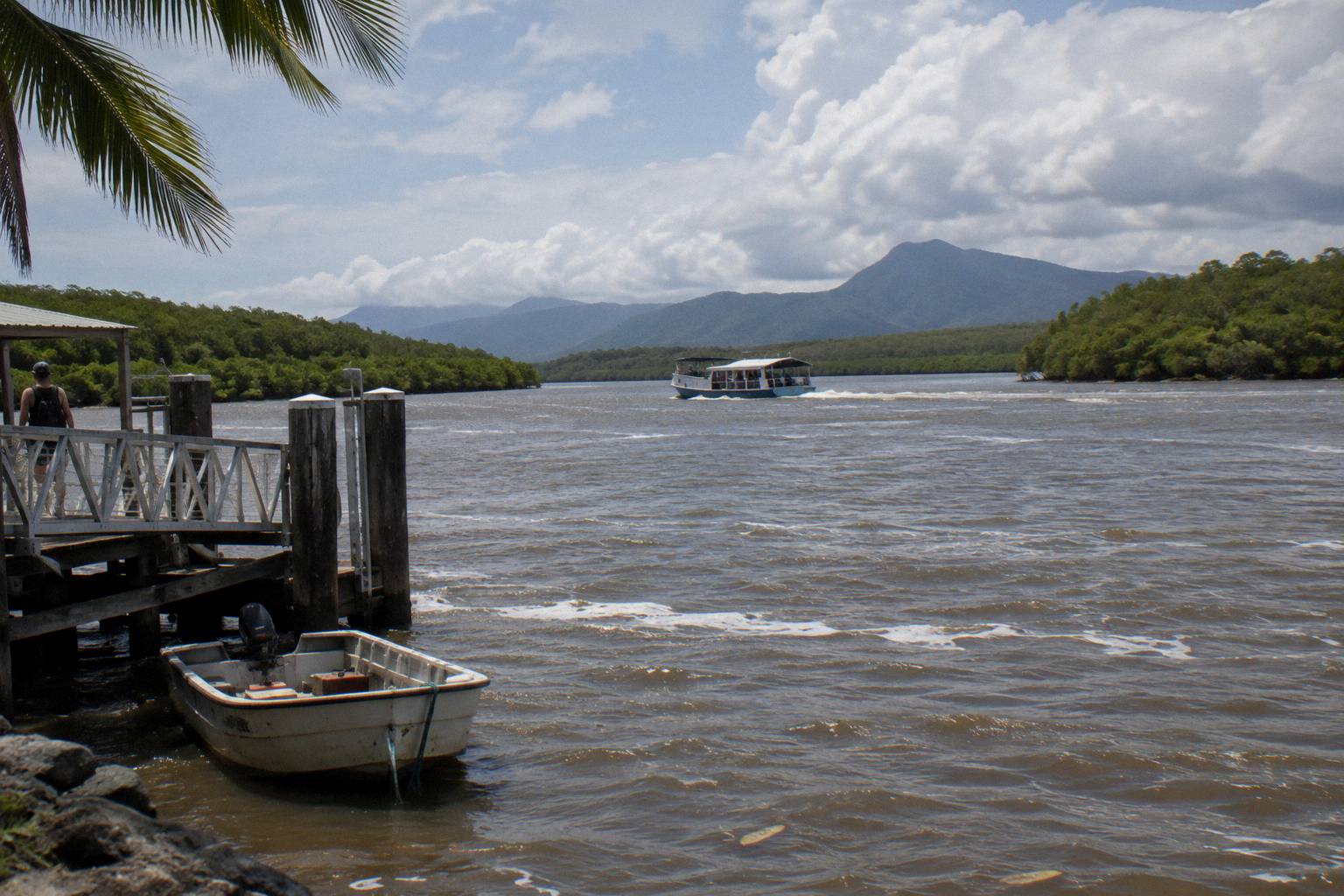
Think in terms of the day around the cruise. If you are based in Port Douglas for three nights without a car, the Lady Douglas is effectively the only croc cruise that fits, and the half-day and full-day bus tours from the same category add the river and Mossman Gorge at US$121 and US$165 from-prices respectively. If you have a car and a full day, the Daintree River wins on scale, and you can layer it with the ferry, a lookout walk or the village. The trade-offs are laid out side by side in Daintree River cruises compared.
For readers who want the two-river pass, the Crocodile Express Daintree wildlife cruise covers both zones on one ticket: one cruise from Daintree Village and a second from a kiosk about 300 metres before the ferry, valid for 14 days from first activation, from US$27 per person with a 4.6 rating from 477 reviews. It is the most direct contrast with the marina cruise, a one-hour drive-yourself river trip versus a 90-minute doorstep departure.
And for a boat with a different silhouette altogether, the Solar Whisper croc and wildlife cruise is a roofed solar-electric vessel with no windows, boarded about 400 metres before the car ferry, whose operator claims about a 99 percent success rate and a free return cruise if none is seen. Its price is on the booking page. Quiet electric propulsion is a real advantage for close wildlife approaches, something no diesel vessel can match.
What Are The Mistakes To Avoid On A Marina Croc Cruise?
The most common mistakes are booking the sunset slot without checking that it runs in your week, expecting a guaranteed crocodile, dismissing the wet season outright, and planning the cruise for the morning you fly out, when a 90-minute trip plus boarding leaves no buffer in the day. None of these are operator problems, they are planning problems, and each is avoidable with one decision made early. The timetable is demand-dependent, the sighting rate is an operator's claim rather than a contract, and the weather table above does the rest of the work.
Book the slot that matches your energy, not the brochure's. Families with small children often do better on the 10.30am or 12.30pm departures, when colouring sheets and snacks carry more weight, while photographers lean toward the 4.30pm slot for low light across the water. Both are legitimate choices; the mistake is assuming every slot runs every day in the low season. Pick your date on the calendar first, then argue about the hour.
Do not treat the inlet as a warm-up act. Dickson Inlet is a real mangrove ecosystem with wild crocodiles in it, governed by the same Queensland rules that apply to the Daintree: stay more than 5 metres from the water's edge on land, be extra cautious at dusk and dawn, and never feed or approach a basking crocodile. The Be Crocwise guidance applies on the jetty at the marina just as it does on a riverbank. A cruise boat is the safe way to meet this animal; the shoreline is not.
Finally, do not skip the cruise because you have a Daintree day planned later. The two trips are different animals, and many travellers do both. The marina cruise costs from US$32 and asks nothing of your day; the river trips cost a car, a drive and half a day. If the budget allows one, the deciding question is simple: do you want crocodiles inside your holiday town, or inside 895,000 hectares of World Heritage rainforest, the scale the Wet Tropics was inscribed for in 1988?
Common Questions About Dickson Inlet Cruises
Can You See Crocodiles On A Cruise From Port Douglas Marina?
Yes. The Lady Douglas spends substantial time searching Dickson Inlet for wild estuarine crocodiles, and the operator says they are normally seen on over 90 percent of trips, especially in the dry season from May to November. No sighting is guaranteed, and the crocodiles are wild animals.
How Long Is The Dickson Inlet Cruise?
The Lady Douglas cruise runs 1.5 hours, boarding at the Crystalbrook Superyacht Marina at 44 Wharf Street, Port Douglas. The route covers several kilometres of mangrove channels, the inlet entrance and the Port Douglas waterfront.
How Much Does A Dickson Inlet Cruise Cost?
Tickets start from US$32 per person, including one bar beverage, snacks, skipper commentary, and children's colouring sheets. Free cancellation applies up to 24 hours before the start.
Is The Lady Douglas Wheelchair Accessible?
The booking page states the cruise is wheelchair accessible, and the operator describes wheelchair and pram access on board, advising passengers with specific needs to call ahead for limits. It is the only cruise sold here whose booking page promises wheelchair access.
What Time Does The Dickson Inlet Cruise Leave?
The operator lists four daily slots with start times of 10.30am, 12.30pm, 2.30pm and 4.30pm, dependent on seasonal demand. The booking calendar for your chosen date shows which departures are running.
Is Dickson Inlet The Same As The Daintree River?
No. Dickson Inlet is a mangrove inlet at Port Douglas; the Daintree River is about 45 minutes' drive north. A Dickson Inlet cruise boards in town, while Daintree River cruises depart from village jetties or ramps near the ferry.