
Saltwater Crocodiles Of The Daintree River: Sizes, Habits And Individual Crocs
Estuarine crocodiles grow to over 4 metres, breed from October to April, and move around the Daintree River far more than most visitors expect. Here is what the Queensland Government and the river's own cruise operators say about the animals, season by season.
Short answer
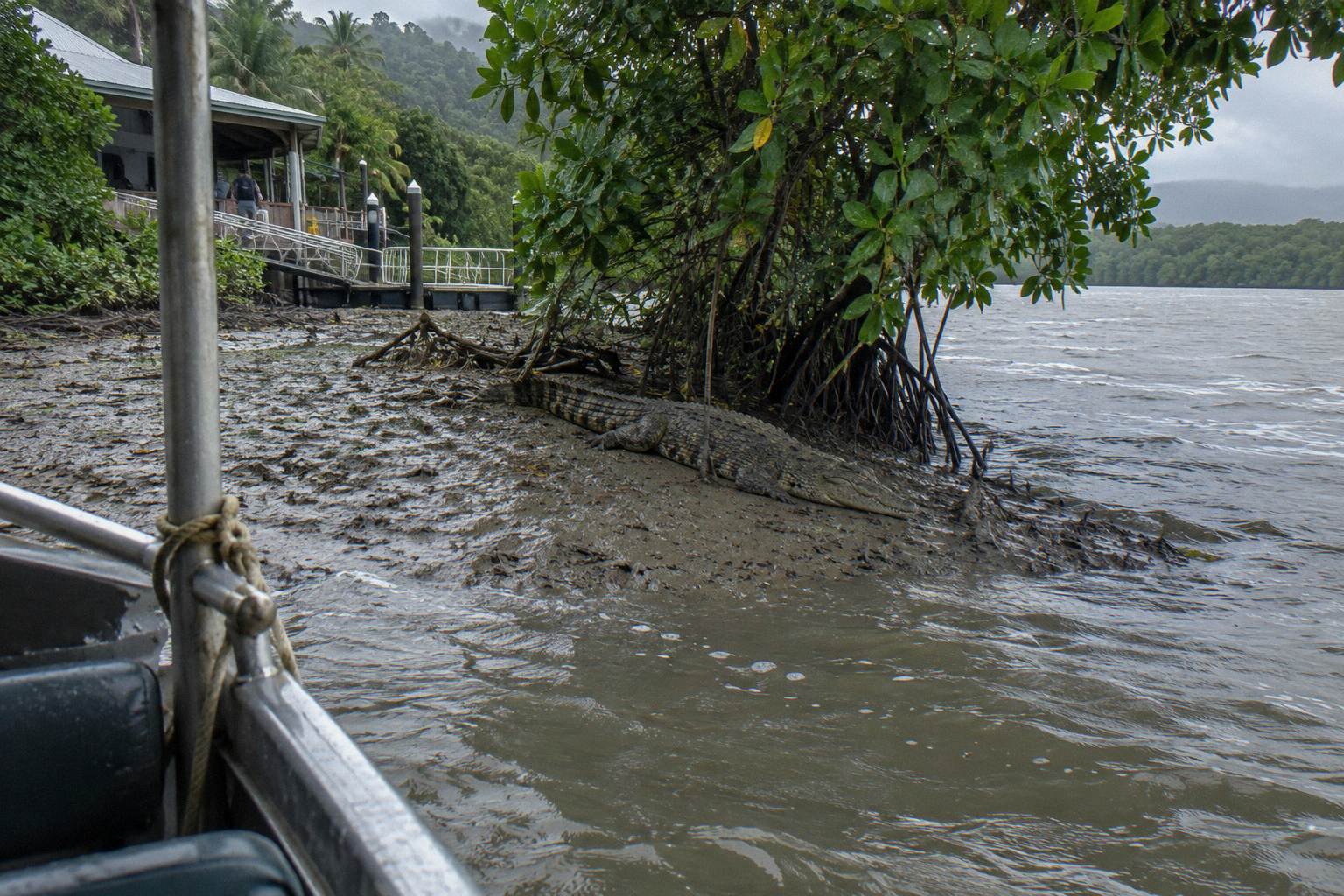
Estuarine (saltwater) crocodiles in Queensland grow to over 4 metres, with the average male 3 to 4 metres and 200 to 300 kilograms. They are most commonly seen in the tidal reaches of rivers like the Daintree. Males become very mobile while looking for a mate in the breeding season, so sightings are more prevalent from October to April.
Estuarine crocodiles have lived in the rivers of far north Queensland for a very long time, in a landscape that was itself inscribed on the UNESCO World Heritage List in 1988. The Wet Tropics of Queensland covers about 895,000 hectares and holds some of the oldest continuously surviving tropical rainforests on Earth. The Daintree River winds through the middle of it, a tidal waterway where crocodiles bask on the banks, hunt in the mangroves, and drift past cruise boats carrying visitors from Port Douglas and beyond.
The animals themselves are the reason those boats exist. A crocodile on a sandbank is one of the great sights of Australian wildlife, and the Daintree is one of the most accessible places in the country to look for one from a licensed vessel. Understanding how big these animals grow, when they breed, and why they seem to vanish for weeks at a time turns a boat ride into something far more rewarding.
How Big Do Daintree Saltwater Crocodiles Actually Grow?
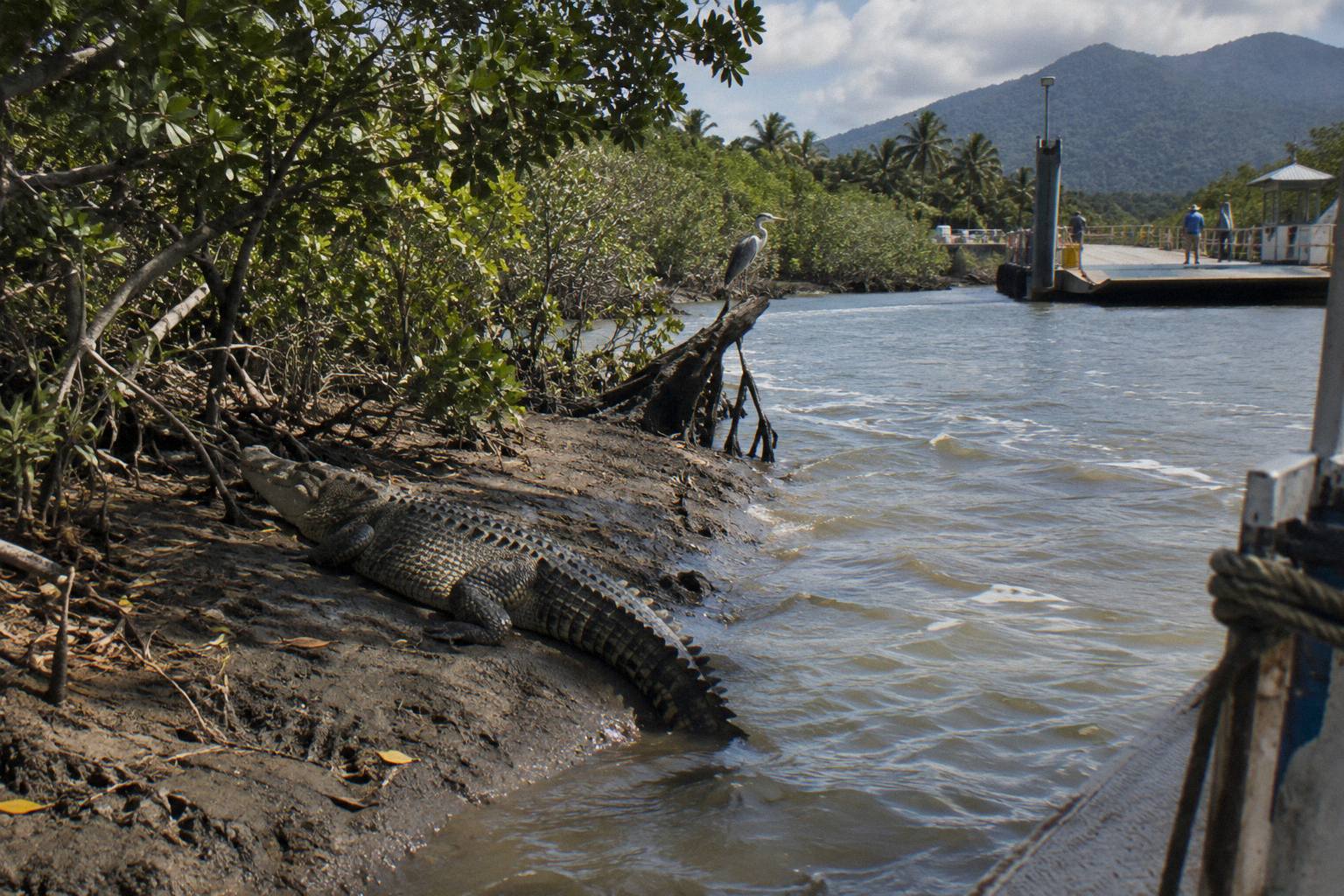
Estuarine crocodiles grow to over 4 metres in length, and the Queensland Government gives the average male as 3 to 4 metres and 200 to 300 kilograms. Females rarely exceed 3.5 metres and reach up to 150 kilograms. Wild lifespan is unknown, with the animals expected to live for 50 years or more. Males mature at about 17 years, females at about 12.
Those figures come from the Queensland Government's own estuarine crocodile information, and they describe the species across its entire Queensland range, not just the Daintree. It is worth slowing down on what they mean. A 3-metre male is not an unusually large animal here; it is an average adult. When a cruise boat eases alongside a sandbank and a crocodile slides into the water, the length is genuinely hard to judge from the water, and first-time visitors routinely overestimate it.
Growth is slow and it never quite stops. A male takes roughly 17 years to reach maturity at about 3.3 metres, a female about 12 years at 2.3 metres. An old animal at the top of the size range is therefore decades old, and the biggest individuals on any given river are usually the ones that have held the best basking and hunting territory the longest. The Government's "over 4 metres" line is a growth ceiling for the species, and no article can tell you the largest crocodile currently on the Daintree, because no such count or named measurement exists.
| Measurement | Male estuarine crocodile | Female estuarine crocodile |
|---|---|---|
| Average adult length | 3 to 4 metres | Up to about 3.5 metres, rarely exceeded |
| Average adult weight | 200 to 300 kilograms | Up to 150 kilograms |
| Age at maturity | About 17 years | About 12 years |
| Length at maturity | About 3.3 metres | About 2.3 metres |
| Maximum growth | Over 4 metres | Rarely over 3.5 metres |
Size matters to how crocodiles use the river, too. The big males hold the prime real estate, the warm sandbanks and the deep channels near the mouth, while smaller animals are pushed into the narrower, shadier stretches upstream. Cruise operators work this constantly: a boat that spends its hour in the upper river near Daintree Village is looking at a different slice of the population than one working the wide tidal estuary at the ferry end. If you want the full picture of which jetty covers which stretch of water, the guide to Daintree Village jetties and cruise departure points breaks down the village ramp against the Lower Daintree departures.
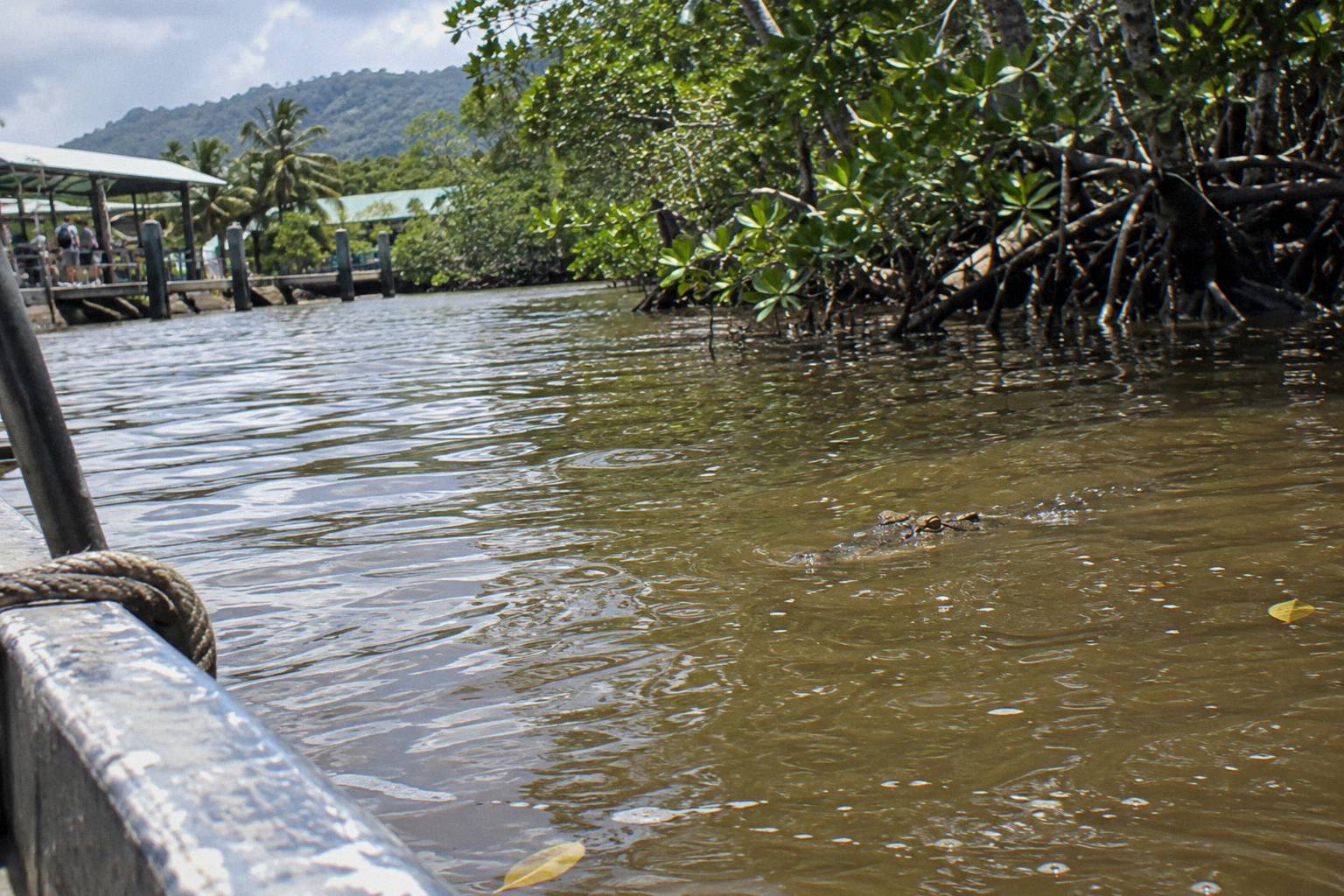
Visitors often ask about teeth, bite force or record animals. The Government's figures cover range, size, lifespan, maturity and breeding, and those are the only species statistics worth repeating. Anything beyond them, a "biggest croc on the Daintree" claim or a named local animal, is folklore rather than fact, and the boat skippers themselves are careful not to play that game. What they will tell you on board is how to read a crocodile's behaviour: a basking animal lying flat with its mouth open is thermoregulating, a cruising animal with just its eyes and nostrils above the surface is hunting or travelling.
Where The Daintree Sits Inside The Queensland Crocodile Range
Estuarine crocodiles occur in Queensland between Gladstone and Cape York Peninsula, and throughout the Gulf of Carpentaria, and they are most commonly seen in the tidal reaches of rivers. The Daintree is exactly that kind of waterway: a tidal river with mangrove-lined banks, mud banks exposed at low tide, and a slow transition from narrow rainforest channel to open estuary.
The Queensland Government's estuarine crocodile pages describe a species that lives in salt and brackish water, which is why "saltwater crocodile" and "estuarine crocodile" are the same animal. The name misleads people. These crocodiles are perfectly at home a long way up freshwater rivers and creeks, and the Daintree's upper reaches near the village are as much crocodile habitat as the estuary at the ferry. No waterway within their natural range can be considered crocodile free, in the Government's own words, which applies to swimming holes, creek mouths and riverbanks alike.
Within the Daintree system, the river splits into two quite different cruising grounds. Upper Daintree, the village end, is narrower and calmer with overhanging trees, which suits smaller crocodiles, roosting birds and close-quarters wildlife viewing. Lower Daintree, the ferry end, is a wide tidal estuary with mangroves, where the big mud banks appear at low tide and the larger animals bask. Crocodile Express, which runs one-hour cruises from both ends on a single ticket, from US$27 per person and rated 4.6 from 477 reviews, is built around exactly that contrast.
The tide reshapes the river twice a day, and the crocodiles move with it. At low water the banks widen and animals bask in the sun; at high tide the banks shrink and crocodiles spend more time floating in the channels. Operators read this constantly. Solar Whisper says low tide is usually better "as there more beaches and less water to hide in", while the most difficult time is in the summer on a high tide. Bruce Belcher's says low tide can enhance the chances but crocodiles are still seen at high tide. For the full mechanics of how water level and time of day interact, see how tides shape crocodile sightings on the Daintree River.
One more range fact matters for visitors who confuse the Daintree with the Northern Territory's "jumping crocodile" shows. In Queensland, deliberately disturbing or feeding a crocodile is an offence, and it is illegal to approach a basking crocodile within 10 metres by boat. A Queensland river cruise is a spotting trip, not a feeding show, and the boats keep their distance. If you are weighing the two formats, the comparison of a jumping crocodile cruise against a Daintree spotting cruise covers the differences without pretending one is bookable from Port Douglas.
The Breeding Calendar: Why Crocodile Sightings Rise And Fall
Courtship begins in October and November, and nesting runs from December to April, with nests holding 40 to 70 eggs and about 90 days of incubation. During the breeding season, male crocodiles become very mobile as they look for a mate, so sightings are more prevalent. That single line from the Queensland Government explains most of the seasonal patterns visitors notice on the river.
It also cuts against the usual visitor assumption that winter is always the best time to see a crocodile. Both things are true at once, and they work on different animals. Big males on the move in the breeding season are easier to spot because they travel the length of the river and fight for territory in the open. Resident animals in the cooler, drier months of June to September bask for longer on the exposed banks because they need the sun's warmth.
The operators describe the same seesaw from the boat's point of view. Bruce Belcher's says crocodiles are spotted on 98 percent of trips, particularly in the cooler months from June to September, and about 50/50 in the warmer months, which it ties to the breeding season and the wet season. Lady Douglas says crocodiles are normally seen on over 90 percent of trips, especially in the dry season from May to November. Solar Whisper says about a 99 percent success rate overall, with small crocodiles very reliable and big ones that come and go, and notes that in the warmer months the river temperature rises and crocodiles are harder to see. Those are operator claims about their own trips, not guarantees, and two of them, Bruce Belcher's and Solar Whisper, offer a complimentary return cruise if no crocodile is seen.
| Period | What the crocodiles are doing | What operators say about sightings |
|---|---|---|
| June to September | Cooler months, long basking sessions on exposed banks | Bruce Belcher's: crocodiles spotted on 98 percent of trips |
| May to November | Dry season on the Daintree and Dickson Inlet | Lady Douglas: normally seen on over 90 percent of trips |
| October and November | Courtship begins, males become very mobile | Queensland Government: sightings are more prevalent |
| December to April | Nesting season, 40 to 70 eggs, about 90 days incubation | Warmer months, river temperature rises and crocodiles are harder to see (Solar Whisper) |
| May to October | Crocs and snakes at their best on the village stretch | Daintree Boatman: much more difficult outside this period |
The rainfall numbers behind those seasons come from the Bureau of Meteorology's Port Douglas records: the wet months of January to March each deliver 395 to 429 mm of rain, while July to September drop to between 23 and 32 mm. Heavy rain matters to crocodiles as well as to cruise schedules, because the Government notes that crocodiles are highly mobile after heavy rain and floods. The Bureau's climate averages underpin the month-by-month picture, and the guide to the best month for a Daintree crocodile cruise works through the trade-offs in detail.
For a reader whose real goal is simply to maximise the odds, the practical read is this: any month can produce a sighting, the operators' own claimed rates sit above 90 percent in their best seasons, and the two variables you control are the tide and the departure point. What you cannot control, and what nobody can promise, is which individual animal decides to bask in the open during your hour on the water.
What A Cruise Boat Actually Does When It Finds A Crocodile
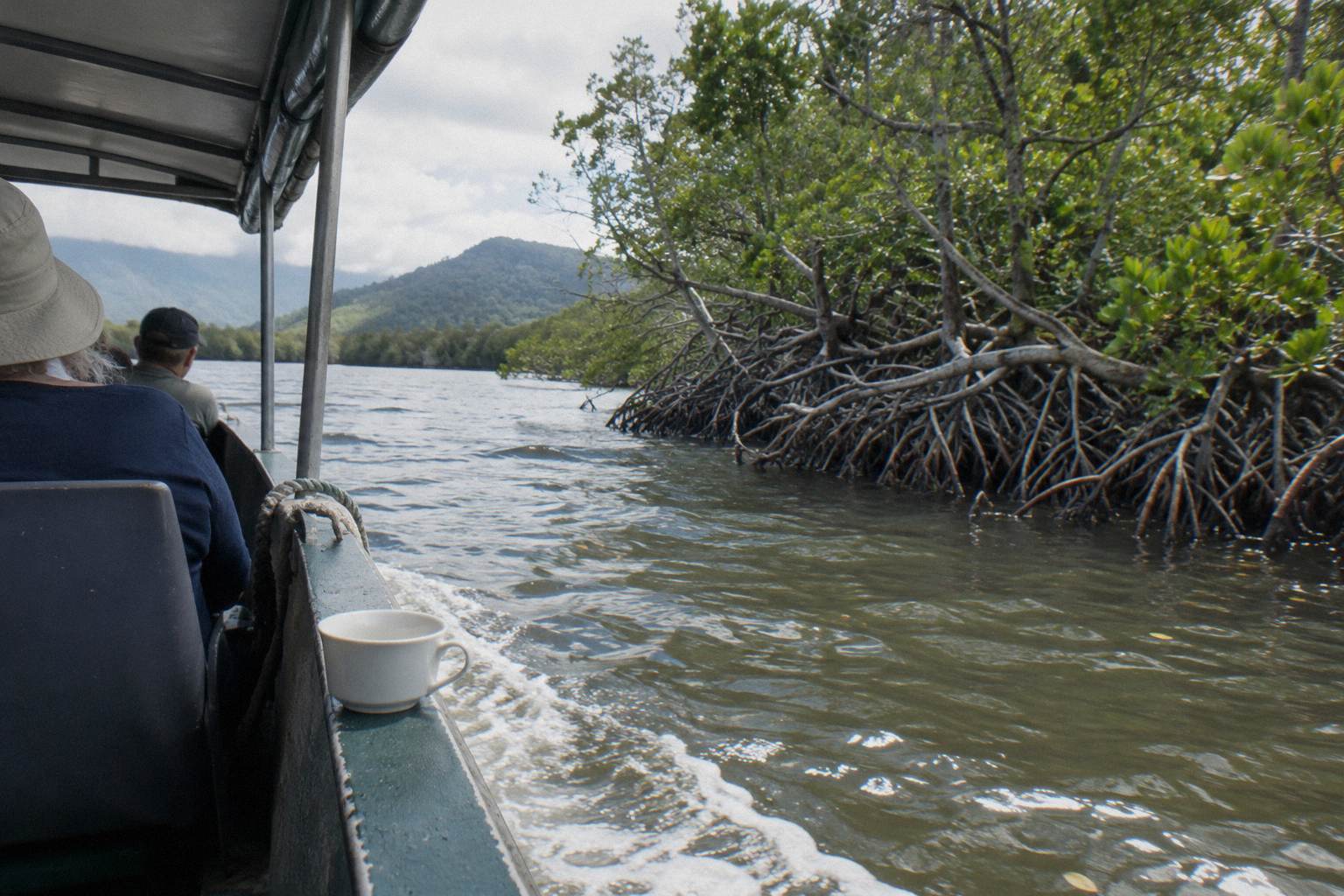
A licensed cruise boat on the Daintree does not chase, feed or call crocodiles. The skippers cruise slowly along the banks, watch for eyes, nostrils and slide marks on the mud, and hold position at a distance while the skipper narrates. Queensland law makes it an offence to approach within 10 metres of a basking crocodile by boat without a reasonable excuse, and the operators design their runs around that line.
Slide marks are the tell. A crocodile hauling out of the water leaves a smooth channel through the mud, and an experienced skipper can read how fresh it is, roughly which way the animal went, and whether it is worth waiting near the bank. Boats also work the tide: a falling tide exposes fresh basking banks, and a rising tide pushes floating animals into the channels where they are easier to see from the deck. Passengers who wonder whether the animals ever react aggressively to boats can read the straight answer in the piece on whether a crocodile can tip over a cruise boat.
Each operator describes the approach in its own words. Lady Douglas, a riverboat that has cruised Dickson Inlet since 1989, says substantial time on board is spent searching for wild estuarine crocodiles, with covered seating on the back deck, a licensed bar and a toilet, from US$32 per person. Solar Whisper runs a roofed solar-electric boat with no windows and no toilet on board, an amenities block beside its office near the ferry, and takes a maximum of 10 people on its two-hour cruises. The one-hour trip covered here departs the Esplanade at Lower Daintree, with the ticket office about 400 metres before the car ferry; check the booking page for the current price.
Bruce Belcher's, running from its own jetty at 2856 Mossman-Daintree Road since 1987, lists a guide and commentary throughout, a complimentary Daintree tea or coffee, and a private wildlife boutique facility, with a 200-metre uncovered walk to the boats and non-slip shoes required. It operates March to January and closes for all of February, Christmas Day and New Year's Day, with cruises listed from 8:30am to 3pm, subject to change. The Daintree River Cruise Centre, a family business since 1987 on the south side before the ferry, includes morning or afternoon tea with its guided wildlife cruise and welcomes assistance animals, with a call ahead for jetty and boat access.
| Operator and boat | Where it departs | How it searches for crocodiles |
|---|---|---|
| Lady Douglas | Crystalbrook Superyacht Marina, 44 Wharf St, Port Douglas | Cruises Dickson Inlet mangrove channels, then the inlet entrance and waterfront, with substantial time searching for wild crocodiles |
| Solar Whisper | Esplanade, Lower Daintree, about 400 m before the car ferry | Roofed solar-electric boat with no windows, quiet electric drive on the estuary |
| Bruce Belcher's | Private jetty, 2856 Mossman-Daintree Rd, Lower Daintree | Guide-led one-hour cruise with commentary throughout |
| Crocodile Express | Daintree Village and the Daintree Ferry Gateway | One pass covers two one-hour cruises, village and ferry routes, valid 14 days |
| Daintree River Cruise Centre | 2914 Mossman-Daintree Rd, south side before the ferry | Guided wildlife cruise from its own jetty, with tea included |
Photography works differently from a moving deck, and a long lens, fast shutter and a seat near the rail pay off. The animals most often appear as eyes and nostrils at distance, and a skipper who holds the boat steady for a basking crocodile is giving you the shot. For the full kit list, the guide to photographing crocodiles from a river cruise covers settings and angles for tidal water.
The Birds, Snakes And Other Wildlife Sharing The River
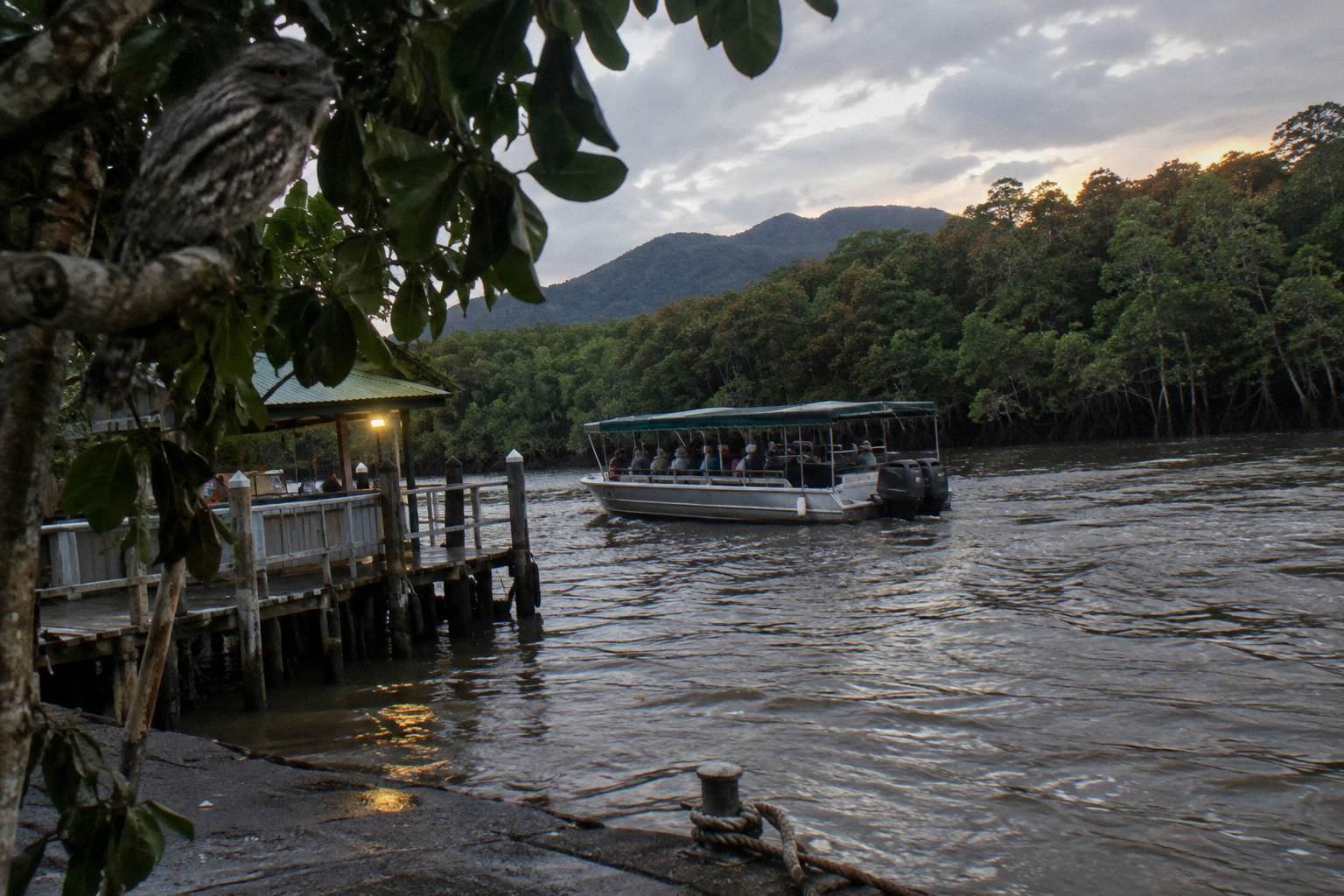
A Daintree crocodile cruise is a wildlife cruise that happens to be headlined by crocodiles. Operators list sea eagles, kites, ospreys, kingfishers, herons, waders, crabs, mudskippers and spiders around Port Douglas, and azure and little kingfishers, great-billed herons, shining flycatchers, amethystine pythons and tree snakes on the river. The Daintree River Cruise Centre says over 280 species have been recorded in the region.
The great-billed heron is the bird serious wildlife watchers come for. Crocodile Express calls it one of Australia's rarest herons, a large, dark, slow-moving bird that feeds along the mangrove roots in the early and late parts of the day. Daintree Boatman, an owner-run operation departing the public boat ramp at Stewart Street in Daintree Village, lists azure, little and sacred kingfishers, Papuan frogmouth, great-billed heron, shining flycatcher and black bittern, plus common tree snakes and water dragons, and says crocs and snakes are best between May and October. Its two-hour sunset cruise sits right in the window when those birds move to the banks to roost.
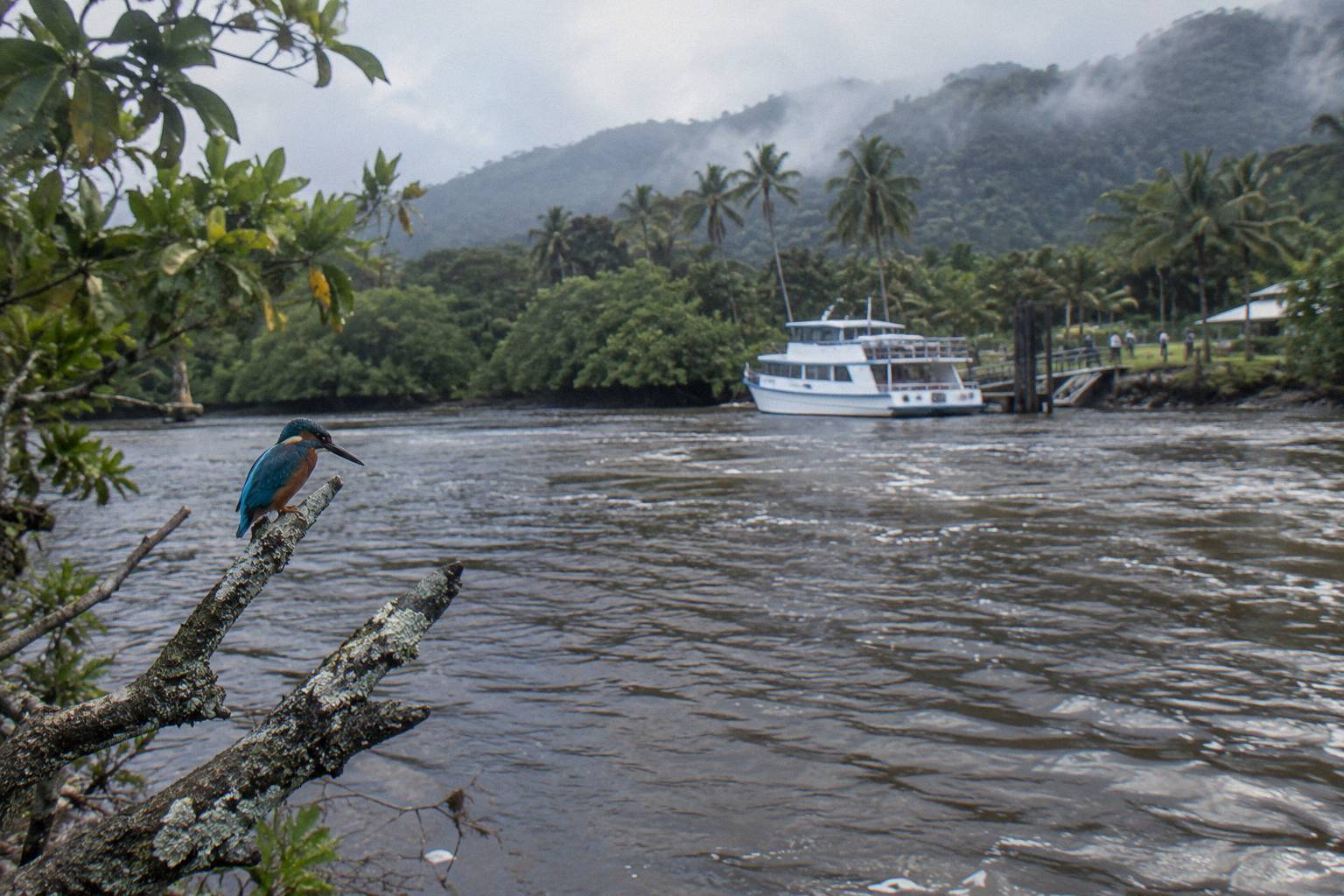
Amethystine pythons, Australia's largest snake, bask in the trees overhanging the upper river, and a good skipper will point out a coiled animal metres from the boat that almost every passenger would have floated straight past. Tree snakes hunt the same canopy. What no one can list is a cassowary, a platypus or a tree kangaroo from the boat: those animals belong to the forest, not the river channel, and a cruise that promises them is promising something outside its habitat. The full species rundown lives in the guide to the birds, snakes and crocodiles of a Daintree River wildlife cruise.
The mix changes with the clock as much as the calendar. Kingfishers and herons work the banks hardest in the first and last hours of daylight, raptors ride the thermals at midday, and crocodiles bask through the middle of the day in the cooler months. That is why the departure time you choose matters nearly as much as the month, and why the sunset and dawn formats exist alongside the standard daytime hours.
Crocodile Safety: The Rules That Apply On And Off The Boat
Follow Queensland's Be Crocwise advice: stay more than 5 metres from the water's edge, be extra cautious at night, dusk and dawn, and remember crocodile interactions can happen at any time of year. On the water, keep arms and legs inside the boat and use it as a barrier. Note the 5-metre line is safety advice, while the 10-metre distance around a basking crocodile is a legal requirement, and the two should never be confused.
The Government's crocodile safety advice also warns that crocodiles are highly mobile, especially after heavy rain and floods, and that no waterway within their natural range can be considered crocodile free. For visitors that has one blunt implication: the banks of the Daintree are not a place to swim, wade or stand at the water's edge for a photo, no matter how calm the water looks or how long you have watched it without seeing anything. Crocodiles are most active at night, dusk and dawn, and very mobile during and after high tides.
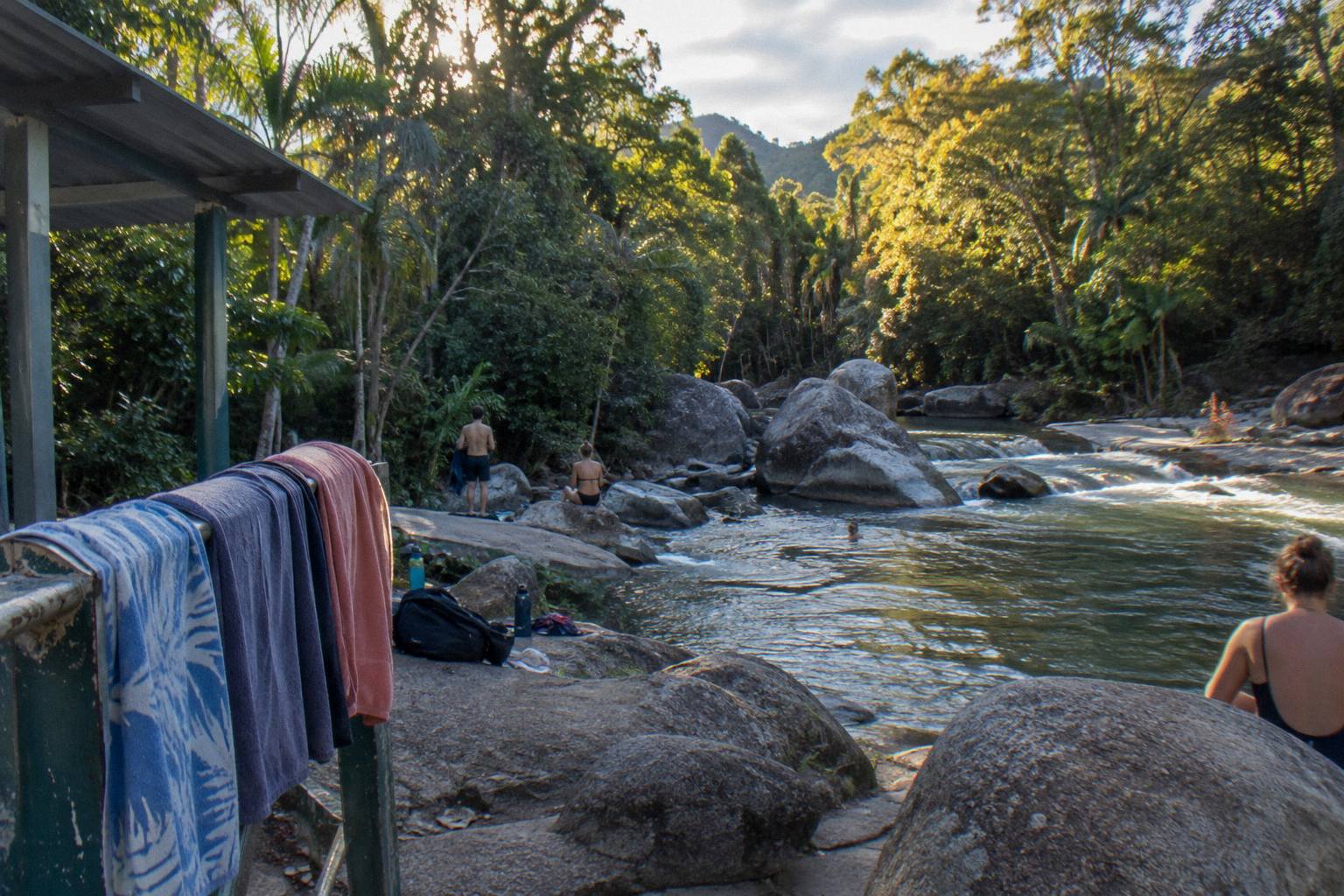
On a cruise boat the risks are managed by design: enclosed or rail-protected decks, a skipper who keeps the vessel between passengers and the animal, and slow approach speeds. The operators flag their own limits. Bruce Belcher's marks its trip not suitable for pregnant women, people with back problems or people prone to seasickness. Crocodile Express and the Daintree River Cruise Centre both mark their trips not suitable for wheelchair users, while Lady Douglas lists wheelchair and pram access with a call ahead for limits. Families weighing it all up can work through the details in the guide to cruise boat safety around wild crocodiles, and anyone swimming at Mossman Gorge on a combined tour should note that the gorge swim is on freshwater, well away from crocodile habitat.
| Rule or advice | Distance | What it is |
|---|---|---|
| Stay back from the water's edge | More than 5 metres | Be Crocwise safety advice |
| Approaching a basking crocodile by boat or vehicle | Within 10 metres is an offence | Legal distance without a reasonable excuse |
| Remaining near a basking crocodile on a sandbank or bank | Within 10 metres is an offence | Legal distance |
| Feeding a crocodile | Any distance | An offence in Queensland |
| Kayaks and paddleboards | Avoid in crocodile habitat | Be Crocwise boating advice |
Common Mistakes Visitors Make About Daintree Crocodiles
The most common mistakes are expecting a guarantee, judging every season by one trip, swimming or standing at the water's edge, assuming the biggest animals live at the ferry, and confusing a Queensland spotting cruise with a feeding show. Each one is avoidable with a single piece of knowledge, and none of them requires paying more for a cruise.
The first mistake is treating an operator's sighting rate as a promise. Every rate quoted anywhere in this article is an operator describing its own trips, and the same operators state plainly that they cannot guarantee wildlife. The two return-cruise offers are the industry's fair answer: if nothing is seen, you ride again. The second mistake is assuming the wet season is a write-off. It is true that warmer water makes crocodiles harder to see, as Solar Whisper notes, but the breeding season makes males more mobile, so the trade-off runs both ways.
| Mistake | Why it happens | The better approach |
|---|---|---|
| Expecting a guaranteed sighting | Operator rates above 90 percent sound like certainty | Book with an operator offering a return cruise if none is seen |
| Swimming near the river after a cruise | Calm water and a hot day | No waterway in crocodile range is crocodile free; stay more than 5 m from the edge |
| Standing on the bank for photos | Crocodiles look slow | Crocodiles are most active at dusk, dawn and night, and highly mobile after rain |
| Assuming all cruises are the same | Same river, similar price | Village and ferry departures cover different stretches and different animals |
| Leaning out to photograph a croc | The shot feels close enough | Keep arms and legs inside the boat; use the boat as a barrier |
The third mistake, and the one with real consequences, is treating the riverbank like a beach. The animals on the cruise are wild, and the same water holds them after the boat docks. The fourth is ignoring the departure point: Daintree Village jetties, the Lower Daintree ramps and Dickson Inlet in Port Douglas are different waterways with different animals, and choosing between them is a genuine decision, covered in the comparison of Daintree River cruises against each other. The fifth is expecting a show. Feeding crocodiles is an offence in Queensland, so what you are buying is an hour of quiet, licensed searching, and it is a better hour for exactly that reason.
Seeing The Daintree's Crocodiles On A Day Trip From Port Douglas
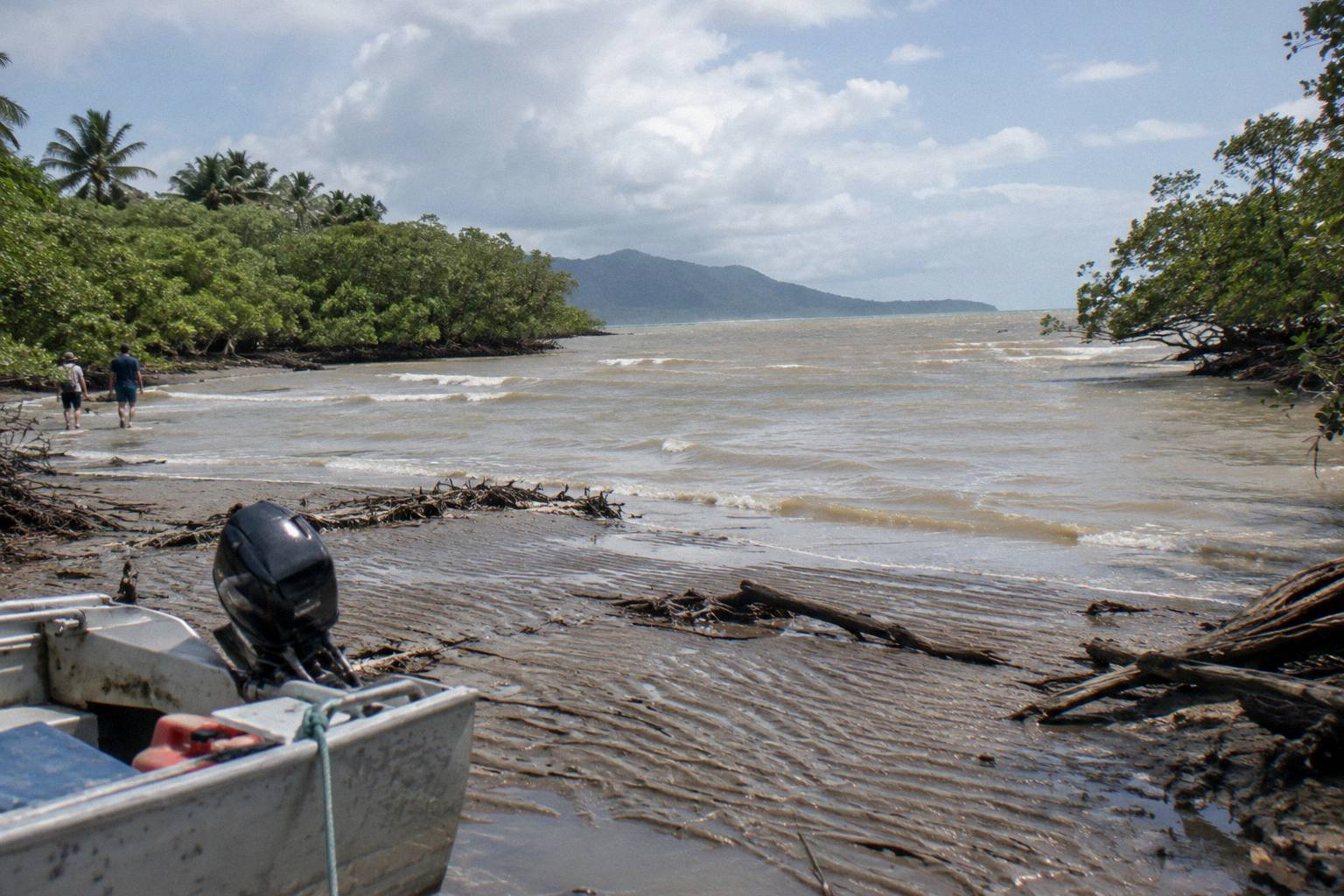
Daintree Village and Lower Daintree are about 45 minutes from Port Douglas by road, about 30 minutes from Mossman and about 1.5 hours from Cairns, in Solar Whisper's own driving notes. The half-day Daintree tour from Daintree Discovery Tours runs 12:50pm to 5:30pm, pairs the river cruise with a Mossman Gorge walk and swim, and includes a beer, wine or soft drink and a small snack on the cruise, from US$121 per person with hotel pickup, rated 4.5 from 117 reviews. It suits families with children over 3 who want crocodiles plus a swim in one afternoon.
The full-day Daintree Experience, from US$165 per person, adds a waterfall walk and swim, a secret trail, a gourmet lunch at a rainforest restaurant and a tropical fruit tasting, with the crocodile search as one stop in eight hours. It is marked not suitable for children under 10 or people with mobility impairments. For readers planning the whole day around the river, including the ferry question, the guide to getting from Port Douglas to a Daintree River cruise covers the driving routes, and none of the Daintree River cruises covered here crosses the ferry: every jetty sits on the south side of the river or in the village.
Whichever format fits, the animal you are going to see is the same one described above: an estuarine crocodile, somewhere between a hatchling and an animal over 4 metres, doing what its species has done on the Daintree for a very long time. Port Douglas Crocodile Cruises exists to get that animal in front of you safely, and the range of boats, from a solar-electric skiff to a covered riverboat on Dickson Inlet, means the choice is really about how you want to spend the hour, not whether the crocodiles will be there.
Common Questions About Saltwater Crocodiles Of The Daintree River
How Big Do Saltwater Crocodiles Get On The Daintree River?
Estuarine crocodiles grow to over 4 metres, with the average male 3 to 4 metres and 200 to 300 kilograms and females rarely over 3.5 metres and 150 kilograms, according to the Queensland Government. No measurement of the largest individual crocodile currently on the Daintree exists.
Are Crocodile Sightings Guaranteed On A Daintree Cruise?
No. Operators state their own rates but never guarantee wildlife: Bruce Belcher's says 98 percent of trips in the cooler months, Lady Douglas says over 90 percent, and Solar Whisper says about 99 percent, while stating it cannot guarantee. Bruce Belcher's and Solar Whisper each offer a complimentary return cruise if none is seen.
What Time Of Year Are Crocodiles Most Active?
Courtship runs October and November and nesting December to April, and the Queensland Government says male crocodiles become very mobile in the breeding season so sightings are more prevalent. In the cooler months from June to September, crocodiles bask longer on exposed banks, which is when Bruce Belcher's reports its highest sighting rate.
Is It Safe To Swim In The Daintree River?
No waterway within crocodile natural range can be considered crocodile free, in the Queensland Government's words, and Be Crocwise advice is to stay more than 5 metres from the water's edge. Visitors who want a swim on a Daintree tour should use the Mossman Gorge swim or a waterfall stop, both on freshwater away from crocodile habitat.
Do Daintree Cruises Feed Or Call The Crocodiles?
No. Feeding a crocodile is an offence in Queensland, and it is illegal to approach within 10 metres of a basking crocodile by boat. Skippers search quietly for basking or floating animals and hold position at a legal distance while narrating.
How Close Can A Cruise Boat Get To A Crocodile?
It is an offence to remain within 10 metres of a crocodile basking on a sandbank or riverbank, or to disturb one by approaching within 10 metres by boat without a reasonable excuse. Licensed cruise operators design their approaches around that legal distance, using the boat itself as a barrier.