
Jumping Crocodile Cruise Or Daintree Croc Cruise: How They Differ
A jumping crocodile cruise is a feeding show on a river boat, a format built around bait drawing crocodiles out of the water. A Daintree croc cruise is a wildlife spotting trip on a tidal river where crocodiles are watched, never fed, and Queensland law sets the distances that keep it that way.
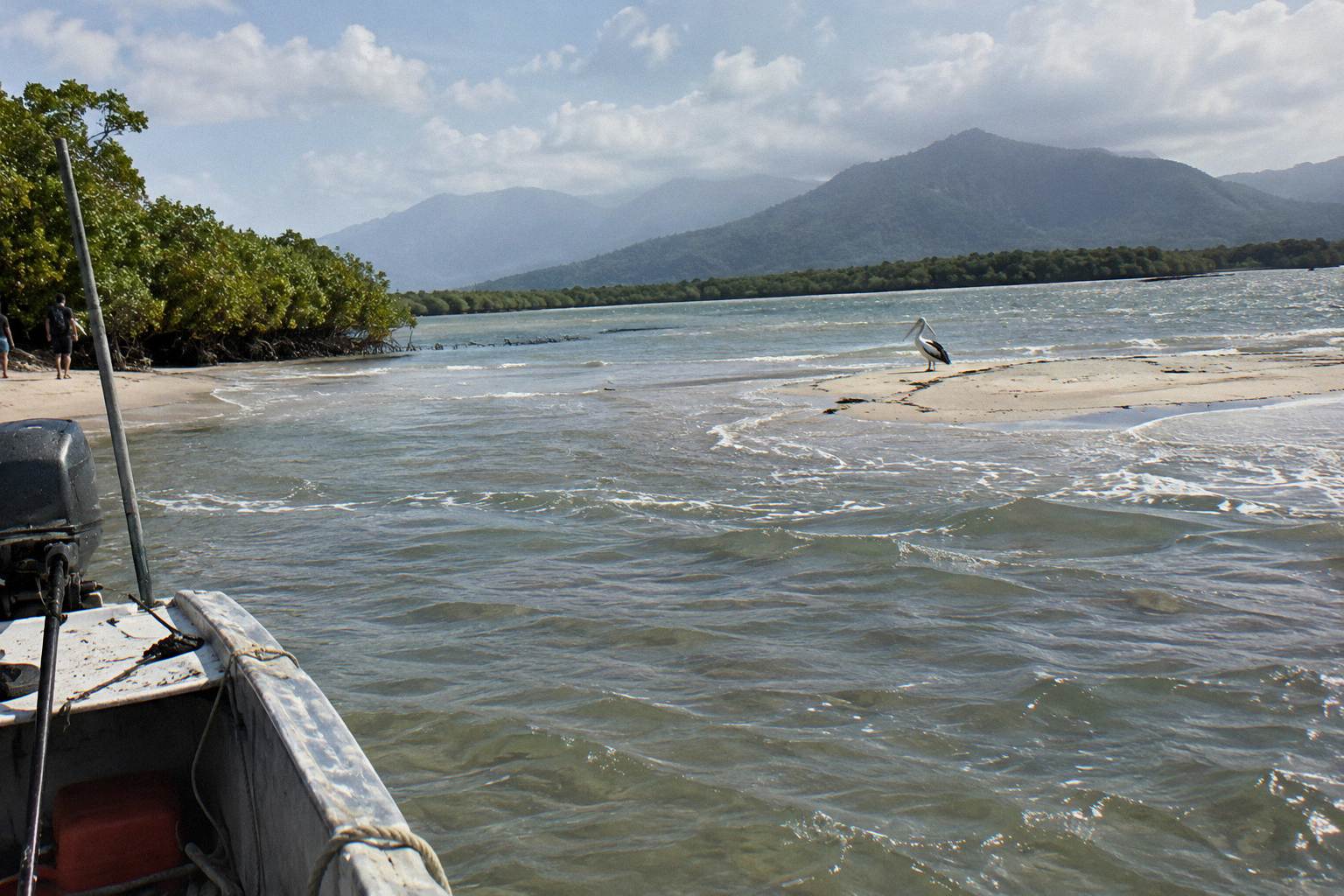
Short answer
A jumping crocodile cruise uses bait to lure crocodiles out of the water so they lunge beside the boat. A Daintree River cruise is a spotting trip: crocodiles are searched for from a distance and never fed. In Queensland feeding or approaching a crocodile within 10 metres is an offence, so Daintree trips from US$24 per person run as guided wildlife cruises instead.
The jumping crocodile cruise is the format most people know from the Northern Territory: a boat, a bait pole, and a crocodile propelling itself out of the water toward the feed. Searchers arriving at a Far North Queensland holiday often type that phrase while standing in Port Douglas, and the answer matters for what kind of day they are buying. Queensland law draws a hard line between the two formats, because in Queensland deliberately feeding a crocodile is an offence, and so is approaching one in a boat within 10 metres without a reasonable excuse.
A Daintree croc cruise is therefore a spotting trip, not a show. Boats move along a tidal river, guides scan the banks, sandbars and mangrove roots, and crocodiles are watched where they lie. The contrast runs through everything: the behaviour you see, the seasonality, the price, and the way each trip treats the animal as either a performer or a wild resident. The comparison below sticks to the Queensland side in detail, because that is what is bookable from Port Douglas and the Daintree.
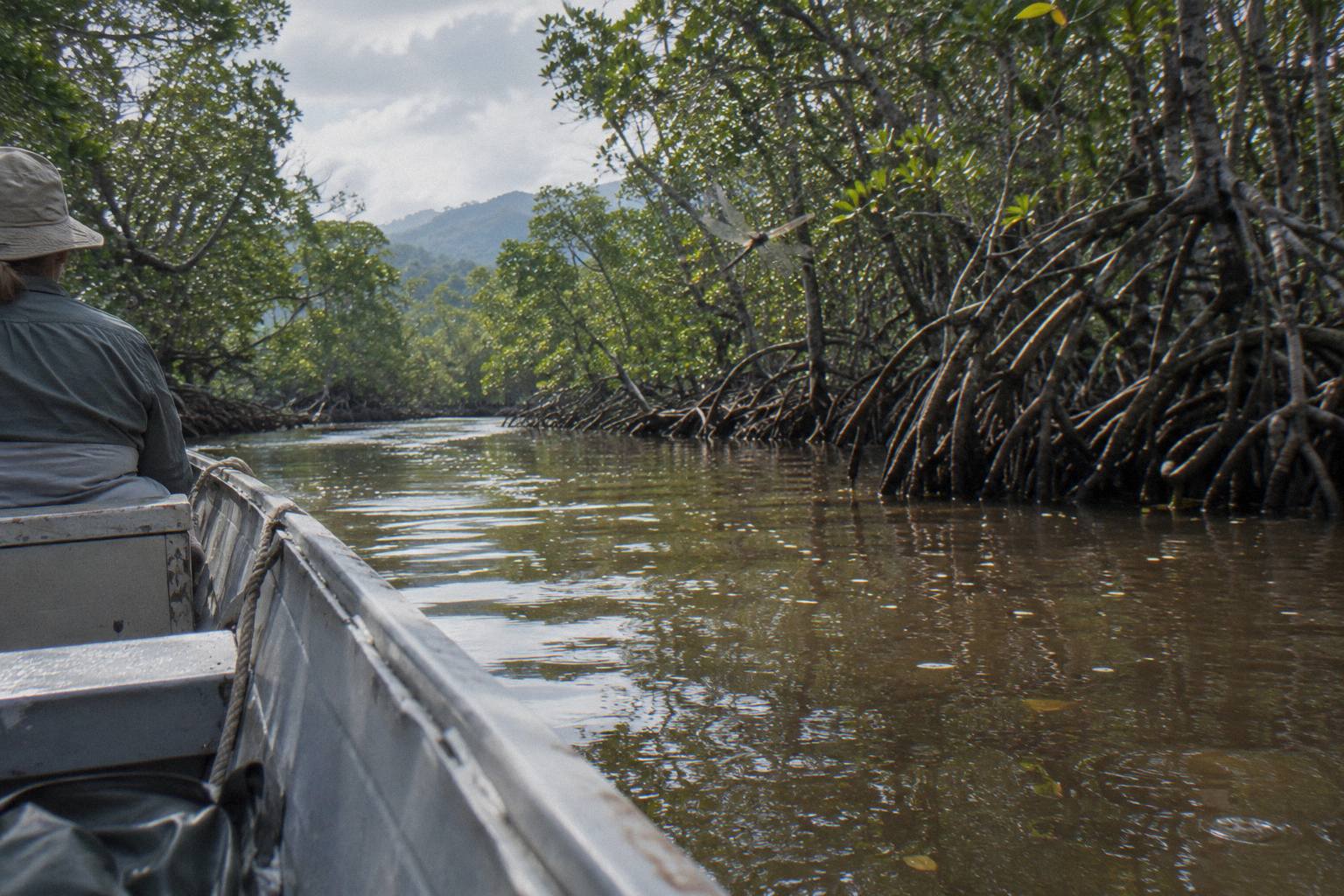
What Is A Jumping Crocodile Cruise?
A jumping crocodile cruise is a boat tour in which operators deliberately use bait to draw crocodiles to the vessel so the animals leap partially or fully out of the water to feed beside it. The jump is a feeding response, powered by a crocodile launching its body from the water with its tail, and the format is built around making that happen reliably for passengers who want photographs and close-up drama.
The appeal is obvious. A crocodile at rest on a sandbank is mostly stillness and armour; a crocodile exploding vertically out of the water is one of the most dramatic animal displays in Australia. The format developed around that spectacle, and it works because estuarine crocodiles are ambush hunters capable of launching most of their body mass in a single tail thrust. Queensland's estuarine crocodiles grow to over 4 metres in length, with the average male at 3 to 4 metres and 200 to 300 kilograms, so the animal doing the jumping is not a small one.
No Northern Territory operator is named or priced on that side of the comparison here, and none is bookable through what is offered on these pages. What matters for a Queensland traveller is the mechanism: the jump is induced by food. Remove the food, and you remove the jump, but you keep the crocodile. A wild crocodile on a sandbar, a female guarding a nest chamber in a bank, or a big male patrolling a tidal reach is doing all the things that make the species worth watching, without a bait pole in the frame.
| Aspect | Jumping cruise format | Daintree spotting cruise |
|---|---|---|
| How crocodiles are seen | Lured to the boat with bait | Searched for on banks and sandbars |
| Typical behaviour on show | Feeding and lunging at the surface | Basking, swimming, cruising the river |
| Legal status in Queensland | Feeding a crocodile is an offence | Fully licensed wildlife spotting |
| Distance from the animal | Deliberately close | Watched from the water, boat as barrier |
| What the crocodile learns | To associate boats with food | Nothing about boats and food |
The last row is the heart of it. A crocodile that associates boats with food is a changed animal, and that is precisely why Queensland's rules exist. To understand the Daintree format properly, it helps to start with those rules rather than with the boats.
Why Queensland Croc Cruises Never Feed The Animals
Feeding a crocodile is an offence in Queensland, and so is disturbing or approaching one within 10 metres by boat without a reasonable excuse, which rules the jumping format out entirely and defines how Daintree cruises operate instead. The Queensland Government's Be Crocwise advice adds a separate 5 metre safety line for people on land. A Daintree cruise is a licensed spotting trip that watches wild crocodiles from the water while keeping the boat itself as the barrier.
The legal wording matters. It is an offence in Queensland to remain within 10 metres of a crocodile basking on a sandbar or riverbank, to disturb one by approaching it in a boat or vehicle within 10 metres without a reasonable excuse, or to feed one. The 10 metre line is a legal distance; the 5 metre line the Government gives for staying back from the water's edge is safety advice, and the two should never be merged. Boating advice from the Government is to keep arms and legs inside the boat and use the boat as a barrier, and to avoid kayaks, paddleboards and other small craft in crocodile habitat.
| Queensland rule | What it says | Effect on a river cruise |
|---|---|---|
| Feeding a crocodile | An offence | No bait, no jumping show, no lure |
| Approaching within 10 metres by boat | An offence to disturb without reasonable excuse | Boats hold off and view from the channel |
| 5 metres from the water's edge | Safety advice for people on land | Why cruises board from jetties and ramps |
| Be Crocwise caution windows | Extra caution at night, dusk and dawn | Daylight departures, arms and legs inside |
The Queensland Government states that crocodile interactions can occur at any time of the year and that no waterway within their natural range can be considered crocodile free. Estuarine crocodiles occur in Queensland between Gladstone and Cape York Peninsula, and throughout the Gulf of Carpentaria, and are most commonly seen in the tidal reaches of rivers. Cruises on the Government's living-with-crocodiles guidance and the Be Crocwise pages sit on exactly this framework, and every operator's behaviour on the water is shaped by it.
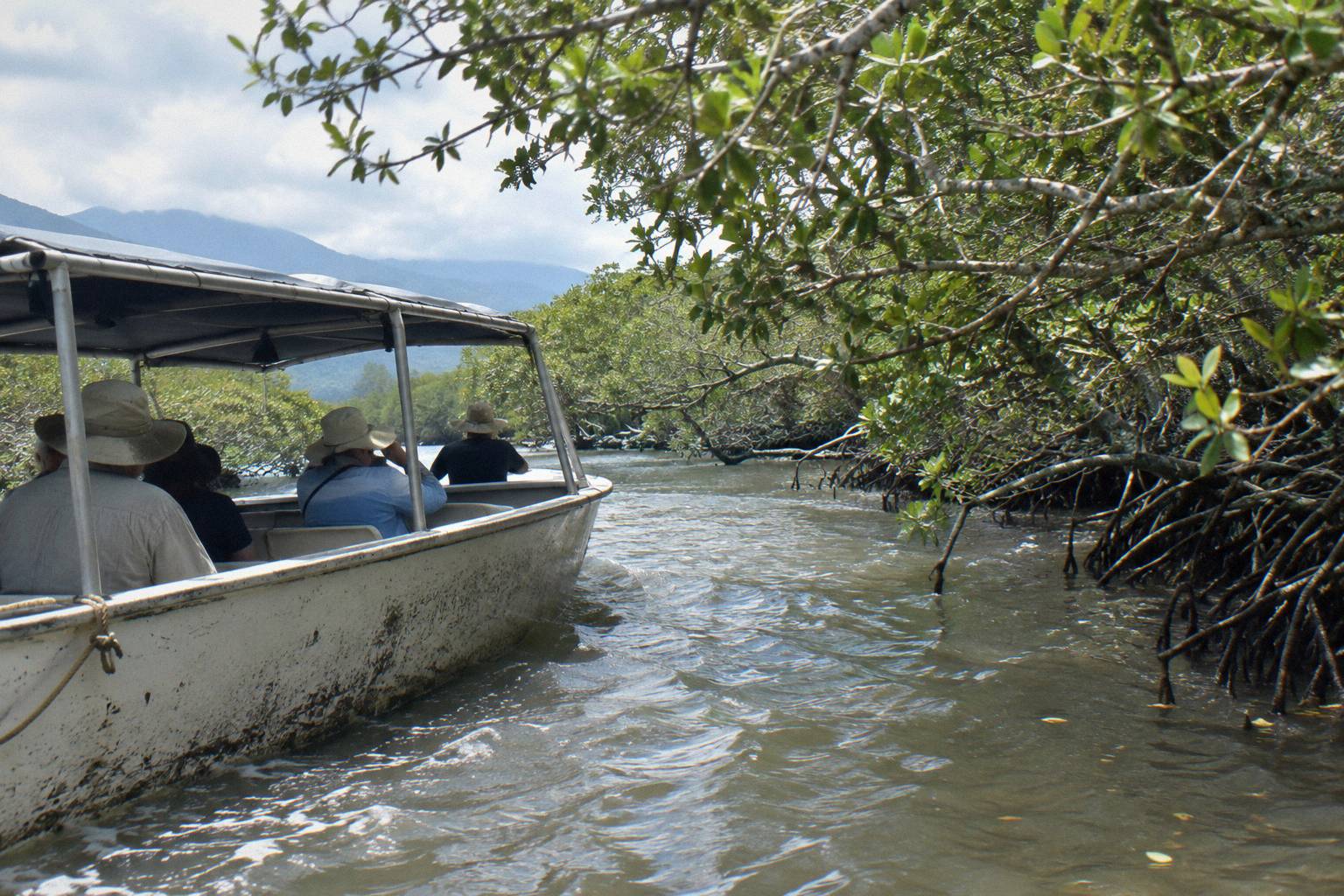
That legal frame does two useful things for a visitor. It explains why no Queensland river cruise will ever promise the lunge-at-the-boat moment, and it means the cruise you do take is watching an animal behaving as it does when no boat has ever fed it. For readers who want the full picture on the animals themselves, the guide to saltwater crocodiles of the Daintree River covers biology, breeding seasons and how crocodiles use the river across the year.
Here is how the Queensland options stack up as a first look, before the detail:
How A Daintree Croc Spotting Cruise Actually Works
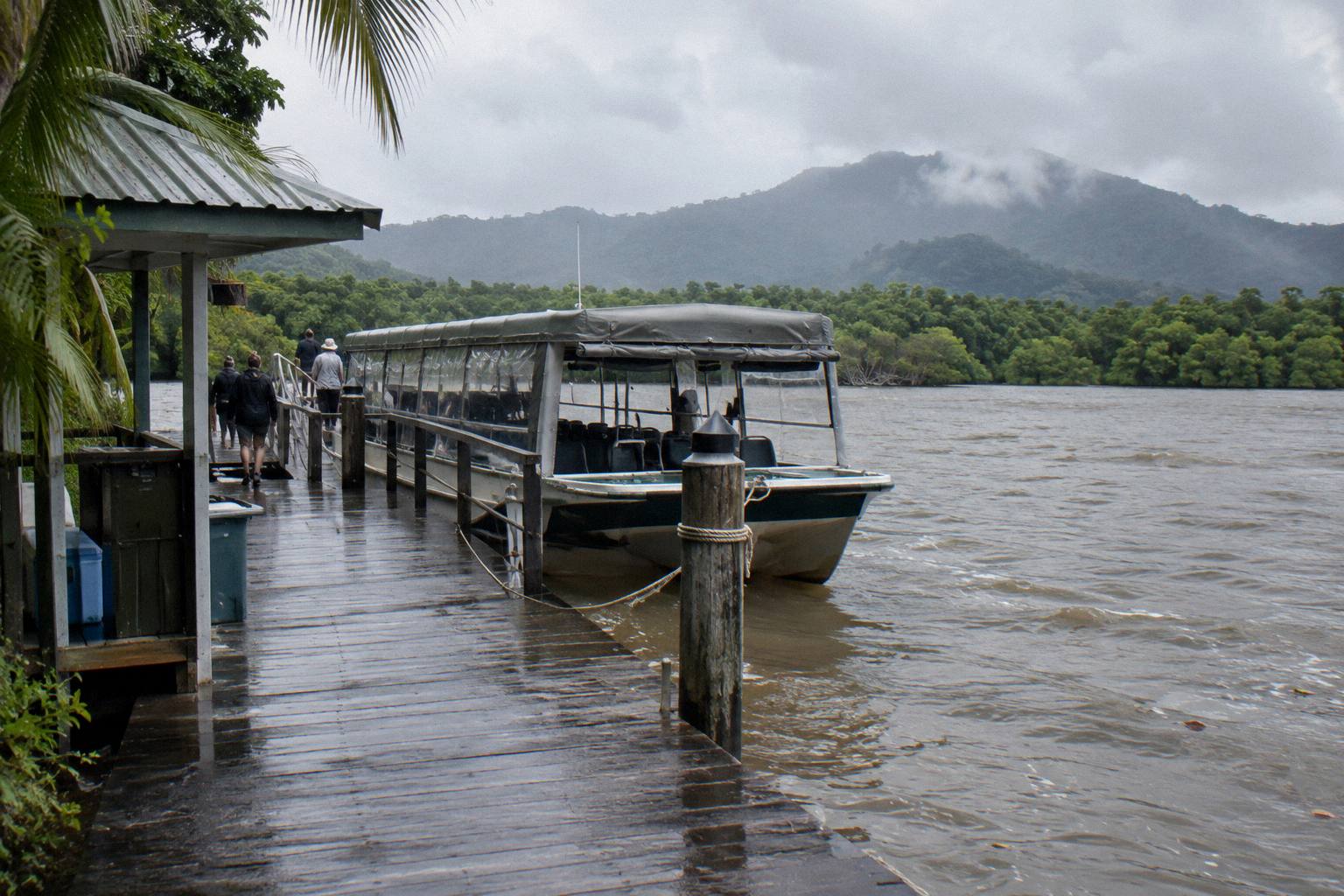
A Daintree spotting cruise runs one to two hours on the Daintree River from a jetty or boat ramp, with a guide or skipper providing commentary while the boat moves slowly through mangrove reaches scanning banks, sandbars and overhanging trees for crocodiles, birds and snakes. Nothing is baited, nothing is called, and the skipper positions the boat so passengers can view whatever the river offers that day.
The rhythm is slower than a feeding show and, for many people, better. The upper Daintree near the village is narrower and calmer with overhanging trees; the lower Daintree at the ferry end is a wide tidal estuary with mangroves, in the words Crocodile Express uses to describe its two routes. Operators list wildlife rather than promising it: crocodiles, water dragons, amethystine pythons and tree snakes, plus birds such as the great-billed heron, azure and little kingfishers, white-bellied sea eagles, ospreys, shining flycatchers, egrets, herons, darters and cormorants. The great-billed heron is called one of Australia's rarest herons by the operator that names it.
Crocodile Express is a good example of the format's flexibility. One ticket covers two one-hour cruises: Cruise 1 from Daintree Village, checking in at 5 Stewart Street, and Cruise 2 from the Daintree Ferry Gateway kiosk at 315 Cape Tribulation Road, about 300 metres before the ferry crossing. The booking page says the pass is valid 14 days from first activation, so the two halves can ride on different days of a holiday. It is rated 4.6 from 477 reviews and costs from US$27 per person, with free cancellation up to 24 hours before start.
For readers weighing a contained wildlife park against a wild river, the separate comparison of a croc cruise versus Hartleys Crocodile Adventures works through the same format question from another angle: a park with fences and feeding infrastructure on one side, a tidal river with wild crocodiles on the other.
The Daintree River Cruise Centre, on the south side of the river just before Daintree Village, frames the same idea with a different setup. Family run since 1987, it lists daily departures from 9.30am to 3.30pm, all cruises at least one hour and extended to 1.5 hours when the schedule permits. The booking page includes a guided wildlife cruise, morning or afternoon tea, and use of the Centre's displays, picnic areas and bathrooms, from US$24 per person. Transfers are excluded, and the Centre tells guests not to cross the ferry to reach it.
Jumping Show Versus Wild Spotting: The Real Differences
The two formats differ in what causes the crocodile behaviour, in how close the encounter is engineered to be, in the reliability of a dramatic moment, and in what the trip teaches about the animal. A jumping cruise manufactures the highlight; a spotting cruise spends its hour or two reading a wild river, and the highlight is whatever the river produces. Neither is a wildlife documentary, but only one of them leaves the crocodile behaving naturally.
Start with the engineered moment. A feeding cruise needs the crocodile to come to the boat, so the operator's skill is in knowing where fed animals live and holding the show's rhythm. A spotting cruise needs the guide's eye instead: a dark log that turns out to have nostrils, a slide trail down a mudbank, a nest mound in the reeds. Guests who want a guaranteed dramatic animal moment every single trip are choosing the wrong region; guests who want to understand a river tend to come off a Daintree cruise with more than they expected.
Reliability sits somewhere in between. On the Daintree, Bruce Belcher's says crocodiles are spotted on 98 percent of trips, particularly in the cooler months of June to September, and about 50/50 in the warmer months, which it ties to the breeding and wet seasons; it says it never guarantees sightings and offers a complimentary return trip if none is seen. Solar Whisper says about a 99 percent success rate, with small crocodiles very reliable and big ones that come and go, and a free return cruise if none is seen. Lady Douglas says crocodiles are normally seen on over 90 percent of trips, especially in the dry season from May to November. These are each operator's own claims about its own river trips, and a sighting of a crocodile is not the same thing as a crocodile leaping at the boat.
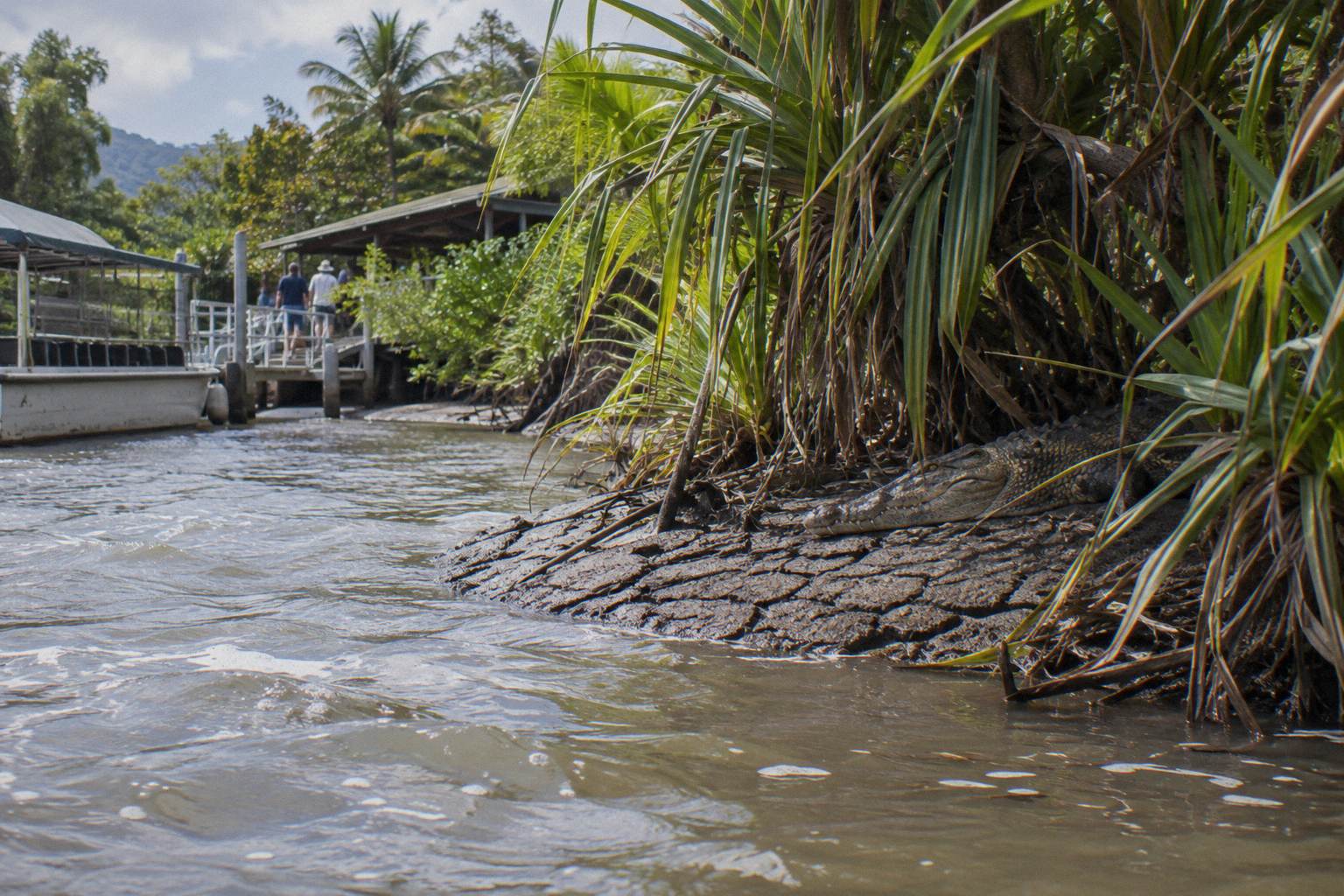
Then there is what the trip asks of you. A feeding show is spectatorship: the action comes to you. A spotting cruise rewards patience, quiet and a guide worth listening to. Commentary runs throughout, and on trips like the Cruise Centre's wildlife cruise or Bruce Belcher's guide-led cruise, the hour is as much about the river's birds, snakes, mangroves and history as about the animal on the sandbar.
Which Daintree Trip Suits Which Traveller
Travellers who want the cheapest hour on the water do well at the Daintree River Cruise Centre from US$24; travellers who want a private jetty and a guide-led trip suit Bruce Belcher's from US$30; families staying in Port Douglas without a car suit the Lady Douglas cruise from US$32; and travellers who want the cruise bundled with rainforest stops suit the half-day and full-day tours from US$121 and US$165.
Bruce Belcher's runs one-hour cruises from its own jetty at 2856 Mossman-Daintree Road, Lower Daintree, with a guide, commentary throughout and access to a private wildlife boutique facility. It is rated 4.6 from 154 reviews, from US$30 per person, with complimentary Daintree tea or coffee, a 200 metre uncovered walk to the boats, non-slip shoes required and no transfers. Its published pattern runs cruises from 8:30am to 3pm, open March to January and closed all February, plus Christmas Day and New Year's Day, subject to change.
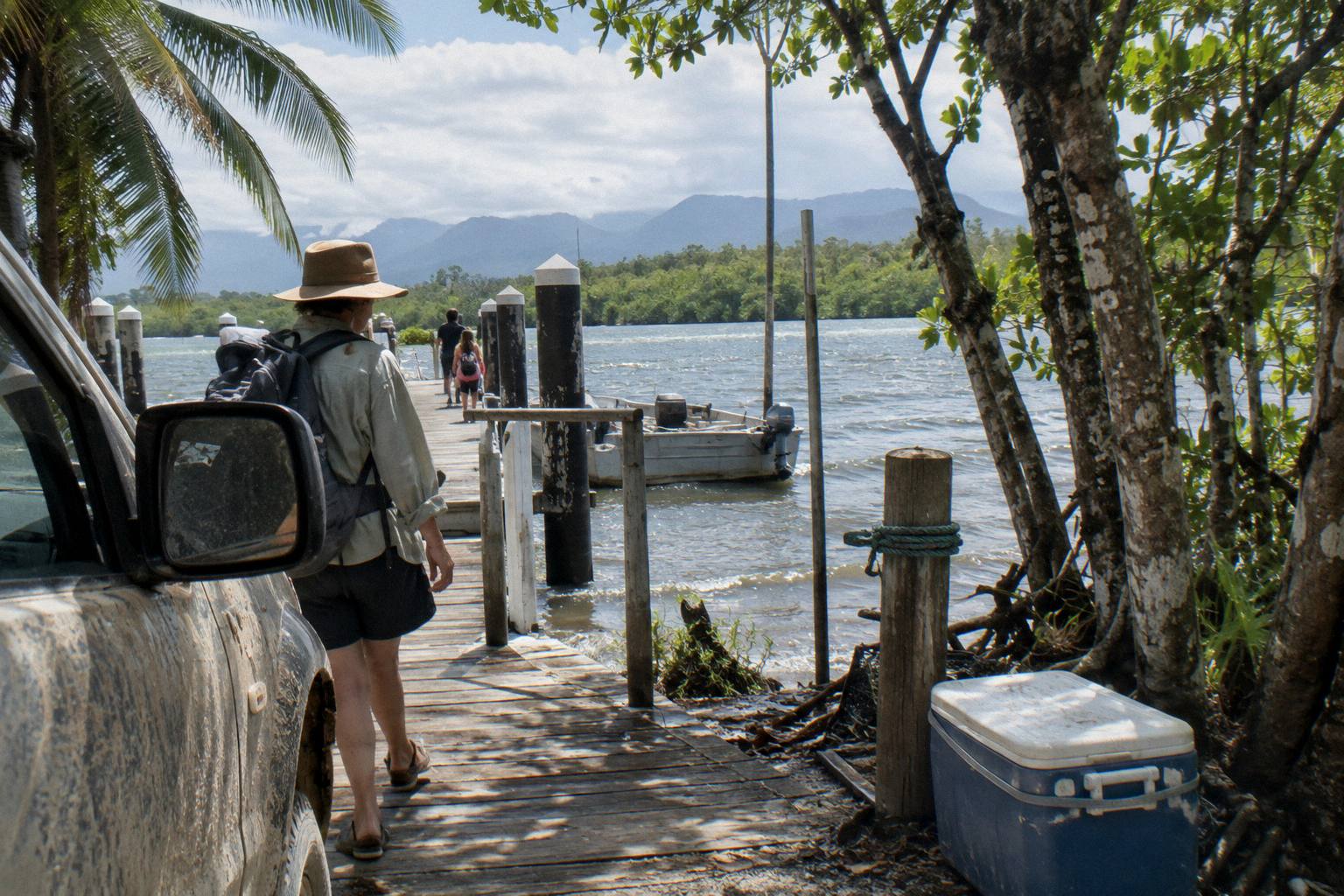
Two owner-run trips round out the river options without printed prices or ratings. Solar Whisper Eco Tours runs a roofed solar-electric boat with no windows from the Esplanade at Lower Daintree, its ticket office about 400 metres before the car ferry, with a maximum of 10 people on its two-hour cruises and a one-hour cruise covered here; it operates in rain but not in flood, and there is no toilet on the boat, only an amenities block beside the office. Daintree Boatman Wildlife Cruises runs a two-hour sunset cruise from the public boat ramp at Stewart Street, Daintree Village, with a dawn sibling, focused heavily on birds: azure, little and sacred kingfishers, Papuan frogmouth, great-billed heron, shining flycatcher and black bittern, plus common tree snakes and water dragons. For both, check the booking page for the price.
| Trip | Style | Duration | From (per person) | Rating |
|---|---|---|---|---|
| Daintree River Cruise Centre | Jetty wildlife cruise, tea included | 1 hour, to 1.5 when possible | US$24 | 4.6 from 558 reviews |
| Bruce Belcher's | Guide-led cruise, private jetty | 1 hour | US$30 | 4.6 from 154 reviews |
| Crocodile Express | One pass, two river routes | 1 hour each, two cruises | US$27 | 4.6 from 477 reviews |
| Solar Whisper | Solar-electric boat near the ferry | 1 hour | Check the booking page | Not published |
| Daintree Boatman | Two-hour sunset, village ramp | 2 hours | Check the booking page | Not published |
The Port Douglas Option: Cruising Without Driving
Only Lady Douglas leaves from Port Douglas itself, cruising Dickson Inlet, a mangrove inlet that is a different waterway from the Daintree River, with a bar beverage and snacks included, and children's colouring sheets on board. It runs 1.5 hours, from US$32 per person, rated 4.6 from 571 reviews, with wheelchair access stated on the booking page.
For a reader who searched a Territory-style show and is now weighing a Queensland cruise, Lady Douglas answers the practical question first: can I do a croc cruise without hiring a car or driving 45 minutes to Daintree Village. The answer is yes. The vessel departs the Crystalbrook Superyacht Marina at 44 Wharf Street, Port Douglas, covers several kilometres of mangrove channels in Dickson Inlet, then the inlet entrance and the Port Douglas waterfront, with commentary on mangroves, crocodiles and history. The operator describes covered seating across the whole back deck, a licensed bar, a toilet, wheelchair and pram access with a call ahead for limits, and a calm water cruise. The operator says crocodiles are normally seen on over 90 percent of trips, especially in the dry season from May to November, and substantial time on board is spent searching for wild estuarine crocodiles.
The two bundled tours go further. The Port Douglas Daintree Half-Day Tour With River Cruise runs five hours from 12:50pm to 5:30pm, picking up from Port Douglas accommodation, and includes Daintree National Park access, a Mossman Gorge walk and swim, and a river cruise with a beer, wine or soft drink and a small snack, from US$121 per person, rated 4.5 from 117 reviews, not suitable for children under 3. The Daintree Experience Full Day runs eight hours with pickup from Port Douglas or Mossman, including a waterfall swim, a secret trail, a gourmet lunch at a rainforest restaurant, tropical fruit tasting, a guided walk and a search for giant estuarine crocodiles on the Daintree River, from US$165 per person, not suitable for children under 10. Both carry free cancellation up to 24 hours before start.
Timing: When Crocodiles Show Best On A Queensland River
Queensland's dry season from May to September is the strongest window for Daintree crocodile sightings, with July to September bringing only 23 to 32 mm of mean monthly rainfall, while the wet months of January to March each drop 395 to 429 mm and operators describe crocodiles as harder to find in warmer water. Daylight matters too, since crocodiles are most active at night, dusk and dawn, and every trip covered here runs in daylight or around dusk.
The climate numbers come from the Bureau of Meteorology's Port Douglas station, with 52 years of temperatures and 124 years of rainfall behind them: mean daily maxima run from 24.6 °C in July to 30.3 °C in January, and the full Port Douglas climate table shows the shape of the year. Bruce Belcher's says the cooler months of June to September bring its highest sighting rate and the warmer months drop to about 50/50, which it ties to the breeding and wet seasons. Solar Whisper says the river temperature rises in the warmer months and crocodiles become harder to see. Daintree Boatman says crocs and snakes are best between May and October.
| Month | Mean max °C | Mean rainfall mm | Rain days 1 mm+ | Crocodile outlook (operator wording) |
|---|---|---|---|---|
| January | 30.3 | 395.8 | 13.8 | Harder, warm water |
| March | 29.5 | 429.4 | 14.4 | Harder, wet season |
| June | 25.1 | 47.7 | 5.7 | Cooler months strongest |
| July | 24.6 | 26.4 | 4.2 | Cooler months strongest |
| September | 26.7 | 32.1 | 4.4 | Driest stretch of the year |
| November | 29.5 | 106.1 | 7.6 | Dry season tail, Lady Douglas window |
Tide and time of day add a second layer. Solar Whisper says low tide is usually better because there are more beaches and less water for crocodiles to hide in, and that a summer high tide is the most difficult time; Bruce Belcher's says low tide can enhance the chances but crocodiles are still seen at high tide. Sunrise in mid-June is about 6:44am with sunset about 5:54pm, and in mid-January about 5:58am and 6:57pm, computed for Daintree Village. The deeper rundown on windows through the day is in what time of day is best to see crocodiles.
Common Mistakes When Switching To A Queensland Cruise
The most common mistakes are expecting a lunge-at-the-boat moment that Queensland law makes impossible, booking a Daintree cruise and driving across the ferry unnecessarily, arriving without checking each operator's boarding point, and picking a midday summer departure when the same river at low tide in the dry season gives the operators their best odds. Each mistake is avoidable with one piece of planning.
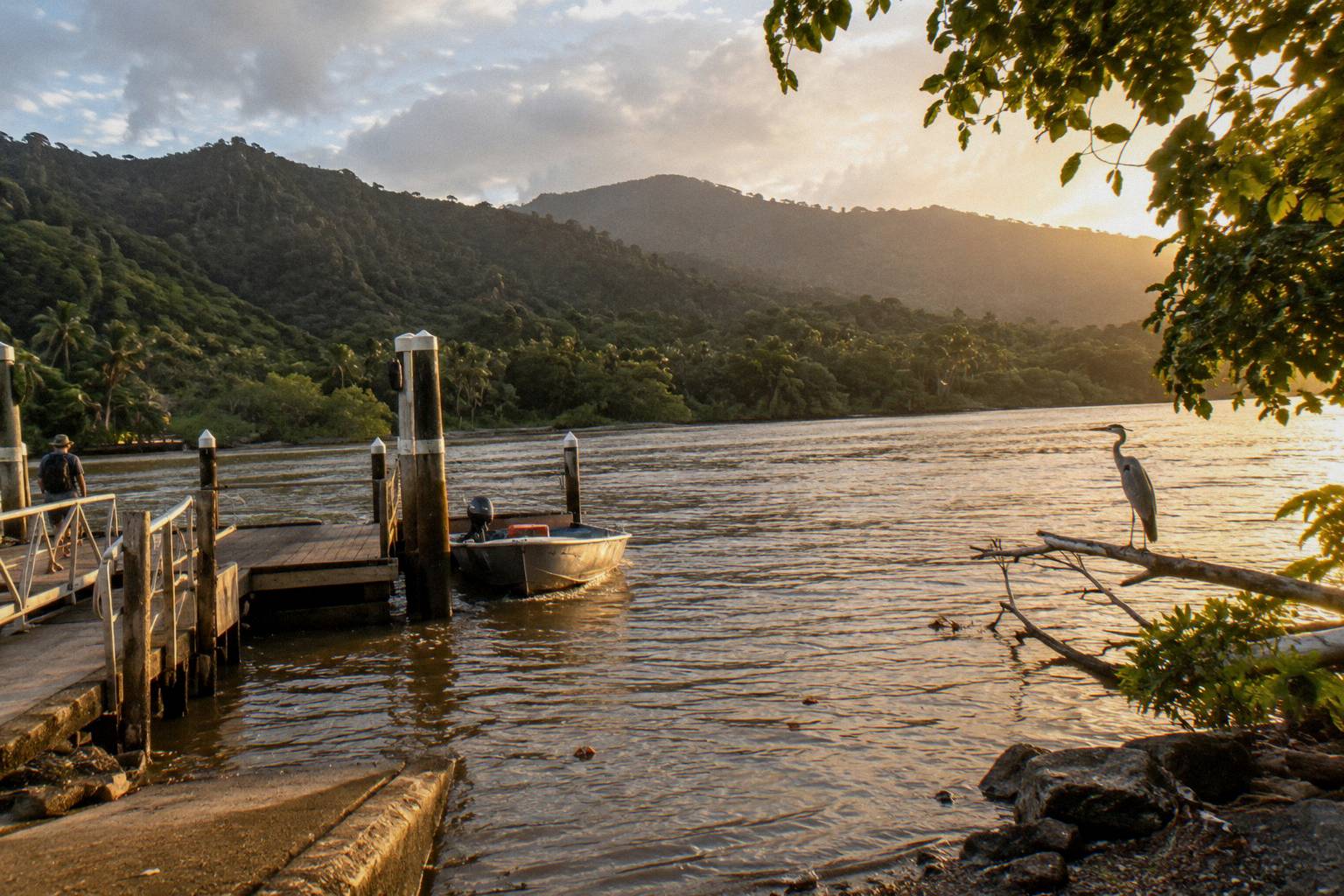
The first mistake is the expectation itself. A reader who has watched Territory footage arrives expecting action at the hull, and a Queensland skipper cannot and will not provide it. The trip to book instead is the one whose pleasures suit you: birds and dusk light on a two-hour sunset cruise, or a cheap family hour with tea at the Cruise Centre, or a marina departure with a drink from the bar on Dickson Inlet. The format is the difference, and knowing it in advance turns a quiet hour into the right hour.
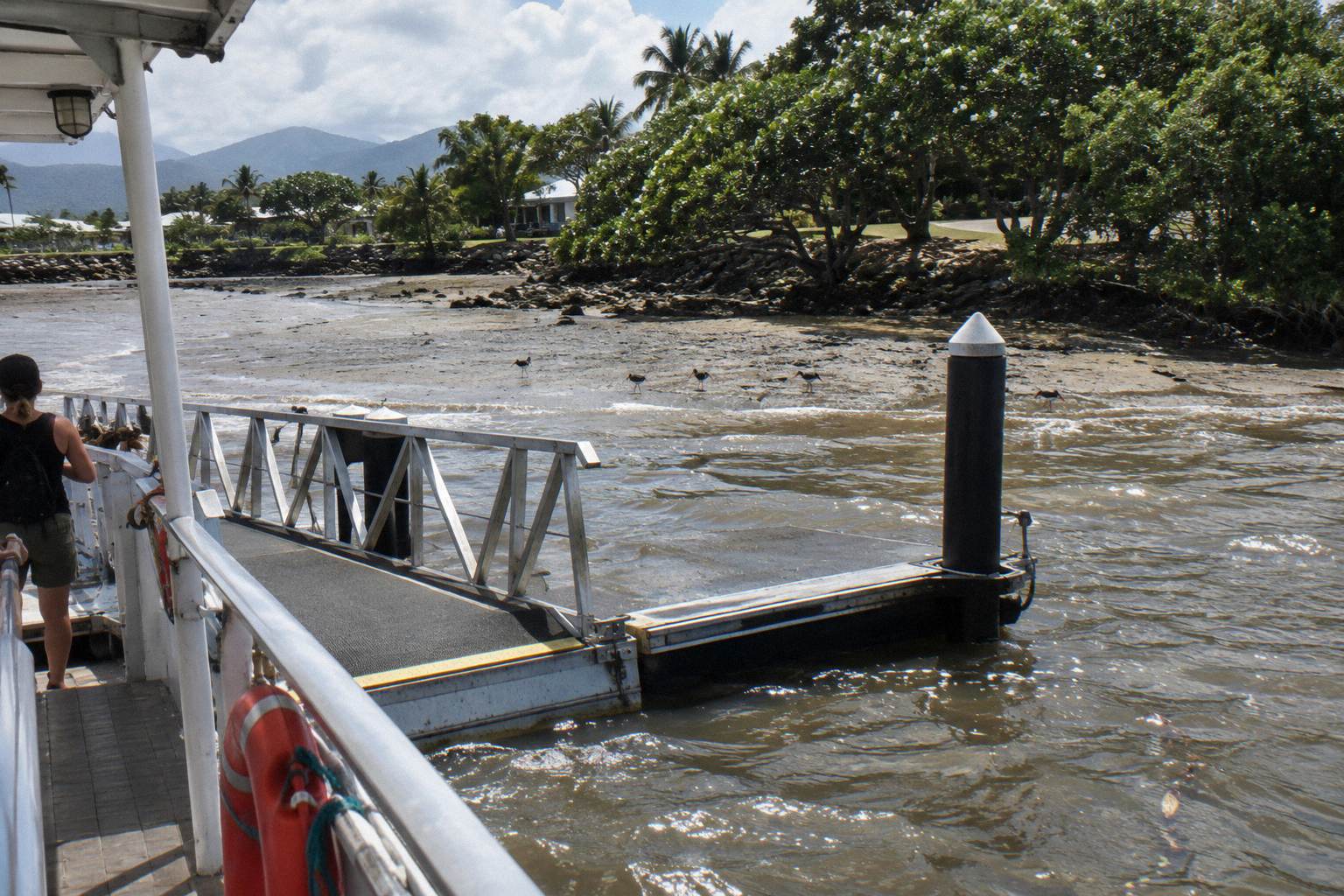
The second is the ferry. The Daintree River cruises covered here depart from the south side of the river or from Daintree Village and do not cross the ferry at all: Daintree River Cruise Centre and Bruce Belcher's sit on the south side before it, and the Cruise Centre explicitly tells guests not to cross. Only Crocodile Express's second route, at its kiosk about 300 metres before the ferry crossing, and Solar Whisper, whose office sits about 400 metres before it, even bring the ferry into view. The ferry runs continuously between 5 am and midnight daily, including Christmas Day, with queues expected in school holidays, but most croc cruise passengers never need it. The guide to whether you need the Daintree Ferry for a croc cruise settles the geography.
| Mistake | What goes wrong | The fix |
|---|---|---|
| Expecting a feeding show | Disappointment on a calm river | Book a spotting cruise for the river, not a stunt |
| Crossing the ferry by mistake | Wasted queue time before the cruise | South-side jetties need no crossing |
| Wrong boarding point | Missed departure at another Stewart Street ramp | Confirm the operator's own jetty or ramp |
| Midday wet season slot | Warm water, high tide, fewer crocodiles | Dry season, low tide, morning or late afternoon |
| Assuming transfers exist | No pickup at most river operators | The bundled tours list pickup |
The third mistake is boarding-point confusion, because Daintree Village alone has more than one ramp: Crocodile Express checks in at 5 Stewart Street, Daintree Boatman uses the Riverview Caravan Park public boat ramp at Stewart Street, and the cruise lines on the Mossman-Daintree Road have their own jetties. The fourth is footwear and weather reading: Bruce Belcher's requires non-slip shoes for a 200 metre uncovered walk and pulls clear screens down in heavy rain. The fifth is assuming every operator transfers guests; only the two bundled tours list pickup, and the Cruise Centre's booking page suggests hiring a car close to your accommodation.
What Each Option Costs And How To Book
River-only cruises run from US$24 to US$32 per person for one to 1.5 hours, the two-river Crocodile Express pass starts at US$27, and the bundled tours run from US$121 for five hours to US$165 for a full day, all bookable on each operator's booking page with free cancellation up to 24 hours before start on every priced river trip and both tours.
Prices move, so treat every figure here as the booking page price rather than a fixed fare, and never a ferry fare or operator-site extra. The pattern, though, is stable: a river hour on the Daintree costs less than a main course in Port Douglas, which is why many travellers book one cruise and then a second on a different stretch, exactly what the Crocodile Express pass encourages with its 14-day validity. The Wet Tropics of Queensland, inscribed on the World Heritage List in 1988 across about 895,000 hectares, holds some of the oldest continuously surviving tropical rainforests on Earth, and the river trips are the cheapest way to get onto that landscape rather than past it.
| Trip | Departure point | Duration | From (per person) | Cancellation |
|---|---|---|---|---|
| Lady Douglas River Cruise | Crystalbrook Superyacht Marina, Port Douglas | 1.5 hours | US$32 | Free up to 24 hours before |
| Crocodile Express | Daintree Village and ferry gateway | 1 hour, two cruises | US$27 | Free up to 24 hours before |
| Daintree River Cruise Centre | South side before Daintree Village | 1 hour | US$24 | Free up to 24 hours before |
| Bruce Belcher's | Own jetty, Lower Daintree | 1 hour | US$30 | Free up to 24 hours before |
| Half-day Daintree tour | Port Douglas accommodation pickup | 5 hours | US$121 | Free up to 24 hours before |
| Full-day Daintree Experience | Port Douglas or Mossman pickup | 8 hours | US$165 | Free up to 24 hours before |
Booking works best around the calendar rather than the clock: each operator's departure pattern is its own published schedule, subject to change, and the booking calendar decides the real start. Daintree Boatman's dawn and dusk cruises shift seasonally, from 7am and 4pm between April and August to 6.30am and 4.30pm between September and January, which is worth knowing if a sunset hour on the river is the part of the Territory memory you most want to recreate. The step-by-step process, including what to confirm before you pay, is in how to book a Daintree croc cruise.
Common Questions About Jumping And Spotting Cruise Formats
Can You Do A Jumping Crocodile Cruise In Queensland?
No. Feeding a crocodile is an offence in Queensland, and so is disturbing or approaching one within 10 metres by boat without a reasonable excuse, so no licensed Queensland river cruise uses bait to make crocodiles jump. Daintree cruises are spotting trips that watch wild crocodiles from the water.
Will I Still See Crocodiles Without The Feeding Show?
Often, yes. Bruce Belcher's says crocodiles are spotted on 98 percent of trips in the cooler months, Solar Whisper says about a 99 percent success rate, and Lady Douglas says crocodiles are normally seen on over 90 percent of trips in the dry season. Each is the operator's own claim, none is a guarantee, and two operators offer a complimentary return trip if none is seen.
How Close Do The Boats Get To The Crocodiles?
Boats stay in the channel and use the vessel as the barrier, per Queensland Government boating advice, and it is an offence to approach a basking crocodile within 10 metres without reasonable excuse. Passengers keep arms and legs inside the boat. Views are typically across water to banks and sandbars, which is where crocodiles bask.
What Does A Daintree Croc Cruise Cost Compared With The Territory Format?
River-only Daintree cruises run from US$24 to US$32 per person for one to 1.5 hours, and the bundled half-day and full-day tours run from US$121 and US$165. No Territory operator or price is published here, so compare against the live booking page of whichever trip you are considering.
Which Queensland Cruise Is Closest To The Territory Experience?
The closest match in drama is the two-hour Daintree Boatman sunset cruise, which uses the low light window when crocodiles are most active, though it is a bird-focused spotting trip. The closest in convenience is Lady Douglas, which leaves Port Douglas itself with a bar beverage included.
Do Croc Cruises Run At Night In Queensland?
No night cruise exists among the trips covered here. Every trip runs in daylight, at dawn or around dusk, and the two-hour Daintree Boatman cruises are the closest to the edge of dark, running from 4pm or 4.30pm depending on the season.