
Croc Cruise Or Hartleys Crocodile Adventures: Wild Versus Park
One outing puts you on a tidal river with wild estuarine crocodiles; the other keeps crocodiles behind fences in a contained park setting. The formats differ more than most visitors expect, and the right pick depends on what you want from the day.
Short answer
A wild river cruise from Daintree Village or Port Douglas runs from US$24 per person for one hour; the covered trips range up to US$165 for a full day with a waterfall swim and lunch. Hartleys Crocodile Adventures is a wildlife park rather than a river cruise, and is not bookable through these pages, so the comparison below is about format, not price.
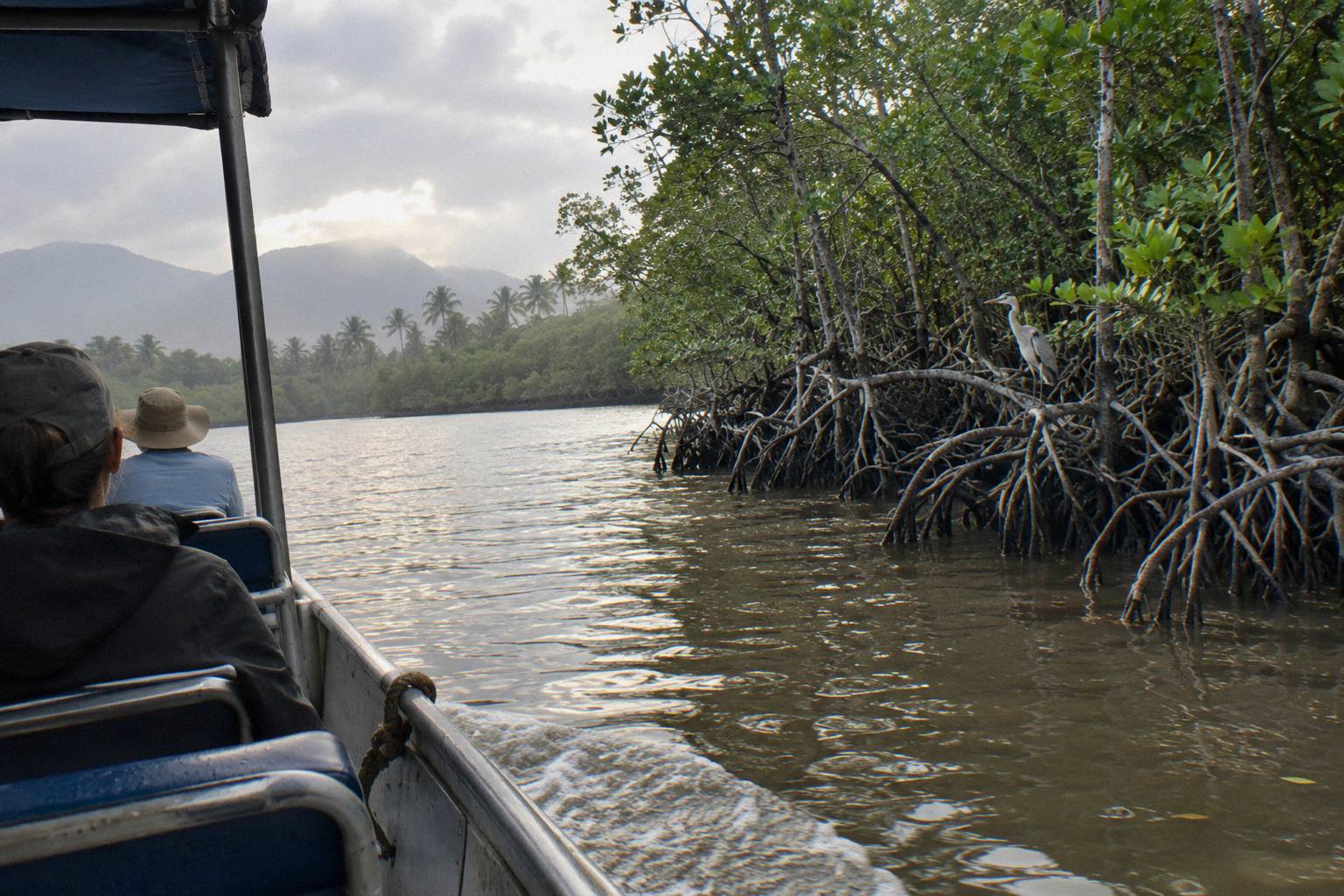
A crocodile sighting on a wild river is never a certainty, and that is exactly the point: the Daintree River trips sold through these pages put you on a tidal waterway where estuarine crocodiles hunt, bask and drift on their own terms. Hartleys Crocodile Adventures sits at the other end of the spectrum, a contained wildlife park where crocodiles live in enclosures and shows run to a schedule. Neither format is the better one in the abstract. One delivers reliability and fences, the other delivers tide, weather and the gamble of a wild animal deciding to appear. The choice between them is really a choice about how much unpredictability you want in your day, how much time you have, and whether small children or tight schedules tip the balance.
Wild River Or Wildlife Park: What Actually Differs?
The core difference is control. A wildlife park guarantees crocodiles because they live in enclosures on the property, while a river cruise offers wild animals on a tidal waterway where no operator can promise a sighting. The river trips covered here run from one to eight hours and from US$24 to US$165 per person, most with free cancellation up to 24 hours before start. The park format trades that wild uncertainty for scheduled, repeatable crocodile viewing.
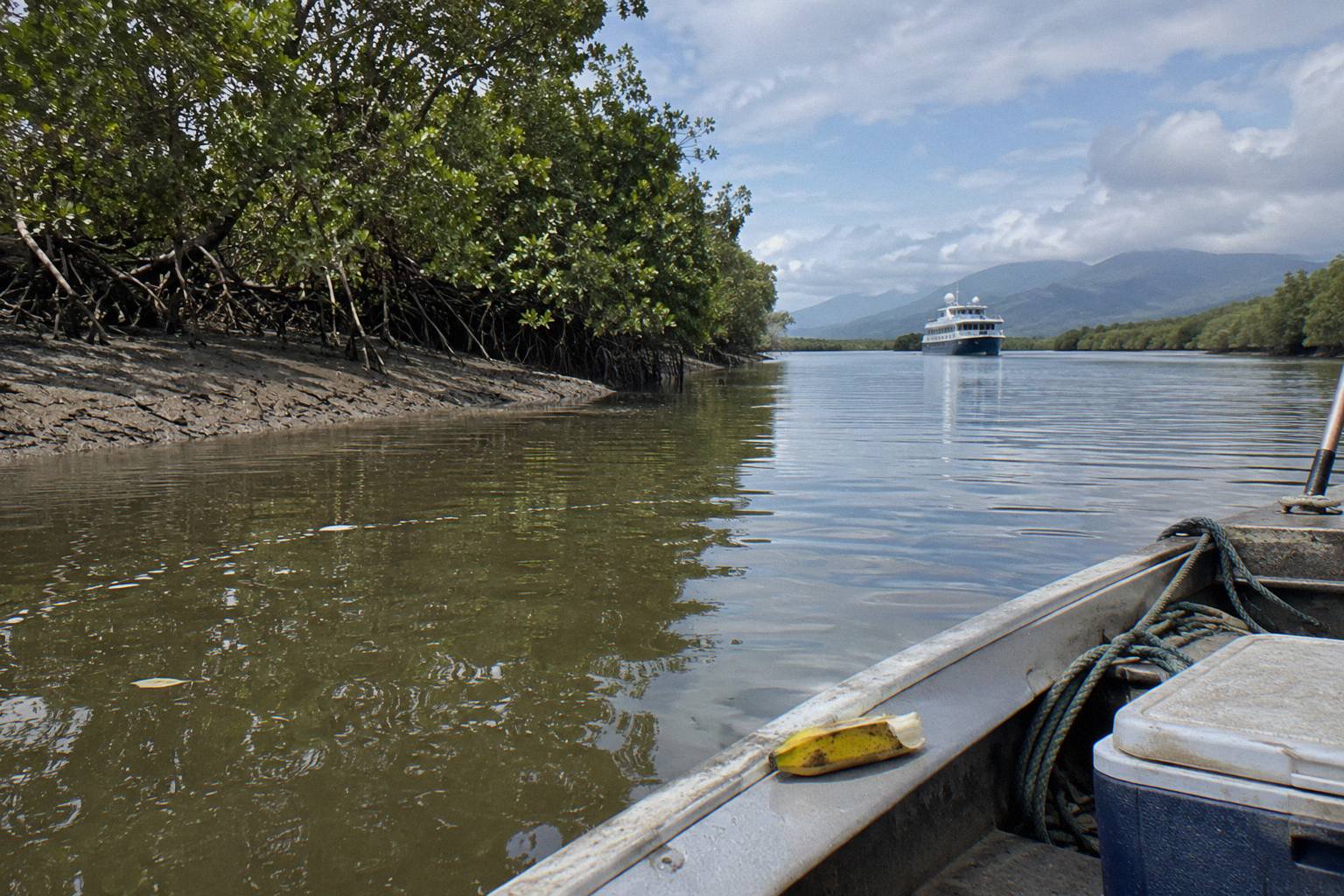
Everything else flows from that single distinction. On a river cruise the crocodile is the destination, not the exhibit. Bruce Belcher's, for one, says crocodiles are spotted on 98 percent of its trips in the cooler months and about 50/50 in the warmer months, and it offers a complimentary return trip if none is seen. That is a strong record, and it is still a probability rather than a promise. Queensland law also shapes the experience: it is an offence in Queensland to disturb a crocodile by approaching it in a boat within 10 metres, or to feed one, so a Queensland river cruise is a spotting trip, not a feeding show. The "jumping crocodile format of the Northern Territory" does not exist here, and the trips sold through these pages would not be allowed to imitate it.
A park, by contrast, can schedule a crocodile around your arrival time. What it cannot give you is the river itself: the Wet Tropics of Queensland was inscribed on the UNESCO World Heritage List in 1988 and covers about 895,000 hectares holding some of the oldest continuously surviving tropical rainforests on Earth, and the Daintree River runs through the middle of it. If the rainforest is part of what you are buying, the river cruise delivers it as scenery rather than backdrop.
There is a second, quieter difference that guidebooks rarely spell out. A park visit is largely self-paced: you walk between enclosures on boardwalks, and the day ends when you decide to leave. A river cruise is a fixed appointment. You board at a stated jetty, at a stated time, and the boat departs whether or not you are on it. The Cruise Centre asks guests to arrive 15 minutes early and check in at reception; Bruce Belcher's requires a 200 m uncovered walk from its parking to the boats. Neither demand is heavy, but both reward travelers who plan, and both punish the ones who treat a cruise the way they might treat a park, turning up whenever the morning happens to shake out.
| Factor | Wildlife park format | Wild river cruise format |
|---|---|---|
| Crocodile presence | Crocodiles live on the property in enclosures | Wild crocodiles on a tidal river, no guarantee |
| Viewing style | Scheduled exhibits and shows | Boat drifts the river searching banks and water |
| Setting | A contained park property | The Daintree River or Dickson Inlet |
| Time needed | Park visit, length is your own choice | One to eight hours depending on the trip |
| Entry price of the river trips | Not a river trip | From US$24 per person for one hour |
| Cancellation | Check the park's own terms | Free cancellation up to 24 hours before start on six of the eight trips; check Solar Whisper and Daintree Boatman on the booking page |
What A Contained Park Outing Does Best
A park suits the traveler who needs crocodiles to be certain, close and quick. Families with very small children, visitors on a tight schedule and anyone uneasy about open water get reliable viewing in a managed setting, with the option to leave whenever it suits. The trade is enclosure rather than wilderness: the crocodiles are there on purpose, and the experience cannot include tide, weather or a wild animal's own movements.
Hartleys Crocodile Adventures is the park most travelers from Port Douglas weigh up against a river cruise, and it belongs to the same broad family as any wildlife park: contained habitat, boardwalks, and crocodiles that cannot choose to be elsewhere. It is a different kind of outing rather than a competitor product, and it is not bookable through these pages, so the comparison here stays at the level of format.
Where the park format genuinely wins is edge cases. A toddler who cannot sit still for an hour on a boat will see crocodiles at a park. A traveler with half a day and a long list of Far North Queensland stops can be certain of ticking the crocodile box. The river cruise asks for a little more: an hour or more of patience, a departure point reached on time, and acceptance that the river decides. The Queensland Government's Be Crocwise advice captures why the wild version can never be fenced: no waterway within the crocodile's natural range can be considered crocodile free, and the animals are highly mobile, especially after heavy rain and floods.
Weather tolerance differs too, and it cuts in both directions. Solar Whisper operates in rain but not in flood, and Bruce Belcher's pulls clear screens down across its boats in heavy rain, so a wet afternoon rarely cancels a river trip outright. A park, meanwhile, spreads its viewing across paths and shelters and can feel manageable in a passing shower. What the park cannot do is move the experience to a better tide or a calmer channel; the river operators can and do, which is one reason the same trip can feel completely different on two consecutive days.
For readers who land on the wild-river side of that trade, the practical question becomes which river trip fits. The rest of the page works through the details.
What A Wild Daintree River Cruise Delivers
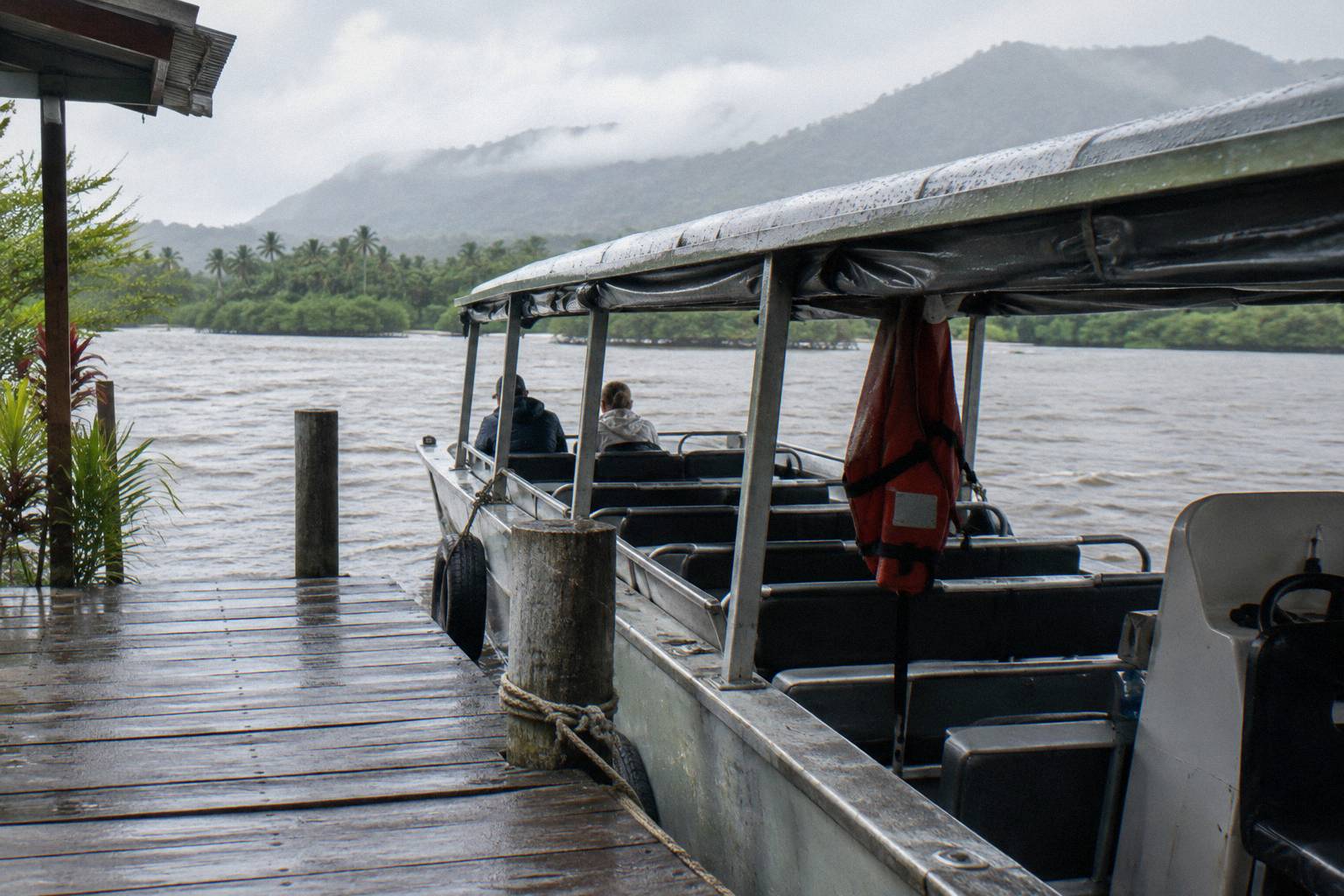
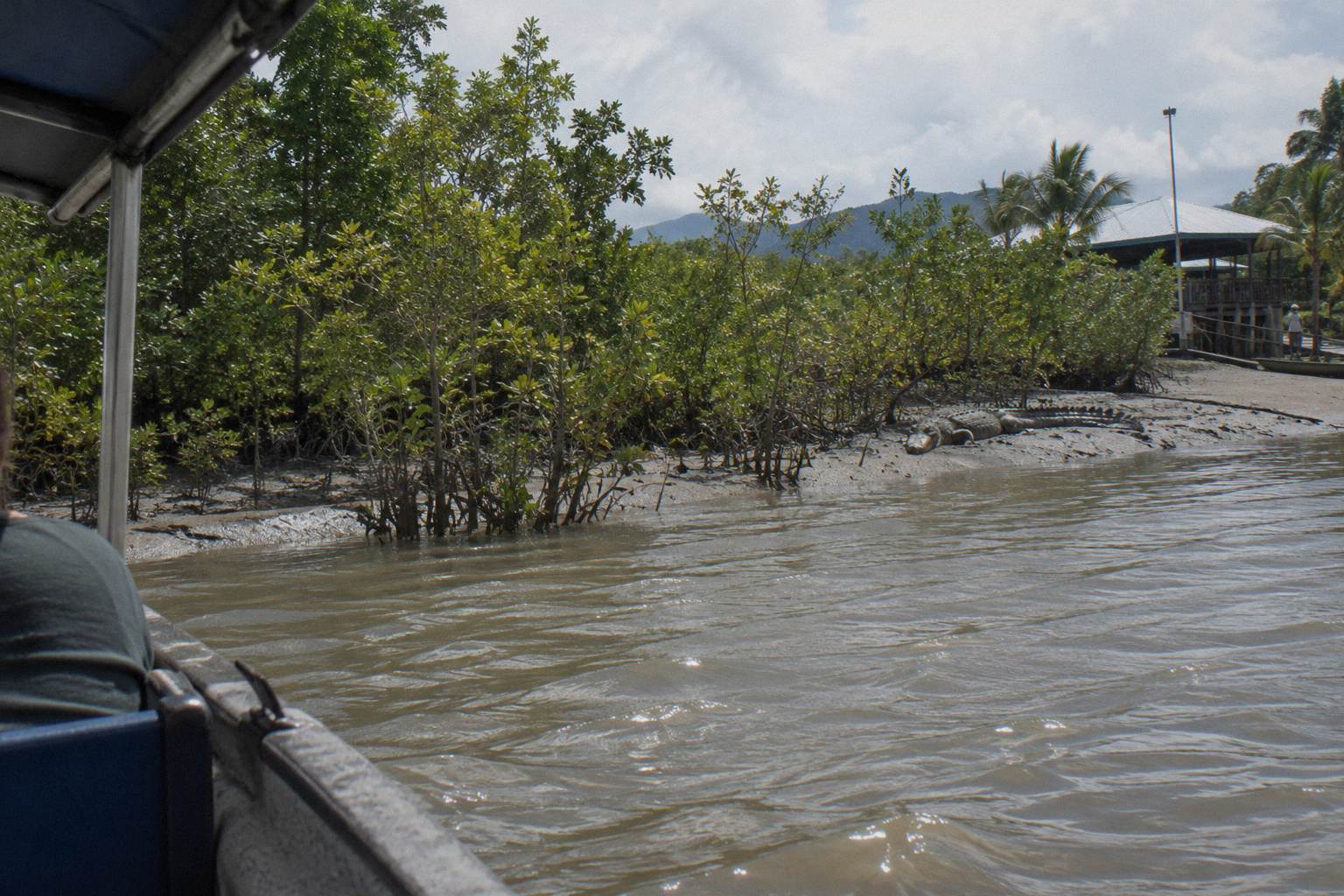
A river cruise puts you inside crocodile habitat with a guide who reads the water: one-hour trips from Daintree Village or the ferry end search the banks for basking crocodiles, and longer trips add rainforest, swimming and lunch. The covered river trips cost from US$24 to US$165 per person, and every one of them runs in daylight, dawn or around dusk, never at night. The payoff is an animal behaving exactly as it would without you there.
The Daintree River splits into two distinct characters, and operators describe the difference plainly. Upper Daintree, departing from the village, is narrower and calmer with overhanging trees; Lower Daintree, at the ferry end, is a wide tidal estuary with mangroves. Crocodile Express sells one ticket that covers a one-hour cruise on each of those routes, valid 14 days from first activation, which is a neat way to see both faces of the river for a from price of US$27 per person. Other pages covering the same trip are gathered on Port Douglas Crocodile Cruises.
The simplest, cheapest entry point is the Daintree River Cruise Centre Wildlife Cruise: one guided hour on the water from US$24, with morning or afternoon tea included and run by a family business that has been on the river since 1987. Bruce Belcher's runs its own jetty nearby, also family-run since 1987, with a guide and commentary throughout from US$30. Neither crossing takes you over the ferry; both sit on the south side of the river, roughly 45 minutes' drive from Port Douglas.
If one hour on the river feels thin against a full day in the region, the Daintree Experience Full Day answers it directly: eight hours from US$165 per person, with pickup from any Port Douglas or Mossman accommodation, a waterfall walk and swim, a secret trail, a gourmet lunch at a rainforest restaurant, a tropical fruit tasting and a one-hour guided walk wrapped around the crocodile search on the Daintree River. It is a trip for visitors who want the wild-river format and a full rainforest day in a single booking.
| Trip | Departure point | River character | Length |
|---|---|---|---|
| Daintree River Cruise Centre | South side, before the village | Rainforest banks near the village reach | 1 hour |
| Bruce Belcher's | Own jetty, Mossman-Daintree Rd, Lower Daintree | Lower river near the ferry end | 1 hour |
| Crocodile Express | Cruise 1 from Daintree Village, Cruise 2 about 300 m before the ferry | Both reaches, one pass | 1 hour per route |
| Lady Douglas | Crystalbrook Superyacht Marina, Port Douglas | Dickson Inlet mangrove channels | 1.5 hours |
| Daintree Boatman | Public boat ramp, Stewart St, Daintree Village | Village reach at dawn and dusk | 2 hours |
Sighting Odds, Seasons And The Wild-Variable Trade
Every operator here publishes its own sighting claim and its own caveat, and the numbers swing with the season. Bruce Belcher's says 98 percent of trips in the cooler months and about 50/50 in the warmer ones; Solar Whisper says about 99 percent overall and adds that summer on a high tide is the most difficult time; Lady Douglas says crocodiles are normally seen on over 90 percent of trips, especially in the dry season from May to November.
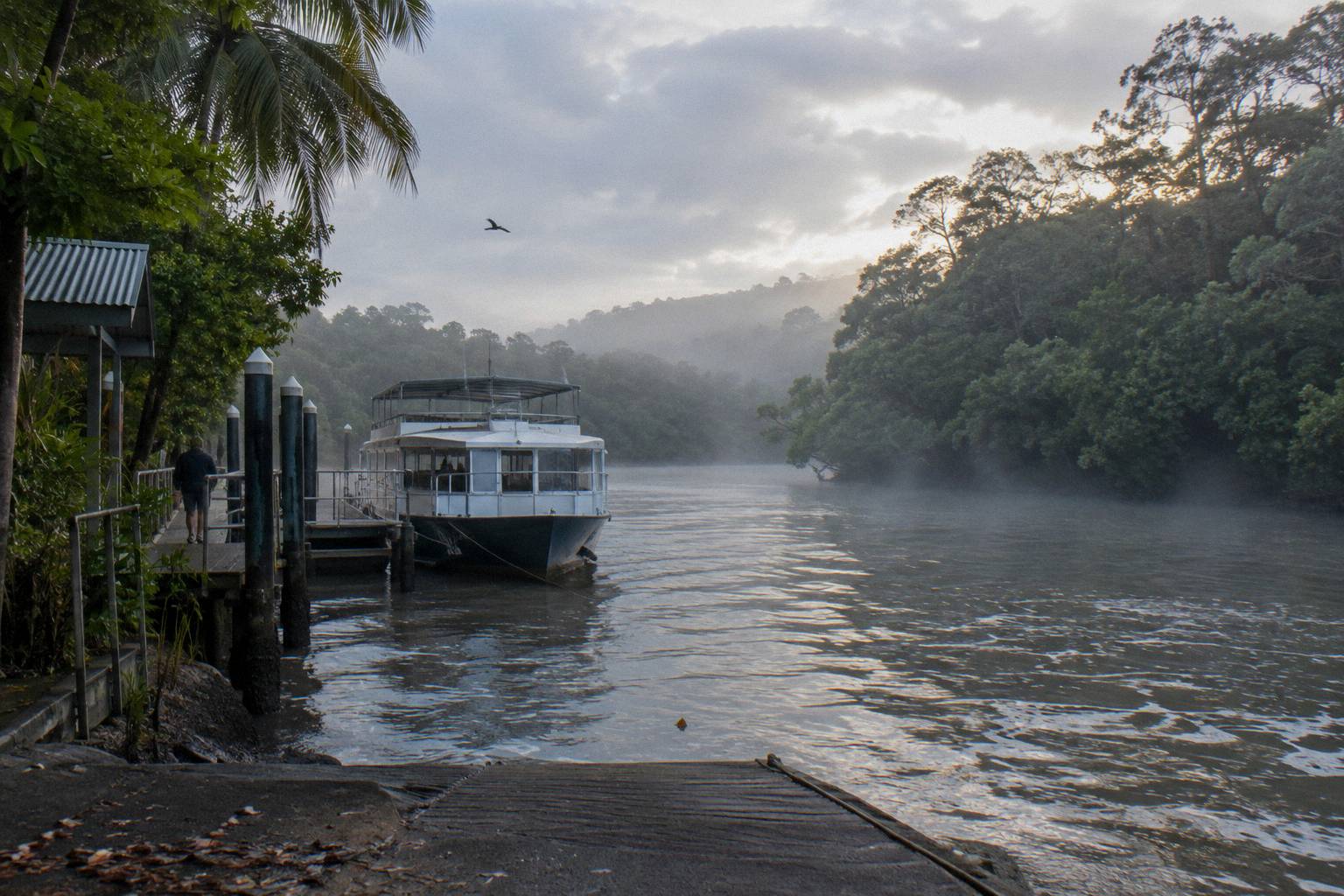
Those claims cannot be merged into one figure, and the operators themselves do not present them as guarantees. Bruce Belcher's states plainly that it never guarantees wildlife sightings and offers a complimentary return trip if none is seen; Solar Whisper says it cannot 100 percent guarantee and also offers a free return cruise. The Queensland Government adds a seasonal driver of its own: male crocodiles become very mobile in the breeding season as they look for a mate, so sightings are more prevalent then, per the Queensland Government's estuarine crocodile page.
| Operator | Its own stated sighting claim | Its own caveat or offer |
|---|---|---|
| Bruce Belcher's | 98 percent of trips in June to September, about 50/50 in warmer months | Never guarantees; complimentary return trip if none seen |
| Solar Whisper | About 99 percent success rate | Cannot 100 percent guarantee; free return cruise if none seen |
| Lady Douglas | Normally seen on over 90 percent of trips, especially May to November | No guarantee stated beyond the dry-season pattern |
| Daintree Boatman | Crocs and snakes best between May and October, much more difficult outside | Seasonal framing, no percentage given |
| Daintree River Cruise Centre | No rate published; sightings vary | Every guest leaves with a deeper love for the river, it says |
Climate backs the seasonal pattern. Bureau of Meteorology averages from the Port Douglas Warner Street station put the wet months at January to March, each carrying 395 to 429 mm of rain, while July to September are the driest at 23 to 32 mm, per the Bureau's Port Douglas climate table. More water and flooded banks give crocodiles more places to hide, which is why several operators point to the cooler, drier months. The deeper seasonal breakdown lives in the guide to the best month for a Daintree crocodile cruise.
The half-day option splits the difference for anyone who wants the wild format without committing a full day: the Port Douglas Daintree Half-Day Tour runs 12:50pm to 5:30pm from US$121, pairing a Mossman Gorge walk and swim with a one-hour river cruise that includes a beer, wine or soft drink and a small snack, with hotel pickup and drop-off from Port Douglas accommodation.
Matching The Trip To Your Travel Party
Pick by who is travelling with you. The Lady Douglas River Cruise is the covered trip that leaves Port Douglas itself, boards at the Crystalbrook Superyacht Marina, lists wheelchair access and children's colouring sheets, and runs 1.5 calm-water hours from US$32. The full-day Daintree Experience is not suitable for children under 10 or people with mobility impairments, and the half-day tour is not suitable for children under 3.
That accessibility spread matters more than most families expect. Several of the Daintree Village jetty trips are marked not suitable for wheelchair users, including Crocodile Express and the Cruise Centre, whose operator notes the Centre itself is wheelchair accessible but its jetty and boats may not suit those needing assistance. Bruce Belcher's marks its trip out for pregnant women, people with back problems and anyone prone to seasickness, and requires a 200 m uncovered walk to its boats in non-slip shoes. Solar Whisper's roofed solar-electric boat has no toilet on board, with an amenities block beside the office. The fuller breakdown is in the guide to croc cruise boarding and mobility.
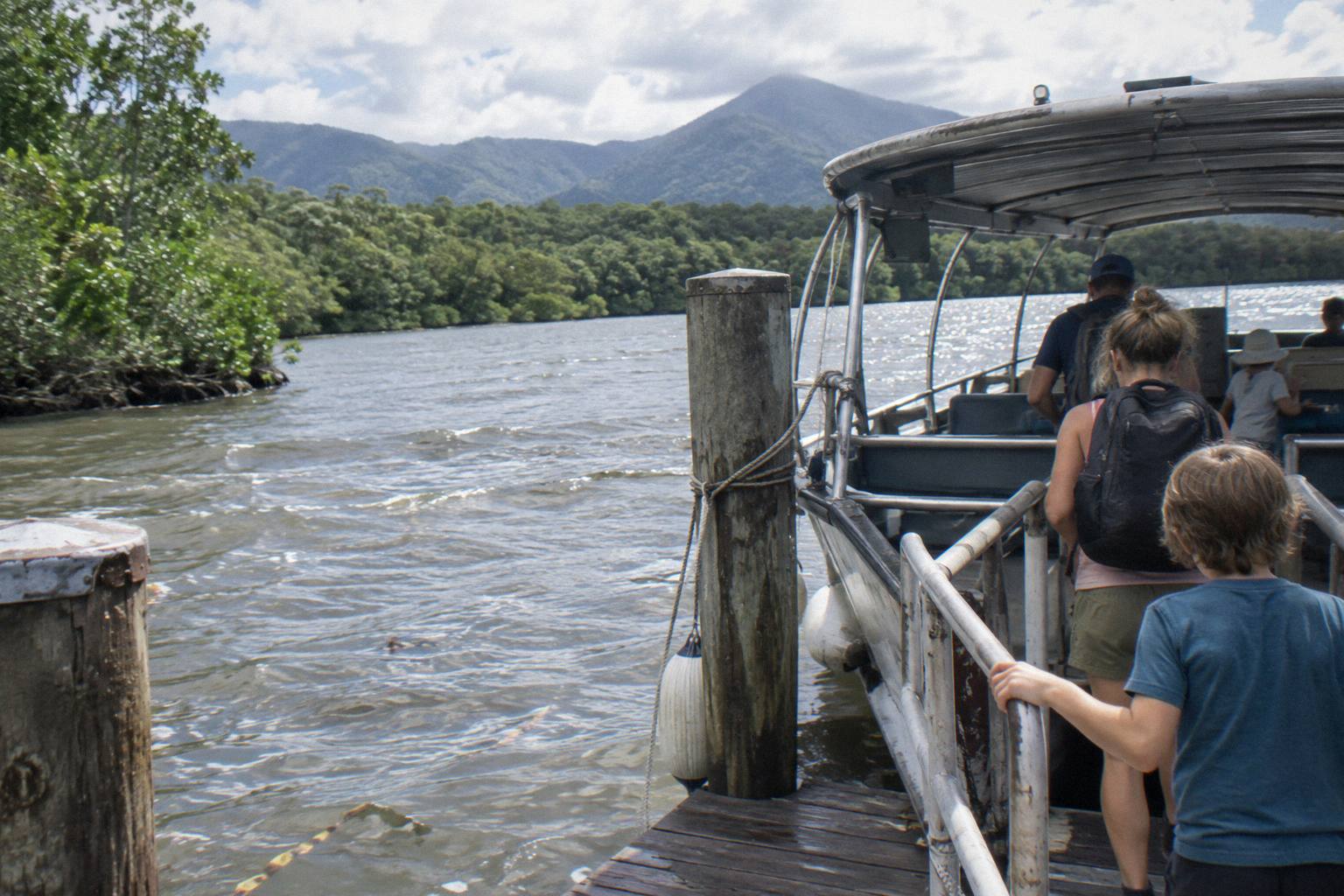
Comfort on the water is the other family consideration. The boats here are not alike: Lady Douglas carries covered seating across the whole back deck, a licensed bar and a toilet, plus one beverage and snacks in the fare, which explains why it works for a relaxed family outing straight from town. Solar Whisper caps numbers at 10 on its two-hour cruises and runs a roofed, windowless solar-electric boat, a quiet hull that suits photographers and anyone who dislikes engine noise. Bruce Belcher's pours a complimentary Daintree tea or coffee and keeps clear screens for rain. None of these is a park bench, but the gap between the roomiest and the most basic is wide enough to check before booking, and the guide to Daintree croc cruise boat types walks through it.
| Trip | Length | From price | Suitability notes from the booking page |
|---|---|---|---|
| Lady Douglas River Cruise | 1.5 hours | US$32 | Wheelchair accessible, pram access, infants on laps |
| Crocodile Express Daintree Wildlife Cruise | 1 hour per route, two routes | US$27 | Not suitable for wheelchair users |
| Daintree River Cruise Centre Wildlife Cruise | 1 hour | US$24 | Not suitable for wheelchair users, transfers excluded |
| Bruce Belcher's Guided Daintree River Cruise | 1 hour | US$30 | Not suitable for pregnant women, back problems, seasickness |
| Port Douglas Daintree Half-Day Tour | 5 hours | US$121 | Not suitable for children under 3, hotel pickup included |
| Daintree Experience Full Day | 8 hours | US$165 | Not suitable for children under 10 or mobility impairments |
For travellers torn between several formats rather than between park and river, the wider field is mapped in a comparison of the Daintree River cruise operators and in the overview of crocodile tours departing Port Douglas. The short version: every option above is a wild-river or wild-inlet trip, and none of them resembles a contained park.
Common Mistakes Picking Between The Two Formats
The most common mistake is treating the two formats as substitutes on price alone. A one-hour river cruise from US$24 and a park admission are different products, one buying wild habitat and the other buying certainty. The second mistake is expecting a guaranteed crocodile on the river: no operator here promises one, and Queensland law would not let them stage one. The third is underestimating the drive, since the Daintree jetties sit about 45 minutes from Port Douglas.
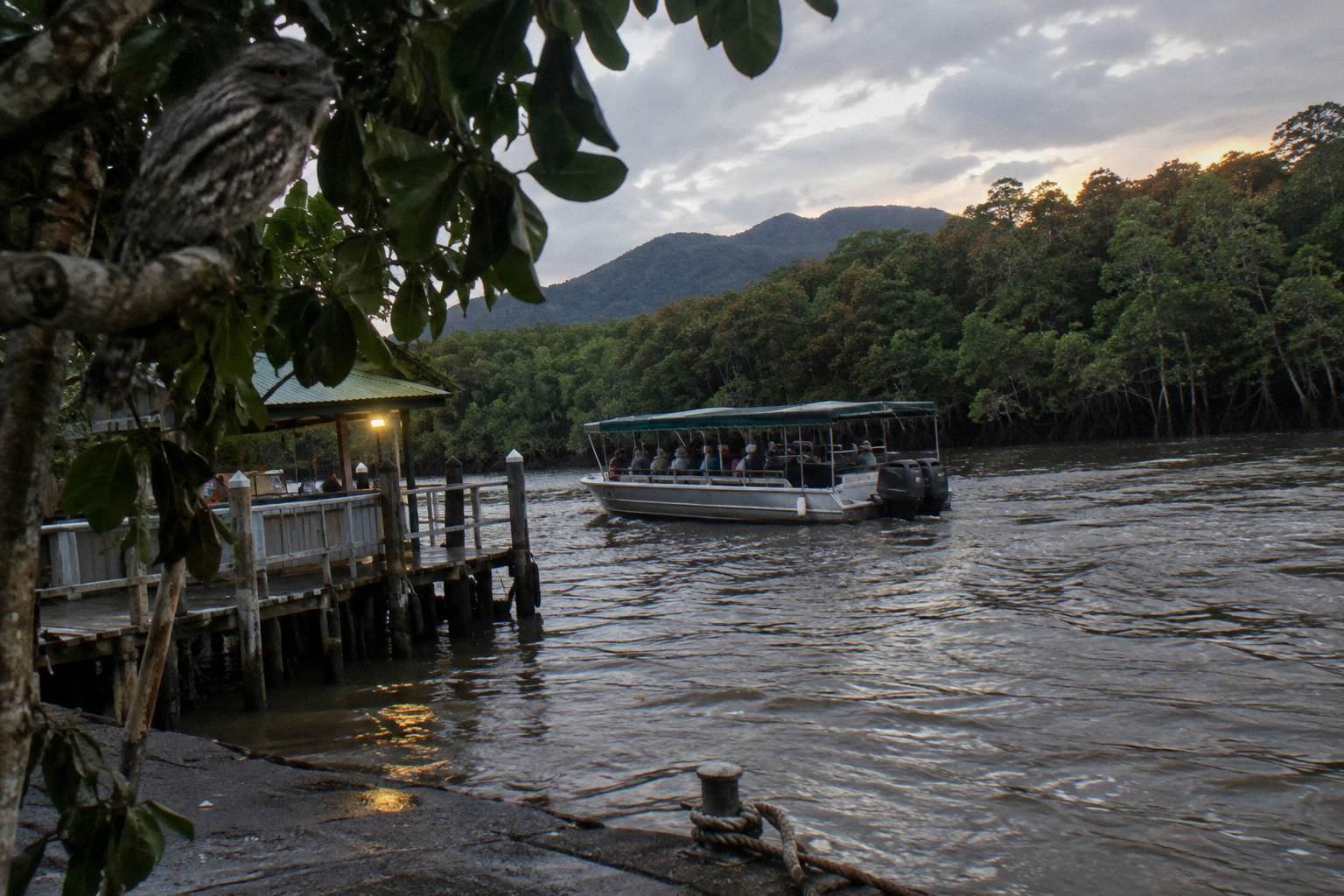
Timing errors rank just as high. Crocodiles are most active at night, dusk and dawn, per the Queensland Government's Be Crocwise advice, which recommends staying more than 5 metres from the water's edge on land and keeping arms and legs inside the boat on the water. Daintree Boatman leans into that rhythm with two-hour dawn and dusk departures, listing morning cruises from 7am between April and August, or 6.30am from September to January, and afternoon departures from 4pm or 4.30pm on the same split. Daintree River Cruise Centre lists daily departures from 9.30am to 3.30pm, and Bruce Belcher's from 8:30am to 3pm, closed all February. Timetables are each operator's own published pattern and subject to change; the booking calendar decides the real start time.
A fourth mistake is assuming the crocodile is the whole show. The river trips carry a parallel cast that no park enclosure reproduces: Crocodile Express names the great-billed heron, calling it one of Australia's rarest herons, alongside azure and little kingfishers, sea eagles, ospreys, amethystine pythons and tree snakes. The Daintree River Cruise Centre points to over 280 recorded bird species in the region. The wider wildlife picture is laid out in the guide to birds, snakes and crocs on a Daintree river cruise.
Finally, visitors sometimes plan the ferry into a cruise day unnecessarily. The Daintree Ferry runs continuously between 5 am and midnight daily, including Christmas Day, but the river cruises sold here depart from the south side of the river or from Daintree Village and never cross it, so the ferry is a separate Cape Tribulation decision rather than part of the cruise logistics. Long queues form at the ferry in school holidays, which is worth knowing if you do head north afterwards: the smart sequence is the cruise first, the ferry second, and never the reverse on a tight clock.
Where the overall balance lands is personal. The park format buys certainty and convenience. The wild river buys the chance of a crocodile choosing to surface beside you, on a World Heritage waterway, with a complimentary return trip from two of the operators if the river stays quiet. For most travellers with at least a half-day to spare and a taste for the wild side of Far North Queensland, the river wins on the strength of the setting alone.
Common Questions About Park Versus Wild River Trips
Is A Wildlife Park Better Than A Wild River Cruise For Seeing Crocodiles?
A park guarantees a crocodile because the animals live in enclosures on the property. A wild river cruise cannot guarantee one, though Bruce Belcher's reports crocodiles on 98 percent of its trips in the cooler months and Solar Whisper reports about a 99 percent success rate, both with a free return cruise if none is seen. Certainty favours the park; the experience of a wild tidal river favours the cruise.
Can I Book Hartleys Crocodile Adventures Through These Pages?
No. It is a wildlife park and a different kind of outing, not a river cruise, and it is not sold here. The trips bookable here are wild-river and wild-inlet cruises departing the Daintree River, Daintree Village or Port Douglas.
Which Is Better With Young Children, A Park Or A River Cruise?
It depends on age. The half-day Daintree tour is not suitable for children under 3 and the full-day Daintree Experience is not suitable for children under 10, while the Lady Douglas River Cruise lists children's colouring sheets, pram access and a calm-water 1.5-hour route from Port Douglas. A contained park suits the youngest visitors; school-age children manage the river trips well.
What Does A Wild River Crocodile Cruise Cost?
The river and inlet trips sold here run from US$24 per person for the one-hour Daintree River Cruise Centre cruise, US$27 for Crocodile Express, US$30 for Bruce Belcher's, US$32 for Lady Douglas, US$121 for the half-day tour and US$165 for the full-day Daintree Experience. Solar Whisper and Daintree Boatman prices are on the booking page. The six priced trips carry free cancellation up to 24 hours before start.
Do Queensland Crocodile Cruises Feed Or Bait The Crocodiles?
No. It is an offence in Queensland to feed a crocodile or to disturb one by approaching within 10 metres in a boat without a reasonable excuse, so a Queensland river cruise is a spotting trip rather than a feeding show. The Northern Territory jumping-crocodile format does not operate here.
What Time Of Day Gives The Best Crocodile Sightings?
Crocodiles are most active at night, dusk and dawn, per Queensland Government advice. Daintree Boatman runs two-hour dawn and dusk cruises on that rhythm. Tide matters too: Solar Whisper says low tide is usually better because there is less water to hide in, and the hardest combination is a summer high tide.