
What Time Of Day Is Best To See Crocodiles?
Dawn, dusk, midday or sunset: how crocodile activity, tides and operator timetables shape the best departure slot for a Daintree River or Port Douglas croc cruise.
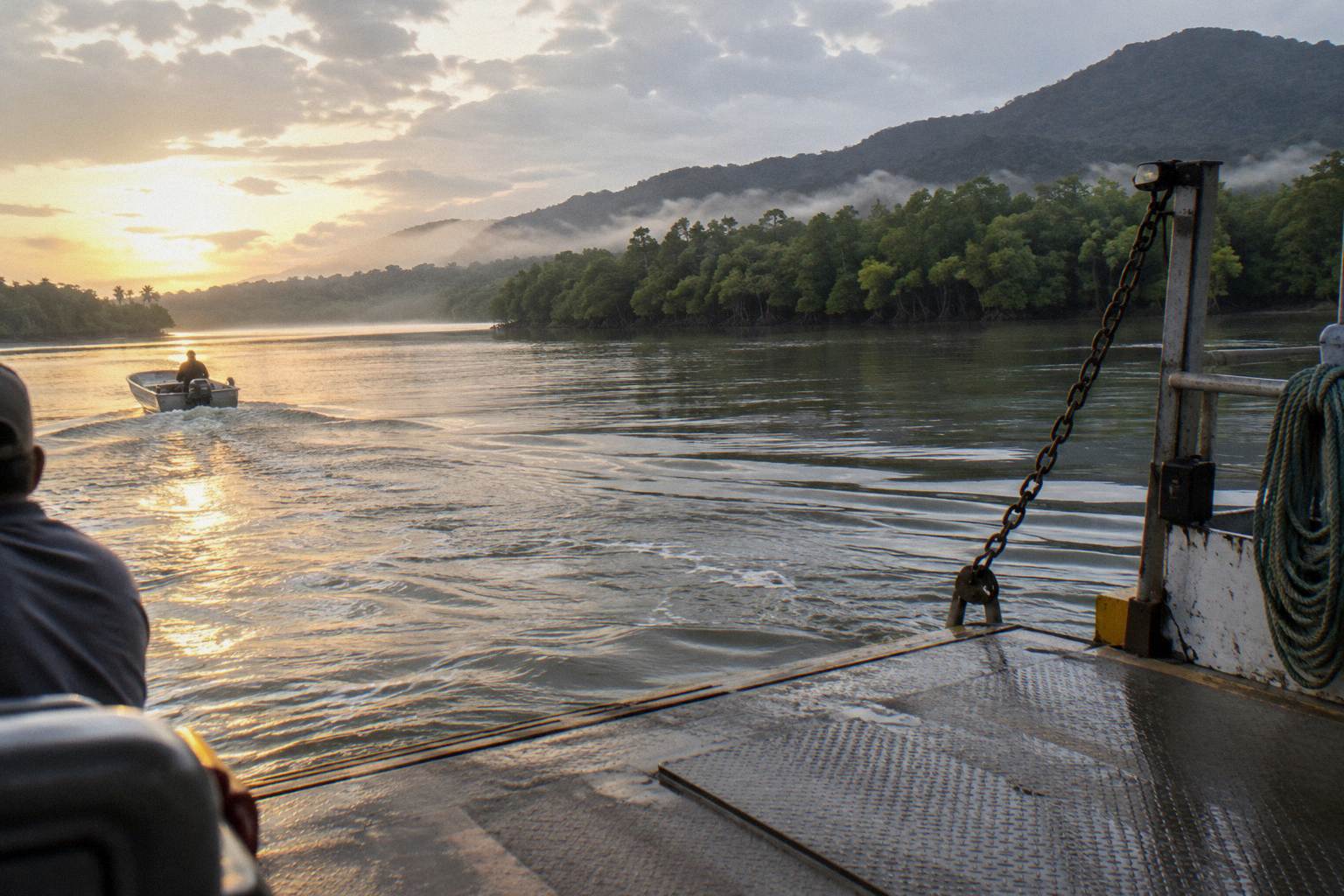
Crocodiles keep their own schedule, and the Queensland Government puts it plainly: they are most active at night, dusk and dawn. Every trip sold on these pages runs in daylight, at dawn or around dusk, because no night cruise exists among them, so the framing is that you are choosing the best lit window inside the animals' busy hours. Dawn and the couple of hours either side of sunset line up with both the Government's activity guidance and the operators' own comments on when crocodiles are easiest to find, while midday trips trade a small edge in activity for stable weather, calmer water and the widest choice of departure times.
That single idea, matching your departure slot to the animals' activity pattern rather than to your lunch plans, is what the rest of the page works through: what the Government and the operators each say, how tides and season shift the answer month by month, and what each departure point actually offers hour by hour. For the broader picture of spotting odds across the whole year, the guide on the best month for a Daintree croc cruise covers the seasonal side, and how tides shape croc sightings on the Daintree handles the tidal mechanics in detail.
| Quick fact | The detail |
|---|---|
| Peak crocodile activity | Night, dusk and dawn, per Queensland Government guidance |
| Cruises sold here | Daylight, dawn and dusk windows only; no night trip exists |
| Dawn option | Daintree Boatman dawn cruise from 7am (April to August) or 6.30am (September to January) |
| Dusk option | Daintree Boatman sunset cruise from 4pm or 4.30pm by season; Lady Douglas sunset slot at 4.30 pm |
| Tide effect | Solar Whisper says low tide is usually better; Bruce Belcher's says low tide can enhance chances |
| Seasonal note | Bruce Belcher's says crocodiles are spotted on 98 percent of trips in the cooler months, June to September |
Why The Clock Matters To A Crocodile
Estuarine crocodiles are most active at night, dusk and dawn, and very mobile during and after high tides and heavy rain, which is Queensland Government guidance rather than operator marketing. The same official advice warns that interactions can occur at any time of year and that no waterway in their range can be considered crocodile free, so the pattern is a lean toward dawn and dusk, never a promise for one hour and a blank for the next.
The Government's estuarine crocodile page describes where the animals sit in the landscape: they occur between Gladstone and Cape York Peninsula and throughout the Gulf of Carpentaria, and are most commonly seen in the tidal reaches of rivers, which is exactly the water a Daintree cruise works. Males average 3 to 4 metres and 200 to 300 kilograms, females rarely exceed 3.5 metres, and the animals are expected to live 50 years or more in the wild. Knowing the biology explains the rhythm: a large cold-blooded predator regulates its temperature and hunts in the cool hours, and basks when it needs warmth.
The official estuarine crocodile information page and the Be Crocwise advice both feed into how a cruise runs. On a boat, the guidance is to keep arms and legs inside the vessel, use the boat as a barrier, and avoid kayaks, paddleboards and other small craft. A river cruise with a skipper follows that logic by design: you view from a vessel with the animal at a distance, and the trips covered here are spotting trips, not feeding shows, since deliberately feeding or disturbing a crocodile is an offence in Queensland.
For timing, the practical takeaway is a hierarchy. Dusk and dawn sit closest to the activity peak while still being legally and practically cruisable in daylight. Early morning and late afternoon, an hour or two either side of those peaks, are the next best thing. Midday is the weakest slot for activity but often the strongest for weather, water calm and family logistics, and operators still find crocodiles across the middle of the day, as their own sighting comments make clear.
Should a dusk slot appeal, the window is worth booking with the operator that specialises in it. Port Douglas Crocodile Cruises keeps the full set of departure slots side by side, and the dusk question below breaks down the two-hour option.
The Dawn Window On The Daintree River
Dawn is the first of the two daylight windows that overlap the crocodile's activity peak, and it comes with the river at its stillest: light winds, glassy water and banks that have not yet filled with the day's boat traffic. The Daintree Boatman dawn cruise runs two hours from 7am between April and August and from 6.30am between September and January, which places it squarely inside the Government's dawn activity band.
Sunrise on the Daintree is early by southern standards. A solar calculation for Daintree Village puts sunrise at about 5:38am in November, about 5:58am in January, about 6:44am in June and about 6:47am in July, accurate to a minute or two. That means a 7am departure in winter sets off a good while after first light, while a 6.30am start in the September to January period lands within roughly an hour of sunrise, and both sit inside the morning activity shoulder. These times are a calculation, not an operator timetable, and the booking calendar decides real departures.
Dawn also overlaps with the bird life that makes the river more than a crocodile hunt. The Daintree Boatman's focus is birds: azure, little and sacred kingfishers, Papuan frogmouth, great-billed heron, shining flycatcher and black bittern are on the operator's own list, alongside common tree snakes and water dragons. Kingfishers and herons are at their most visible in the first calm hours, so a dawn trip buys two wildlife rewards for one alarm clock.
The trade-offs are real, though. A dawn cruise means an early start from Port Douglas: Daintree Village and Lower Daintree are about 45 minutes' drive from Port Douglas and about 30 minutes from Mossman, in Solar Whisper's own driving guidance. In the wet months, January to March, the mean rainfall runs 395 to 429 millimetres a month at Port Douglas, and early showers are more likely than in the dry middle of the year. Weigh that against the sighting comments: Daintree Boatman says crocs and snakes are best between May and October and much more difficult outside that period, so a May to October dawn start is the strongest combination of the year, though no hour is promised.
For an alternative dawn-adjacent format, Solar Whisper runs a one-hour trip from the Esplanade at Lower Daintree, its ticket office about 400 metres before the car ferry, on a roofed solar-electric boat carrying small groups. Details and availability are on the Solar Whisper croc cruise page.
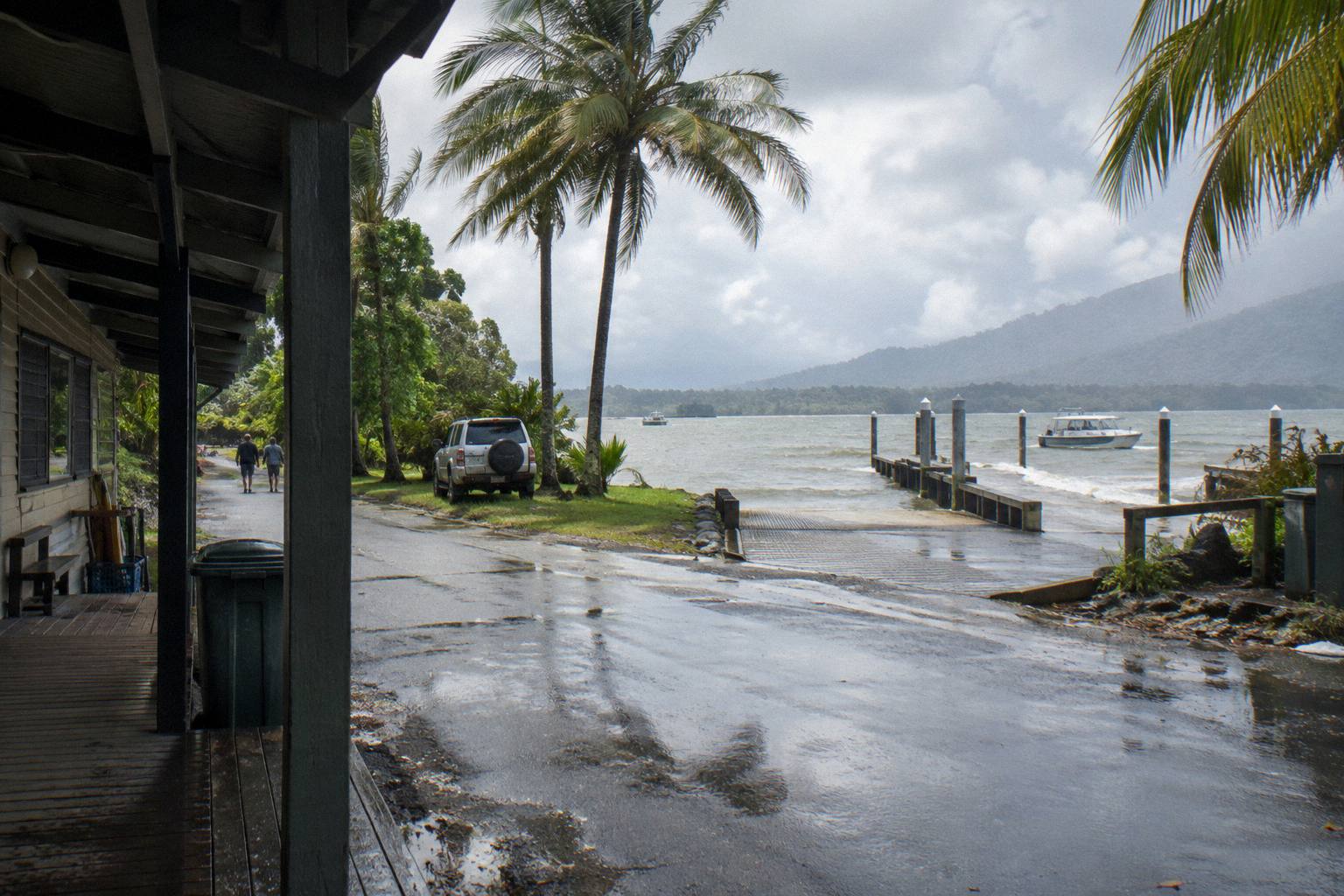
Midday Trips: What You Trade And What You Gain
A midday departure gives up the activity edge of the dawn and dusk shoulders and buys back the day's most dependable conditions: settled weather, calm water and the widest spread of departure times across the operators. Crocodiles are still seen through the middle of the day, and the operators' own wording makes clear that time of day is one factor among several, with tide and season doing at least as much work.
Bruce Belcher's says crocodiles are spotted on 98 percent of its trips, particularly in the cooler months from June to September, and about 50/50 in the warmer months, which it links to the breeding season and the wet season. Crucially, that is a figure across its whole timetable, which runs from 8:30am to 3pm, so the middle of the day is plainly not a dead zone on that river. The same operator says low tide can enhance the chances but crocodiles are still seen at high tide, which pushes the tide question ahead of the clock question for many midday slots.
Lady Douglas says crocodiles are normally seen on over 90 percent of trips, especially in the dry season from May to November, across four scheduled slots at 10.30 am, 12.30 pm, 2.30 pm and 4.30 pm, all dependent on seasonal demand. The midday and afternoon slots on Dickson Inlet sit inside that claim. Solar Whisper frames the midday question differently: it says small crocodiles are very reliable while big ones come and go, and that the most difficult time is summer on a high tide, again making tide and season the levers rather than the hour hand.
For families, midday is often the practical winner. The Port Douglas Daintree Half-Day Tour runs 12:50pm to 5:30pm, pairs a Mossman Gorge walk and swim with a one-hour river cruise, and includes hotel pickup from Port Douglas, which removes the early-morning drive entirely. It rates 4.5 from 117 reviews and starts from US$121 per person. Its cruise stop lands in the early-to-mid afternoon, and the timetable shows how a midday tour can still catch the late activity shoulder on the river before the drive home.
| Time band | What the sources say | Best suited to |
|---|---|---|
| Dawn, first two hours | Government: crocodiles most active at dawn; Daintree Boatman dawn cruise from 6.30am or 7am by season | Birders, photographers, repeat visitors |
| Morning, 8.30am to 11am | Bruce Belcher's from 8:30am; Crocodile Express and Cruise Centre from 8.30am and 9.30am | Families with school-age children |
| Midday, 11am to 2pm | Operators report sightings across the whole timetable; tide often matters more than hour | Cruise-and-explore day plans |
| Afternoon, 2pm to 4pm | Cruise Centre to 3.30pm; Crocodile Express to 3.30pm; half-day tour cruise stop | Late risers, Port Douglas day-trippers |
| Dusk, last two daylight hours | Government: most active at dusk; Daintree Boatman sunset cruise; Lady Douglas 4.30 pm slot | Wildlife-first visitors, couples |
The Dusk Window And The Sunset Cruises
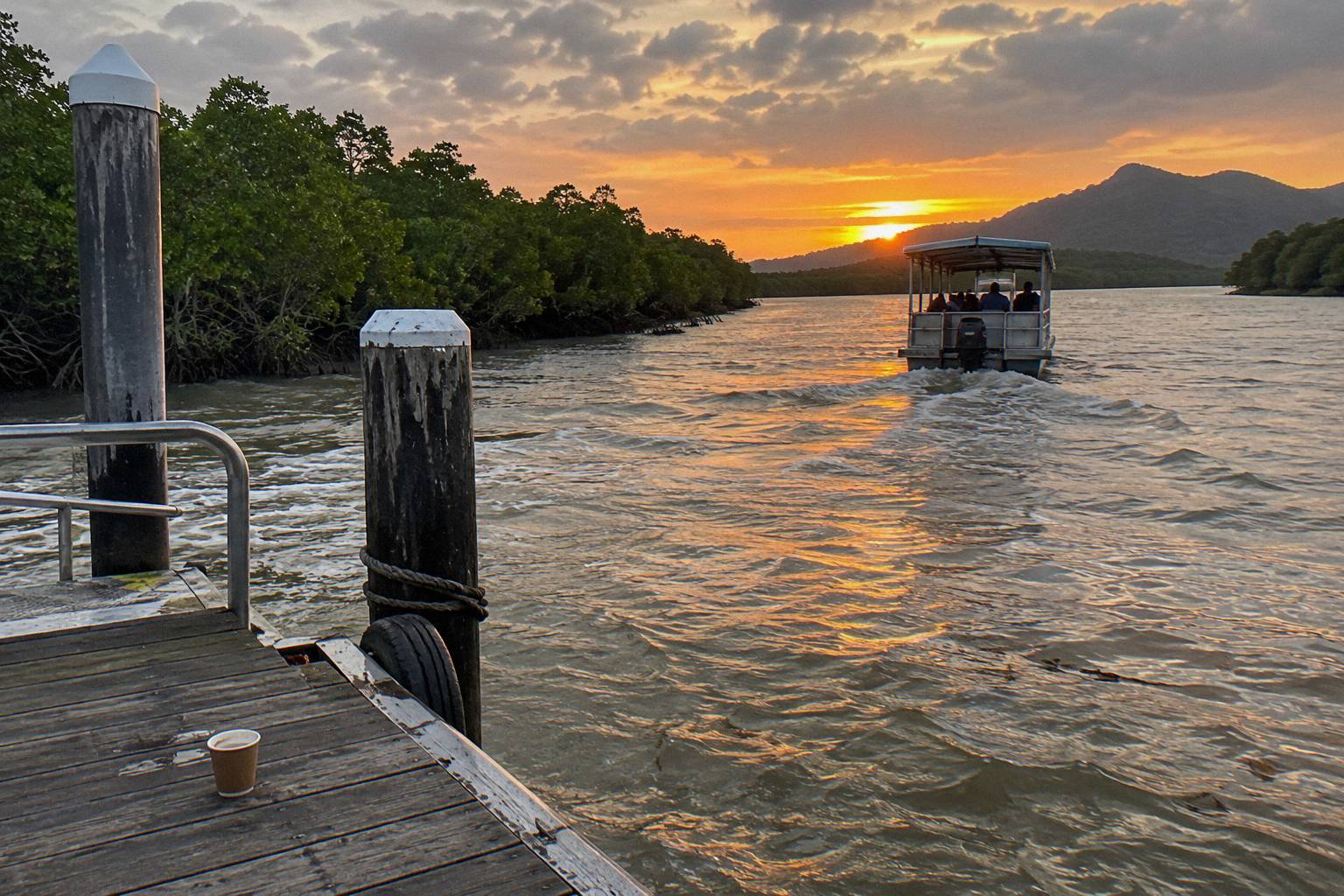
Dusk is the second daylight window that overlaps the crocodile's activity peak, and it is the slot with the most distinctive product: the Daintree Boatman Sunset Cruise, two hours from the public boat ramp at Stewart Street in Daintree Village, departing 4pm between April and August and 4.30pm between September and January. Lady Douglas covers the same idea closer to town with its 4.30 pm sunset slot on Dickson Inlet.
Sunset over the Daintree, by the same solar calculation, falls at about 6:57pm in January, about 5:54pm in June and about 6:02pm in July. That spread shapes the sunset experience: a 4pm winter departure runs mostly in golden low light, while a 4.30pm summer start carries the trip right to the edge of daylight. The calculation is approximate to a minute or two and is not a boat time, and Queensland has no daylight saving to shift it.
What dusk buys on the water is the changeover. The Government's guidance that crocodiles are most active at night, dusk and dawn means the hour before sunset is when a resident crocodile stirs, slides off a bank and starts to hunt, and the Daintree Boatman's bird-first crew times its two hours around exactly that shift. The operator's own wildlife list leans on the herons, frogmouths and bitterns that also move at that hour. No night cruise is sold among the trips here, so dusk is as close to the peak activity window as a booked departure gets.
The trade-off is visibility at the margins. Light fades fast in the tropics, so the first ninety minutes of a winter sunset trip do the heavy lifting for photography, and the last stretch is atmosphere rather than frame-filling shots. From Port Douglas, the drive back after a 6pm finish in Daintree Village is about 45 minutes, worth planning if you have children in the car. Check the booking page for the Daintree Boatman's two-hour sunset cruise when you are weighing a dusk slot, since season and river conditions shape each departure.
Every Departure Slot, Operator By Operator
Each operator publishes its own pattern of departures, and the patterns are wide: Crocodile Express lists daily cruises from 8.30am to 3.30pm on both routes, the Daintree River Cruise Centre from 9.30am to 3.30pm, Bruce Belcher's from 8:30am to 3pm, and Lady Douglas across four seasonal slots ending with a 4.30 pm sunset departure. The booking calendar decides real start times, and every pattern is subject to change.
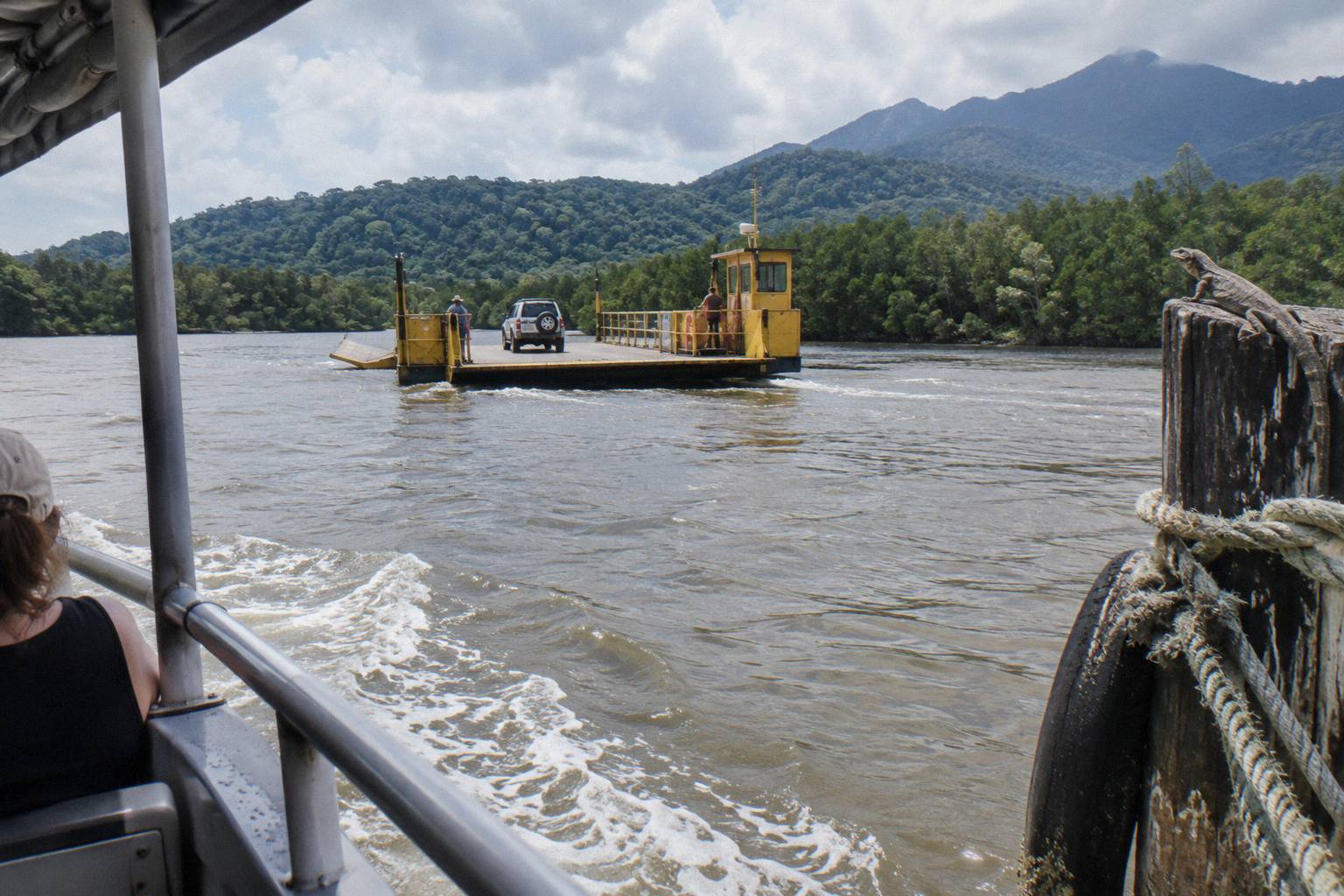
The spread matters because it turns the time-of-day question into a logistics question. Only Lady Douglas leaves from Port Douglas itself, at the Crystalbrook Superyacht Marina, so its 10.30 am, 12.30 pm, 2.30 pm and 4.30 pm slots need no drive. The Daintree River operators cluster at the village end and the south side of the river, none of them crossing the ferry, so every Daintree departure means the roughly 45-minute drive from Port Douglas either before your cruise or as part of a tour that includes pickup.
Bruce Belcher's has the narrowest calendar of the group: open March to January, closed all of February, and closed Christmas Day and New Year's Day. Crocodile Express runs every day except 25 December. The Cruise Centre extends some trips, with all cruises at least one hour and stretch to 1.5 hours when its schedule permits, and asks guests to arrive 15 minutes early and check in at reception. Crocodile Express's single ticket covers two one-hour cruises, one from Daintree Village and one from its kiosk about 300 metres before the ferry crossing, valid 14 days from first activation, which lets a keen visitor work a morning run and an afternoon run out of one pass.
| Operator | Departure point | Published pattern | Duration | Rating |
|---|---|---|---|---|
| Lady Douglas | Crystalbrook Superyacht Marina, Port Douglas | Four seasonal slots, 10.30 am to 4.30 pm | 1.5 hours | 4.6 from 571 reviews |
| Crocodile Express | Daintree Village and ferry gateway | Daily 8.30am to 3.30pm, two routes | 1 hour each | 4.6 from 477 reviews |
| Daintree River Cruise Centre | South side before the village | Daily 9.30am to 3.30pm | 1 to 1.5 hours | 4.6 from 558 reviews |
| Bruce Belcher's | Private jetty, Lower Daintree | 8:30am to 3pm, closed February | 1 hour | 4.6 from 154 reviews |
| Solar Whisper | Esplanade, Lower Daintree | Booking calendar decides | 1 hour | Rating on the booking page |
| Daintree Boatman | Stewart Street ramp, Daintree Village | Dawn and dusk by season | 2 hours | Rating on the booking page |
The pattern table rewards a second read for time-of-day purposes. If dusk is the goal, two products serve it directly. If dawn is the goal, one does. Everything else spreads across the day, which means most visitors are choosing among morning, midday and afternoon slots, and the tide table deserves a look alongside the clock, as the guide on tides and croc sightings on the Daintree River explains in depth.
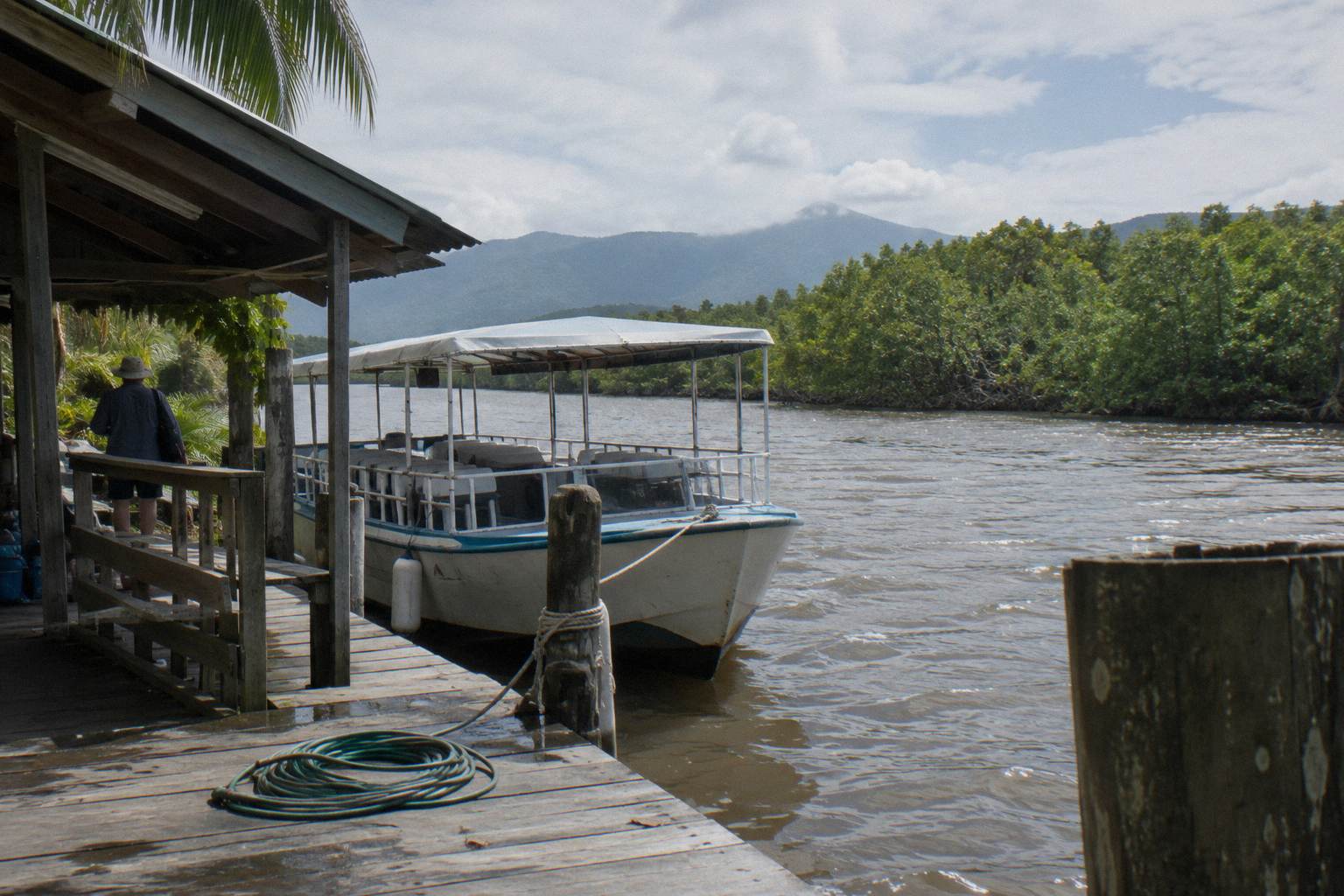
Season Shifts The Answer, Not Just The Clock
The best hour in June is not the best hour in January, because season moves both crocodile behaviour and the daylight window. The Bureau of Meteorology's Port Douglas records show the driest months are July to September at 23 to 32 millimetres of rain, while January to March each average 395 to 429 millimetres, and the operators tie their strongest sighting comments to the cooler, drier part of the year.
Bruce Belcher's says June to September is when crocodiles are spotted on 98 percent of its trips, about 50/50 in the warmer months. Solar Whisper says the river warms in the warmer months and crocodiles become harder to see. Lady Douglas says the dry season, May to November, is when crocodiles are normally seen on over 90 percent of its trips. Daintree Boatman says crocs and snakes are best between May and October. Four operators, one direction of travel: the cooler, drier months are the strong season, and the Government adds a reason, since courtship begins in October and November and nesting runs December to April, and male crocodiles become very mobile in the breeding season, so sightings are more prevalent.
Daylight itself changes. The computed table for Daintree Village gives about 13.0 hours of daylight in January against about 11.2 hours in June and July, with sunrise ranging from about 5:38am in November to about 6:47am in July and sunset from about 5:54pm in June to about 6:57pm in January. In July, a 3.30pm last departure from the Cruise Centre or Crocodile Express finishes with more than two hours of light left; in January, the same departure runs toward a soft late-afternoon glow. The Bureau's Port Douglas climate averages carry the rainfall and temperature figures behind the seasonal picture.
| Month | Sunrise, approx. | Sunset, approx. | Mean rainfall | Rain days of 1 mm or more |
|---|---|---|---|---|
| January | 5:58am | 6:57pm | 395.8 mm | 13.8 |
| April | 6:27am | 6:11pm | 203.3 mm | 11.2 |
| July | 6:47am | 6:02pm | 26.4 mm | 4.2 |
| October | 5:51am | 6:17pm | 53.1 mm | 5.3 |
| December | 5:41am | 6:46pm | 213.5 mm | 10.1 |
One caution belongs here rather than repeated later: no operator guarantees a sighting, and two of them, Bruce Belcher's and Solar Whisper, offer a complimentary return cruise if none is seen, each on its own terms. The Government's point that crocodile interactions can occur at any time of year works both ways: there is no month and no hour that is empty of crocodiles, only leaner and richer windows.
Mistakes People Make When Picking A Slot
The most common timing mistakes are treating the clock as the only variable, ignoring the tide, booking a dawn cruise without pricing the drive, assuming a sunset cruise means darkness, and expecting a guarantee. Time of day, tide, season and weather all shape a trip, and the operators' own comments put tide and season ahead of the hour hand in several cases, so a midday low-tide cruise can outperform a dawn high-tide one.
The first mistake is skipping the tide check. Solar Whisper says low tide is usually better, because there are more beaches and less water to hide in, and the most difficult time is summer on a high tide. Bruce Belcher's says low tide can enhance the chances but crocodiles are still seen at high tide. If your heart is set on a big crocodile on a bank, a low-tide afternoon beats a high-tide dawn.
The second is underestimating the drive. A dawn cruise from Daintree Village means leaving Port Douglas well before 6am in some months, on unlit roads shared with wildlife. The half-day tour from Port Douglas, 12:50pm to 5:30pm with pickup from your accommodation, exists precisely for visitors who would rather not make that drive twice in a day.
The third is assuming dusk means a night trip. No night cruise is sold among the trips here: every trip runs in daylight, at dawn or around dusk. A sunset cruise finishes at or just before last light in winter and with light to spare in summer, which is why the computed sunset table above matters more than the word sunset on a booking button.
The fourth is expecting the animals to keep your appointment. The Government says crocodiles are highly mobile, especially after heavy rain and floods, and every operator here either declines to promise a sighting or offers a return trip if none appears. Book the window that maximises your odds, then let the river decide.
For the mechanics of locking in a slot, the walkthrough on how to book a Daintree croc cruise covers cancellation windows, with free cancellation up to 24 hours before start stated on the booking pages for the Lady Douglas, Crocodile Express, Cruise Centre, Bruce Belcher's, half-day and full-day trips, and a check-the-booking-page note applying to Solar Whisper and Daintree Boatman.
Common Questions About Crocodile Spotting Times
What Time Of Day Is Best To See Crocodiles?
Dawn and the hours either side of dusk, because the Queensland Government says crocodiles are most active at night, dusk and dawn, and those are the lit windows closest to the peak. The Daintree Boatman runs dawn and sunset two-hour cruises, Lady Douglas has a 4.30 pm sunset slot, and tide and season matter as much as the hour.
Are Crocodiles More Active At Dawn Or Dusk?
The Government lists both: crocodiles are most active at night, dusk and dawn. Pick by practicality, since the two windows behave differently for visitors: dawn means an early drive from Port Douglas of about 45 minutes, while dusk trips such as the Daintree Boatman Sunset Cruise start at 4pm or 4.30pm by season.
Do Croc Cruises Run At Night?
No night cruise exists among the trips covered here: every trip runs in daylight, at dawn or around dusk. The closest option to the night activity peak is a sunset cruise that finishes at the edge of last light.
Is Low Tide Better Than A Specific Time Of Day?
It can be. Solar Whisper says low tide is usually better because there are more beaches and less water for crocodiles to hide in, and Bruce Belcher's says low tide can enhance the chances though crocodiles are still seen at high tide. A low-tide midday slot often beats a high-tide dawn one.
Which Operators Have Sunset Departure Slots?
Daintree Boatman runs a two-hour sunset cruise from the Stewart Street ramp in Daintree Village, from 4pm between April and August and 4.30pm between September and January, and Lady Douglas lists a 4.30 pm sunset slot from the Crystalbrook Superyacht Marina in Port Douglas, dependent on seasonal demand.
Does The Time Of Year Change The Best Time Of Day?
Yes. Daylight spans about 13.0 hours in January against about 11.2 hours in June and July at Daintree Village, and the operators tie their strongest sighting comments to the cooler, drier months, with Bruce Belcher's saying crocodiles are spotted on 98 percent of trips from June to September. In winter, late-afternoon departures run closer to the dusk activity window than the same clock time does in summer.