
Can Crocodiles Tip A Boat On A Croc Cruise?
What crocodile size, boat design and Queensland's Be Crocwise rules mean for stability on a Daintree River or Port Douglas croc cruise.
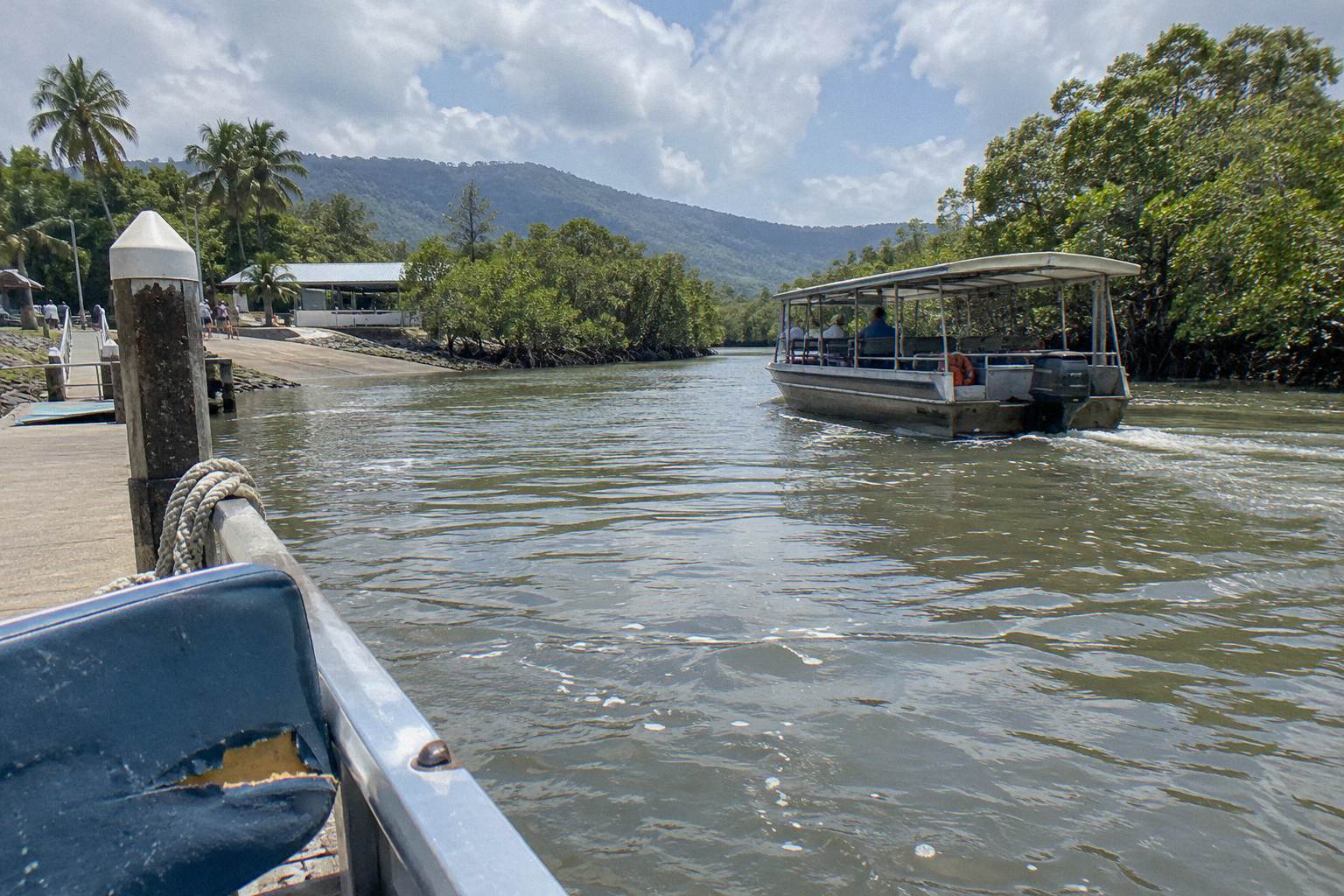
Croc cruises around Port Douglas and the Daintree River run on purpose-built, covered, guide-operated vessels that cruise calm water at low speed, stay well back from any animal they spot, and follow Queensland's Be Crocwise boating advice: keep arms and legs inside the boat and use the boat as a barrier. An adult male estuarine crocodile grows to over 4 metres, which is exactly why operators keep their distance.
Crocodiles are wild animals and the operators treat them that way. Bruce Belcher's Daintree River Cruises says outright that it never guarantees wildlife sightings, and it offers a complimentary return trip if no crocodile is seen rather than pushing a boat closer to make one visible. Solar Whisper says the same thing in its own words, that it cannot 100 per cent guarantee a sighting, and Lady Douglas describes its Dickson Inlet trip as a calm water cruise through several kilometres of mangrove channels. None of these trips chase, feed or corner an animal. In Queensland deliberately feeding a crocodile is an offence, and disturbing one by approaching it in a boat within 10 metres without a reasonable excuse is an offence too, so a river cruise here is a spotting trip from a respectful distance, not a wildlife show.
The practical answer sits in three places: how big these animals actually are, what the boats on these rivers are built like, and what the official rules require of anyone on the water in crocodile country. The sections below take each in turn, with the numbers from the Queensland Government's own species pages and the vessel details the operators publish. If you are weighing which trip to book, the three below span the range from a full Daintree day to a one-hour village cruise.
For a deeper look at the vessels themselves, the guide to Daintree croc cruise boat types compares the formats side by side, and the overview of croc cruise safety, boats and wild crocs covers the same ground from the planning angle.
How Big Do Estuarine Crocodiles Actually Get?
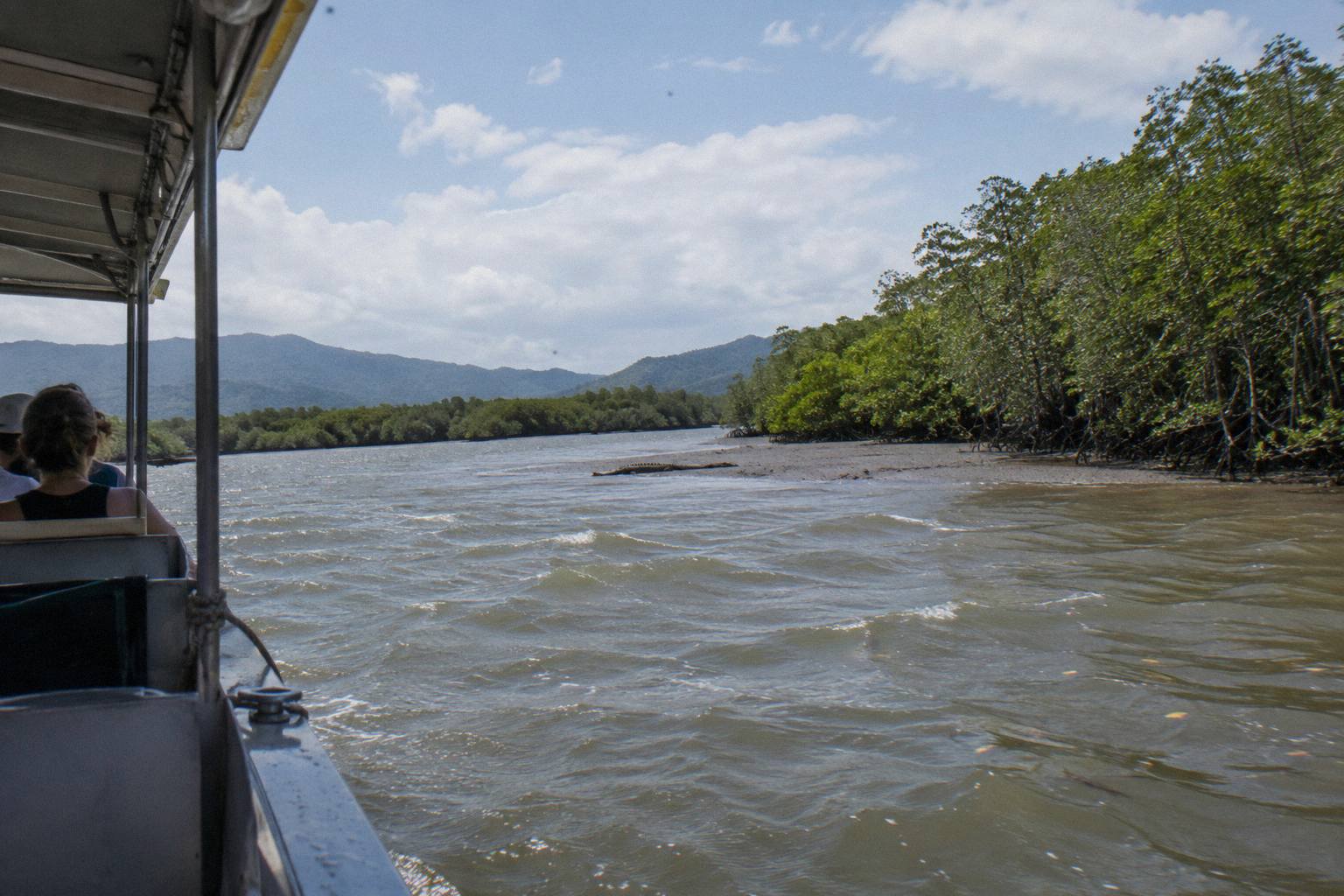
An estuarine crocodile grows to over 4 metres in length, the Queensland Government states, with the average male at 3 to 4 metres and 200 to 300 kilograms. Females rarely exceed 3.5 metres and 150 kilograms. Wild lifespan is unknown but expected to reach 50 years or more. These are heavy, powerful animals, and every rule on the water exists because of that.
The species occurs in Queensland between Gladstone and Cape York Peninsula, and throughout the Gulf of Carpentaria, and is most commonly seen in the tidal reaches of rivers, which is precisely where the Daintree River cruises run. Courtship begins in October and November, nesting runs December to April, and during the breeding season male crocodiles become very mobile as they look for a mate, so sightings are more prevalent. Nests hold 40 to 70 eggs with about 90 days of incubation. Males mature at about 17 years, females at about 12. The Government's estuarine crocodile species page carries the full biology.
| Measurement | Male estuarine crocodile | Female estuarine crocodile |
|---|---|---|
| Maximum length | Over 4 metres | Rarely over 3.5 metres |
| Average adult size | 3 to 4 metres | Up to 2.3 metres at maturity |
| Average adult weight | 200 to 300 kilograms | Up to 150 kilograms |
| Age at maturity | About 17 years | About 12 years |
Size matters for the boating picture in one specific way: an animal of this bulk is not something any operator tries to bring alongside. The cruises that search for crocodiles on the Daintree River hold back and let the binoculars and the zoom lens do the work. The guide to the saltwater crocodiles of the Daintree River goes deeper on behaviour and seasonality if you want the species background before a trip.
What Are The Boats On A Croc Cruise Like?
Every cruise covered here runs on a stable, low-speed vessel designed for wildlife viewing: Lady Douglas is a covered multi-deck riverboat with a licensed bar, toilet and wheelchair and pram access, Solar Whisper runs a roofed solar-electric boat with no windows and a maximum of 10 passengers on its longer trips, and the Daintree River operators run covered cruise boats boarding from private or village jetties. All of them cruise calm, sheltered water rather than open sea.
The details come from the operators themselves. Lady Douglas, family run and cruising Dickson Inlet since 1989, describes covered seating across the whole back deck and a calm water route through mangrove channels, then the inlet entrance and the Port Douglas waterfront. Dickson Inlet is a different waterway from the Daintree River, a mangrove inlet right at Port Douglas, and the only scheduled croc cruise covered here that leaves from Port Douglas itself, at the Crystalbrook Superyacht Marina on Wharf Street.
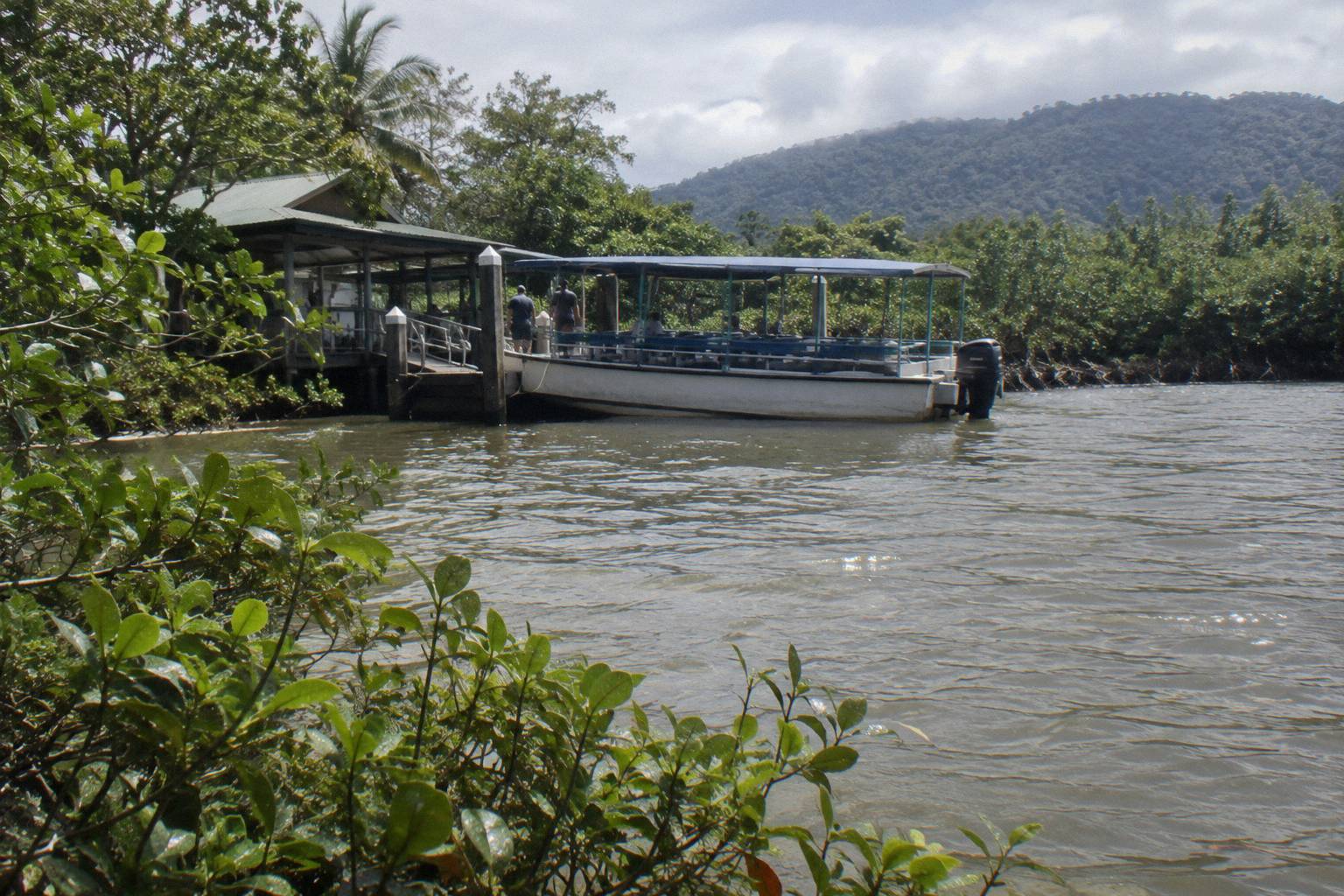
On the Daintree, the boats are smaller but the principle is identical. Bruce Belcher's, running since 1987 from its own jetty on the Mossman-Daintree Road, boards via a 200 metre uncovered walk and requires non-slip shoes, with clear screens pulled down in heavy rain. Solar Whisper's owner-run boat is solar-electric, roofed and windowless, departing the Esplanade at Lower Daintree about 400 metres before the car ferry. The Daintree River Cruise Centre, a family business since 1987, runs its wildlife cruises from its own jetty and asks guests to arrive 15 minutes early and check in at reception.
| Trip | Boat and boarding | Water | Duration |
|---|---|---|---|
| Lady Douglas River Cruise | Covered riverboat, back deck seating, toilet, bar; Crystalbrook Superyacht Marina | Dickson Inlet, Port Douglas | 1.5 hours |
| Crocodile Express Daintree Wildlife Cruise | Covered cruise boats from two jetties, one pass | Upper and Lower Daintree | 1 hour per cruise |
| Daintree River Cruise Centre Wildlife Cruise | Centre jetty, south side of the river | Daintree River | 1 hour, extended to 1.5 when the schedule permits |
| Bruce Belcher's Guided Cruise | Private jetty, 200 m walk, screens in rain | Lower Daintree | 1 hour |
| Solar Whisper Croc And Wildlife Cruise | Roofed solar-electric boat, no windows, small group | Lower Daintree near the ferry | 1 hour |
The full-day Daintree Experience uses a river cruise as one 1-hour stop inside an 8-hour day that also includes a waterfall walk and swim, a secret trail, a gourmet rainforest lunch and a tropical fruit tasting, from US$165 per person with pickup from Port Douglas or Mossman accommodation. Check availability if that format suits your dates.
What Rules Keep The Distance Between Boats And Crocodiles?
Queensland's Be Crocwise advice for anyone boating in crocodile country is to keep arms and legs inside the boat, use the boat as a barrier, and avoid kayaks, paddleboards and other small craft. The 5 metre line from the water's edge is safety advice for people on land; the 10 metre line is law. It is an offence to stay within 10 metres of a basking crocodile, or to feed one.
Those two distance lines do different jobs and are never merged. The Be Crocwise pages advise staying more than 5 metres from the water's edge and being extra cautious at night, dusk and dawn, because crocodiles are most active then and very mobile during and after high tides and heavy rain. The advice also states that no waterway within the species' natural range can be considered crocodile free, and that crocodile interactions can occur at any time of the year. A commercial cruise boat with a guide at the wheel sits on the right side of every one of those rules: high freeboard, everyone seated inside the rails, an experienced skipper reading the animal from a distance. It is an offence to disturb a crocodile by approaching within 10 metres in a boat or vehicle without a reasonable excuse. Other pages covering the same trip are gathered on Port Douglas Crocodile Cruises.
| Rule or advice | What it says | Who it applies to |
|---|---|---|
| 5 metre line | Stay more than 5 metres from the water's edge | Safety advice for people on land |
| 10 metre rule | An offence to remain within 10 metres of a basking crocodile, or disturb one by approaching in a boat or vehicle | Law for everyone on or near the water |
| Feeding ban | An offence to feed a crocodile | Law for everyone |
| Be Crocwise boating | Arms and legs inside the boat, boat as a barrier, avoid kayaks and paddleboards | Advice for all vessels |
This is also why the Northern Territory's jumping crocodile format has no Queensland equivalent here: in Queensland deliberately disturbing or feeding a crocodile is an offence, so a Daintree River cruise is a spotting trip, not a feeding show. The comparison piece on the jumping crocodile cruise versus a Daintree croc cruise unpacks that difference.
The distinction between the two lines catches out plenty of visitors. People often assume the 5 metre line is a legal boundary and that standing 6 metres from the bank is somehow compliant and safe, when it is only advice, and cautious advice at that. Conversely, some assume the 10 metre rule is merely a guideline, when it is an offence to breach it by staying near a basking crocodile or closing the gap in a boat without a reasonable excuse. For a passenger on a licensed cruise, the practical takeaway is simpler: the skipper carries the legal responsibility for the approach, and the passenger's job is to stay seated with arms and legs inside the rails.
The timing advice matters just as much as the distance advice for anyone planning their own movements around crocodile habitat. Because crocodiles are most active at night, dusk and dawn, and move around more during and after high tides and heavy rain, a midday cruise in stable conditions lines up with the period when the animals are most likely to be basking in view rather than hunting unseen. That is one reason operators can report such high sighting rates on the Daintree without ever breaking the 10 metre rule or using food to draw animals in.
Finally, the warning that no waterway within the species' natural range can be considered crocodile free deserves emphasis. It applies year round, not just in the wet season or after a sighting has been reported, and it applies to apparently quiet, muddy creeks just as much as to the main river channels. The safest reading of Be Crocwise is that any water in crocodile country is crocodile water, and the only genuinely safe place to view a crocodile is from inside a proper cruise boat with an experienced skipper.
Do Operators Chase Crocodiles To Get Closer?
No operator covered here chases, feeds or baits a crocodile, and two of them put a free return trip behind that restraint: Bruce Belcher's says it never guarantees sightings and offers a complimentary return cruise if none is seen, and Solar Whisper says it cannot 100 per cent guarantee a sighting and also offers a free return cruise. Their sighting figures describe how often crocodiles are seen from a normal viewing distance, not how close the boat gets.
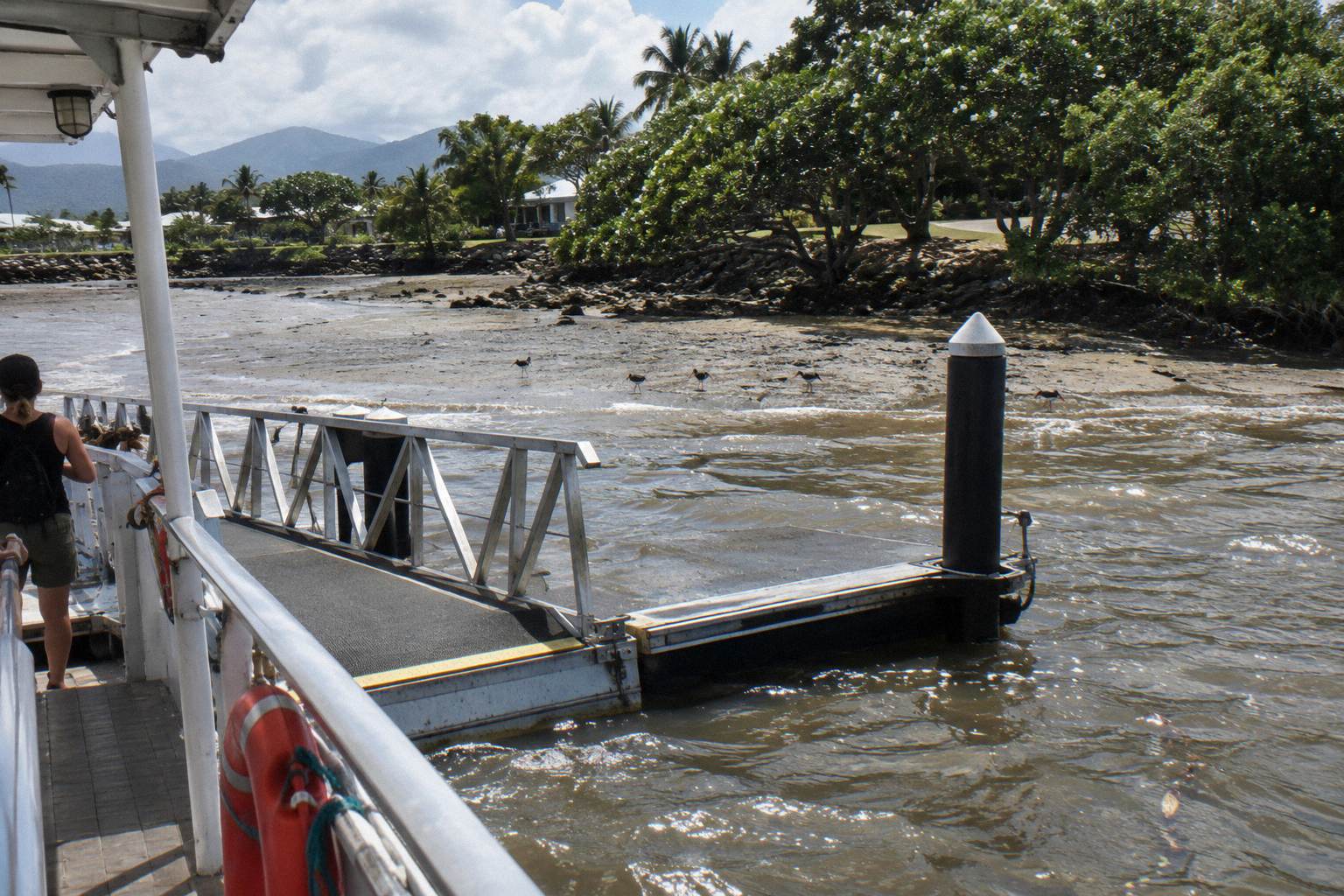
Each operator speaks only for itself, and the wording stays with its owner. Bruce Belcher's says crocodiles are spotted on 98 per cent of trips, particularly in the cooler months of June to September, and about 50/50 in the warmer months, and it says low tide can enhance the chances but crocodiles are still seen at high tide. Solar Whisper says about a 99 per cent success rate, with small crocodiles very reliable and big ones coming and going, and that low tide is usually better because there are more beaches and less water to hide in. Lady Douglas says crocodiles are normally seen on over 90 per cent of trips, especially in the dry season from May to November. The Daintree River Cruise Centre puts it more simply: while sightings vary, it hopes every guest leaves with a deeper love for the river.
The pattern in those claims is worth noticing. Every figure is a description of how often an animal appears to a boat that is holding position, drifting or moving slowly past. None of the operators promises proximity, and the two that attach a remedy to a missed sighting attach a return ticket, not a closer approach. That restraint is the commercial logic of a wildlife cruise in a state where disturbing a crocodile is an offence.
Common Mistakes People Make Worrying About Boat Safety
The most common mistakes are treating a crocodile cruise like a thrill ride instead of the slow, covered, guide-driven drift it actually is, reaching over the rail for photos, ignoring the skipper's seating instructions, choosing a kayak or paddleboard over a proper boat, and assuming wet season conditions match the dry season. Each one is easy to avoid with basic care and attention.
Reaching over the side is the one that matters most. Be Crocwise boating advice exists precisely because the risk on the water is contact at the waterline, not the boat rolling over: keep arms and legs inside the vessel and let the hull be the barrier. A selfie taken half out of the seat defeats the design of the boat. The second mistake is standing up or changing seats while the boat is moving, which matters on any small vessel regardless of what is in the water. The skippers on these rivers brief their passengers for a living; following the briefing is the whole job on your side.
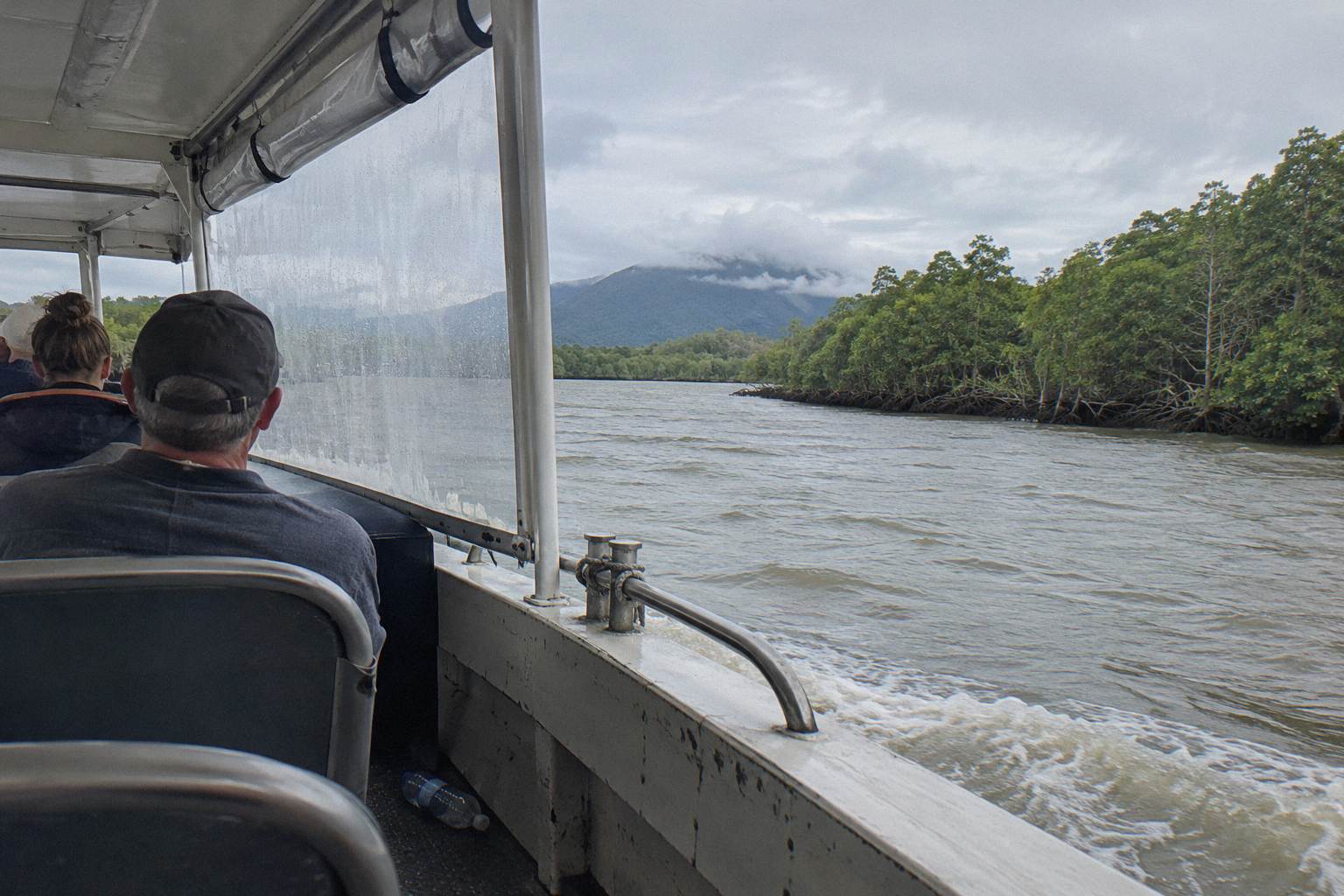
The third mistake is choosing the wrong craft altogether. The Be Crocwise advice names kayaks, paddleboards and other small craft as things to avoid in crocodile habitat, and a covered cruise boat is the format that advice points toward. The fourth is season-blind planning: Daintree Boatman says crocs and snakes are best between May and October and much more difficult outside that period, and the Bureau of Meteorology's Port Douglas data shows why, with January to March each delivering 395 to 429 mm of rain and 13.8 to 14.4 rain days, against 23 to 32 mm across July to September. The Bureau's Port Douglas climate averages carry the full table. The guide to the best month for a Daintree croc cruise turns that into a booking calendar.
Which Trip Should A Nervous Passenger Choose?
Start with the water: Dickson Inlet aboard Lady Douglas is the calmest proposition, a 1.5-hour covered riverboat cruise with a bar, toilet and wheelchair access that never leaves the inlet, from US$32 per person with a 4.6 rating from 571 reviews. On the Daintree, the Cruise Centre's one-hour wildlife cruise from US$24, 4.6 from 558 reviews, includes morning or afternoon tea and use of the Centre's displays and picnic areas.
Both of those run free cancellation up to 24 hours before start, as do Bruce Belcher's, Crocodile Express and the two combined tours, so a nervous booker can lock a date and still walk away inside a day of departure. Bruce Belcher's one-hour cruise from US$30, 4.6 from 154 reviews, suits a confident passenger who wants a guide-led trip from a private jetty. The half-day Port Douglas Daintree tour, from US$121 and rated 4.5 from 117 reviews, bundles a river cruise with a Mossman Gorge walk and swim, running 12:50pm to 5:30pm with hotel pickup.
The full-day Daintree Experience is the pick if you want the crocodile hour embedded in a bigger rainforest day rather than standing alone: 8 hours, from US$165, with pickup from any Port Douglas or Mossman accommodation, a waterfall swim, a guided walk and a gourmet lunch around the river cruise. It is not suitable for children under 10 or people with mobility impairments, so check that fit before booking.
Whatever you choose, book the boat and let the guide run the distance. That is the whole design of a croc cruise around Port Douglas: a heavy, ancient animal viewed from a stable, covered vessel by people who do it daily, on waterways these families have worked for decades.
Common Questions About Crocs And Cruise Boat Safety
Can Crocodiles Tip A Boat On A Croc Cruise?
Croc cruises around Port Douglas and the Daintree River run on stable, covered, guide-operated boats on calm water, holding well back from any animal and following the Be Crocwise boating advice: arms and legs inside the boat, the boat as a barrier. Approaching or disturbing a crocodile within 10 metres is an offence in Queensland, so operators view from a distance rather than closing in.
How Close Does The Boat Get To A Crocodile?
Operators hold a viewing distance rather than closing in, and Queensland law makes it an offence to remain within 10 metres of a basking crocodile or disturb one by approaching within 10 metres in a boat. Feeding a crocodile is also an offence, so these are spotting trips, not feeding shows.
Are Croc Cruise Boats Covered If It Rains?
Mostly yes. Lady Douglas has covered seating across the whole back deck, Solar Whisper runs a roofed boat, and Bruce Belcher's pulls clear screens down in heavy rain. Solar Whisper operates in rain but not in flood.
What Is The Be Crocwise Advice For Boats?
Keep arms and legs inside the boat, use the boat as a barrier, and avoid kayaks, paddleboards and other small craft in crocodile habitat. On land, the advice is to stay more than 5 metres from the water's edge and be extra cautious at night, dusk and dawn.
Is A Kayak Or Paddleboard A Good Alternative To A Croc Cruise?
No. The Be Crocwise advice specifically says to avoid kayaks, paddleboards and other small craft where crocodiles occur, and no waterway in the species' natural range can be considered crocodile free. A covered cruise boat is the format the advice points toward.
Which Croc Cruise Is Best For A Nervous First-Timer?
Lady Douglas suits nervous passengers well: a 1.5-hour calm water cruise of Dickson Inlet on a covered riverboat with a toilet, licensed bar and wheelchair access, from US$32 per person. On the Daintree, the Cruise Centre's one-hour cruise from US$24 includes tea and use of the Centre's displays and picnic areas.