
Can You See Crocodiles In Port Douglas?
Yes, wild estuarine crocodiles live around Port Douglas: what the Queensland Government says, which cruises go looking for them, and when sightings are most likely.
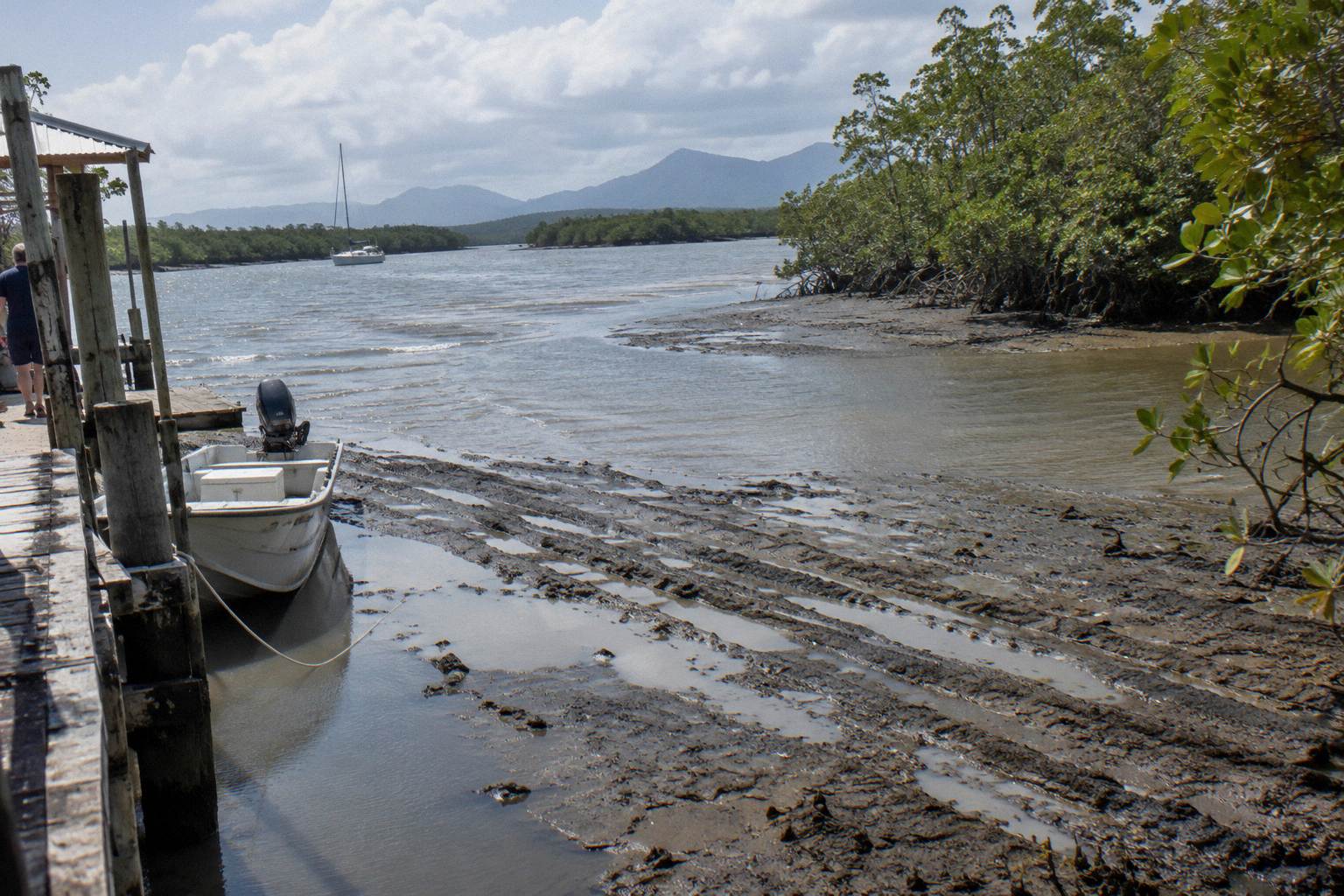
Yes. Wild estuarine crocodiles live across the Port Douglas area, and seeing one from a boat is a realistic outing rather than a lucky fluke. The Queensland Government places estuarine crocodiles throughout the state's north between Gladstone and Cape York Peninsula, most commonly in the tidal reaches of rivers, and two waterways near town host croc-spotting cruises: Dickson Inlet inside Port Douglas itself, and the Daintree River about 45 minutes' drive north.
Estuarine crocodiles grow to over 4 metres in length, with the average male reaching 3 to 4 metres and 200 to 300 kilograms, according to the Queensland Government's crocodile pages. Females rarely exceed 3.5 metres. They are animals of tidal river reaches, mangrove creeks and estuaries, which is exactly the habitat that wraps around Port Douglas: Dickson Inlet is a mangrove system at the town's edge, and the Daintree River's wide tidal estuary sits a short drive up the coast.
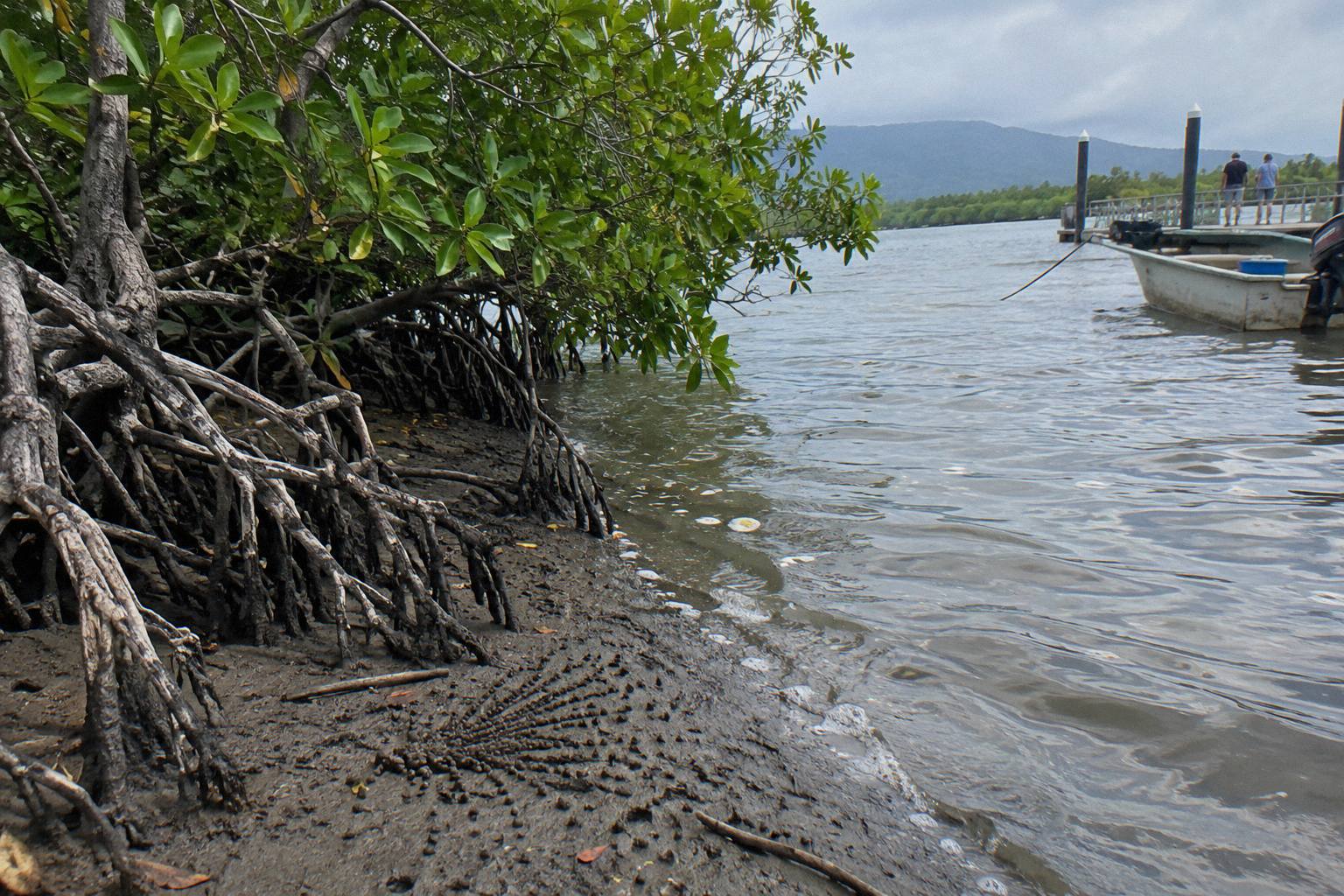
The practical answer for a visitor has two parts. First, yes, the animals are here, and the state's own safety program states plainly that no waterway within crocodile range can be considered crocodile free. Second, the way to see one is from a river cruise with a skipper who knows where crocodiles bask, which is why croc-spotting boat trips are one of the most booked outings in the region. The Lady Douglas, a family-run vessel cruising Dickson Inlet since 1989, is the only scheduled croc cruise covered here that departs from Port Douglas itself, and the operator says crocodiles are normally seen on over 90 percent of trips, especially in the dry season from May to November.
Where Do Crocodiles Live Around Port Douglas?
Estuarine crocodiles occupy the tidal rivers, creeks and mangrove inlets of the whole region, and the two places croc cruises actually run are Dickson Inlet, a mangrove waterway at Port Douglas, and the Daintree River, whose village and ferry departure points sit about 45 minutes' drive north. The Queensland Government describes estuarine crocodiles as most commonly seen in the tidal reaches of rivers, and warns that every waterway in their range must be treated as crocodile habitat.
Dickson Inlet is the waterway at the heart of the crocodile question for Port Douglas. It is a working inlet behind Four Mile Beach, lined with mangroves, and the Lady Douglas cruises several kilometres of its channels before reaching the inlet entrance and the Port Douglas waterfront. The operator describes it as a calm water cruise with substantial time on board spent searching for wild estuarine crocodiles, alongside birds the operator names including sea eagles, kites, ospreys, kingfishers, herons and waders. For a reader deciding whether the crocs are close to town, Dickson Inlet answers that directly: the habitat is inside the township, minutes from the marina.
The Daintree River is the bigger name in the region. Its village departure point is the boat ramp and jetty at Stewart Street in Daintree Village, and a separate Lower Daintree ramp sits on Cape Tribulation Road beside the car ferry. Solar Whisper's own guidance puts both about 45 minutes from Port Douglas, about 30 minutes from Mossman and about 1.5 hours from Cairns. The upper river near the village is narrower and calmer with overhanging trees, while the lower river at the ferry end is a wide tidal estuary with mangroves, in the words of Crocodile Express. Both stretches are crocodile habitat.
| Waterway | Where it is | What cruise runs there |
|---|---|---|
| Dickson Inlet | Inside Port Douglas, at the Crystalbrook Superyacht Marina | Lady Douglas 1.5-hour cruise |
| Upper Daintree River (village) | Stewart Street, Daintree Village, about 45 minutes from Port Douglas | Crocodile Express, Daintree Boatman, Daintree River Cruise Centre cruises |
| Lower Daintree River (ferry end) | Cape Tribulation Road beside the car ferry | Crocodile Express second route, Solar Whisper, Bruce Belcher's |
None of these cruises involves crossing the Daintree Ferry: every Daintree River departure point sits on the south side of the river, a detail that trips up plenty of first-time visitors. The wider setting matters too. These rivers run through the Wet Tropics of Queensland, inscribed on the UNESCO World Heritage List in 1988, covering about 895,000 hectares holding some of the oldest continuously surviving tropical rainforests on Earth. A croc cruise here passes through world heritage rainforest habitat, not a canal.
How Likely Are You To Actually Spot One?
Your odds are very good but never guaranteed. Lady Douglas reports crocodiles on over 90 percent of trips, especially from May to November, while Bruce Belcher's claims 98 percent success from June to September and roughly 50/50 in warmer months. Solar Whisper cites about 99 percent, saying small crocodiles are very reliable while big ones come and go.
Those three claims are similar but not identical, and each says something slightly different about the season. Bruce Belcher's ties its warmer-months drop to the breeding season and the wet season, and it offers a complimentary return trip if no crocodile is seen. Solar Whisper makes the same free return offer and adds its own reading of conditions: low tide is usually better because there are more beaches and less water to hide in, while summer on a high tide is the most difficult time. Lady Douglas points at the dry season, May to November, as its strongest period.
The Queensland Government adds a sourced fact that sits outside any operator's marketing: during the breeding season, male crocodiles become very mobile as they look for a mate, so sightings are more prevalent. Courtship begins in October and November, and nesting runs December to April, with nests holding 40 to 70 eggs and about 90 days of incubation. A spring or early-wet visitor is therefore moving through a period when crocodiles are on the move for their own reasons, independent of any cruise's local knowledge.
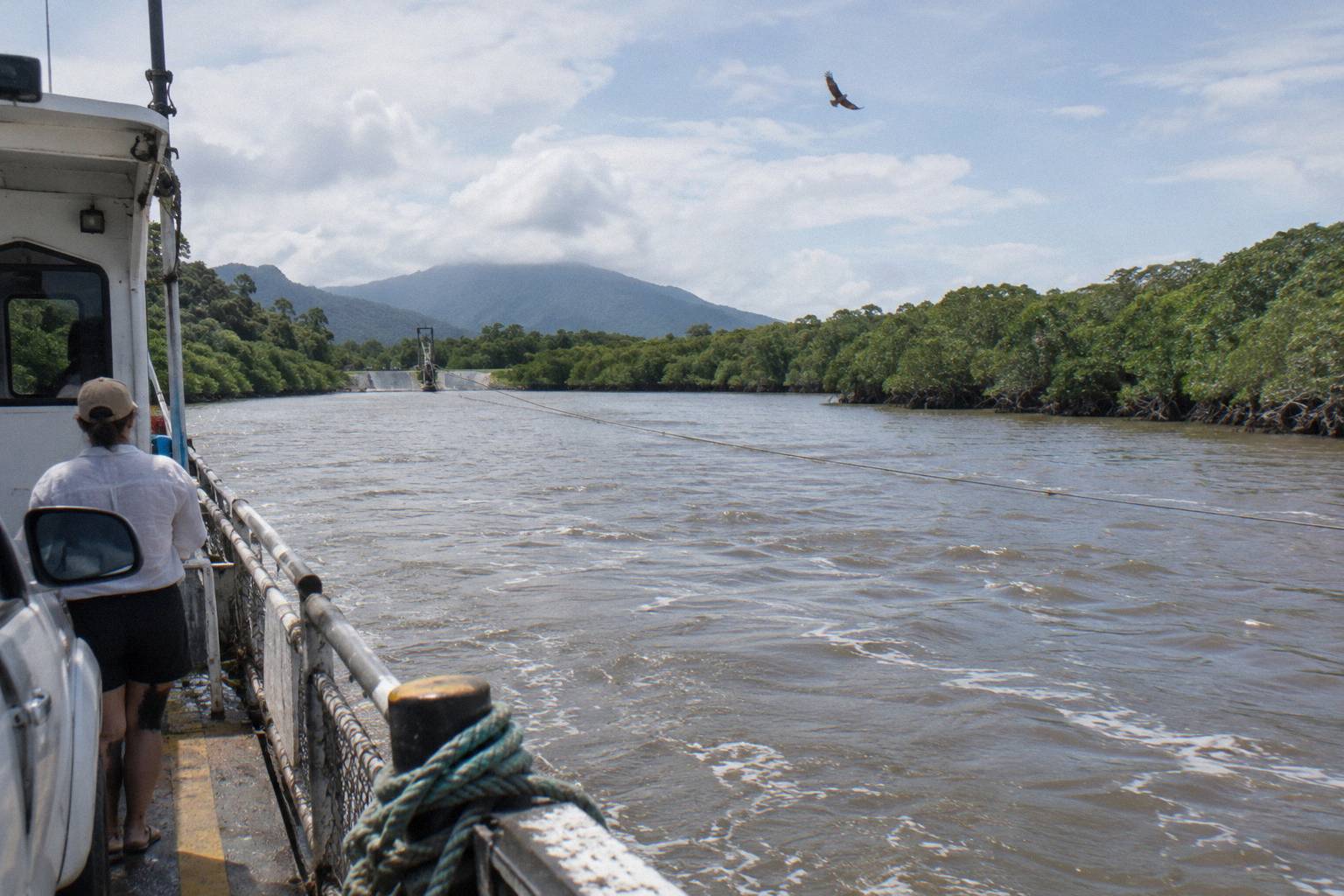
The framing that matters for planning is this: the animals are resident, the operators know their waterways, and the odds each quotes is a claim about its own trips rather than a promise to you. The Daintree River Cruise Centre, for one, gives no rate at all, saying only that while sightings vary, it hopes every guest leaves with a deeper love for the river. If a sighting matters enormously to your plans, the season chapter below matters more than any single percentage.
Daintree Boatman, the village-based sunset operator, is blunter than most about the calendar: it says crocs and snakes are best between May and October and are much more difficult outside that period. Its two-hour sunset cruise is a bird-focused trip by design, and the reader who wants the highest croc odds should weigh that against the one-hour spotting trips.
What Month Gives You The Best Chance?
The dry season, roughly May to September, is when the operators report their best crocodile sightings, and it is also when Port Douglas is at its driest. January to March brings 395 to 429 millimetres of rain a month on long-term averages, while July to September averages just 23 to 32 millimetres, according to the Bureau of Meteorology's Port Douglas climate averages. Warmer months also raise river temperature, which Solar Whisper says makes crocodiles harder to see.
The climate pattern shapes everything else. The table below shows long-term means from the Bureau of Meteorology's Warner Street station in Port Douglas, with 52 years of temperature records and 124 years of rainfall records. Rain concentrates hard in the first three months of the year, then falls away to almost nothing in the middle of the year. Daytime maximums stay warm year-round, between about 24.6 and 30.3 degrees, so the decision is less about comfort than about water levels, turbidity and crocodile behaviour. The full index of guides sits on Port Douglas Crocodile Cruises.
| Month | Mean max (C) | Mean min (C) | Mean rainfall (mm) | Rain days of 1mm+ |
|---|---|---|---|---|
| January | 30.3 | 23.7 | 395.8 | 13.8 |
| February | 30.1 | 23.5 | 422.0 | 14.2 |
| March | 29.5 | 22.8 | 429.4 | 14.4 |
| April | 28.3 | 21.5 | 203.3 | 11.2 |
| May | 26.7 | 19.5 | 72.8 | 8.0 |
| June | 25.1 | 17.7 | 47.7 | 5.7 |
| July | 24.6 | 16.8 | 26.4 | 4.2 |
| August | 25.3 | 17.1 | 23.3 | 4.0 |
| September | 26.7 | 18.6 | 32.1 | 4.4 |
| October | 28.3 | 20.8 | 53.1 | 5.3 |
| November | 29.5 | 22.3 | 106.1 | 7.6 |
| December | 30.3 | 23.3 | 213.5 | 10.1 |
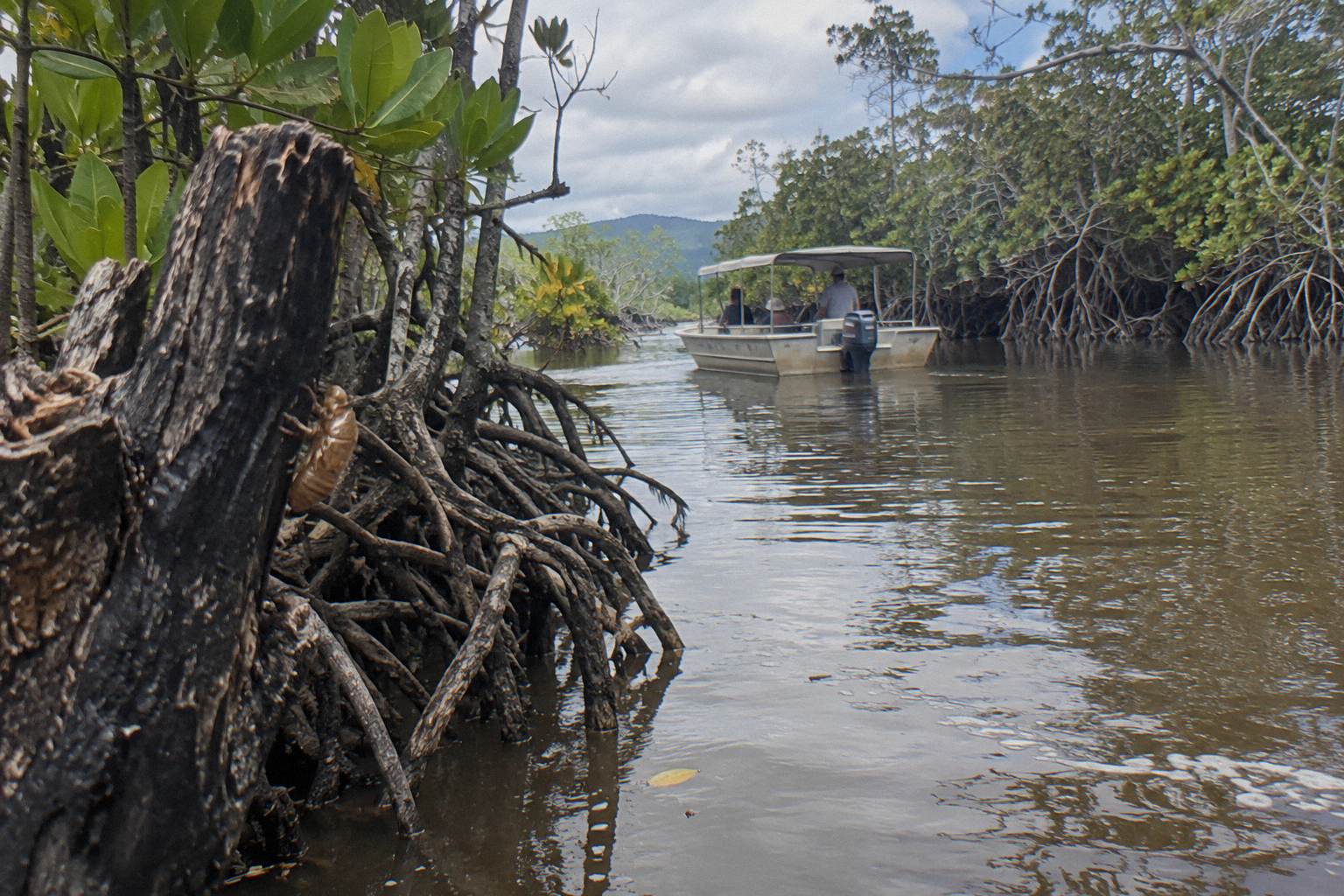
Set the operators' seasonal claims against those numbers and a shape emerges. Lady Douglas points at May to November, Bruce Belcher's at June to September for its 98 percent figure, Daintree Boatman at May to October. All three windows sit inside or overlap the driest part of the year, when mean rainfall is a fraction of the wet-season peak. Cool, dry, low-water months concentrate crocodiles on visible banks; hot, wet, high-water months give them more places to hide.
Time of day is the other lever, and the same government advice sits behind it: crocodiles are most active at night, dusk and dawn, and Be Crocwise tells people to be extra cautious at those hours. Every trip covered here runs in daylight, dawn or around dusk, because no night cruise exists among these departures. Daintree Boatman runs dawn and dusk trips, with afternoon departures from 4pm between April and August and from 4.30pm between September and January. For more on the timing question, see the best time of day to see crocodiles.
Which Cruise Should You Book To See One?
For the shortest path from town to a crocodile, the Lady Douglas River Cruise departs the Crystalbrook Superyacht Marina, runs 1.5 hours on Dickson Inlet, costs from US$32 per person and carries a 4.6 rating from 571 reviews. For a bigger day, the full-day Daintree Experience runs 8 hours from US$165 and includes a waterfall swim, lunch and a crocodile search on the Daintree River.
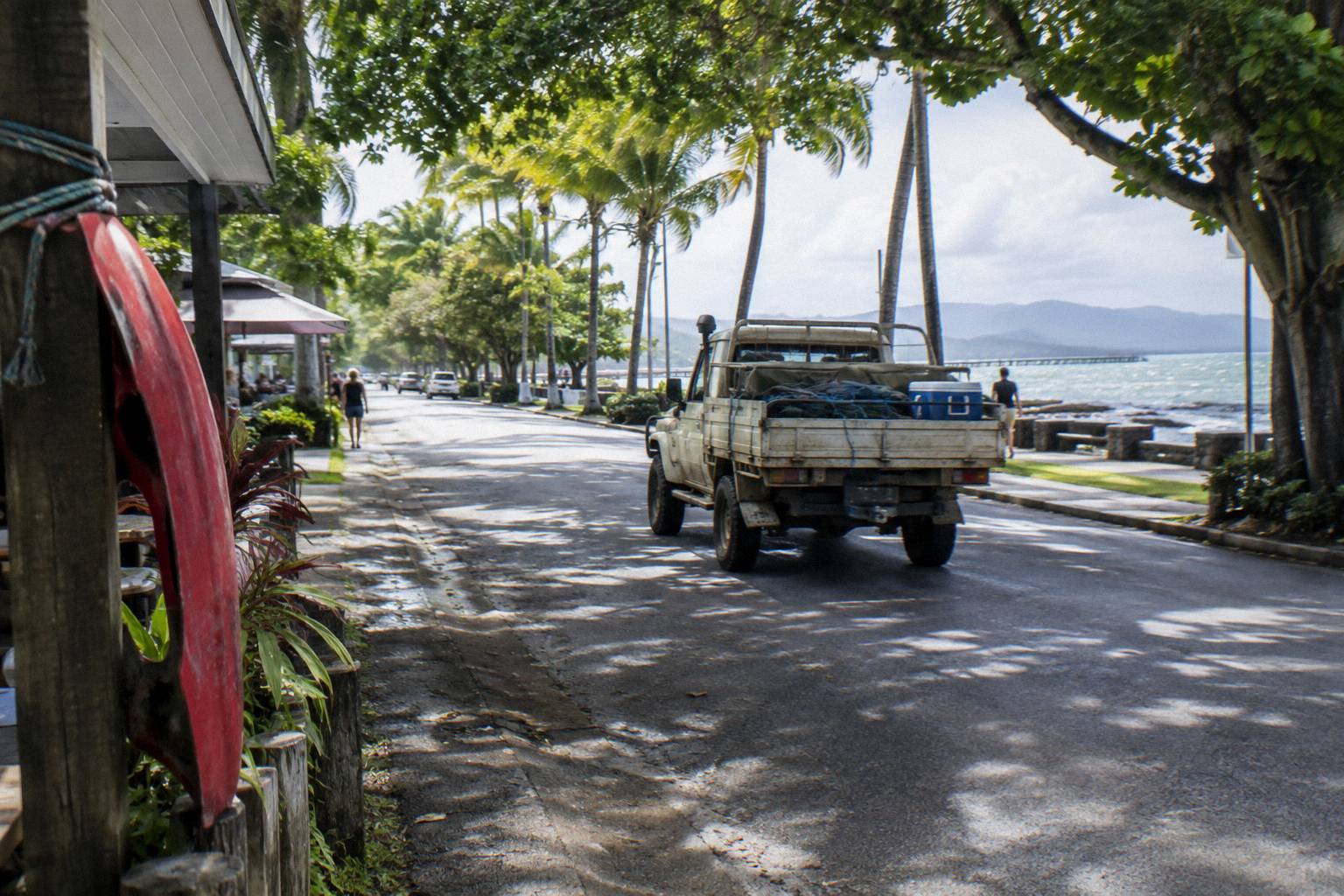
The Lady Douglas is the answer most visitors are really asking for when they wonder whether crocodiles are visible from Port Douglas. It boards at 44 Wharf Street, in the marina at the edge of town, and needs no hire car, no ferry and no driving. The booking page includes skipper commentary, one beverage from the bar, snacks and colouring sheets for children, and the operator describes covered seating across the whole back deck, a licensed bar, a toilet, and wheelchair and pram access with a call ahead for limits. Free cancellation applies up to 24 hours before the start.
Croc cruises run up the price ladder from there, and the comparison is mostly about where you board and what else the ticket includes. The Daintree River Cruise Centre's one-hour guided cruise from US$24 includes morning or afternoon tea and use of the Centre's displays, picnic areas and bathrooms, with daily departures it lists from 9.30am to 3.30pm. Bruce Belcher's one-hour cruise from US$30 leaves its own private jetty on the Mossman-Daintree Road, cruises listed from 8:30am to 3pm, and includes a complimentary Daintree tea or coffee. Crocodile Express sells one pass from US$27 covering two one-hour cruises on two different stretches of the river, valid 14 days from first activation.
| Trip | Boards at | Duration | From (US$) | Rating |
|---|---|---|---|---|
| Lady Douglas River Cruise | Crystalbrook Superyacht Marina, Port Douglas | 1.5 hours | US$32 | 4.6 from 571 reviews |
| Daintree River Cruise Centre Wildlife Cruise | South side of the Daintree River | 1 hour | US$24 | 4.6 from 558 reviews |
| Crocodile Express Daintree Wildlife Cruise | Daintree Village and the ferry gateway | Two 1-hour cruises | US$27 | 4.6 from 477 reviews |
| Bruce Belcher's Guided Daintree River Cruise | Private jetty, Lower Daintree | 1 hour | US$30 | 4.6 from 154 reviews |
| Port Douglas Daintree Half-Day Tour With River Cruise | Port Douglas accommodation pickup | 5 hours | US$121 | 4.5 from 117 reviews |
| Daintree Experience Full Day | Port Douglas or Mossman pickup | 8 hours | US$165 | Rating on the booking page |
The half-day and full-day options suit readers who want a crocodile search folded into a bigger Daintree day rather than as a standalone boat trip. The 5-hour half-day tour runs 12:50pm to 5:30pm with a Mossman Gorge walk and swim and a river cruise with a beer, wine or soft drink, picking up at resorts, apartments, holiday homes and caravan parks around Port Douglas. The full-day Daintree Experience adds a secluded waterfall swim, a secret trail, a gourmet rainforest lunch, tropical fruit tasting and a guided walk around its Daintree River crocodile search, for guests aged 10 and over.
What If You Want More Than Crocodiles?
Every operator on these waterways sells a wildlife trip rather than a crocodile-only show, and the birdlife is a genuine co-star. Crocodile Express names great-billed heron, which it calls one of Australia's rarest herons, plus azure and little kingfishers, sea eagles, ospreys, shining flycatchers, egrets, herons, darters and cormorants, alongside water dragons, amethystine pythons and tree snakes. The Daintree River Cruise Centre points to over 280 recorded bird species in the region.
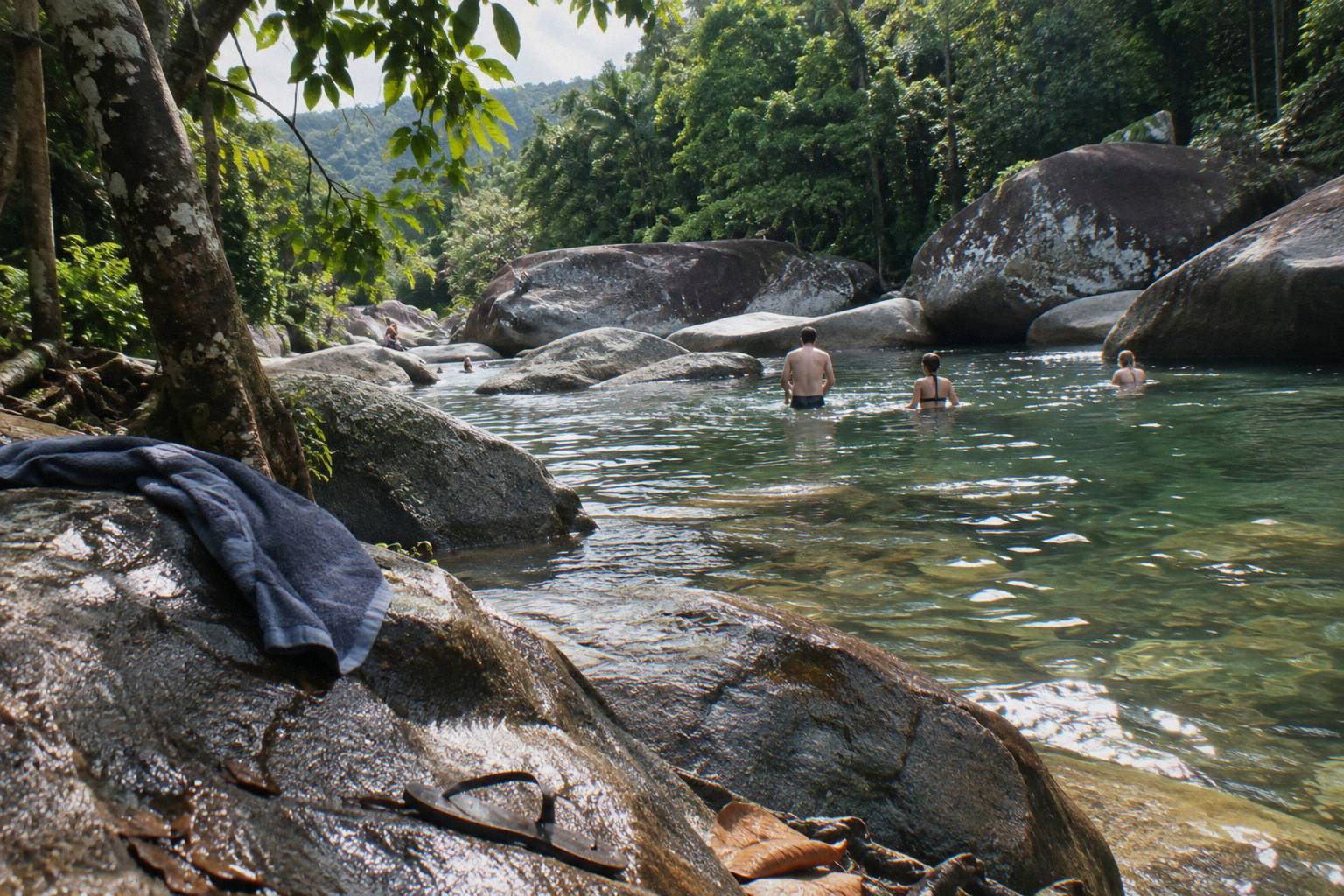
Daintree Boatman is the bird specialist of the group. Its sunset cruise from the Riverview Caravan Park boat ramp in Stewart Street runs two hours and focuses on azure, little and sacred kingfishers, Papuan frogmouth, great-billed heron, shining flycatcher and black bittern, with common tree snakes and water dragons also on its list. The operator's own framing, that crocs and snakes are best between May and October, tells you what to weight it toward and when.
Solar Whisper offers the quietest ride. Its roofed solar-electric boat carries no windows and takes a maximum of 10 people on its two-hour cruises, with the one-hour cruise the trip covered here, departing from the Esplanade at Lower Daintree about 400 metres before the car ferry. It operates in rain but not in flood, runs no toilet on the boat itself, with an amenities block beside the office, and its price and any cancellation terms are on the booking page. The operator says about a 99 percent success rate, and that it cannot 100 percent guarantee a sighting.
A note on what a Queensland croc cruise is not. Some visitors arrive expecting the jumping, fed crocodiles of Northern Territory tourism. In Queensland, deliberately disturbing or feeding a crocodile is an offence, so every trip here is a spotting trip on a wild river, where the skipper's skill and the tide do the work. The comparison between the two formats is covered in detail in the jumping crocodile cruise versus Daintree comparison.
What Mistakes Do Visitors Make?
The most common mistakes are crossing the Daintree Ferry when the cruise departs the south side, expecting a night trip when every cruise here runs in daylight or around dusk, booking Bruce Belcher's in February when it closes for the whole month, and standing too close to the water's edge before and after the cruise. Each of these is avoidable with one piece of knowledge, and the last one is a safety matter the Queensland Government spells out directly.
The ferry mistake is the classic. The Daintree River cruises covered here all depart from the south side of the river or from Daintree Village and none crosses the ferry, yet visitors regularly drive over the crossing looking for a jetty. The ferry itself runs continuously between 5am and midnight daily, including Christmas Day, with long queues expected in school holidays, but none of the cruises here needs it. The layout is explained fully in the Daintree Village jetties guide.
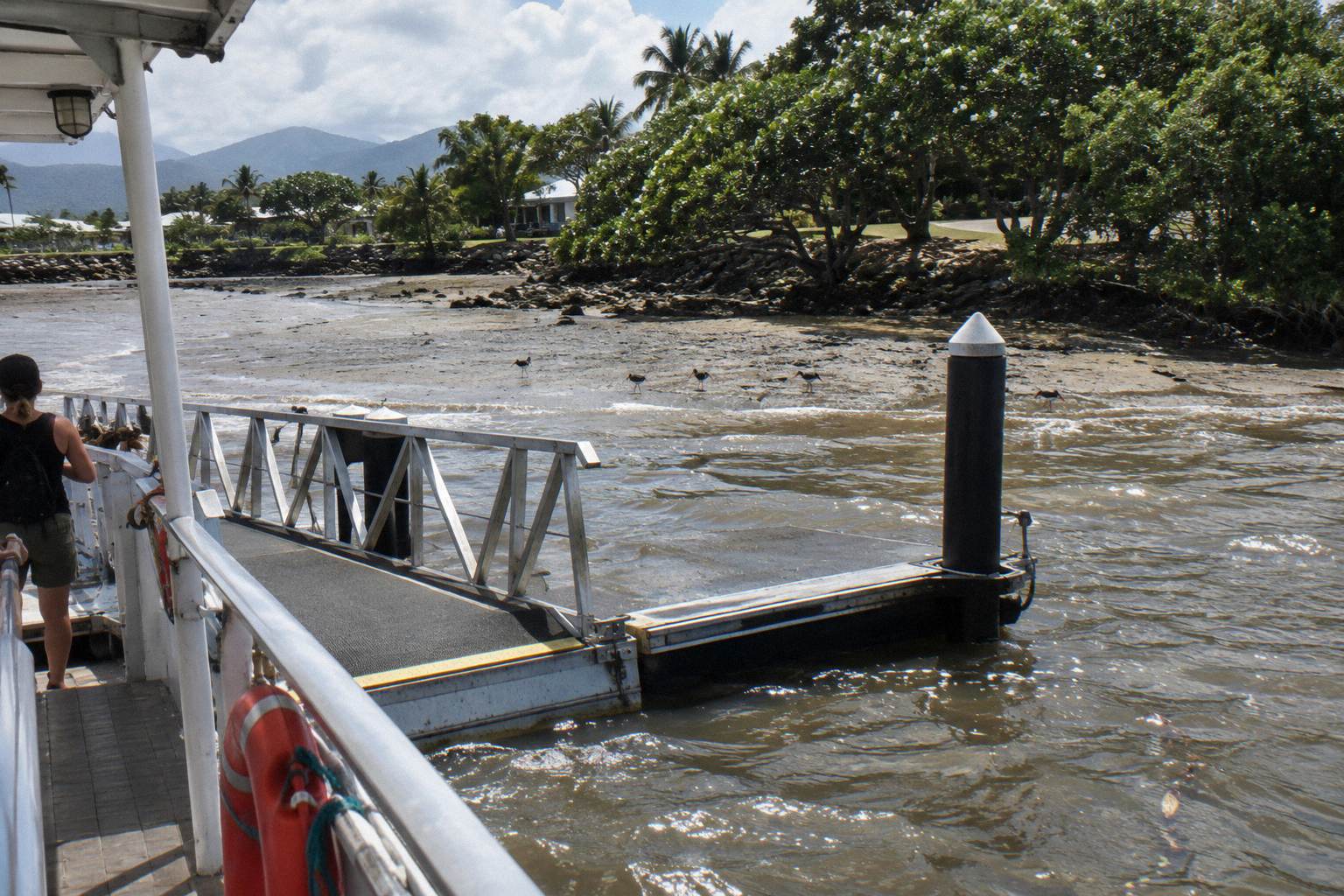
The calendar mistakes are quieter. Bruce Belcher's is open March to January and closed all of February, plus Christmas Day and New Year's Day. Crocodile Express operates every day except 25 December. The booking calendar decides real start times for every trip, since each operator's published timetable is a pattern subject to change rather than a promise, so check your date before assuming a departure.
The safety mistake matters most. Be Crocwise advice from the Queensland Government is to stay more than 5 metres away from the water's edge, be extra cautious at night, dusk and dawn, and remember that crocodile interactions can occur at any time of the year and that no waterway within crocodile range can be considered crocodile free. It is an offence in Queensland to remain within 10 metres of a crocodile basking on a sandbar or riverbank, to disturb one by boat within 10 metres without reasonable excuse, or to feed one. From the boat, keep arms and legs inside and let the vessel act as the barrier. More detail is in the croc cruise safety guide, and if a swim is on your mind, read where croc cruises run and swimming safety first.
Common Questions About Crocodiles Near Port Douglas
Can You See Crocodiles In Port Douglas?
Yes. Estuarine crocodiles live across the region, and the Lady Douglas cruise searches for them on Dickson Inlet inside Port Douglas itself. The operator says crocodiles are normally seen on over 90 percent of trips, especially in the dry season from May to November.
Are Crocodiles Seen On Every Cruise?
No operator guarantees a sighting. Bruce Belcher's says crocodiles are spotted on 98 percent of trips in the cooler months and about 50/50 in the warmer months, and offers a complimentary return trip if none is seen. Solar Whisper says about a 99 percent success rate and makes the same return offer, while stating it cannot 100 percent guarantee.
Can You See Crocodiles Without Leaving Port Douglas?
Yes. Lady Douglas departs the Crystalbrook Superyacht Marina at 44 Wharf Street and cruises Dickson Inlet, a mangrove waterway at Port Douglas that is a different waterway from the Daintree River.
When Are Crocodile Sightings Most Likely?
The operators point at the dry season: Lady Douglas says May to November, Bruce Belcher's says June to September for its strongest figures, and Daintree Boatman says May to October. The Queensland Government adds that sightings are more prevalent in the breeding season, when male crocodiles become very mobile looking for a mate.
Is It Safe To Walk Near The Water In Port Douglas?
Be Crocwise advice is to stay more than 5 metres from the water's edge, be extra cautious at night, dusk and dawn, and treat every waterway in crocodile range as crocodile habitat, since no waterway can be considered crocodile free. Interactions can occur at any time of year.
Do Any Of These Cruises Run At Night?
No. Every trip covered here runs in daylight, at dawn or around dusk. Daintree Boatman's sunset cruise is the latest-running option, with afternoon departures from 4pm between April and August and from 4.30pm between September and January.