
Does A Daintree Croc Cruise Run At Night?
No night croc cruise runs on the Daintree River. Here are the real departure windows, the sunset-slot alternatives, and when crocodiles are actually most active.
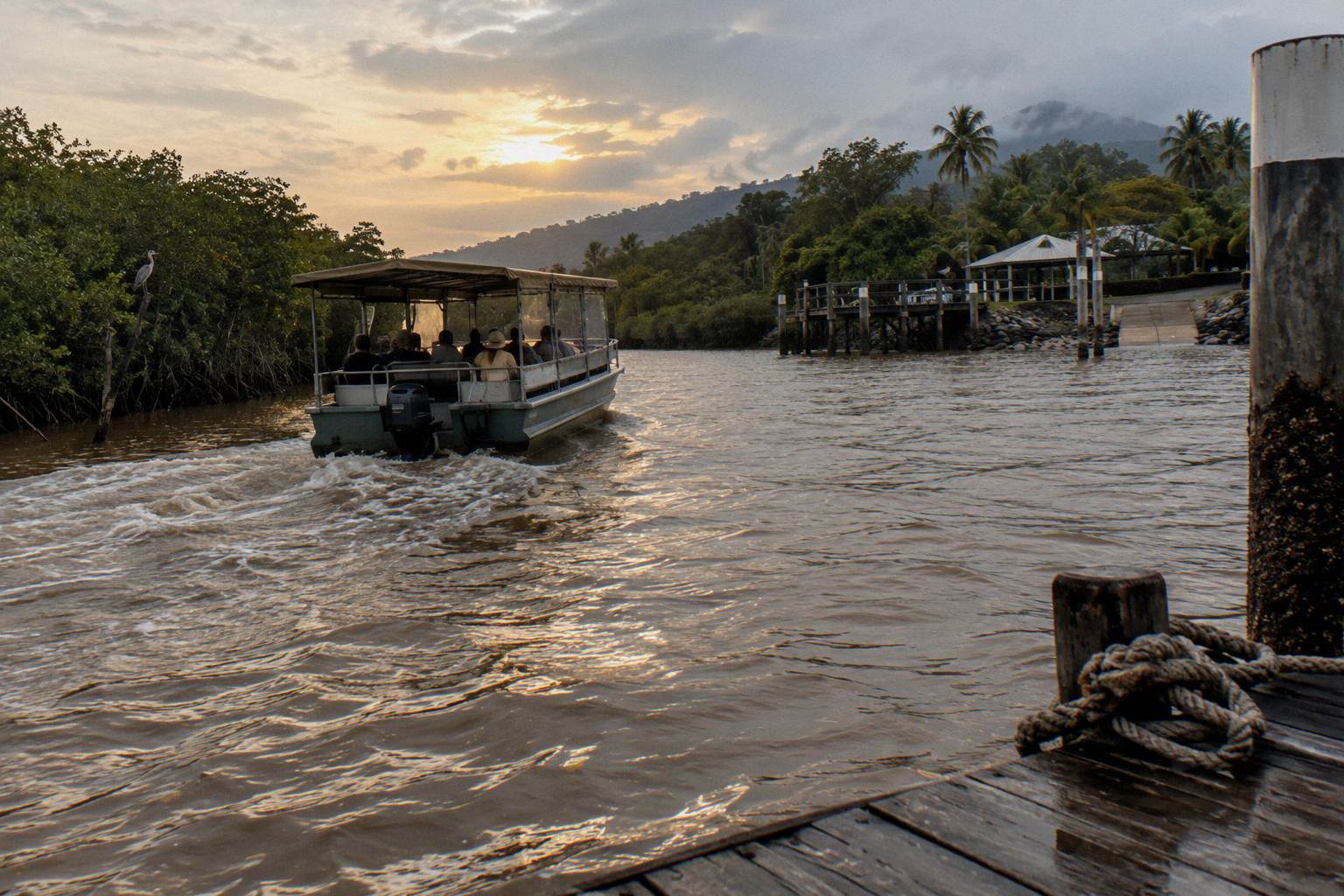
Every crocodile cruise covered by Port Douglas Crocodile Cruises departs in daylight, at dawn or in the hour around sunset. Not one runs after dark. That answer surprises a lot of planners, because Queensland Government advice describes crocodiles as most active at night, dusk and dawn, which makes a spotlight trip sound like the obvious product. It is not sold here. What is sold instead is a set of dawn, daytime and sunset departures that still put you on the water during the shoulder of the day, when crocodiles move between water and bank.
No. Every crocodile cruise on the Daintree River bookable through these pages runs in daylight, at dawn or around dusk, and no night or spotlight cruise is sold here. Crocodile Express lists its last daily cruises at 3.30pm, Bruce Belcher's at 3pm, and the Daintree River Cruise Centre at 3.30pm. The latest departures are Lady Douglas's 4.30pm sunset slot and the Daintree Boatman's afternoon cruise from 4pm or 4.30pm depending on the season.
Each of those times comes from the operator's own published pattern, subject to change, and the booking calendar decides the real start on any given day. None of the operators stretches a trip into darkness. The Daintree Boatman's two-hour afternoon cruise, leaving at 4pm from April to August or 4.30pm from September to January, finishes as the light goes, and it is the closest thing to an evening trip anywhere on the river.
There is a safety logic behind the pattern, and it belongs to the Queensland Government rather than to any operator. Crocodiles are most active at night, dusk and dawn, and the Be Crocwise guidance tells people to be extra cautious at exactly those hours. A commercial cruise boat with a skipper keeps passengers inside the hull and uses the boat as a barrier, which the same guidance recommends, but no operator here chooses to run the river after full dark.
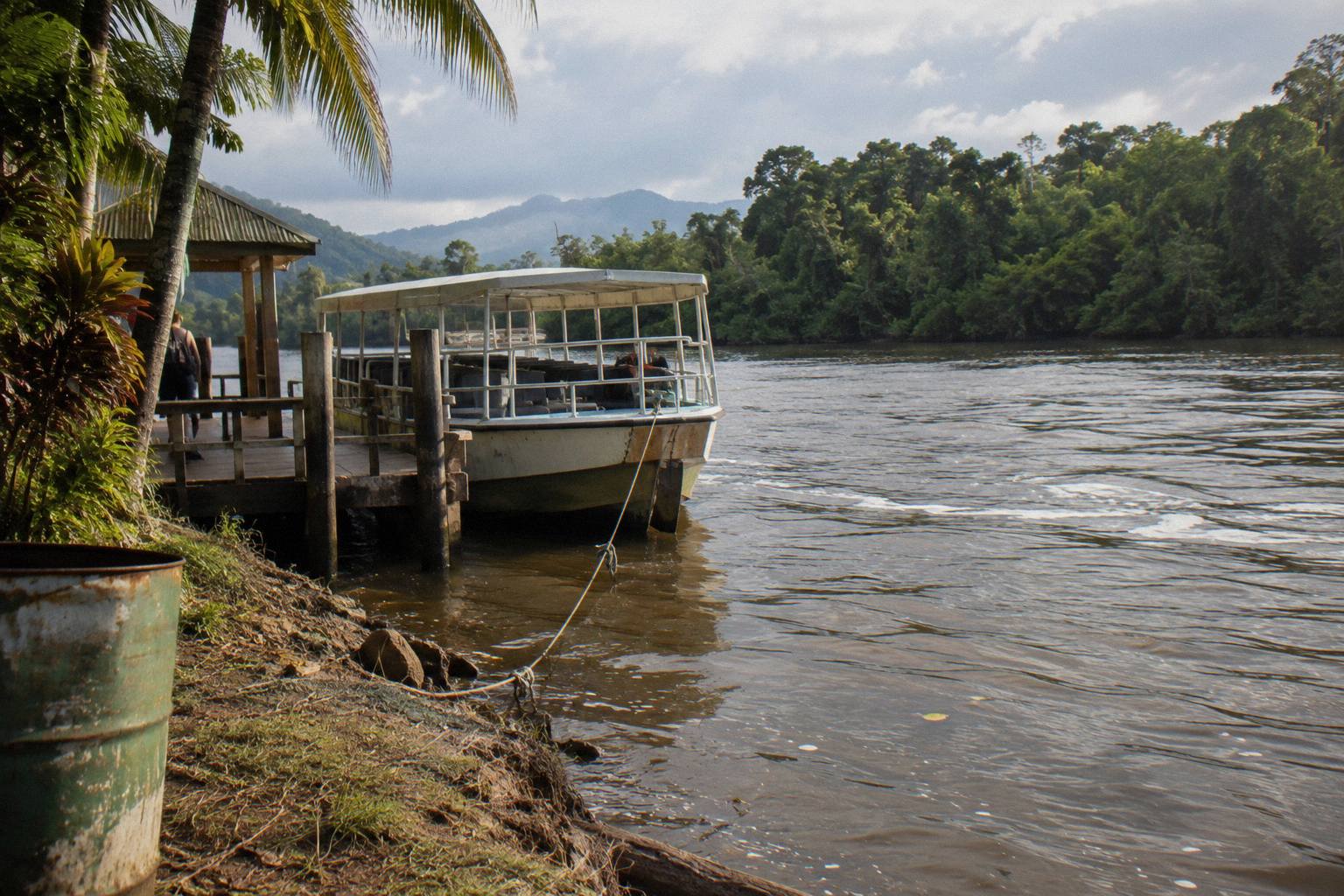
Here are the real departure patterns in one place, each stated by its own operator and subject to change:
| Operator | Published departure pattern | Latest start |
|---|---|---|
| Daintree River Cruise Centre | Daily, 9.30am to 3.30pm, cruises at least 1 hour, extended to 1.5 hours when the schedule permits | 3.30pm |
| Bruce Belcher's | Cruises from 8:30am to 3pm, open March to January, closed all February, Christmas Day and New Year's Day | 3pm |
| Crocodile Express | Daily, 8.30am to 3.30pm on both routes, every day except 25 December | 3.30pm |
| Lady Douglas | Four seasonal slots: 10.30am, 12.30pm, 2.30pm and a 4.30pm sunset slot | 4.30pm |
| Daintree Boatman | Two-hour dawn and dusk cruises, morning from 7am or 6.30am, afternoon from 4pm or 4.30pm by season | 4.30pm |
If a dusk-feeling cruise is what you are after, the two names to know are Lady Douglas and Daintree Boatman, and the selection below gives you the sunset option alongside a classic daytime river cruise and the Port Douglas departure.
Which Cruise Gets You Closest To Dusk?
The Daintree Boatman Sunset Cruise is the latest-running wildlife trip on the Daintree River, a two-hour cruise departing the Stewart Street boat ramp in Daintree Village from 4pm between April and August, or 4.30pm between September and January. Lady Douglas offers the other near-dusk option, a 4.30pm slot on Dickson Inlet from the Crystalbrook Superyacht Marina in Port Douglas, on a 1.5-hour cruise that finishes around the waterfront.
The Boatman trip is a different animal from the one-hour croc shuttles. Two hours on the water at the end of the day, with an owner-operator whose focus is birds: azure, little and sacred kingfishers, Papuan frogmouth, great-billed heron, shining flycatcher and black bittern, plus common tree snakes and water dragons where they turn up. The operator's own note on timing is that crocs and snakes are best between May and October and much more difficult outside that period, so a sunset trip in June is a very different bet from one in February. Its price and rating are on the booking page rather than restated here.
Lady Douglas, by contrast, is a calm-water cruise on a mangrove inlet rather than the river itself. Dickson Inlet sits inside Port Douglas, and the boat works several kilometres of mangrove channels before reaching the inlet entrance and the town waterfront, with skipper commentary on mangroves, crocodiles and local history. The operator says substantial time on board is spent searching for wild estuarine crocodiles, and that they are normally seen on over 90 percent of trips, especially in the dry season from May to November. It rates 4.6 from 571 reviews and starts from US$32 per person, with a bar beverage, snacks, skipper commentary and colouring sheets for children on the ticket.
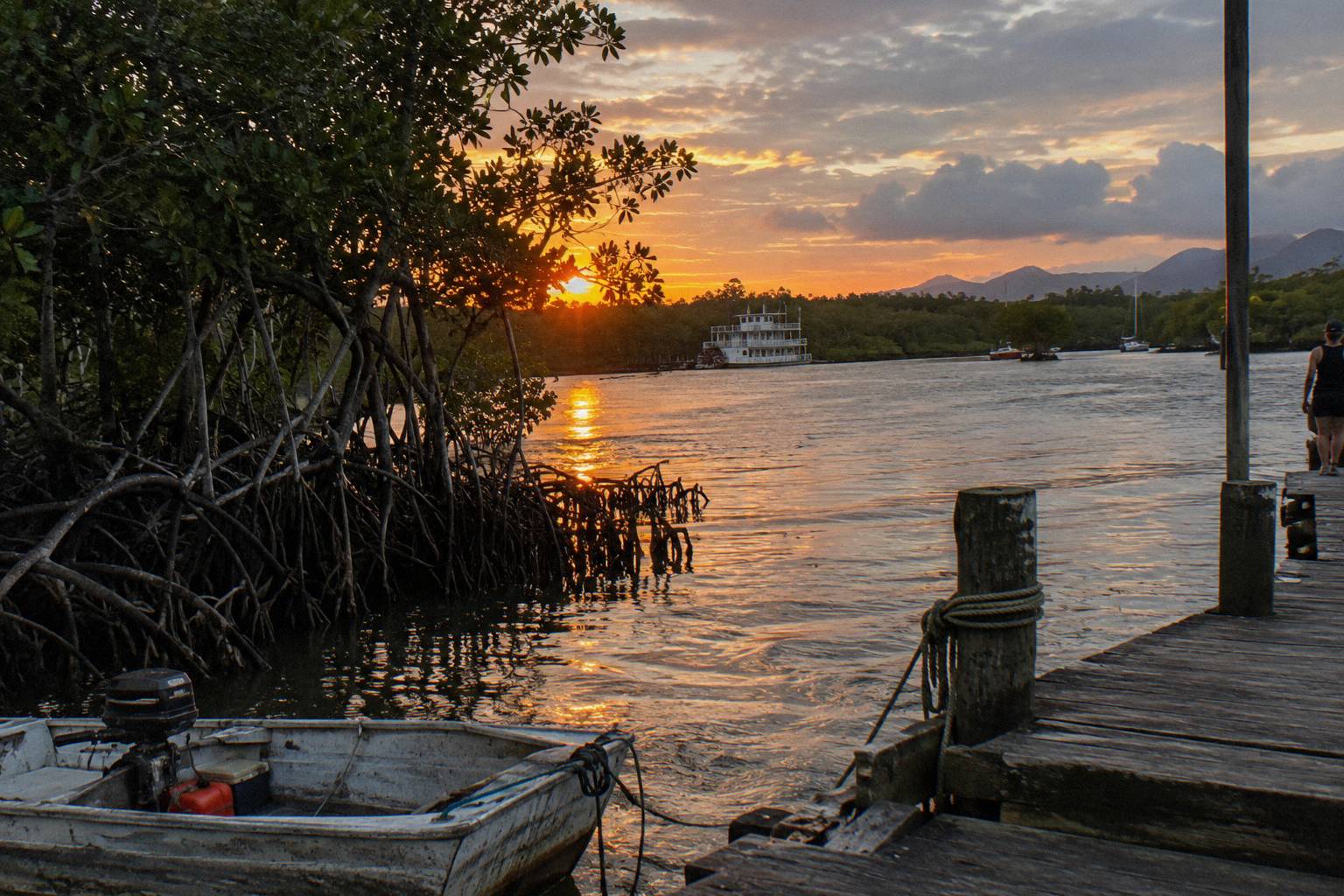
Neither trip is a night cruise, and neither should be booked expecting one. Both put you on the water as the day ends, which for photography and for crocodile movement is arguably better than a floodlit river would be. If the question you are really asking is when crocodiles are most likely to be moving, that is answered by behaviour rather than by any timetable.
For readers weighing the Port Douglas departure against a Daintree Village one, the Dickson Inlet croc and wildlife cruise guide breaks down the inlet experience in full, and the Daintree Village jetties and ramps explained guide maps exactly where each Daintree operator boards.
When Are Crocodiles Actually Most Active?
The Queensland Government states that crocodiles are most active at night, dusk and dawn, and very mobile during and after high tides and heavy rain. The same source notes that during the breeding season, male crocodiles become very mobile as they look for a mate, so sightings are more prevalent. None of that translates into a night boat trip, because a dusk or dawn cruise already overlaps the shoulders of that activity window.
The biology behind the advice is worth knowing before you pick a departure. Estuarine crocodiles grow to over 4 metres in length, with the average male at 3 to 4 metres and 200 to 300 kilograms; females rarely exceed 3.5 metres. Courtship begins in October and November, nesting runs December to April, and nests hold 40 to 70 eggs with about 90 days of incubation. That breeding rhythm explains why several operators report better crocodile sightings in the cooler months, and why the Government separately reports sightings as more prevalent when males are on the move.
Operator sighting claims belong to their operators alone. Bruce Belcher's says crocodiles are spotted on 98 percent of its trips, particularly from June to September, and about 50/50 in the warmer months, which it ties to breeding and the wet season; it never guarantees a sighting and offers a complimentary return trip if none is seen. Solar Whisper says about a 99 percent success rate, that small crocodiles are very reliable while big ones come and go, and that low tide is usually better; it also cannot 100 percent guarantee anything and offers a free return cruise if none is seen. Lady Douglas, as above, says over 90 percent. These are marketing claims from individual businesses, not measurements of the river.
The safety rules that shape all of this are public. The Government's estuarine crocodile page and Be Crocwise advice ask people to stay more than 5 metres from the water's edge, to be extra cautious at night, dusk and dawn, and to remember that no waterway within the crocodile's natural range can be considered crocodile free. It is an offence in Queensland to remain within 10 metres of a crocodile basking on a sandbar or riverbank, to disturb one by approaching it in a boat within 10 metres without a reasonable excuse, or to feed one. A licensed cruise with a skipper keeps to those distances by design.
One more Queensland point settles the question people sometimes arrive with. The jumping crocodile cruise is a Northern Territory format in which crocodiles are fed from a boat to make them leap. In Queensland, deliberately feeding or disturbing a crocodile is an offence, so every river cruise sold here is a spotting trip, not a feeding show, at any hour of the day.
What Does Sunset Actually Look Like By Month?
At Daintree Village, sunset falls about 6:57pm in January, about 5:54pm in June, and about 6:46pm in December, from a computed solar table for latitude -16.25 with no daylight saving in Queensland. That means a 4.30pm cruise in June finishes near dark, while the same 4.30pm departure in January still has well over two hours of light after it ends.
These figures come from a NOAA solar algorithm calculated for the 15th of each month and are accurate to a minute or two; they are a calculation, not a boat timetable. But they change what the sunset cruises actually deliver.
| Month | Sunrise (about) | Sunset (about) | Daylight hours |
|---|---|---|---|
| January | 5:58am | 6:57pm | 13.0 |
| February | 6:14am | 6:52pm | 12.6 |
| March | 6:22am | 6:35pm | 12.2 |
| April | 6:27am | 6:11pm | 11.7 |
| May | 6:34am | 5:56pm | 11.4 |
| June | 6:44am | 5:54pm | 11.2 |
| July | 6:47am | 6:02pm | 11.2 |
| August | 6:37am | 6:10pm | 11.6 |
| September | 6:15am | 6:14pm | 12.0 |
| October | 5:51am | 6:17pm | 12.4 |
| November | 5:38am | 6:29pm | 12.9 |
| December | 5:41am | 6:46pm | 13.1 |
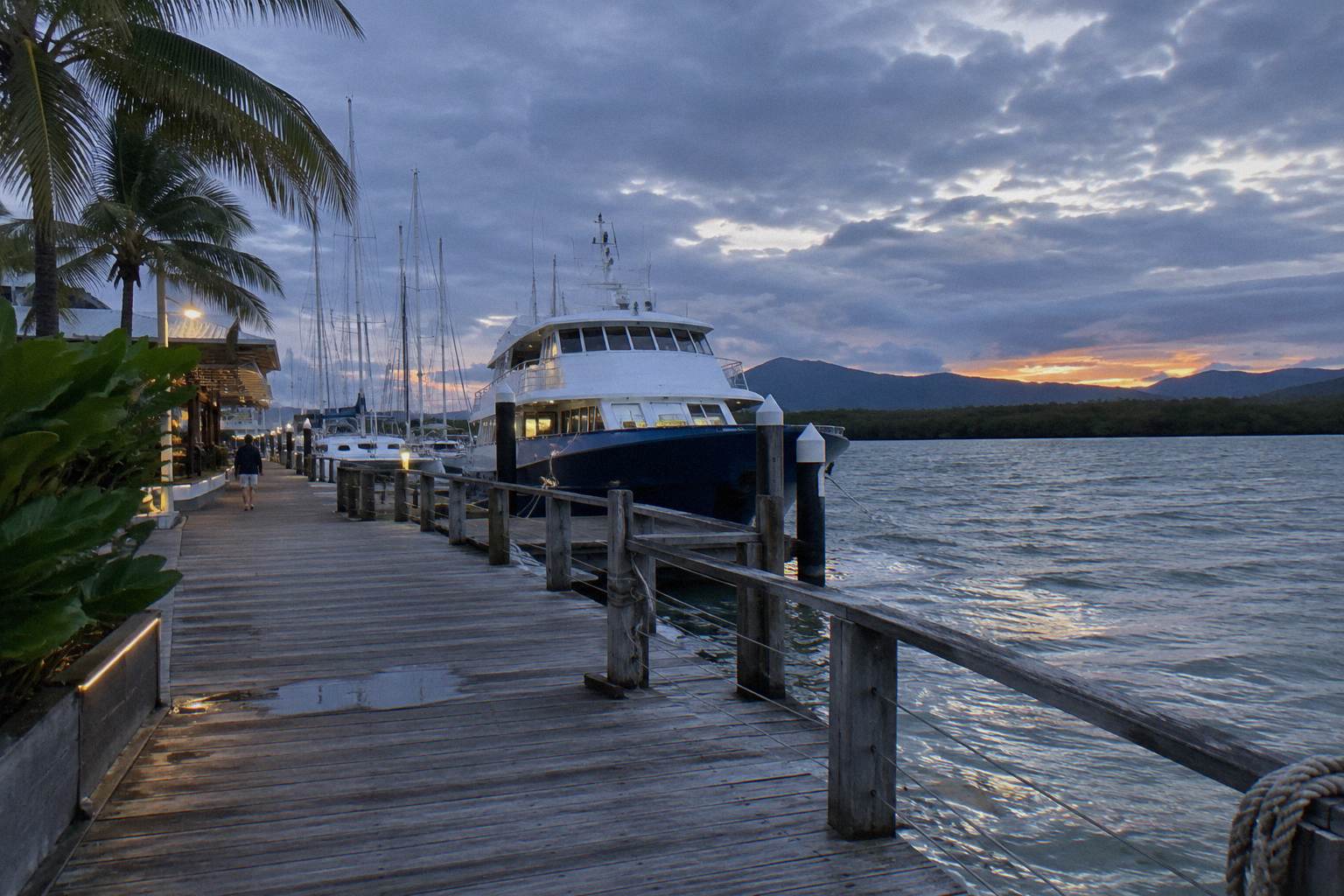
Read that table against the timetables above and the seasonal picture snaps into focus. A Daintree Boatman afternoon cruise at 4pm in July, with sunset about 6:02pm, spends its second hour in genuine golden light and finishes right at the edge of it. The same cruise in January, with sunset about 6:57pm, is a late-afternoon trip that hands you back to the village with daylight to spare. Neither is a night cruise, but the July departure gets you the atmosphere most people are picturing when they search for one.
The dawn option works the same trick in reverse. The Boatman's morning cruise leaves at 6.30am from September to January, when sunrise is about 5:38am in November, so you board just after first light with the whole activity window ahead of you. For more on the trade-offs between morning and afternoon departures, the best time of day to see crocodiles post works through the operators' own seasonal claims.
Common Mistakes When Planning Around Dusk
The most common mistake is assuming a sunset cruise is a night cruise, then booking the wrong season: a 4.30pm departure in December ends in bright daylight, while the same slot in June ends near dark. The others are crossing the Daintree Ferry unnecessarily, expecting transfers that an operator does not provide, and booking the February closure at Bruce Belcher's without checking the calendar.
Each of those trips up a real booking. The ferry mistake is the most expensive in time: the Daintree Ferry operates continuously between 5am and midnight daily, including Christmas Day, but every cruise covered here departs from the south side of the river or from Daintree Village and never crosses it. The Daintree River Cruise Centre and Bruce Belcher's both sit on the south side before the ferry, and the Cruise Centre tells guests not to cross it. Long queues at the ferry are expected in school holidays, and missing them entirely is free if you know the geography. The do you need the Daintree Ferry for a croc cruise post covers that decision in full.
| Mistake | What actually happens | How to avoid it |
|---|---|---|
| Booking a sunset slot expecting darkness | Lady Douglas's 4.30pm slot and the Boatman's dusk cruise finish at or before sunset, and sunset swings from about 5:54pm to about 6:57pm across the year | Check the sunset month table above, then pick the season that matches the light you want |
| Driving to the wrong bank | All covered cruises leave from the south side of the river or Daintree Village and do not use the ferry | Use the Stewart Street ramp in the village, or the Mossman-Daintree Road addresses on the south side |
| Assuming transfers are included | The Cruise Centre excludes transfers and suggests hiring a car; Bruce Belcher's offers no transfers; the two day tours include Port Douglas pickup | Book a Port Douglas departure or a tour with pickup if you will not have a car |
| Turning up in February at Bruce Belcher's | The operator is closed all February, plus Christmas Day and New Year's Day | Check opening months on the booking calendar before locking flights |
The season mistake deserves one extra line. Several operators say crocodile spotting is harder in the warm, wet months: Bruce Belcher's calls it about 50/50 then, Solar Whisper says the river warms and crocodiles become harder to see, and the Daintree Boatman says crocs and snakes are much more difficult outside May to October. The Bureau of Meteorology's Port Douglas data shows why planning around the dry season is easier in every way: mean rainfall runs 395 to 429mm a month from January to March against just 23 to 32mm from July to September. Fewer storms, better light, more crocodiles on the banks.
For a daytime alternative that still fits a dusk-first plan, the Daintree River Cruise Centre's 1-hour wildlife cruise from US$24, rated 4.6 from 558 reviews, includes morning or afternoon tea and the run of the Centre's displays, picnic areas and bathrooms, and its last departure at 3.30pm still hands you the whole evening afterward.
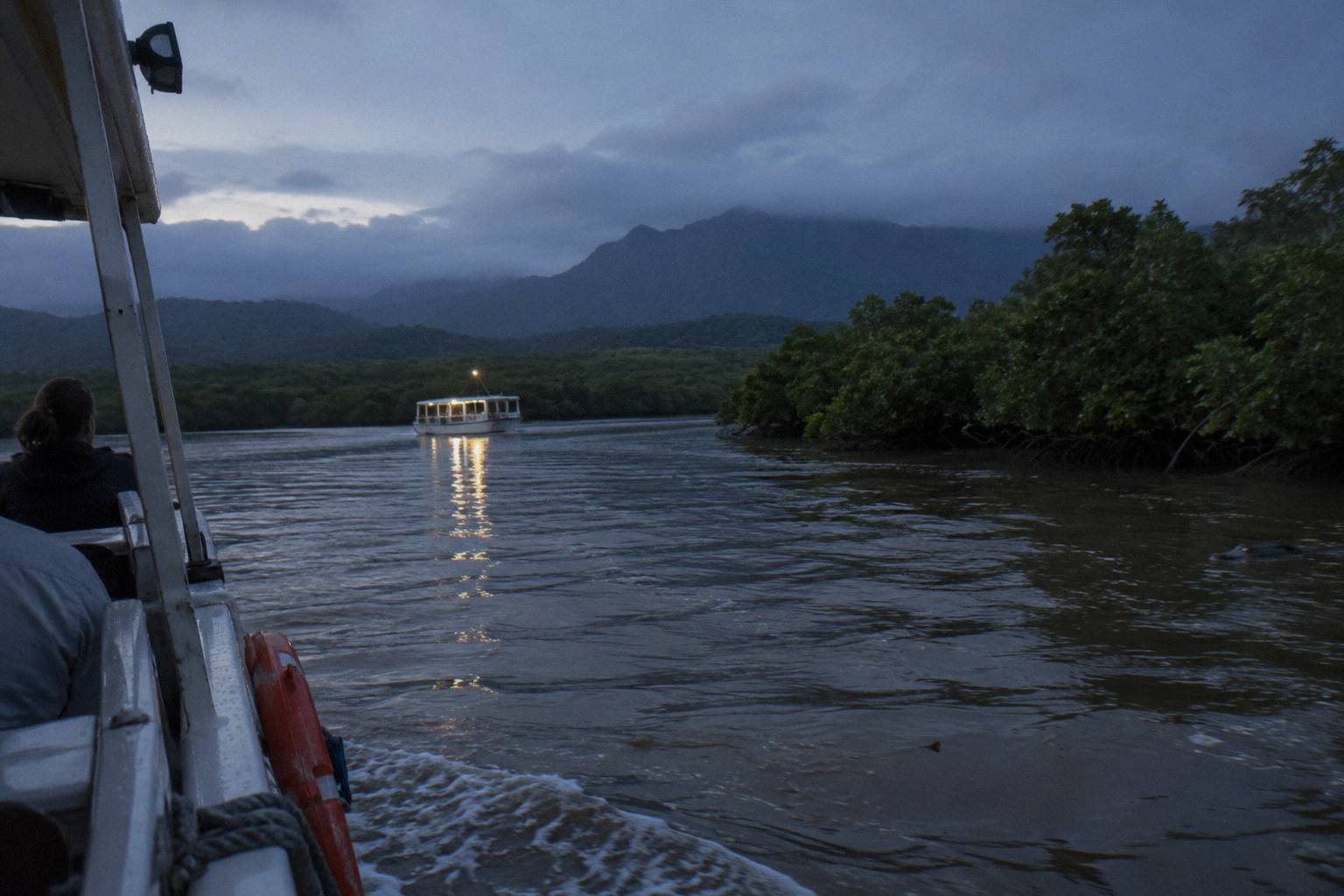
If your heart is set on the latest possible departure, book the sunset trips early: the Boatman's boat is owner-run and the Lady Douglas sunset slot is one of four seasonal departures, and both fill fastest in the dry season months when the light is best. Cancellation terms are worth one look before you commit; the Cruise Centre, Lady Douglas and Crocodile Express pages show free cancellation up to 24 hours before start, while the Boatman and Solar Whisper pages carry their own terms, so check when booking.
Which Trips Best Fit The Dusk Window?
The Daintree Boatman Sunset Cruise is the latest departure on the Daintree River, Lady Douglas gives you a 4.30pm sunset slot without leaving Port Douglas, and the Daintree River Cruise Centre is the cheap, relaxed daytime benchmark at US$24 with tea included. Between those three you can cover dawn, day and dusk, which is every hour of crocodile activity a licensed boat can legally and sensibly work.
You cannot boat the Daintree after dark on a scheduled cruise, but you can be on the water at the exact hours the Queensland Government says crocodiles move most, in a boat built for the river, with an operator who knows where they bask. Pick the departure that matches your month, not the name that sounds latest, because a June dusk and a December dusk are two different experiences on the same waterway.
Common Questions About Daintree Croc Cruise Times
Does A Daintree Croc Cruise Run At Night?
No. Every cruise sold through these pages runs in daylight, at dawn or around dusk. The latest departures are Lady Douglas's 4.30pm slot and the Daintree Boatman's afternoon cruise from 4pm or 4.30pm by season, and no spotlight or night cruise exists among the trips offered.
Are Crocodiles More Active At Night?
The Queensland Government says crocodiles are most active at night, dusk and dawn, and very mobile during and after high tides and heavy rain. Dawn and dusk cruises overlap the edges of that activity window.
Which Cruise Finishes Closest To Dark?
The Daintree Boatman's two-hour afternoon cruise, departing the Stewart Street ramp in Daintree Village from 4pm or 4.30pm, finishes at or just before sunset. In June, with sunset about 5:54pm, its final hour runs in fading light.
Is There A Spotlight Crocodile Tour In Queensland?
Not through these pages, and the Northern Territory jumping crocodile format does not run here: in Queensland, deliberately feeding or disturbing a crocodile is an offence. Every cruise sold here is a spotting trip from a licensed boat.
Do Any Cruises Cross The Daintree Ferry?
No. All the Daintree River cruises sold here depart from the south side of the river or from Daintree Village and do not use the ferry, which runs continuously between 5am and midnight but is never part of these trips.
What Time Of Year Gives The Best Dusk Cruise?
The dry season, May to October, combines low rainfall with earlier sunsets, and several operators report better crocodile sightings in the cooler months. July to September averages just 23 to 32mm of rain a month at Port Douglas. Book the sunset trips early for that window.