
How Likely Are You To See A Crocodile On A Daintree River Cruise?
Operator-by-operator sighting claims for the Daintree River, how season, tide and time of day shift the odds, and how to pick the cruise that gives you the best chance.
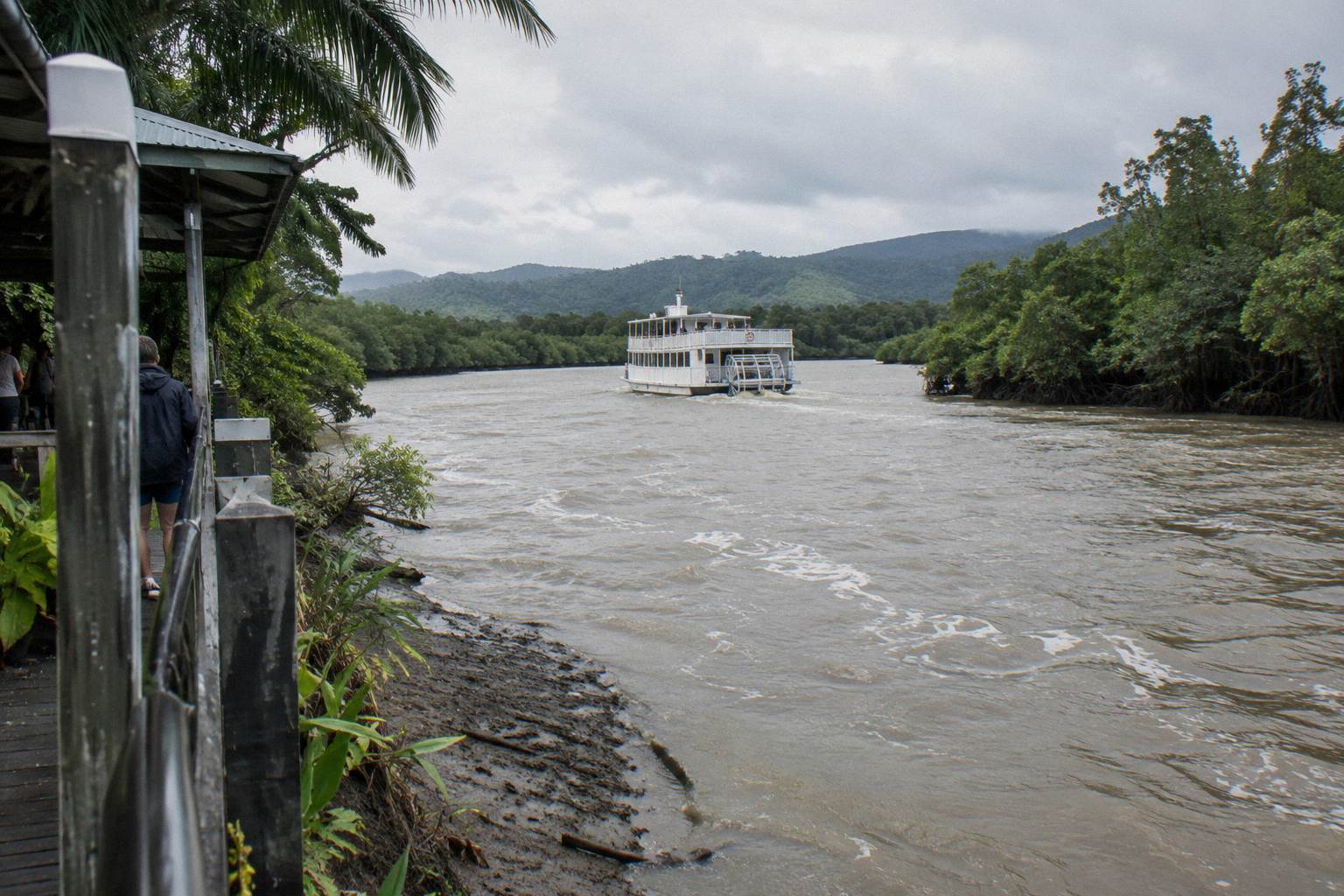
On the numbers the operators themselves publish, your chances are very good but never certain. Bruce Belcher's says crocodiles are spotted on 98 percent of its trips, Solar Whisper claims about a 99 percent success rate, and Lady Douglas says crocodiles are normally seen on over 90 percent of trips. None guarantees a sighting, and two promise a complimentary return cruise if you see nothing.
That last sentence matters more than the headline percentages. A dry-season morning at low tide and a wet-season midday trip at high tide are, in the words of the operators themselves, two different games. Solar Whisper describes summer on a high tide as its most difficult condition, while Bruce Belcher's describes its cooler-month trips as far more reliable than its warmer-month ones. The percentage you see quoted is an average across all of that.
Here is the quick picture before we go deeper.
| Question | The short answer |
|---|---|
| Can a cruise guarantee a crocodile? | No. Every operator here states sightings vary and none guarantees one |
| Best operator numbers on file | Bruce Belcher's 98 percent claim, Solar Whisper about 99 percent, Lady Douglas over 90 percent |
| Best months | Operators point to the cooler, drier months, roughly May to September |
| Tide | Solar Whisper says low tide is usually better; Bruce Belcher's agrees |
| Worst combination | Solar Whisper says summer on a high tide is the most difficult time |
| Free return trip if none seen | Offered by Bruce Belcher's and by Solar Whisper, each for its own cruises only |
The Queensland Government adds its own layer to the seasonal picture. During the breeding season, male crocodiles become very mobile as they look for a mate, so sightings are more prevalent, which lines up with the operators' observation that the cooler months deliver more consistent spotting. For a broader look at the choices, how the Daintree River cruises compare breaks down every departure point and what each one includes.
What Each Cruise Operator Says About Its Own Sightings
The sighting figures in circulation belong to individual operators, and each one speaks only for itself. Bruce Belcher's says crocodiles are spotted on 98 percent of its trips. Solar Whisper says its success rate is about 99 percent. Lady Douglas says crocodiles are normally seen on over 90 percent of its trips, especially from May to November, and Daintree Boatman says crocs and snakes are best between May and October.
The Daintree River Cruise Centre gives no rate at all, simply noting that sightings vary. These numbers cannot be merged into one river-wide average, and no operator here would stand behind that. Each boat works a different stretch of water, a different timetable and a different tidal window. Bruce Belcher's cruises from its own jetty on the Lower Daintree, Solar Whisper boards near the car ferry, Lady Douglas works an entirely different waterway in Dickson Inlet at Port Douglas, and Daintree Boatman runs long two-hour dawn and dusk trips from the village ramp. A percentage earned over years of one-hour daytime trips from one jetty says nothing about a sunset cruise from another.
| Operator | Its own sighting claim | Its own caveat |
|---|---|---|
| Bruce Belcher's | Crocodiles spotted on 98 percent of trips | Never guarantees sightings; complimentary return trip if none is seen |
| Solar Whisper | About a 99 percent success rate | Says it cannot 100 percent guarantee; free return cruise if none seen |
| Lady Douglas | Crocodiles normally seen on over 90 percent of trips | Especially in the dry season, May to November |
| Daintree Boatman | Crocs and snakes best between May and October | Much more difficult outside that period |
| Daintree River Cruise Centre | No rate given | Says sightings vary |
Two of those operators back their claim with a real remedy. Bruce Belcher's offers a complimentary return trip if no crocodile is seen, and Solar Whisper offers a free return cruise on the same terms. That offer belongs to each operator alone and covers only its own cruises, but it does change the arithmetic for a visitor: a miss costs you another drive to the river, not another ticket. Bruce Belcher's runs a one-hour guided cruise from US$30 per person, rates 4.6 from 154 reviews, and its live listing carries free cancellation up to 24 hours before the start.
The Crocodile Express pass works differently again, and it is worth understanding if your whole trip rests on seeing a crocodile. One ticket covers two one-hour cruises, one from Daintree Village and one from a kiosk about 300 metres before the ferry crossing, and the pass stays valid for 14 days from first activation. You are effectively buying two bites at the apple across two different stretches of the river, the narrow overhung upper section from the village and the wide mangrove estuary at the ferry end.
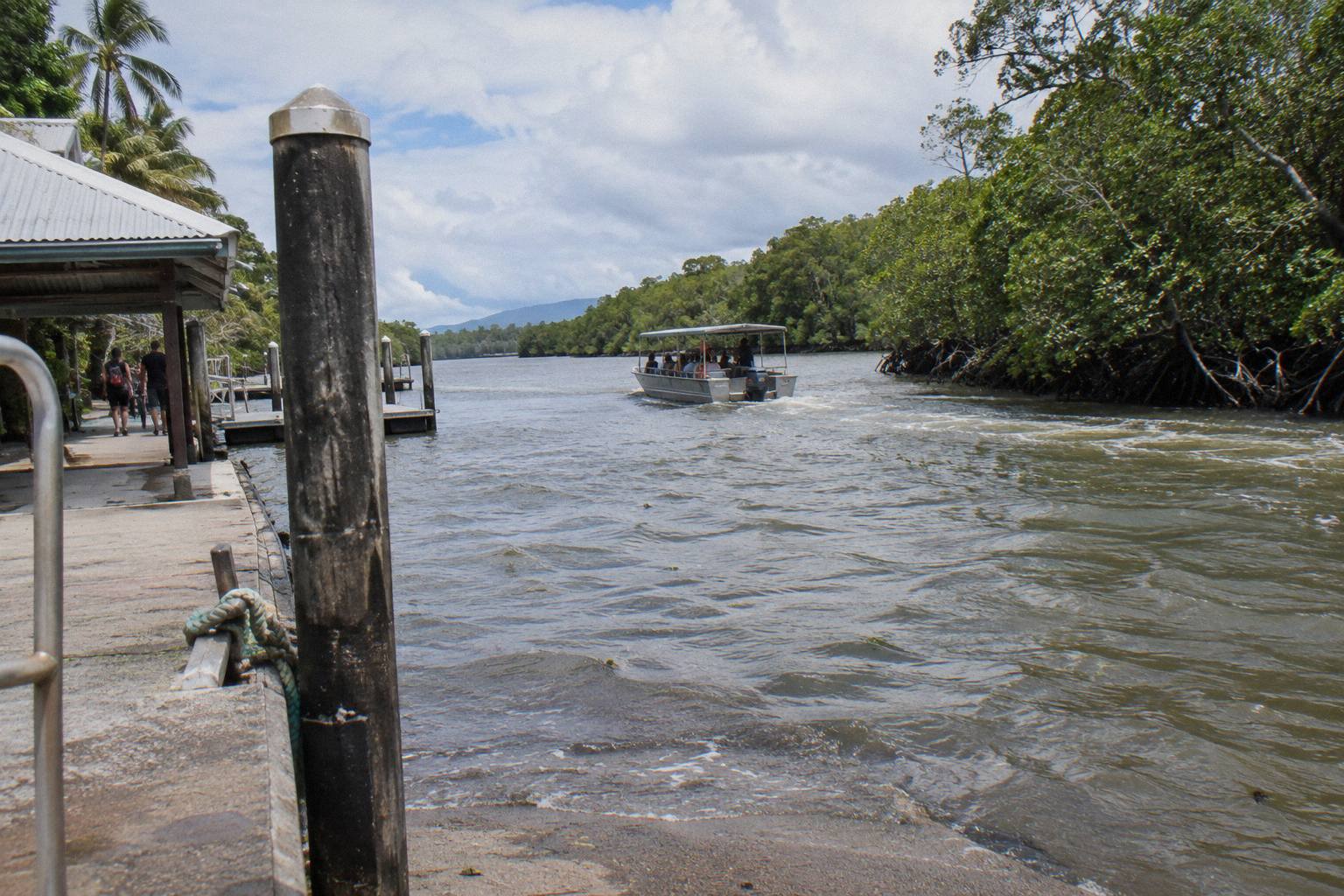
Solar Whisper gives its claim a technological assist: the boat is an electric solar vessel, and the operator credits its quietness with letting it drift closer to wildlife without disturbing it, which is part of how it explains a rate near 99 percent. The cruise also runs with small group numbers, so passengers at any seat get a clear view when a croc surfaces alongside.
Daintree Boatman's two-hour format is doing different work from the one-hour trips around it. Dawn and dusk are when crocodiles are most active, feeding and basking at the water's edge, and a longer window on the water at those hours raises the odds of more than a single distant sighting. The trade-off is scheduling: if your day is fixed around a midday arrival, you cannot take that dawn departure.
Lady Douglas operates from Port Douglas, not the Daintree itself, which matters if your itinerary is tight. Dickson Inlet is a separate estuary roughly an hour's drive from the Daintree ferry, so its 90 percent claim applies to a different body of water entirely, and a croc missed on the Daintree does not mean one will be missed there, or the reverse.
Why The Season Changes The Odds So Much
Every operator points the same way: the cooler, drier months are the most reliable for crocodile sightings. Bruce Belcher's says June to September is when its 98 percent figure holds strongest, dropping to about 50/50 in the warmer months. Solar Whisper says rising river temperature in the wet makes crocodiles harder to see, and Daintree Boatman names May to October as its window.
The Government's breeding-season mobility explains part of the contrast. The Bureau of Meteorology's Port Douglas record, built on 124 years of rainfall at the Warner Street station, shows the rest. January, February and March each average between 395 and 429 millimetres of rain, with roughly 14 rain days of a millimetre or more per month. July, August and September average just 23 to 32 millimetres and only about four rain days each. More water in the system means deeper river, fewer exposed mudbanks and more places for a crocodile to disappear into, which is exactly how the operators describe the warm-month problem.
| Period | Mean rainfall (Port Douglas) | What operators say about sightings |
|---|---|---|
| January to March | 395 to 429 mm per month | Warm water and high river make crocs harder to see |
| May to October | 23 to 73 mm per month | Multiple operators call this the best window |
| July to September | 23 to 32 mm per month | The driest and most reliable stretch of the year |
There is a counterweight worth knowing. The Queensland Government notes that male crocodiles become very mobile during the breeding season as they search for a mate, so sightings are more prevalent then, and courtship begins in October and November. Some visitors therefore plan an early-spring trip to catch animals on the move. That mobility cuts both ways, though: a crocodile actively travelling the river is a crocodile that is not basking motionless on a bank for an hour. The Bureau's Port Douglas climate averages let you check any month before you commit.
Do Tides Change Your Chances On The Day?
Yes, and the operators are unusually specific about it. Solar Whisper says low tide is usually better because there are more beaches and less water for a crocodile to hide in, and calls summer on a high tide its most difficult condition. Bruce Belcher's says low tide can enhance the chances but crocodiles are still seen at high tide. Neither treats the tide as a deal-breaker, only as a lean in one direction.
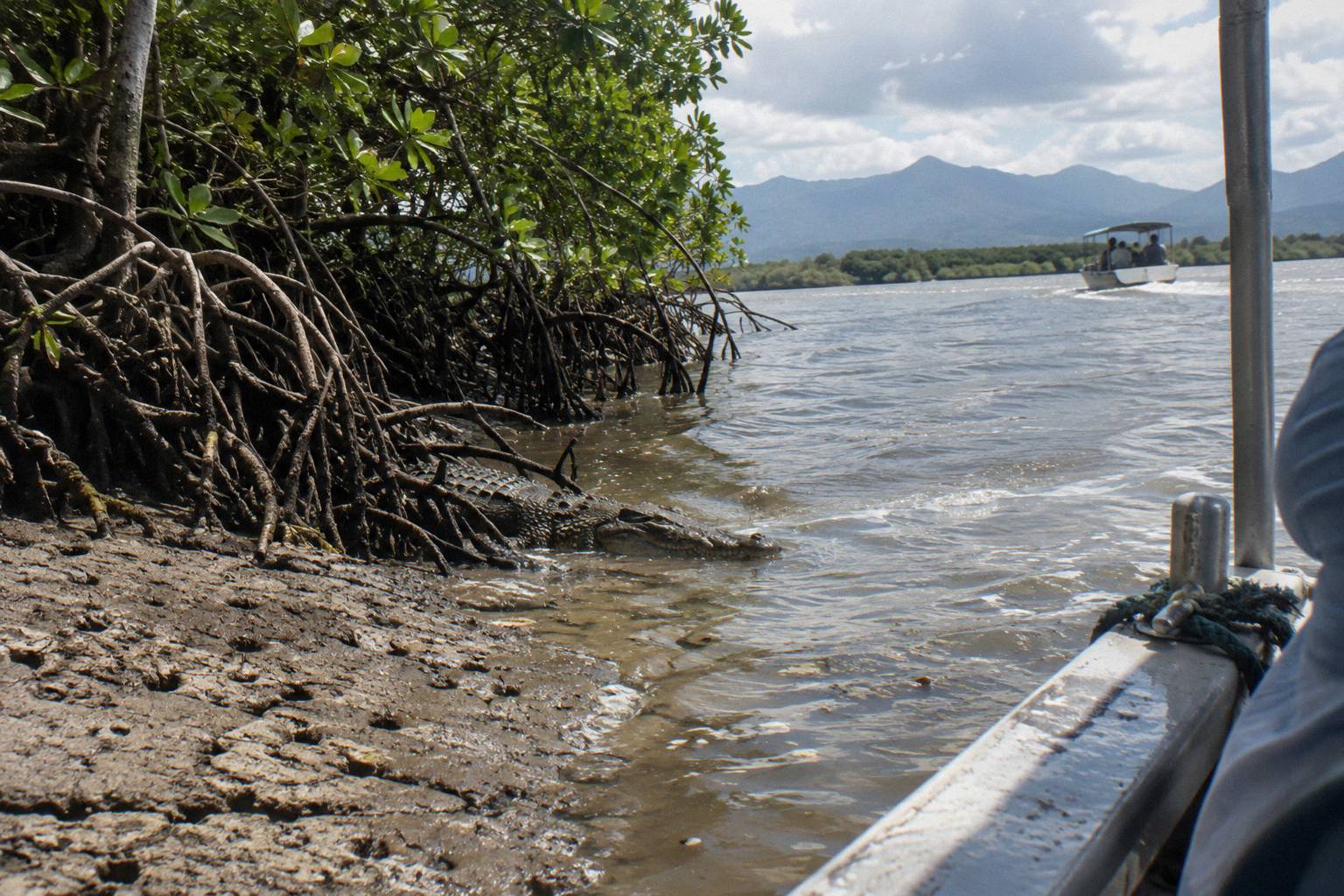
The mechanism is simple. The lower Daintree around the ferry is a wide tidal estuary, and when the water drops, sandbanks and mudflats come out of the river. Crocodiles use those banks to bask, and a basking crocodile is a visible crocodile. At high tide the same animal can sit in the shallows with only its eyes and nostrils above the surface, inches from the mangrove line, and a boat can pass within metres without anyone aboard noticing. The tide tables for the Daintree are published and easy to check against your chosen departure time.
Two practical points follow. First, do not treat a high-tide departure as a wasted ticket, because every operator here still runs and still finds animals at high tide. Second, if your dates are locked in, favour a departure that sits near low tide, and read how tides affect croc sightings on the Daintree before you pick a time slot. If you want to go deeper on the animals themselves, the saltwater crocodiles of the Daintree River covers their size, breeding cycle and habits.
What Time Of Day Works Best
Crocodiles are most active at night, dusk and dawn, which is Queensland Government wording, and that shapes both the wildlife and the cruise timetable. Daintree Boatman runs its two-hour trips at dawn and dusk for exactly that reason, while the one-hour daytime cruises rely on crocodiles basking on banks in daylight. Every trip covered here runs in daylight, dawn or around dusk, because no night cruise exists among them.
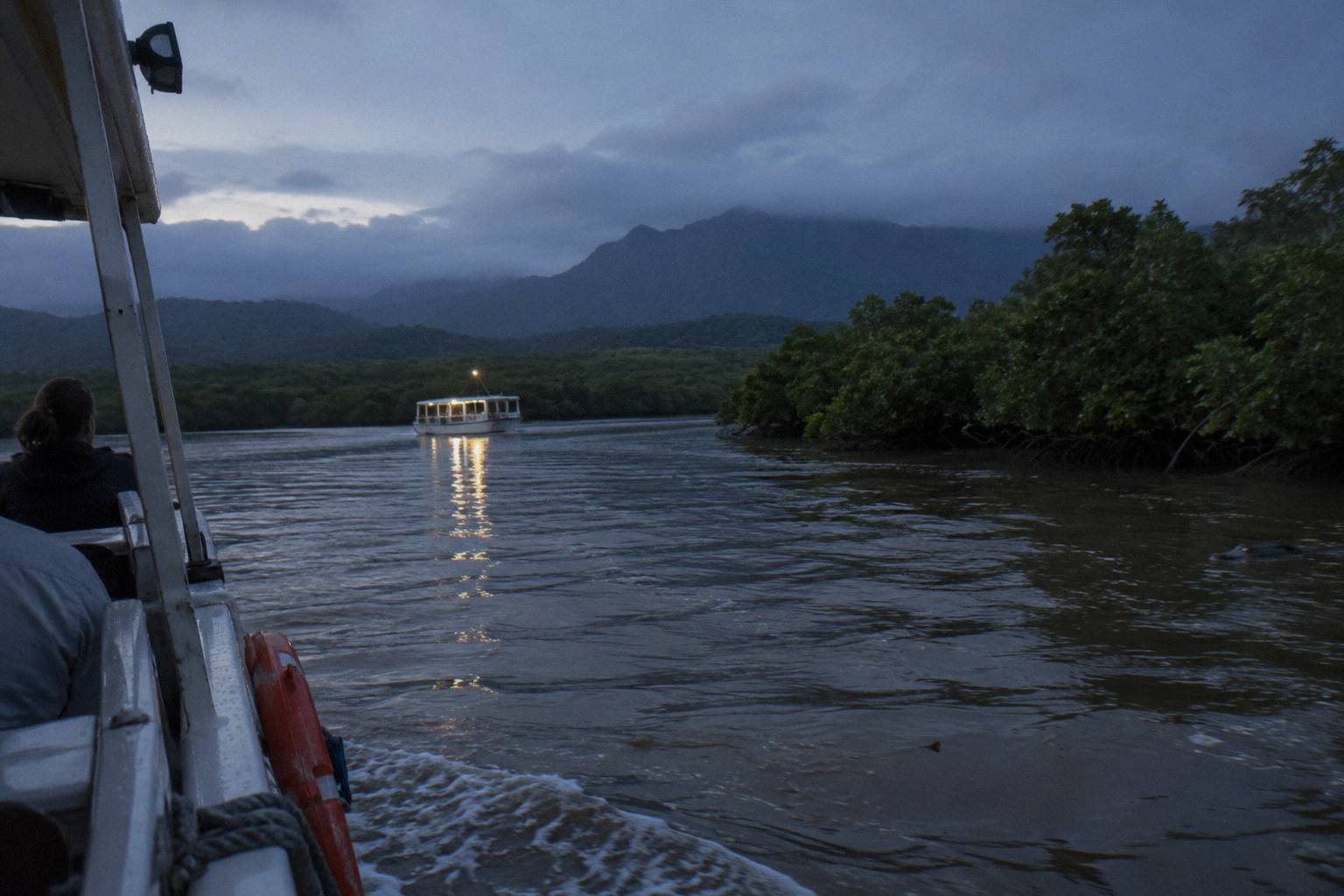
The dawn and dusk option is a genuine trade-off rather than a straight upgrade. A two-hour Daintree Boatman trip at 7am or 4pm spends double the time on the water and targets the hours when animals move, and its skippers focus heavily on birds, naming azure, little and sacred kingfishers, the Papuan frogmouth and the great-billed heron among the regulars. Against that, a daytime trip gets better light for photography, easier driving times and the bank-basking behaviour that makes crocodiles easiest to spot. The best time of day to see crocodiles works through the same question in more detail.
The solar-electric option is its own category. Solar Whisper's boat is roofed, windowless and near-silent, which its owner argues gets you closer to wildlife without an engine noise announcing the boat. Small crocodiles are very reliable on its trips, it says, while the big ones come and go, an unusually candid way of describing what every operator knows: the four-metre animals that make photographs are the least predictable residents of the river.
Which Stretch Of The River You Cruise Matters Too
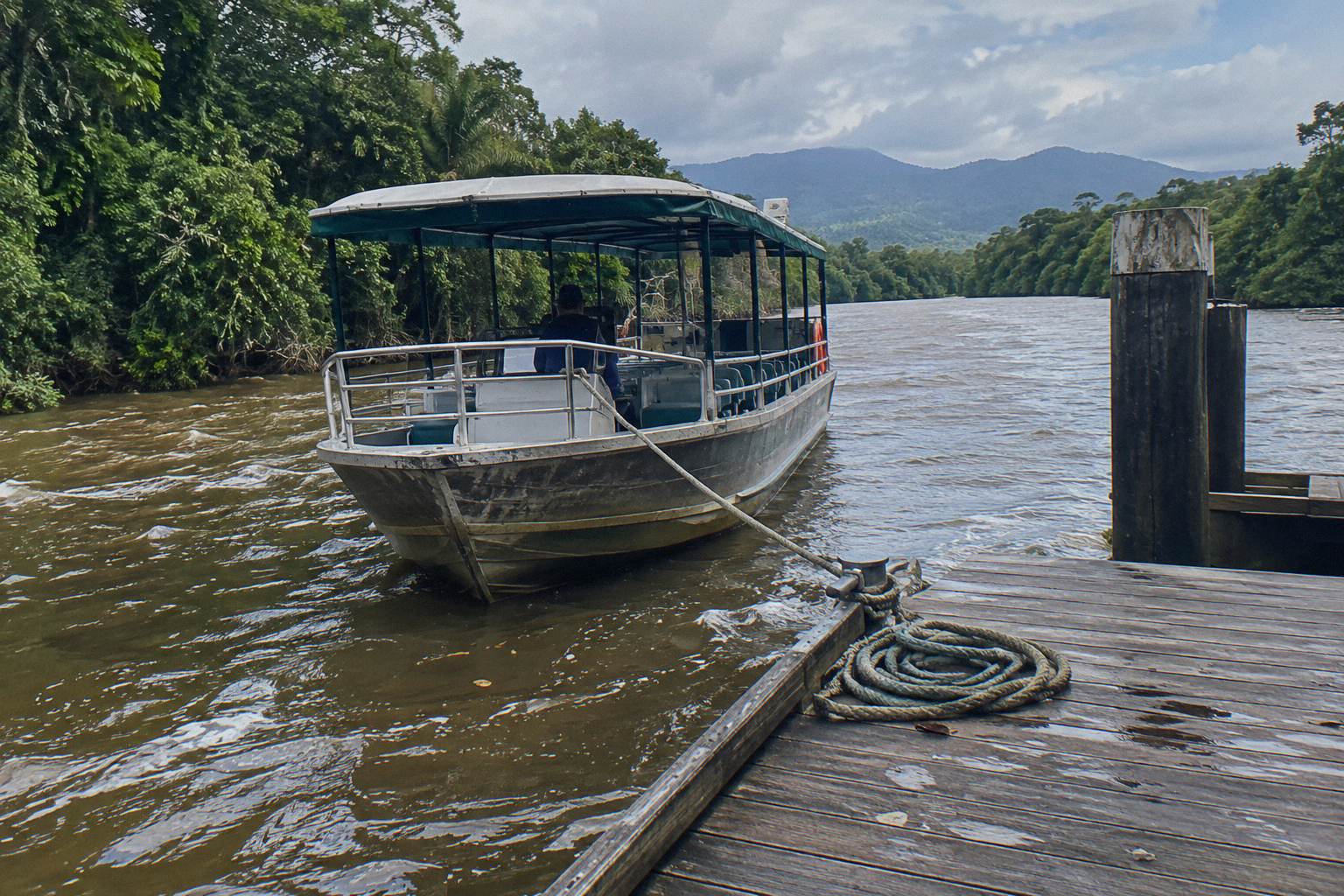
The Daintree splits into two visibly different worlds, and your cruise boards on one or the other. Upper Daintree, around the village, is narrower and calmer with overhanging trees; Lower Daintree, at the ferry end, is a wide tidal estuary lined with mangroves, in Crocodile Express's own description. Neither is guaranteed croc territory, but the two stretches concentrate different behaviour, from bank-basking in the estuary to animals tucked under the timber in the upper river.
The village jetty at Stewart Street and the Lower Daintree ramps near the ferry sit on the same river but rarely show it the same way. The Cruise Centre, a family business since 1987 operating from the south side, takes its cruises into the upper reaches and frames its trip around the full river experience rather than a single animal, with tea at its base and displays and picnic grounds to use before or after. Its own position on the sighting question is the quietest of all: sightings vary, and it hopes every guest leaves with a deeper love for the river.
Bruce Belcher's, further down on the Mossman-Daintree Road, works from its own private jetty on the Lower Daintree and gives its guests access to a private wildlife boutique facility alongside the cruise. The distance between the two bases is a few minutes' driving, but the water they cover is different enough that visitors with a single-minded croc mission sometimes book one cruise from each end. The Crocodile Express two-route pass exists for precisely that instinct, and the Daintree Village jetties and ramps map every boarding point.
Common Mistakes That Lower Your Sighting Chances
Most missed crocodile sightings trace back to planning, not to the animals. Booking a summer midday trip at high tide stacks the three hardest conditions into one cruise, which is the exact combination Solar Whisper names as its most difficult. Turning up at the wrong jetty, expecting a guarantee no operator makes, or discounting the free return-trip offers because they were never claimed are the other common errors. Each one is easy to avoid.
The concrete mistakes, in rough order of how often they cost people a sighting:
- Ignoring the month. A February trip fights warm water, deep river and 14 rain days. A July trip gets the driest window in the Port Douglas record and the strongest operator numbers.
- Ignoring the tide. Low tide exposes the banks where crocodiles bask. Check the tide against your departure slot before booking.
- Booking the wrong departure point. The village, the ferry-side ramps and the Mossman-Daintree Road jetty are minutes apart by road but different water. Know which one your ticket boards from.
- Expecting a guarantee. Every operator here states plainly that wildlife cannot be promised. The guarantee-shaped thing on offer is the return-trip remedy at Bruce Belcher's and Solar Whisper.
- Treating a miss as the end of it. A complimentary return cruise, where offered, turns a bad hour on the water into a second chance. Ask about it when you book.
- Forgetting the rest of the river. Operators list sea eagles, kingfishers, herons, pythons and tree snakes among the regulars, and a cruise that finds no crocodile usually finds everything else.
One more framing error deserves its own mention. The jumping-crocodile feeding shows associated with the Northern Territory do not exist here, and deliberately feeding or disturbing a crocodile is an offence in Queensland. A Daintree cruise is a spotting trip among wild animals on a wild river, which is exactly why the odds, the season and the tide are worth understanding before you pay. The comparison of wild-river cruises versus contained parks explains the difference if you are weighing the two formats.
Safety on the water follows the same logic. The Be Crocwise guidance tells boat passengers to keep arms and legs inside the boat and use the boat as a barrier, and it is an offence to remain within 10 metres of a crocodile basking on a bank. Your skipper manages all of that; your job is to follow the crew's instructions and keep your hands inside the rails, which also happens to be where the best photographs come from. The Queensland Government's estuarine crocodile page covers the animals' range and biology if you want the background.
Whether you build the day around a single one-hour cruise or a longer itinerary, Port Douglas Crocodile Cruises pulls the departure points, prices and inclusions into one place, and fitting a croc cruise into a Daintree day shows how the timetables slot together.
Common Questions About Daintree River Crocodile Sightings
How Likely Are You To See A Crocodile On A Daintree River Cruise?
Very likely but never certain. Bruce Belcher's says crocodiles are spotted on 98 percent of its trips, Solar Whisper claims about a 99 percent success rate, and Lady Douglas says crocodiles are normally seen on over 90 percent of its trips. Every operator also states that sightings cannot be guaranteed, and Bruce Belcher's and Solar Whisper each offer a free return cruise if you see nothing.
Which Month Gives The Best Chance Of A Crocodile Sighting?
The operators consistently point to the cooler, drier months. Bruce Belcher's names June to September as its strongest period, Lady Douglas highlights the dry season from May to November, and Daintree Boatman names May to October. Port Douglas averages just 23 to 32 millimetres of rain a month across July to September, against 395 to 429 millimetres in the January-to-March wet.
Does Low Tide Really Improve Crocodile Sightings?
Yes, in the operators' own words. Solar Whisper says low tide is usually better because there are more beaches and less water for a crocodile to hide in, and Bruce Belcher's says low tide can enhance the chances. Both also note crocodiles are still seen at high tide, so a high-water departure is not a wasted ticket.
Can Any Daintree Cruise Guarantee I Will See A Crocodile?
No. Every operator here says wildlife sightings cannot be guaranteed. The closest thing to a guarantee is the return-trip remedy: Bruce Belcher's offers a complimentary return trip if no crocodile is seen, and Solar Whisper offers a free return cruise on the same terms, each for its own cruises only.
Is A Dawn Or Dusk Cruise Better Than A Daytime One?
Crocodiles are most active at night, dusk and dawn, which is Queensland Government wording, and Daintree Boatman runs its two-hour cruises at exactly those hours. Daytime one-hour cruises instead rely on crocodiles basking on banks in the light, which many visitors find easier for photography and spotting. Both approaches produce sightings.
Why Are Crocodile Sightings Harder In The Wet Season?
Solar Whisper says the river temperature rises in the warmer months and crocodiles become harder to see, and Bruce Belcher's drops its expectation to about 50/50 in the warmer months, tying it to breeding and the wet season. Deeper water and fewer exposed banks give animals more places to disappear, which is why the dry months dominate every operator's advice.