
What Animals Besides Crocodiles Will You See On A Daintree River Cruise?
Birds, snakes, lizards and river life on the Daintree River, species by species and operator by operator, plus the months and hours that shape what you spot.
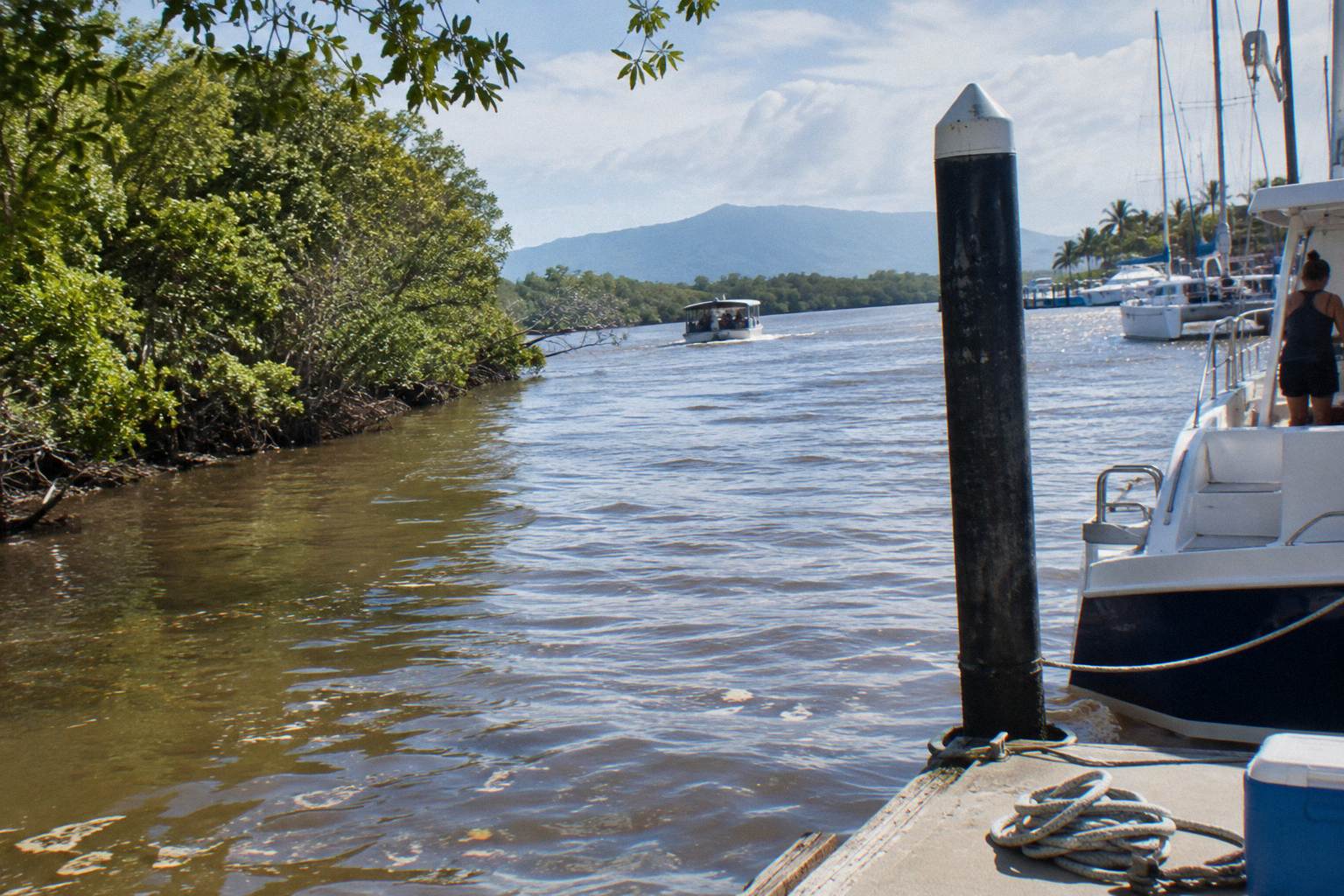
The crocodile is the headline act, but the Daintree River supports a far wider cast: operators list three species of kingfisher, the great-billed heron they call one of Australia's rarest herons, amethystine pythons, common tree snakes and water dragons, alongside sea eagles, kites, ospreys, herons, waders, crabs and mudskippers. The Daintree River Cruise Centre points to over 280 recorded bird species in the region. What turns up on any single hour on the water depends on the season, the tide, the time of day and which stretch of the river your boat works.
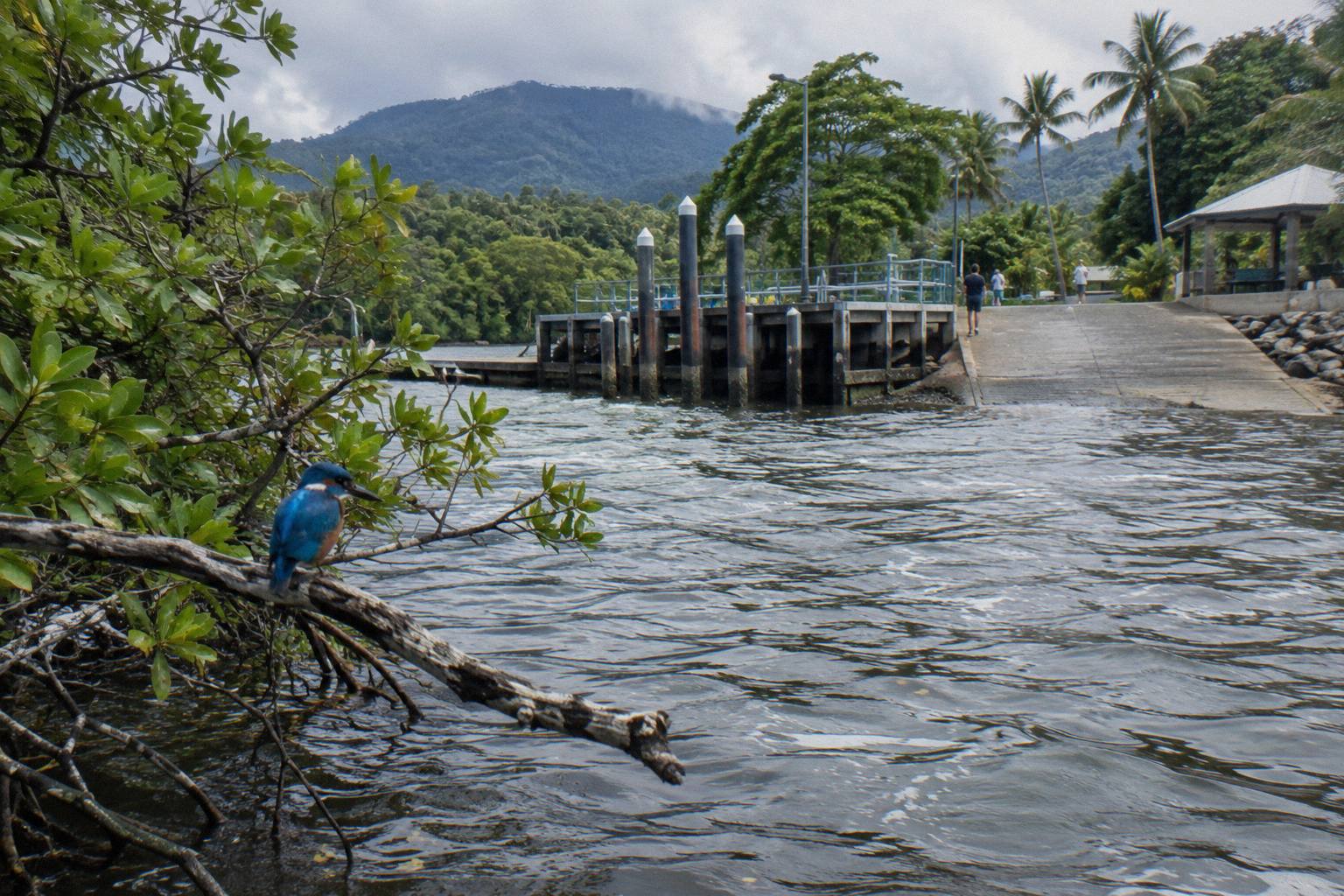
No operator promises a species list on demand, and none should: this is a wild tidal river, not a park with feeding times. What you get instead is a set of boats that know where each animal tends to sit, and a set of published lists that tell you what each crew looks for. The pattern worth knowing before you book is that the birdlife is the reliable core of every trip, the reptiles beyond crocodiles are a genuine but occasional bonus, and the small stuff, crabs, mudskippers and spiders on the mangrove roots, fills in the margins while the boat drifts.
For the wider picture of how these trips run, the Daintree River wildlife cruise guide to birds, snakes and crocs covers the same waterway in planning terms, and the saltwater crocodiles of the Daintree River page deals with the big predator separately. Read on for the rest of the river's residents.
The Birds That Carry The Trip
Birds are the constant on the Daintree River, and the lists the operators publish are bird lists first. Crocodile Express names the great-billed heron, azure kingfisher, little kingfisher, white-bellied sea eagles, ospreys, shining flycatchers, egrets, herons, darters and cormorants. Daintree Boatman adds the sacred kingfisher, Papuan frogmouth and black bittern. Lady Douglas lists sea eagles, kites, ospreys, kingfishers and herons on its Dickson Inlet route.
The kingfishers deserve their reputation. The azure kingfisher is a small, electric-blue flash that sits low over the water on drowned branches, and the little kingfisher is smaller still, a bird many visitors tick off here for the first time in their lives. An hour on the upper river in the dry season, drifting under the overhanging trees with an outboard cut to idle, is close to ideal kingfisher habitat.
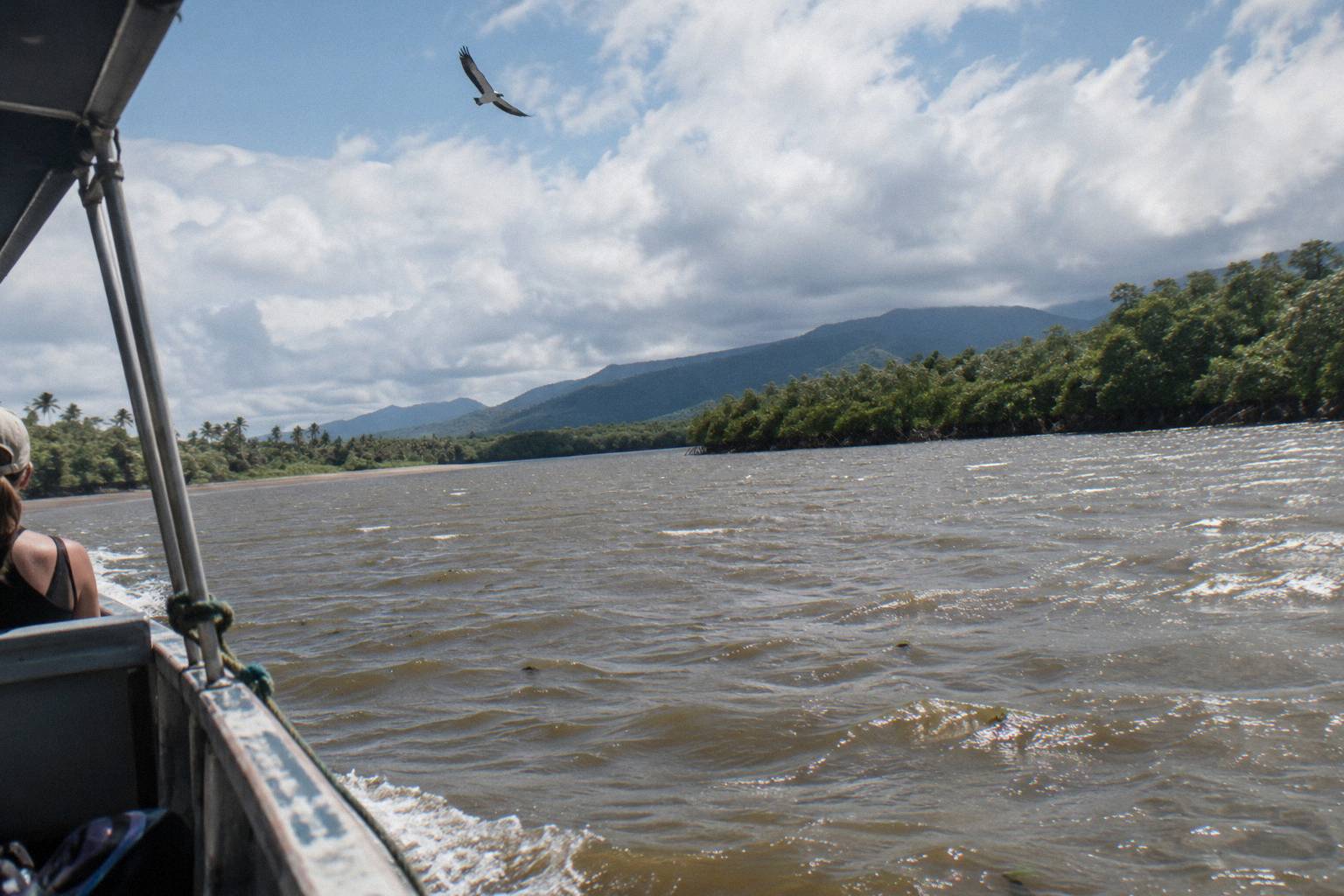
The raptors put on the widest show. White-bellied sea eagles and ospreys both hunt the river, and Crocodile Express and Lady Douglas name both; kites join them on the Lady Douglas list. A sea eagle working the shallows, holding still against the breeze before dropping feet-first, is the moment passengers remember even on a trip that also produced a crocodile. Darters and cormorants, the long-necked swimmers that dry their wings spread-eagled on snags, are the everyday punctuation of the riverbank.
Then there is the great-billed heron, which Crocodile Express calls one of Australia's rarest herons. It is a large, grey, patient bird of the mangrove shadows, more often heard, a harsh bark from the trees, than seen in the open. The Papuan frogmouth and black bittern on the Daintree Boatman list are similar stories: night birds and skulkers that reward an operator who works the same channel daily and knows which roost is active. That is the quiet argument for the two-hour sunset format over a fast hour: more time at the margins, when the herons and bitterns start to move.
Reptiles Beyond The Big One
Snakes and lizards are the second tier of Daintree River wildlife, and the operators name them plainly: Crocodile Express lists amethystine pythons and tree snakes alongside water dragons, and Daintree Boatman lists the common tree snake and water dragon too. None of these is promised on any trip; they are the species each crew actively looks for on the banks and in the overhanging vegetation.
The amethystine python, also called the scrub python, is Australia's longest snake and a genuine prize of a sighting: a big one draped along a horizontal branch above the water, its scales catching an oily sheen in the right light. Tree snakes are the more realistic hope. The common tree snake is a slender, diurnal hunter, often greenish in the tropics, that streaks across mangrove roots and low branches when the sun is on them. Water dragons bask on the same roots and logs, and on a warm afternoon their habit of holding position until the boat is almost level with them makes them one of the easier photographs of the day.
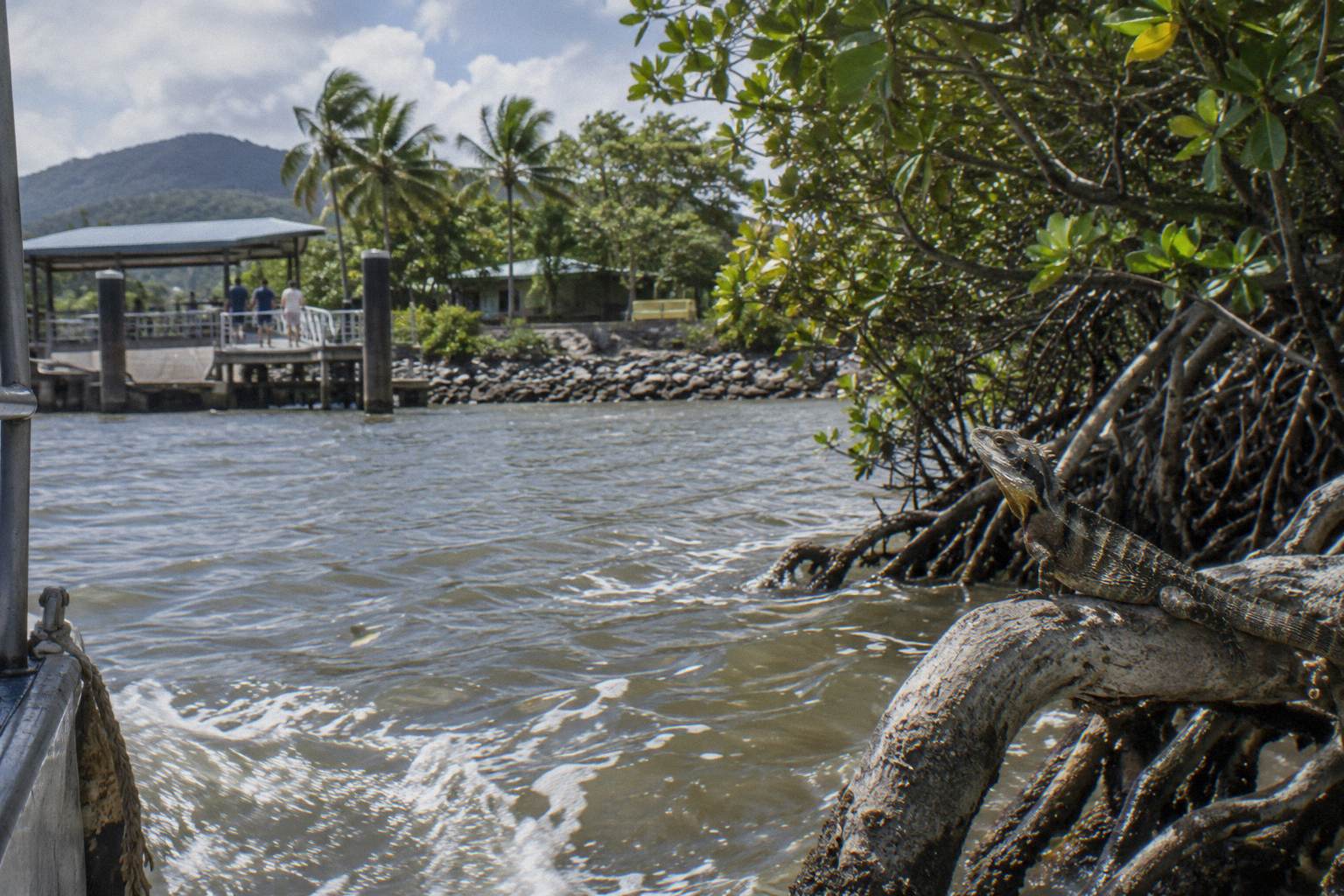
How you see any of this depends on the boat. A quiet electric vessel changes the arithmetic: Solar Whisper runs a roofed solar-electric boat with no windows and a maximum of ten people on its two-hour cruises, and quiet hulls get closer to basking lizards and roosting birds before anything flushes. The one-hour version is the trip sold here, departing the Esplanade at Lower Daintree, with the ticket office about 400 metres before the car ferry. Check the booking page for the price and the day's departure, and note there is no toilet on the boat itself, only the amenities block beside the office.
Sighting talk belongs to the operators and only to them. Solar Whisper says about a 99 percent success rate for crocodiles, with small crocodiles very reliable and big ones that come and go; Bruce Belcher's says crocodiles are spotted on 98 percent of trips in the cooler months of June to September and about 50/50 in the warmer months. For the rest of the wildlife, no operator publishes a rate at all, which tells you the birds are counted on and everything else is a bonus. Queensland's own crocodile advice is blunt on the wider point: no waterway in crocodile country can be considered crocodile free, and the same wild-river character is exactly why the bird and reptile lists exist.
If the quiet-electric format sounds like your kind of wildlife hour, the Solar Whisper trip runs in rain but not in flood, with free cancellation terms to check on the booking page before you commit.
The boat choice interacts with the season in one more way worth knowing. In the cooler, drier months the banks are exposed and the dragons and snakes bask in the open, which favours any vessel; in the warmer months the same animals sit deeper in the shade, and a small, quiet, low-profile hull that can hold position under the trees without an engine idling gives a skulking python or a roosting frogmouth its best chance of staying put while you watch.
Who Lists What: Species By Operator
Each operator publishes its own wildlife list, and the differences are real: Crocodile Express carries the longest combined list of birds and reptiles, Daintree Boatman is the bird specialist with the frogmouth and black bittern, Lady Douglas adds the inlet species around Port Douglas, and the Cruise Centre leans on its over 280 recorded regional bird species. The table below prints exactly what each operator names, with no additions.
| Operator (trip) | Birds operators list | Reptiles and others operators list |
|---|---|---|
| Crocodile Express (Daintree Wildlife Cruise) | Great-billed heron, azure kingfisher, little kingfisher, white-bellied sea eagles, ospreys, shining flycatchers, egrets, herons, darters, cormorants | Saltwater crocodiles, water dragons, amethystine pythons, tree snakes |
| Daintree Boatman (Sunset Cruise) | Azure, little and sacred kingfisher, Papuan frogmouth, great-billed heron, shining flycatcher, black bittern | Common tree snake, water dragon |
| Lady Douglas (River Cruise, Dickson Inlet) | Sea eagles, kites, ospreys, kingfishers, herons, waders | Crocodiles, crabs, mudskippers, spiders |
| Daintree River Cruise Centre (Wildlife Cruise) | Over 280 recorded species in the region, with a guided spotting cruise | Guided wildlife spotting cruise with morning or afternoon tea |
Two readings of that table are worth drawing out. First, the heron and kingfisher names repeat across operators because those birds genuinely are the river's staples, not because the lists copy each other. Second, the Lady Douglas list is different in kind, because Dickson Inlet is a different waterway: a mangrove inlet at Port Douglas rather than the Daintree, with its own mix of waders, crabs and mudskippers working the mudflats at low water. If your interest is the rare heron and the frogmouth, the Daintree lists are the ones to chase; if you want a calm-water hour with the kids counting mudskippers, the inlet delivers that.
The Daintree River Cruise Centre, a family business since 1987 on the south side of the river, frames its trip as a fully guided wildlife spotting cruise with morning or afternoon tea included and use of the Centre's displays, picnic areas and bathrooms. It runs daily departures from 9.30am to 3.30pm by its own published pattern, each cruise at least an hour and extended to 1.5 hours when the schedule permits, subject to change. Transfers are excluded, so you drive yourself to 2914 Mossman-Daintree Road and the booking page suggests hiring a car close to your accommodation. From US$24 per person, rated 4.6 from 558 reviews, with free cancellation up to 24 hours before the start, it is the cheapest hour of guided wildlife on the river: see the Daintree River Cruise Centre trip or Check availability.
Upper River Or Lower River For Wildlife
The Daintree splits into two distinct wildlife theatres. Upper Daintree, the village end, is narrower and calmer with overhanging trees, which suits the kingfishers, flycatchers and snakes that work the shaded branches. Lower Daintree, at the ferry end, is a wide tidal estuary with mangroves, which suits the crocodiles, the big waders and the raptors. Crocodile Express sells one pass that covers a cruise from each end.
That two-for-one structure is the quiet advantage of the Crocodile Express pass. Cruise 1 departs Daintree Village, checking in at 5 Stewart Street, and works the narrow, calm upper reaches. Cruise 2 departs the Daintree Ferry Gateway, the kiosk about 300 metres before the ferry crossing on Cape Tribulation Road, and works the wide mangrove estuary below. The booking page says the pass is valid 14 days from first activation, so you can take the two cruises on different days, or the same day with a lunch between them, and the operator says a bonus cruise is also valid 14 days and is not bookable online. Combo tickets add Daintree Discovery Centre entry, with the ferry fee extra if you use it. Other pages covering the same trip are gathered on Port Douglas Crocodile Cruises.
The other operators each pick a side, and the table below shows where each one boards and what kind of water it works. None of the departure points requires crossing the ferry: every jetty, ramp and marina berth here sits on the south side of the river or in the village.
| Operator | Boarding point | Stretch of river |
|---|---|---|
| Crocodile Express (Cruise 1) | Check in 5 Stewart Street, Daintree Village | Upper Daintree, narrow and calm with overhanging trees |
| Crocodile Express (Cruise 2) | Kiosk at 315 Cape Tribulation Road, about 300 m before the ferry | Lower Daintree, wide tidal estuary with mangroves |
| Daintree Boatman | Public boat ramp, Stewart Street, Daintree Village | Upper Daintree, calm village water |
| Solar Whisper | Esplanade, Lower Daintree, about 400 m before the car ferry | Lower Daintree estuary |
| Bruce Belcher's | Private jetty, 2856 Mossman-Daintree Road | South side, own jetty on the lower river |
| Daintree River Cruise Centre | 2914 Mossman-Daintree Rd, before the village | South side, before the ferry crossing |
| Lady Douglas | Crystalbrook Superyacht Marina, 44 Wharf St, Port Douglas | Dickson Inlet, a separate mangrove waterway |
Timing matters as much as geography, and the Boatman's schedule is built around it. Its two-hour cruises run at dawn and dusk: the morning departure from 7am between April and August, shifting to 6.30am from September to January, and the afternoon from 4pm or 4.30pm on the same seasonal split, subject to change. Those shoulder hours are when the frogmouths give way to the day birds, and when the herons and bitterns start hunting, which is precisely why a bird-focused operator chose them. Bruce Belcher's is the one with a calendar gap to plan around: it is open March to January, closed all of February, and closed Christmas Day and New Year's Day. The Daintree River ferry question only matters if you are continuing north afterwards.
Season And Clock: When The Lists Come Alive
The dry season from May to October is the reliable wildlife window, in the operators' own words: Daintree Boatman says crocs and snakes are best between May and October and much more difficult outside that period, and Lady Douglas says crocodiles are normally seen on over 90 percent of trips, especially in the May-to-November dry season. July to September averages just 23 to 32 mm of rain, against 395 to 429 mm a month from January to March.
| Month | Mean max / min (C) | Mean rain (mm) | Rain days of 1 mm+ |
|---|---|---|---|
| January | 30.3 / 23.7 | 395.8 | 13.8 |
| February | 30.1 / 23.5 | 422.0 | 14.2 |
| March | 29.5 / 22.8 | 429.4 | 14.4 |
| April | 28.3 / 21.5 | 203.3 | 11.2 |
| May | 26.7 / 19.5 | 72.8 | 8.0 |
| June | 25.1 / 17.7 | 47.7 | 5.7 |
| July | 24.6 / 16.8 | 26.4 | 4.2 |
| August | 25.3 / 17.1 | 23.3 | 4.0 |
| September | 26.7 / 18.6 | 32.1 | 4.4 |
| October | 28.3 / 20.8 | 53.1 | 5.3 |
| November | 29.5 / 22.3 | 106.1 | 7.6 |
| December | 30.3 / 23.3 | 213.5 | 10.1 |
Those figures come from the Bureau of Meteorology's Port Douglas station, 52 years of temperatures and 124 years of rainfall, and the full Port Douglas climate table carries the monthly detail. What the numbers mean for a wildlife trip is simple: in the wet months the river rises, the mangroves flood, and animals spread out across a much larger area to hunt and hide; in the dry the water contracts to defined channels, the sandbanks emerge, and everything from a crocodile to an azure kingfisher concentrates where the fish are. Solar Whisper makes the same point from the water temperature side, saying that in the warmer months the river warms and crocodiles are harder to see.
Daylight length barely moves in the tropics, which keeps the wildlife schedule steady year-round. Computed sunrise and sunset for Daintree Village run from about 5:58am and 6:57pm in January to about 6:47am and 6:02pm in July, roughly 11.2 to 13.1 hours of daylight, with no daylight saving in Queensland. That is why the Boatman's seasonal shifts are measured in half hours rather than the two-hour swings of southern latitudes, and why every trip sold on this waterway runs in daylight, at dawn or around dusk: no night cruise exists among the trips covered here.
The breeding calendar adds a late-spring wrinkle. The Queensland Government notes that crocodile courtship begins in October and November and nesting runs December to April, and that during the breeding season male crocodiles become very mobile as they look for a mate, so sightings are more prevalent. For the birds, the build-up months are busy in their own way, with resident species nesting in the mangroves, though the operator lists stay the only safe guide to what each crew expects to show you.
Mistakes That Cost You Sightings
The most common mistakes are all about clock and clothing: booking the middle of the day when the dawn and dusk hours carry the bird movement, expecting a species rather than hoping for one, dressing loudly and moving around the deck, and treating the cruise as a crocodile-only errand so the herons, snakes and dragons go unnoticed while everyone stares at the water. Each one is avoidable with a small amount of planning.
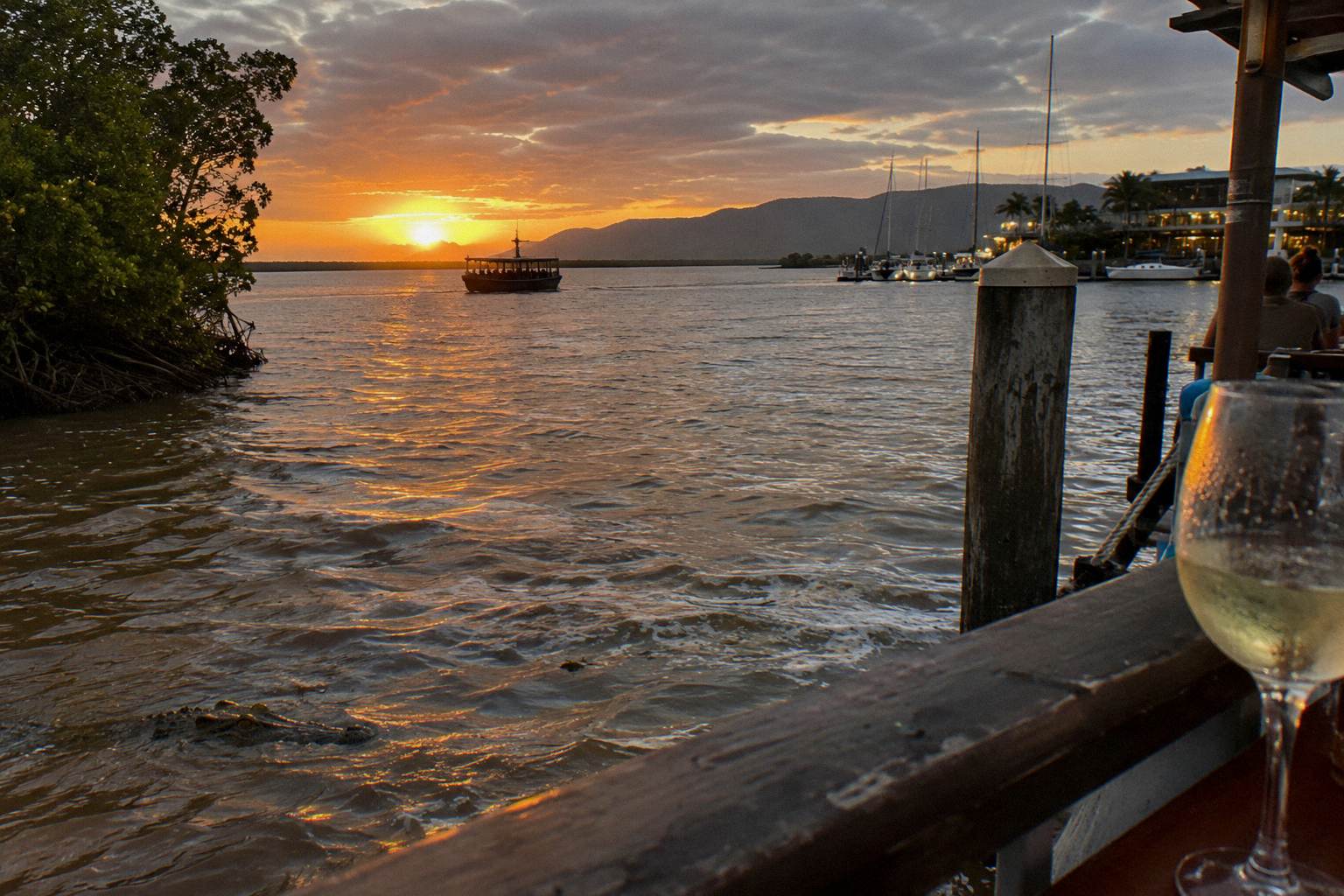
Book the shoulder. The Daintree Boatman sunset cruise exists because the last two hours of daylight are when the river changes shifts: the day raptors wind down, the herons and bitterns begin hunting, and the crocodiles, most active at night, dusk and dawn by the Queensland Government's own description, start to move. An 11am cruise will still show you kingfishers and water dragons, but the odds on the shy species tilt badly toward the dawn and dusk departures.
Dress for the boat, not the beach. The operator pages converge on the same practical advice from different directions: Bruce Belcher's requires non-slip shoes for its 200-metre uncovered walk to the boats and pulls clear screens down in heavy rain, and the half-day Daintree tour supplies raincoats, umbrellas and insect repellent because the mangrove hours bring insects with them. Muted colours help everywhere on a small boat, and the Queensland Government's boating advice to keep arms and legs inside the vessel doubles as wildlife advice: sudden movement over the gunwale flushes the very birds you came for.
Manage expectations by operator, not by hope. Bruce Belcher's says plainly that it never guarantees wildlife sightings and offers a complimentary return trip if none is seen, and Solar Whisper says it cannot 100 percent guarantee and offers a free return cruise on the same terms; those offers belong to those operators alone. The Cruise Centre puts it gently: while sightings vary, it hopes every guest leaves with a deeper love for the river. A trip planned around the bird list, with crocodiles as the possible highlight rather than the only goal, is the trip that disappoints least.
If You Want The Wildlife With A Bigger Day Around It
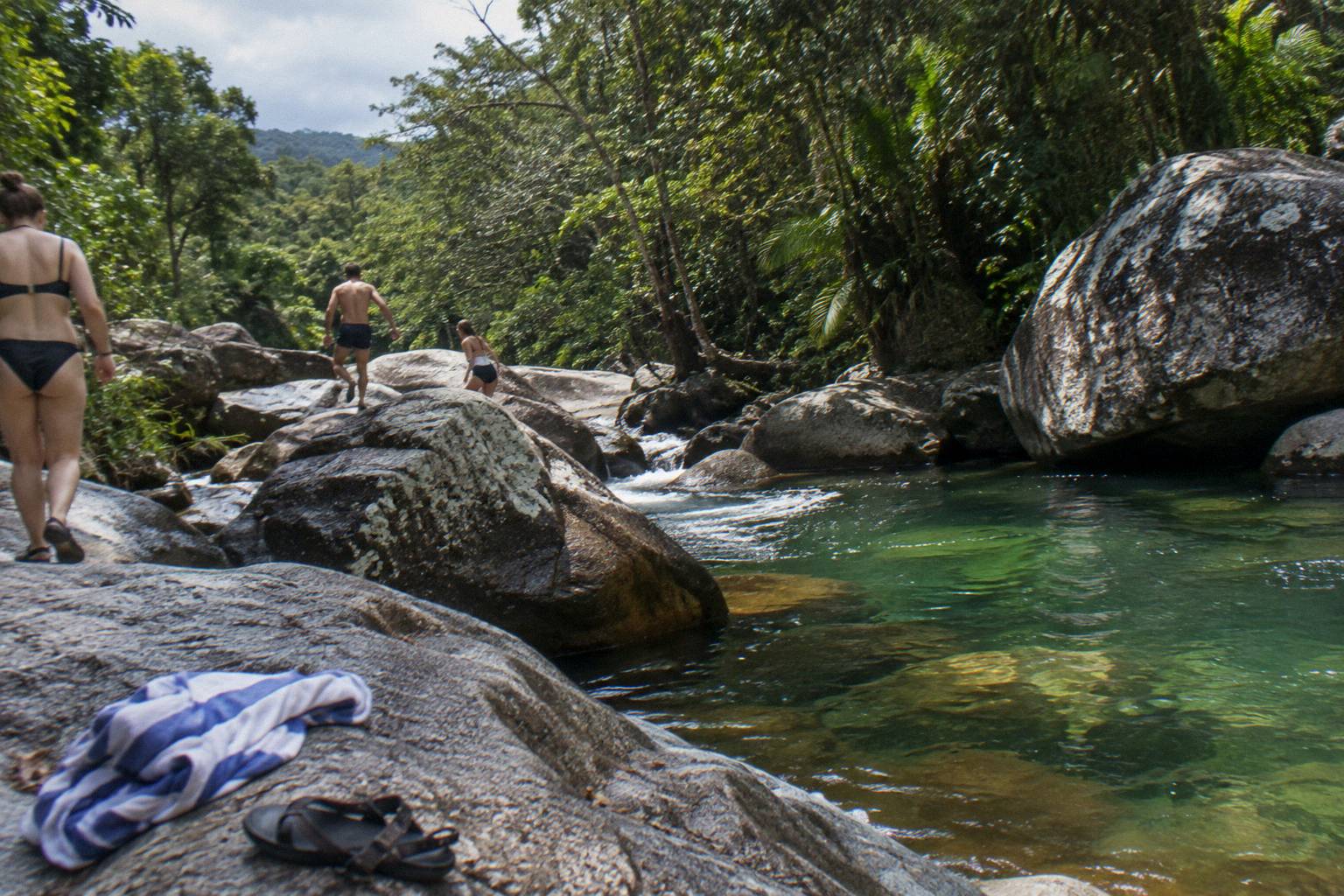
Two tours bundle the river cruise into a fuller Daintree day. The half-day tour from Daintree Discovery Tours pairs a cruise with a Mossman Gorge walk and swim for US$121 per person over 5 hours, and the full-day Daintree Experience adds a waterfall swim, a secret trail, a rainforest lunch and a tropical fruit tasting for US$165 over 8 hours, both with Port Douglas pickup.
The half-day runs 12:50pm to 5:30pm, collecting from resorts, apartments, holiday homes and caravan parks around Port Douglas, and its booking page lists Daintree National Park access, the Mossman Gorge walk and swim, a river cruise with a beer, wine or soft drink and a small snack, chilled water, raincoats, umbrellas, insect repellent and door-to-door transport. It is rated 4.5 from 117 reviews, not suitable for children under 3, and free cancellation applies up to 24 hours before the start. The gorge walk is the wildlife bonus: rainforest birds in the canopy and a freshwater swim in a landscape the crocodile cruise never touches.
The full-day version is for the trip-of-the-holiday traveller. Eight hours with pickup from any Port Douglas or Mossman accommodation, a swim beneath a secluded waterfall, exclusive access to a secret trail, a gourmet lunch at a rainforest restaurant, a tropical fruit tasting, a one-hour guided walk, a chance to see rare rainforest wildlife and a search for giant estuarine crocodiles on the Daintree River, with the river cruise as one one-hour stop in the middle. It is not suitable for children under 10 or people with mobility impairments. Neither day tour replaces the specialist wildlife hour; they wrap it in the rainforest.
For the town-based alternative, Dickson Inlet croc and wildlife cruising from Port Douglas covers the Lady Douglas route: a 1.5-hour calm-water cruise from the Crystalbrook Superyacht Marina at 44 Wharf Street, with a bar beverage and snacks included, skipper commentary, colouring sheets for children and wheelchair access as the booking page gives it. From US$32, rated 4.6 from 571 reviews, with four seasonal departure slots from 10.30am to a 4.30pm sunset start, it is the one trip here that never needs a car. The Wet Tropics around it, World Heritage listed in 1988, spans about 895,000 hectares and holds some of the oldest continuously surviving tropical rainforests on Earth, which is why the day tours keep finding rare wildlife beyond the riverbank.
Common Questions About Daintree River Wildlife
What Animals Besides Crocodiles Will You See On A Daintree River Cruise?
Operators list a wide bird and reptile cast: three kingfishers (azure, little and sacred), the great-billed heron, Papuan frogmouth, black bittern, white-bellied sea eagles, ospreys, kites, shining flycatchers, egrets, herons, darters and cormorants, plus water dragons, amethystine pythons, tree snakes, crabs and mudskippers. The Daintree River Cruise Centre points to over 280 recorded bird species in the region. No operator promises any species on a given trip.
Are The Snakes On The Daintree River Dangerous?
The species operators list are the amethystine python and the common tree snake. The python is a large non-venomous constrictor and the tree snake is mildly venomous but not regarded as dangerous to humans; both are shy branch and bank dwellers that flee boats. They are seen occasionally, not on demand, and no operator promises one.
Which Cruise Is Best For Birdwatchers?
The Daintree Boatman Sunset Cruise is the bird-focused format: two hours from the Stewart Street village ramp at dawn or dusk, with an operator whose published list centres on the azure, little and sacred kingfisher, Papuan frogmouth, great-billed heron, shining flycatcher and black bittern. The Crocodile Express pass adds a second ecosystem by covering one cruise from the village and one from the ferry end.
Do You See The Same Animals Year-Round?
No. Daintree Boatman says crocs and snakes are best between May and October and much more difficult outside that period, and the dry season concentrates wildlife around the narrowed channels. Solar Whisper says crocodiles become harder to see in the warmer months as the river temperature rises. Bird residents like kingfishers and herons are present year-round.
Will You Definitely See A Crocodile?
No trip guarantees one. Bruce Belcher's says it never guarantees sightings and offers a complimentary return trip if none is seen; Solar Whisper says about a 99 percent success rate but cannot 100 percent guarantee, with a free return cruise on the same terms; Lady Douglas says crocodiles are normally seen on over 90 percent of trips, especially from May to November. Each figure belongs to its own operator.
Are There Cassowaries Or Platypuses On The Cruise?
No operator among these trips lists cassowary or platypus among its river wildlife, so plan on the published lists: birds, crocodiles, snakes, water dragons and the small mangrove life like crabs, mudskippers and spiders. The rainforest walks on the day tours are separate habitats from the tidal river the cruises work.