
What To Wear On A Daintree River Cruise?
Clothing, shoes, rain and sun advice for a Daintree River crocodile cruise, built on operator guidance and Port Douglas climate averages.
Wear light, breathable clothing in neutral colours, closed non-slip shoes, a hat and sunglasses, and pack a light rain layer plus insect repellent no matter the month. Port Douglas averages a mean maximum of 30.3 °C in January and still 24.6 °C in July, and rain falls somewhere in every month of the year, so the difference between seasons is degree, not kind. Nothing in the wardrobe needs to be technical or expensive.
The Daintree River sits inside the Wet Tropics of Queensland, a region UNESCO added to the World Heritage List in 1988, covering about 895,000 hectares of what it calls some of the oldest continuously surviving tropical rainforests on Earth. That setting drives every clothing choice on the water: shade, humidity, sudden showers and insects. The cruises covered here run in daylight, at dawn or around dusk, and every departure point is a short walk from a car park or check-in desk, so the clothing test is comfort over one or two hours seated on a boat, not a hike.
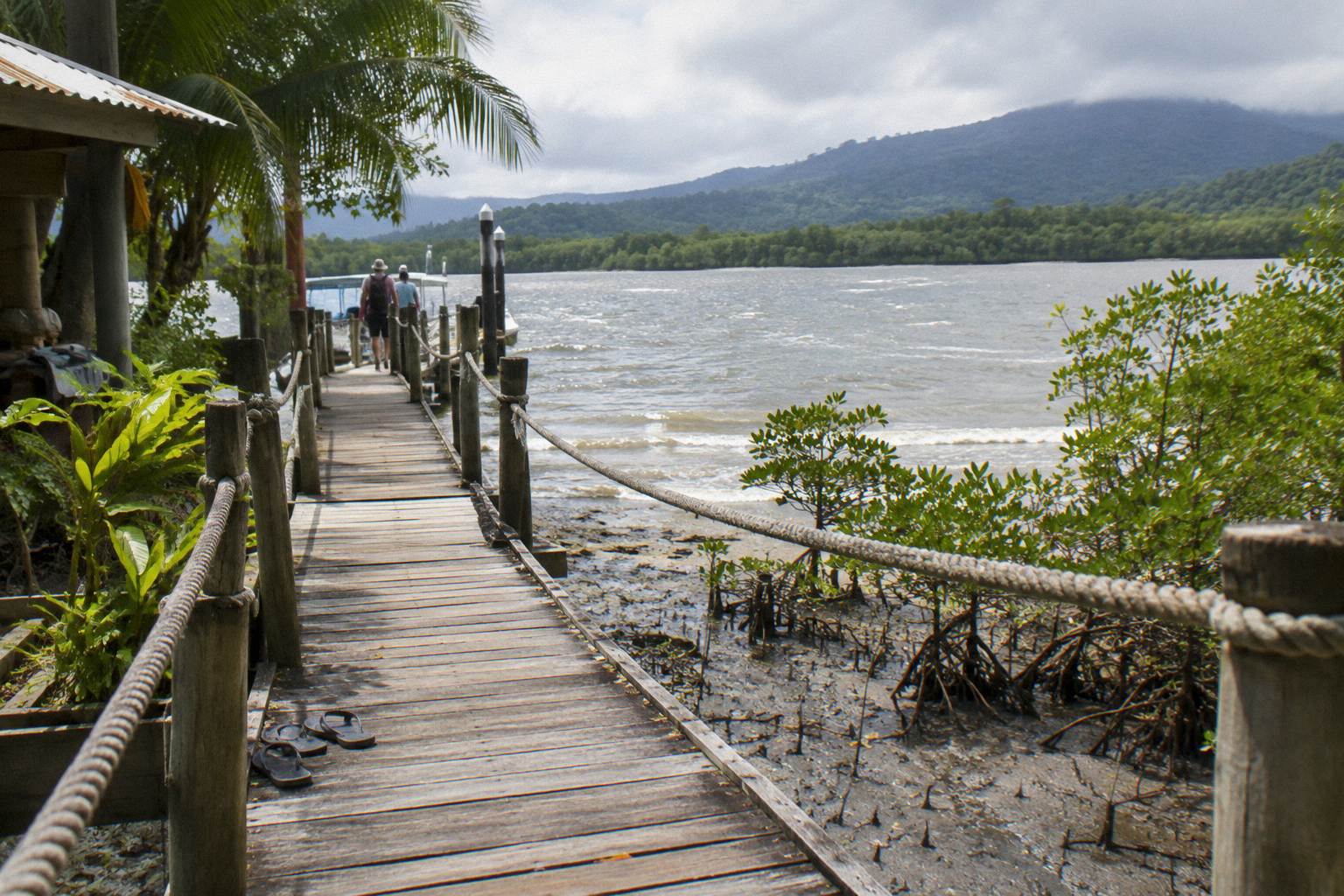
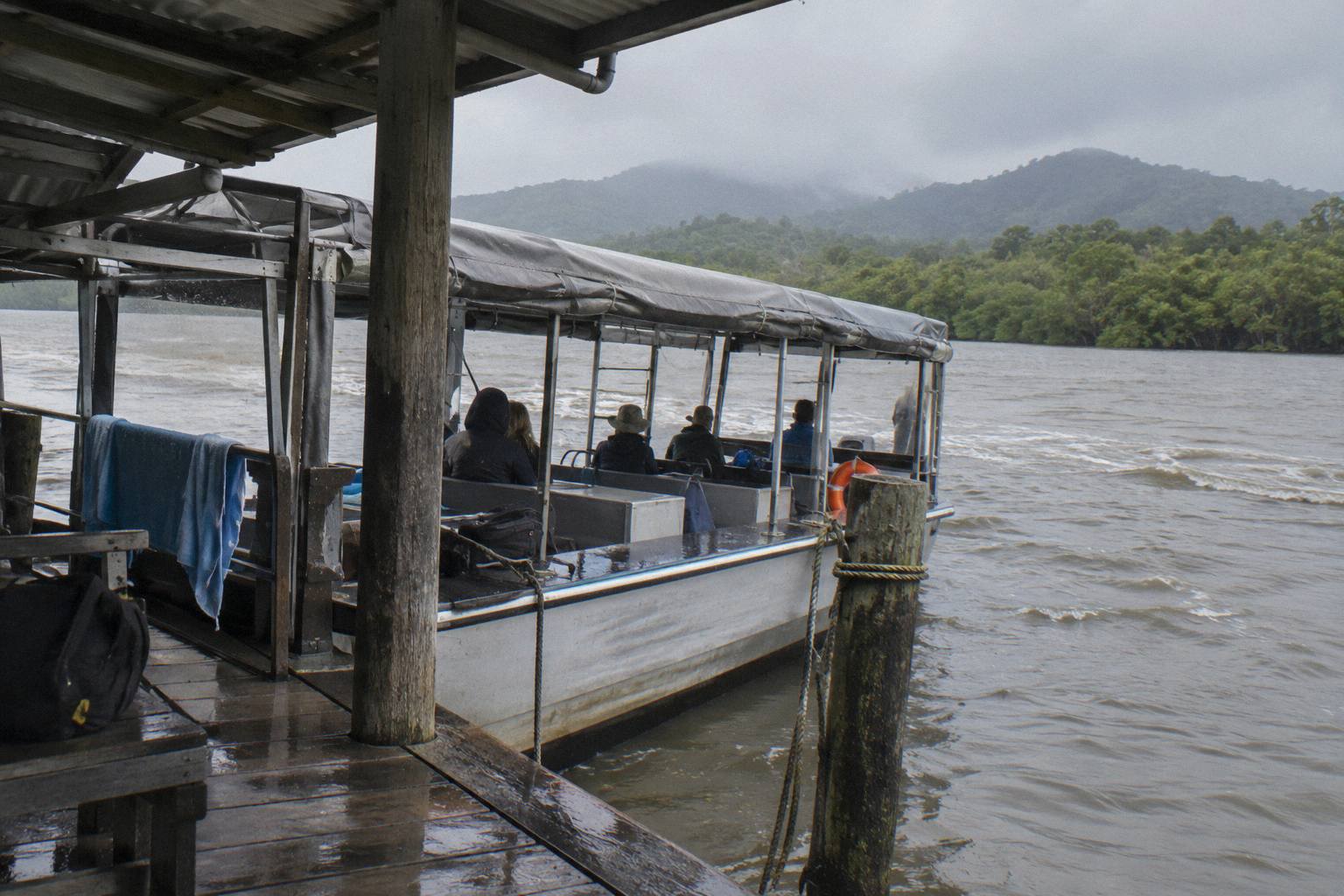
Two operator facts anchor the footwear question. Bruce Belcher's Daintree River Cruises requires non-slip shoes for its cruises, and its jetty involves a 200 m uncovered walk to the boats. The half-day Daintree tour, which spends part of its five hours at Mossman Gorge including a walk and swim, supplies raincoats, umbrellas and insect repellent on board, which tells you the operator considers all three worth having in this climate. Solar Whisper's boat is roofed but has no windows, so rain reaches the sides of the cabin and wind comes through on the move.
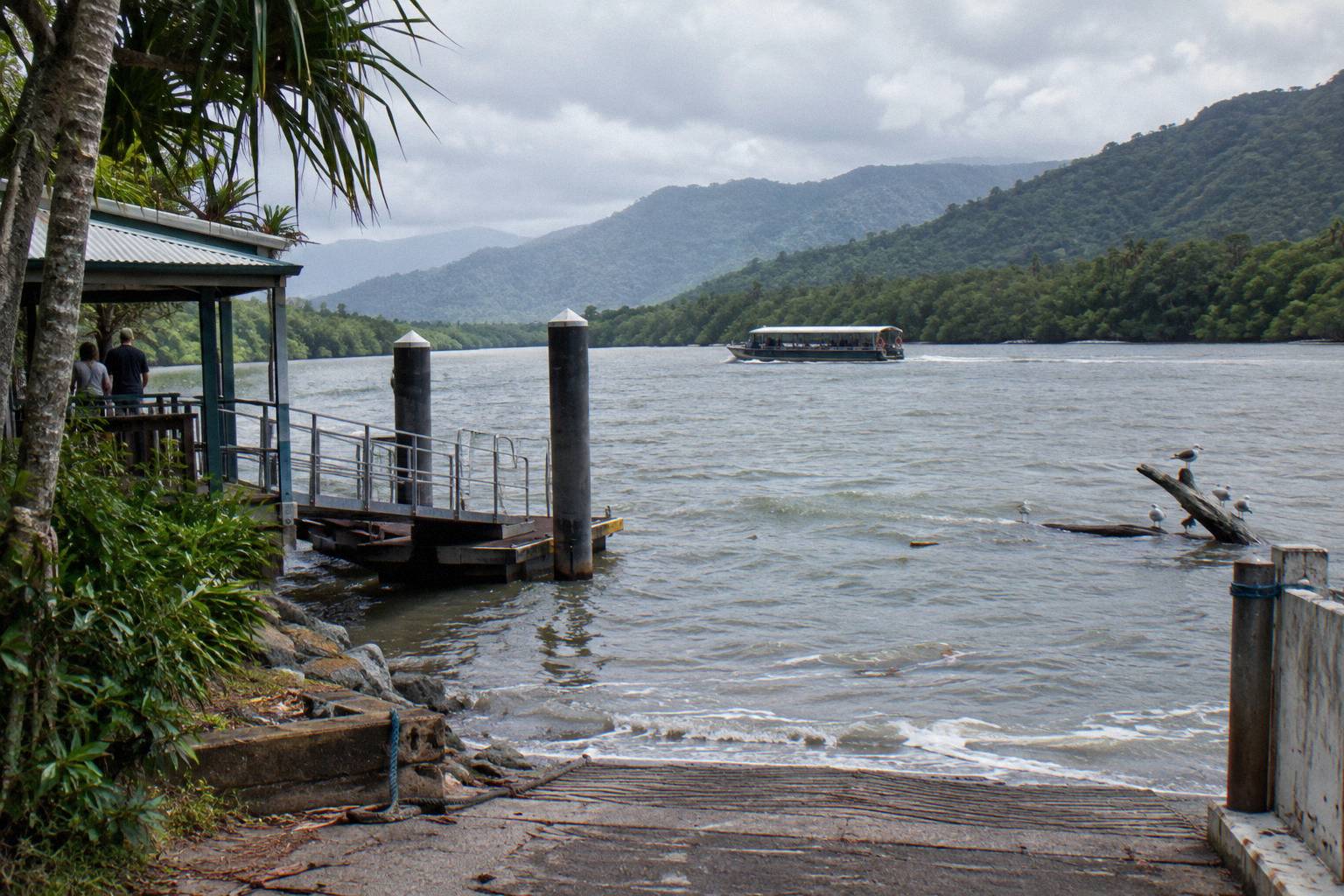
For a first cruise, the Daintree River Cruise Centre Wildlife Cruise is an easy one to dress for: you check in at a reception building with displays, picnic areas and bathrooms, board from the Centre's jetty, and spend an hour on the water with morning or afternoon tea included. It runs from US$24 per person, rates 4.6 from 558 reviews, and cancels free up to 24 hours before start. The Centre asks guests to arrive 15 minutes early and check in at reception, so plan to be standing about in the sun or a shower briefly before boarding, another quiet argument for a hat and a light layer.
Three trips make a good shortlist for a clothing-conscious visitor:
Which Shoes Work On A River Cruise?
Closed, flat, non-slip shoes are the safest answer on every boat covered here. Bruce Belcher's states non-slip shoes are required and its jetty walk is 200 m of open ground with no cover, wet or dry. Thongs survive a village departure but fail on wet timber steps, and the Cruise Centre notes its jetty and boats may not suit everyone, so sure footing matters. Sandals with a heel strap are a workable middle ground.
Every jetty on the river is timber, and timber that has taken a shower is slick. The Daintree Village departures put you on a boat ramp and jetty at Stewart Street; the Lower Daintree operators sit beside or before the ferry on Cape Tribulation Road. None of these involve hiking boots territory, but all of them punish slippery soles. If your trip pairs the cruise with walking, the argument for closed shoes strengthens: the half-day tour includes a Mossman Gorge walk where tracks are often damp even in the dry season.
Bruce Belcher's sums up the operator position on weather better than most: clear screens are pulled down in heavy rain so cruises keep running, which means you may board in a shower and finish in sunshine. Shoes that handle both ends of that arc are the ones to pack. The same operator serves complimentary Daintree tea or coffee at its facility, a small reason not to worry about mud on your shoes and a bigger reason to have shoes you can walk in comfortably.
One hour on the water in stable shoes beats one hour in pain, and the cheapest pair of closed trainers you already own outperforms anything bought for the occasion. If you are travelling with children, the same rule applies with more force; a child in slick-soled shoes on a wet ramp is a handful. The broader question of ages, seats and supervision on board has its own guide to kids on croc cruises, worth reading before you finalise what the whole family wears.
What Should You Wear In Each Season?
Dress for the month, not for the tropics as an idea. Mean maximum temperatures at Port Douglas run from 30.3 °C in January down to 24.6 °C in July, while mean monthly rainfall swings from 429.4 mm in March to 23.3 mm in August. In the wet months expect heavy bursts and humidity; in the dry months expect strong sun and coolish mornings on the water.
The Bureau of Meteorology's long-run averages for Port Douglas, drawn from 52 years of temperatures and 124 years of rainfall, give the practical picture. January to March each average between 395 and 429 mm of rain across 14 or so rain days of 1 mm or more. July to September drop to between 23 and 32 mm across roughly four to five such days. The shoulder months sit between those poles: April averages 203.3 mm, May 72.8 mm, October 53.1 mm, November 106.1 mm, December 213.5 mm. You can read the full table on the Bureau of Meteorology climate pages.
| Month | Mean max | Mean min | Mean rain | Rain days (1 mm+) | What it means for clothing |
|---|---|---|---|---|---|
| Jan | 30.3 °C | 23.7 °C | 395.8 mm | 13.8 | Lightest possible clothing, rain shell in the bag |
| Mar | 29.5 °C | 22.8 °C | 429.4 mm | 14.4 | Peak wet season, quick-dry fabrics only |
| May | 26.7 °C | 19.5 °C | 72.8 mm | 8.0 | Dry season begins, mornings feel mild |
| Jul | 24.6 °C | 16.8 °C | 26.4 mm | 4.2 | Coolest mornings, add a light layer |
| Sep | 26.7 °C | 18.6 °C | 32.1 mm | 4.4 | Warm, dry, sun protection is the priority |
| Dec | 30.3 °C | 23.3 °C | 213.5 mm | 10.1 | Humid, storms return, keep the rain layer handy |
The dry season runs roughly May to November, and several operators tie wildlife viewing to that window. Lady Douglas says crocodiles are normally seen on over 90 percent of trips, especially in the dry season from May to November, while Daintree Boatman says crocs and snakes are best between May and October. Cooler months mean cooler mornings on open water, so a light long-sleeve layer earns its place; warmer months mean you will want it for sun and insects rather than warmth. Timing interacts with clothing too, and the question of the best time of day to see crocodiles can shape whether you need that extra layer for a dawn start.
Rain never cancels the wardrobe plan. Solar Whisper operates in rain, just not in flood, and Bruce Belcher's pulls clear screens down in heavy rain. A cheap packable rain jacket, or even a wide umbrella, covers every plausible shower; the half-day tour hands out raincoats and umbrellas on board precisely because its operator knows showers arrive fast here. If you want the detail on how the wet season affects the river itself, there is a separate piece on whether croc cruises run after heavy rain.
Daylight length also nudges the packing list. Computed solar times for Daintree Village put sunrise about 5:38am in November against about 6:47am in July, with sunset ranging from about 5:54pm in June to about 6:57pm in January. Early departures in the middle of the year begin in low light and cool air, so the layer you skip for a 10am cruise is the one you will reach for on a 7am start.
Sun, Heat And Sunscreen: How Much Protection Do You Need?
More than the temperature suggests. Even at 24.6 °C in July, an hour on open water under a high-altitude tropical sun is enough to burn unprotected skin, and boats reflect light off the river surface from below. A brimmed hat, sunglasses, sunscreen on face and hands, and a loose long-sleeve shirt for dawn and dusk trips will cover every boat on the river without weighing down your day pack.
The sun angle in the tropics is high year-round, and cruises sit you in open air for their full running time. On the Lady Douglas, a 1.5-hour cruise from the Crystalbrook Superyacht Marina across Dickson Inlet, the operator describes covered seating across the whole back deck, which softens the exposure but does not remove it, since light comes off the water at the sides. On windowless boats such as Solar Whisper's roofed electric vessel, the sides stay open to the elements by design. The wider set of guides lives on Port Douglas Crocodile Cruises.
Loose, light-coloured, long-sleeved cotton or synthetic shirts solve two problems at once here: sun on the water and insects at the banks. They cost little, pack flat, and suit every month of the year in this climate. A hat with a cord is wiser than a loose-brimmed sun hat on any moving boat, and polarised sunglasses genuinely help you see into the water at the mangrove edges, which is where the animals are.
A practical note on luggage: none of these cruises involves checked bags or dress standards. Wear the shirt you would wear for a garden lunch, add the sun layer, and you are dressed correctly. The Daintree Experience full day, which runs 8 hours and includes a waterfall walk and swim, is the one trip where you should pack swimwear and a change of clothes, since a swim beneath a secluded waterfall is part of the itinerary; the river cruise is only one hour of that longer day.
Sunscreen belongs in a pocket rather than a suitcase. Reapplying mid-cruise is normal practice on the water, faces catch reflected glare off the river, and hands rest on rails in full sun. A small tube travels better than a large bottle, and the walk from the car to the jetty is exactly long enough for one application before you board.
Do You Need Insect Repellent And Long Sleeves?
Yes, and the operators agree with you before you ask. The half-day Daintree tour carries insect repellent on board for guests, and mangrove rivers are mosquito and sandfly habitat at dawn and dusk by nature. Apply repellent before boarding, reapply after rain, and choose long, loose trousers if you react badly to bites. It costs nothing to bring and is hard to borrow mid-river.
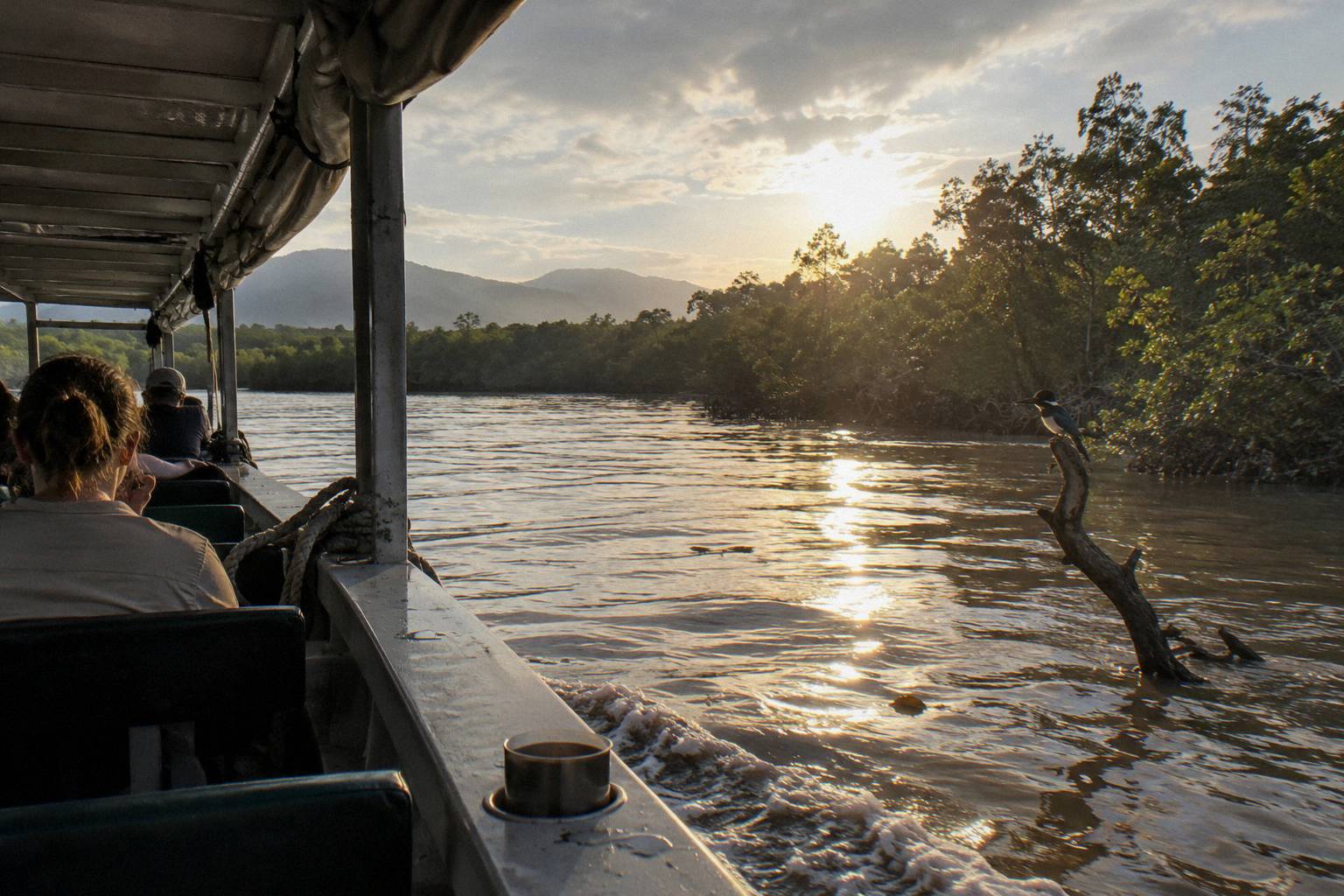
Mosquito pressure is highest in the warmer, wetter months when standing water is everywhere, but the banks of the Daintree hold enough humidity year-round that insects are never off the table. The insects are also part of the show: operators list the birds and reptiles that feed along the mangroves, and the Daintree River Cruise Centre speaks of over 280 recorded bird species in the region. You are dressing inside a working ecosystem, and that ecosystem includes things that bite.
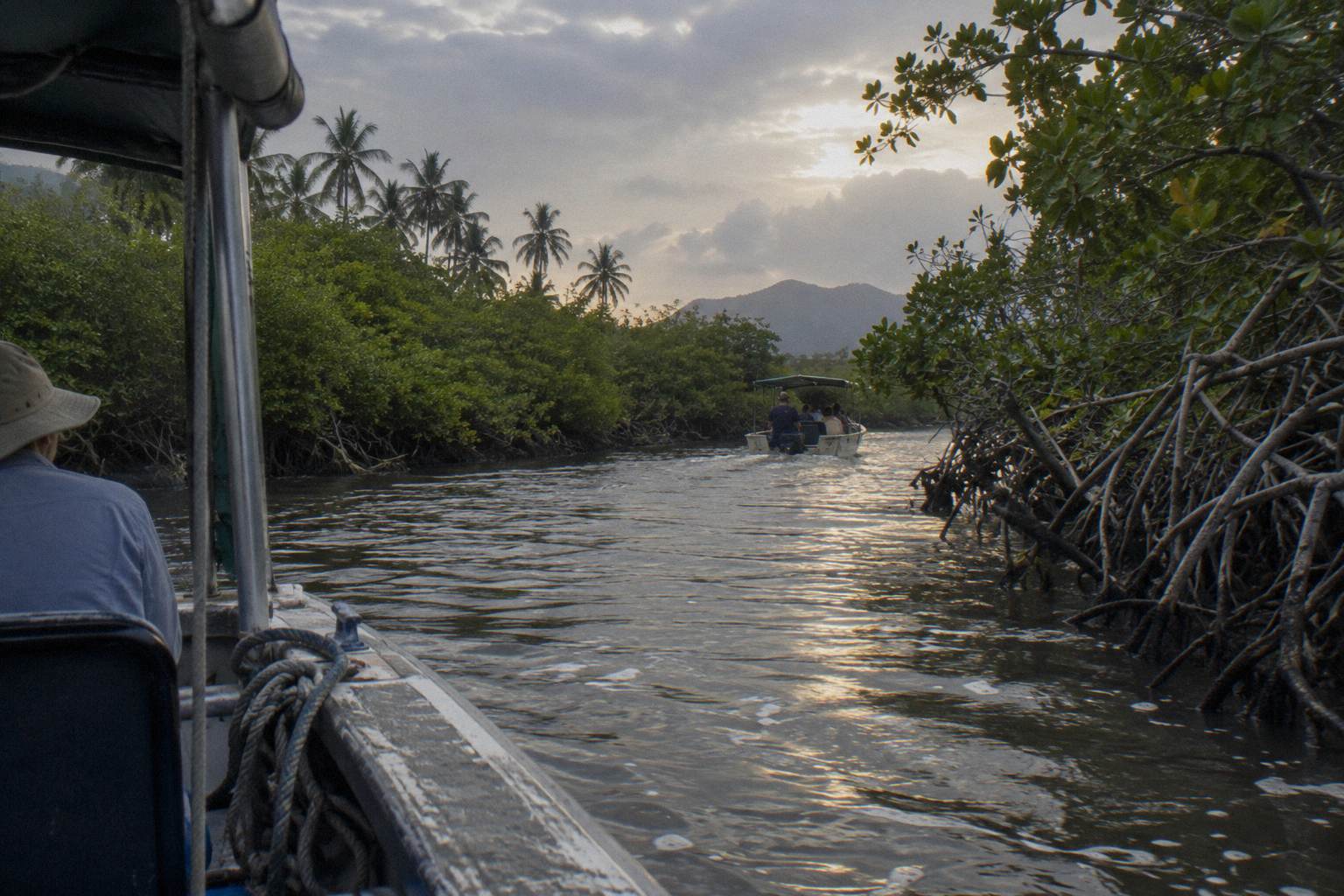
The evening trips make this sharper. Daintree Boatman runs a two-hour sunset cruise from the public boat ramp at Stewart Street, with afternoon departures from 4pm in the April to August period and 4.30pm from September to January, and those hours run straight into peak insect time. Queensland's crocodile safety advice also says to be extra cautious at night, dusk and dawn, which applies to people on riverbanks rather than on boats, but it underlines that these are the active hours on a tropical river in every sense.
Bruce Belcher's one-hour cruise is a good example of dressing for the whole outing rather than the boat alone, with its uncovered walk, its wildlife boutique facility and its complimentary tea or coffee; it rates 4.6 from 154 reviews and runs from US$30 per person.
What Packing Mistakes Do People Make?
The recurring errors are dark heavy clothing, slippery shoes, no rain layer in the wet season, no repellent at dawn and dusk, and over-packing for a one-hour boat trip that needs almost nothing. Travellers also forget that some boats have no toilet on board, that jetties involve exposed walking, and that a cruise pairs naturally with a swim stop on the longer tours. Avoid those six and the day is easy.
The single most common mistake is dressing for the brochure photograph instead of the climate. Heavy denim, dark colours and stiff new shoes all fail here: denim stays wet for hours after a shower, dark fabric holds heat at 30 °C, and new shoes bite on a jetty walk. The second is treating the dry season as rain-free; even August averages 23.3 mm, and a ten-minute tropical downpour will find anyone without a shell.
The third is forgetting the transitions. Several departures involve standing at a check-in desk, then a walk, then an hour seated with limited shade, then the walk back. Layers you can tie around your waist or stuff in a small bag handle all four stages better than a single fixed outfit. The fourth is over-preparing: a backpack with a jacket, repellent, a water bottle and a hat covers every one-hour cruise sold here.
| Item | Bring it? | Why |
|---|---|---|
| Closed non-slip shoes | Yes, always | Required by Bruce Belcher's, wise on every wet timber jetty |
| Packable rain jacket | Yes, all months | Rain falls in every month; screens and roofs do not keep sides dry |
| Wide-brimmed hat with cord | Yes | Sun reflects off the water; a cord keeps it on a moving boat |
| Insect repellent | Yes, dawn and dusk trips especially | Mangrove habitat; the half-day tour supplies it on board |
| Light long-sleeve shirt | Yes | Doubles as sun and insect protection in every season |
| Swimwear and towel | Only on full-day tours | The Daintree Experience includes a waterfall swim |
| Binoculars | Optional | Birds sit far back in the mangroves; boats do not chase them |
A note on behaviour that belongs with clothing etiquette: Queensland law makes it an offence to approach within 10 metres of a crocodile basking on a bank or to feed one, and the state's Be Crocwise advice on the Queensland Government crocwise pages is to keep arms and legs inside the boat and use the boat as the barrier. Practically, that means clothing with pockets for your phone, because leaning out over the rail for a photograph is the exact habit to avoid.
If your day pairs a cruise with other stops, the half-day tour from Port Douglas is the easiest fit: it collects you at your accommodation at 12:50pm, runs to 5:30pm, and includes the river cruise with a beer, wine or soft drink and a small snack, along with Mossman Gorge. It rates 4.5 from 117 reviews and runs from US$121 per person, with free cancellation up to 24 hours before start.
The longer view of the region's outfits is simple. Port Douglas Crocodile Cruises exists because the waterways here are worth dressing properly for, from Dickson Inlet at the town's edge to the Daintree's mangrove reaches, and a wardrobe built around light layers, good shoes and a rain shell will serve every boat on the river.
Quick Facts: Clothing On The Water
The short version of every clothing decision on these cruises comes down to six answers. Light layers in light colours, closed non-slip shoes, a hat with a cord, sunscreen, a packable rain jacket and insect repellent cover every month and every boat sold here, with swimwear added only when a longer tour includes a swim stop. The table below compresses each question into one line for a fast packing check before you leave your accommodation.
| Question | Short answer |
|---|---|
| Best all-round outfit | Light long-sleeve shirt, loose trousers or shorts, closed non-slip shoes |
| Footwear rule | Non-slip and flat; required by Bruce Belcher's, sensible everywhere |
| Rain gear | Packable jacket in every month; operators run in rain, screens cover heavy falls |
| Sun protection | Hat with cord, sunglasses, sunscreen; reflection off the water is real |
| Insect protection | Repellent at dawn and dusk; long loose layers help |
| Extra for full-day tours | Swimwear, towel and dry change for the waterfall stop |
Whatever you wear, the cruise itself is the reason to get the clothing right, and these three trips cover the range from a low-cost hour on the water to a full afternoon built around the river:
Common Questions About Daintree River Cruise Clothing
What To Wear On A Daintree River Cruise?
Light, breathable clothing in light colours, closed non-slip shoes, a hat, sunglasses and sunscreen, plus a packable rain layer and insect repellent. Port Douglas averages between 24.6 °C and 30.3 °C mean maximum across the year, so the wardrobe stays tropical in every month.
Can You Wear Thongs Or Sandals On The Boat?
Closed non-slip shoes are the safe choice and are required by Bruce Belcher's, whose jetty involves a 200 m uncovered walk. Sandals with a heel strap can work at the village departures, but wet timber steps make loose thongs a poor bet.
Do You Need A Rain Jacket In The Dry Season?
Yes, a light packable one. Even the driest months average some rain, with July at 26.4 mm and August at 23.3 mm, and tropical showers arrive quickly. The half-day tour carries raincoats and umbrellas on board for exactly that reason.
Is Insect Repellent Necessary?
It is wise on every trip and close to essential on dawn and dusk departures. Mangrove rivers are mosquito and sandfly habitat, and the half-day tour supplies repellent on board, which reflects how the operator rates the need.
What Should Children Wear?
The same kit as adults in smaller sizes: closed shoes, hat, sunscreen, a light layer and repellent. Lady Douglas provides activity colouring sheets for children and the cruise is a calm water trip, but clothing basics still matter on a wet jetty.
Do You Need Swimwear On A River Cruise?
Not on a one or two-hour cruise. Swimwear matters on the longer tours: the half-day tour includes a Mossman Gorge walk and swim, and the Daintree Experience full day includes a waterfall swim, so those trips call for swimwear, a towel and a dry change.