
Do Croc Cruises Run In The Wet Season Or After Heavy Rain?
Daintree River crocodile cruises in the wet season: which operators keep running in rain, what happens in flood, and how heavy rain changes crocodile sightings.
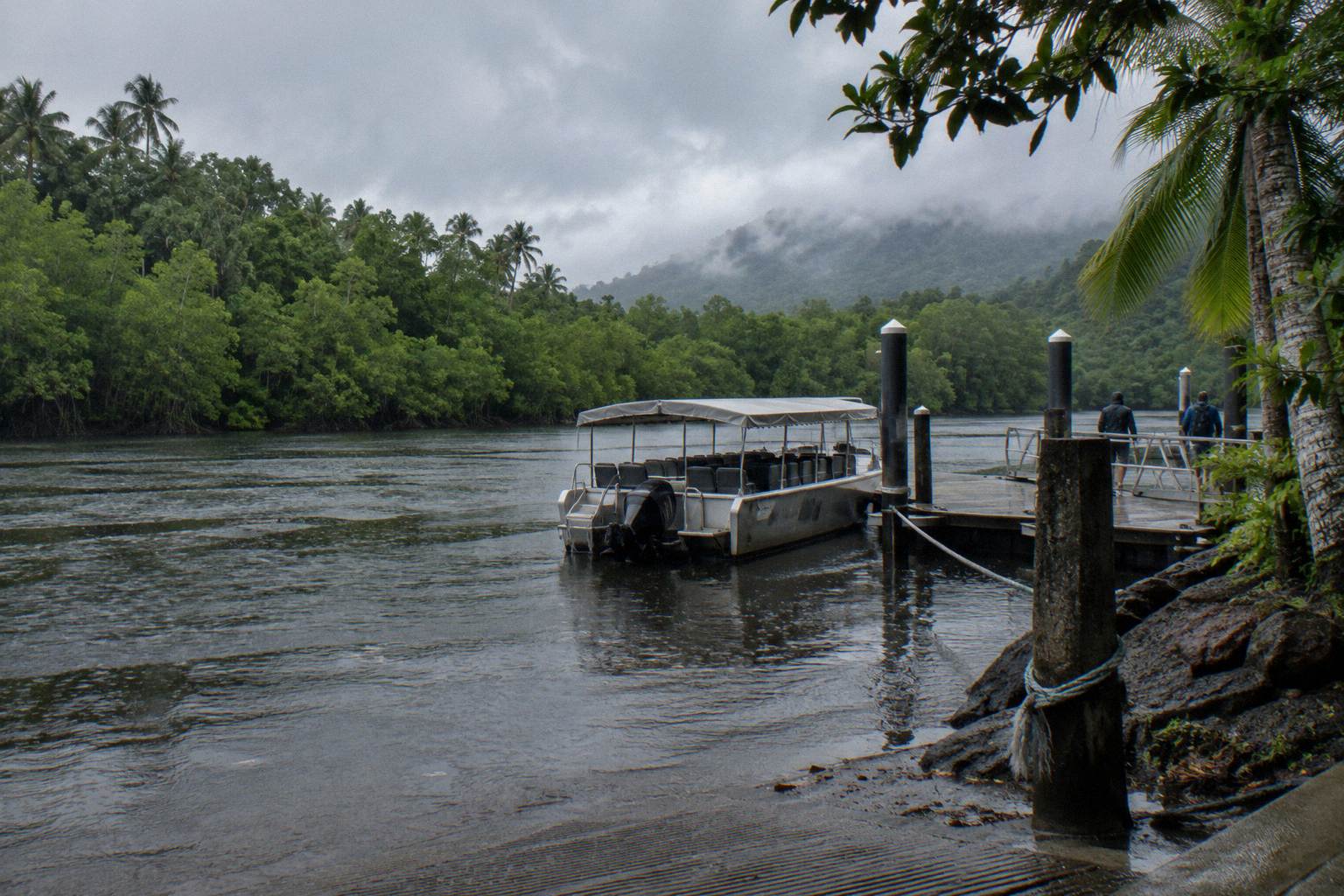
Yes, in almost every case. Rain alone does not stop a Daintree River crocodile cruise: Solar Whisper operates in rain, Bruce Belcher's pulls clear screens down over its boats in heavy rain, and Crocodile Express runs every day except 25 December. Flood is the real dividing line, and river and tidal conditions can affect operations on the river at any time of year. For any specific date, check the booking page before you travel.
The wet season in Far North Queensland runs roughly January to March, and the numbers are dramatic: Port Douglas records a long-term average of 395.8 mm of rain in January, 422.0 mm in February and 429.4 mm in March, measured across 124 years of rainfall records at the Warner Street station. That is rain on roughly 14 days in each of those months. Yet cruise operators on the Daintree River do not shut down for the season as a matter of course. Their boats are built for a tropical river, and their calendars stay open through summer, with only one confirmed seasonal closure among the trips sold here.
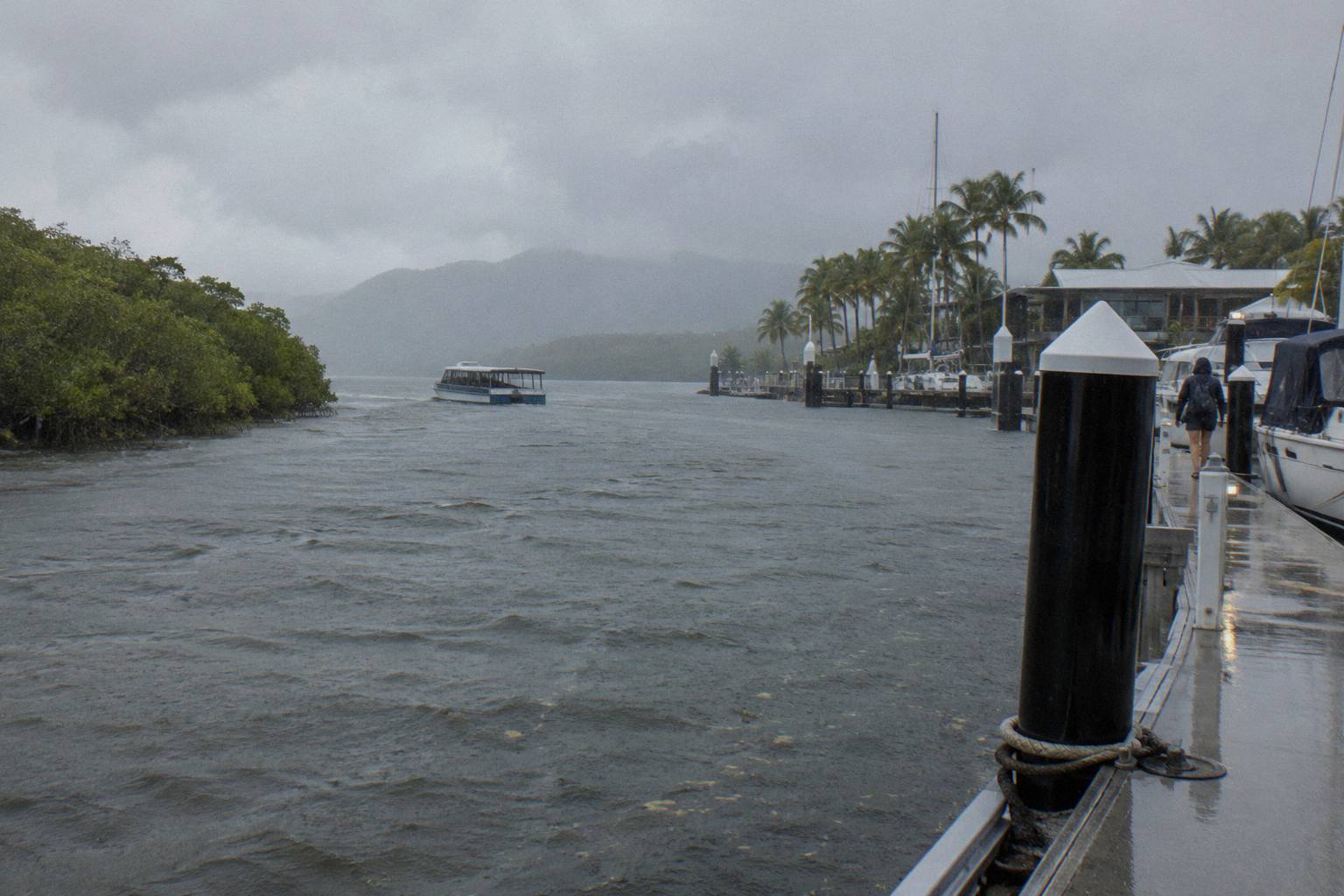
The distinction that matters is rain versus flood. A tropical downpour, even a heavy one, usually passes within an hour and leaves the river running brown and high but navigable. A flood, when the Daintree breaks its banks after sustained rainfall upstream, is different: debris in the channel, fast currents and submerged snags make small-craft operations unsafe. Solar Whisper states plainly that it operates in rain but not in flood, and the Daintree Ferry's own site notes that river and tidal conditions can affect operations. No operator will promise a specific day in advance, which is why the standard advice is simple: check the booking page, and expect a reschedule rather than a refund fight if the river is up.
One more framing fact before the detail. Nothing on the river runs at night; every trip covered here operates in daylight, at dawn or around dusk. So a wet season booking is always a daytime question, and the daylight hours in January run about 13.0 hours long near Daintree Village, computed for the 15th of the month, which leaves a wide window between sunrise at about 5:58am and sunset at about 6:57pm. The practical question is whether weather fills that window or empties it.
Which Operators Keep Running When It Rains?
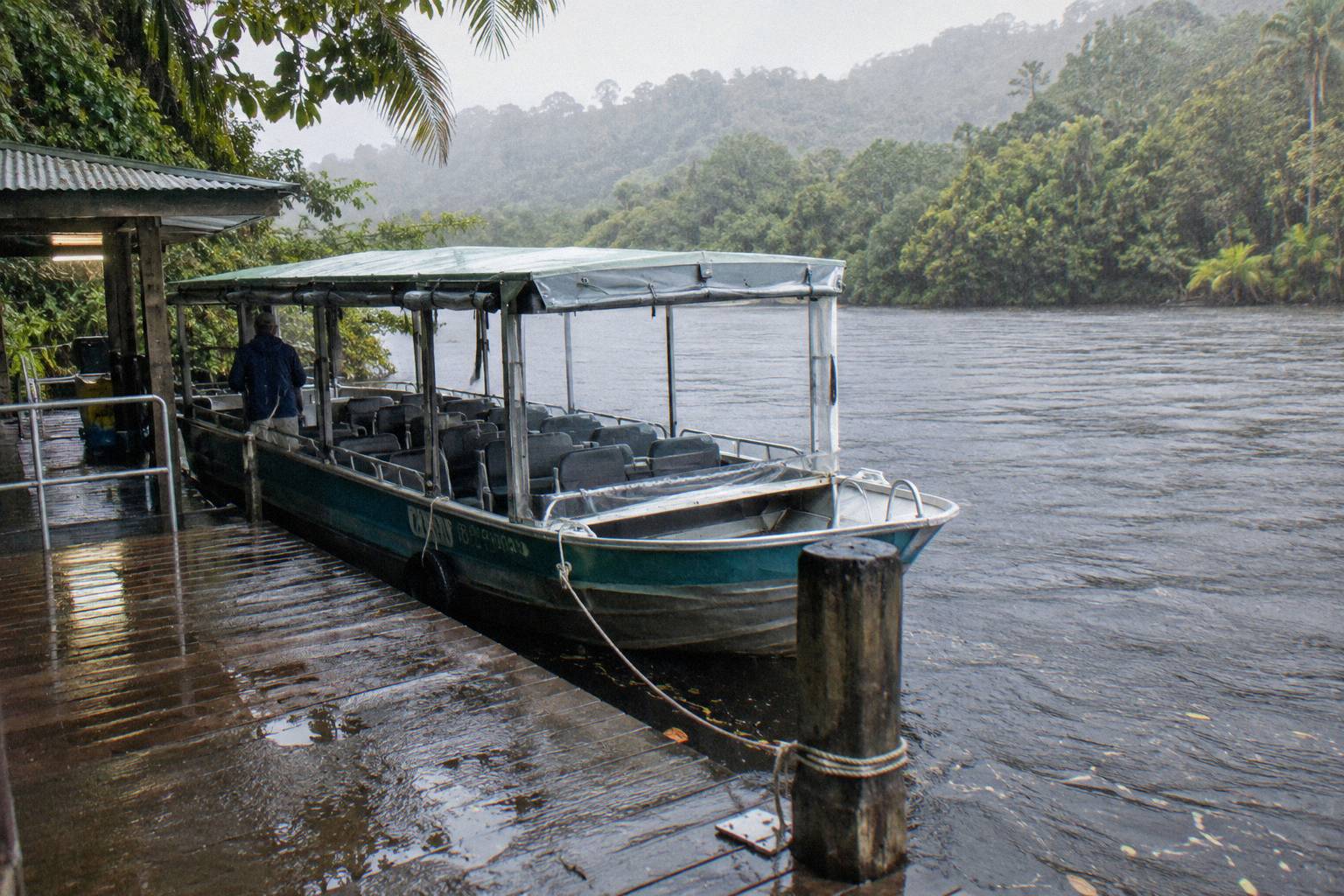
Each operator treats rain differently because each runs a different boat from a different spot on the river. Solar Whisper's vessel is roofed and windowless, an open-sided solar-electric boat, which means a shower passes through as scenery rather than stopping the trip; flood is its only stated stoppage. Bruce Belcher's approach is the reverse in mechanics but the same in spirit: its boats have no permanent roof, so clear screens come down in heavy rain and the cruise continues, with non-slip shoes required for the 200 m uncovered walk to the private jetty. Crocodile Express runs two one-hour routes, one from Daintree Village and one from the ferry gateway, on a pattern of daily cruises from 8.30am to 3.30pm every day except 25 December, and its one-ticket pass stays valid for 14 days from first activation, which is quietly useful in a week of patchy weather.
Lady Douglas sits in a different category for wet season planning. It departs the Crystalbrook Superyacht Marina at 44 Wharf Street, Port Douglas, and cruises Dickson Inlet, a mangrove inlet that is a different waterway from the Daintree River. The operator calls it a calm water cruise with covered seating across the whole back deck, and it runs four seasonal slots a day (10.30 am, 12.30 pm, 2.30 pm and 4.30 pm, dependent on seasonal demand). An inlet does not flood the way a river does, which makes it the most weather-sheltered croc spotting trip sold here. The half-day and full-day land tours also run through summer, since a rainforest walk in the rain is a different proposition from a boat on a flooding river; the full-day Daintree Experience even supplies the waterfall swim, and both include a one-hour river cruise as one stop.
| Trip | From price | Length | Stated wet weather approach |
|---|---|---|---|
| Solar Whisper Croc And Wildlife Cruise | check the booking page | 1 hour | Operates in rain, not in flood |
| Crocodile Express Daintree Wildlife Cruise | from US$27 | 1 hour per route | Runs daily except 25 December |
| Daintree River Cruise Centre Wildlife Cruise | from US$24 | 1 hour | Departures listed 9.30am to 3.30pm daily |
| Bruce Belcher's Guided Daintree River Cruise | from US$30 | 1 hour | Clear screens in heavy rain; closed all February |
| Lady Douglas River Cruise | from US$32 | 1.5 hours | Calm water, covered back deck, in Port Douglas |
| Daintree Boatman Sunset Cruise | check the booking page | 2 hours | Dawn and dusk pattern, village boat ramp |
Cancellation policy is the other half of a wet season booking. Six of the trips here state free cancellation up to 24 hours before start. Solar Whisper and Daintree Boatman carry no stated cancellation terms here, so check the booking page for those two. The Lady Douglas, Crocodile Express, Daintree River Cruise Centre, Bruce Belcher's, half-day and full-day trips all state free cancellation up to 24 hours before start for a full refund. The Daintree River Cruise Centre adds its own operator terms on top: more than 24 hours out, full refund or credit; within 24 hours, no refund but one free rebooking.
Does Heavy Rain Change Crocodile Sightings?
The seasonal split that operators themselves describe is consistent enough to plan around. Bruce Belcher's says crocodiles are spotted on 98 percent of its trips, particularly in the cooler months of June to September, and about 50/50 in the warmer months, which it ties to the breeding season and the wet season; it never guarantees a sighting and offers a complimentary return trip if none is seen. Solar Whisper says about a 99 percent success rate overall, with small crocodiles very reliable and big ones come and go, and that the warmer months make crocodiles harder to see as river temperature rises. Lady Douglas says crocodiles are normally seen on over 90 percent of trips, especially in the dry season from May to November. Daintree Boatman says crocs and snakes are best between May and October and much more difficult outside that period.
Against that, one Government fact cuts the other way. Courtship begins in October and November and nesting runs December to April, and the Queensland Government states that during the breeding season male crocodiles become very mobile as they look for a mate, so sightings are more prevalent. A wet season trip is therefore a trade: fewer basking crocodiles on the banks, more movement in the water, and warmer, murkier water after rain. Neither side of that trade is a promise, and every operator here that quotes a rate also refuses to guarantee it.
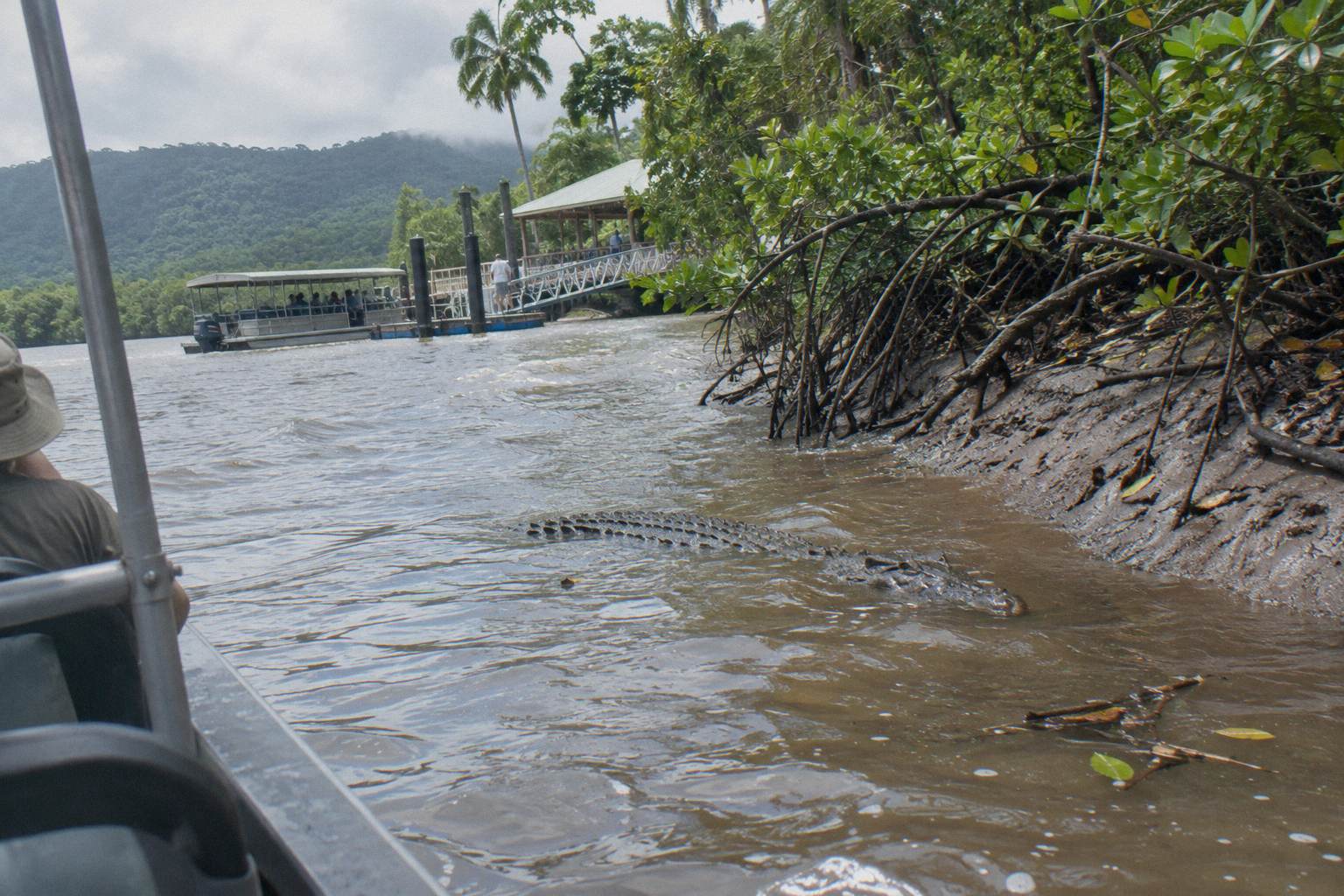
The practical reading for a summer booking: pick an operator with a return-trip offer, go at low tide where the operator offers a choice, and treat any sighting in January to March as a bonus rather than the point of the day. Solar Whisper says low tide is usually better, as there are more beaches and less water to hide in, and that the most difficult time is summer on a high tide. Bruce Belcher's says low tide can enhance the chances but crocodiles are still seen at high tide. The tide question is its own subject, covered in full in how tides shape croc sightings on the Daintree River.
For the boundary case, night: nothing here runs at night, and the Queensland Government's Be Crocwise advice notes crocodiles are most active at night, dusk and dawn. That is partly why dawn and dusk hold the best odds. More on that in whether a Daintree croc cruise runs at night.
What The Wet Season Actually Looks Like In Numbers
January, February and March are the wet months, averaging 395.8 mm, 422.0 mm and 429.4 mm of rain respectively, with rain on roughly 14 days a month. The driest stretch is July to September at 23 to 32 mm. Temperatures stay warm year round: mean maximums run from 24.6 °C in July to 30.3 °C in January, so a wet season cruise is a warm, humid outing, not a cold one.
These are 52-year temperature and 124-year rainfall averages from the Bureau of Meteorology's Port Douglas Warner Street station, the closest long record to the Daintree, and they set expectations better than any anecdote. Note what they do not say: even in February, the wettest month, rain falls on about 14 days of 1 mm or more, which leaves roughly half the days of the month either dry or carrying only light falls. Monsoon mornings are frequently clear, with build-up cloud and afternoon storms. A cruise booked for 8.30am or 9.30am, the first departures on most timetables here, often beats the day's rain entirely.
| Month | Mean max | Mean min | Mean rain | Rain days (1 mm+) |
|---|---|---|---|---|
| January | 30.3 °C | 23.7 °C | 395.8 mm | 13.8 |
| February | 30.1 °C | 23.5 °C | 422.0 mm | 14.2 |
| March | 29.5 °C | 22.8 °C | 429.4 mm | 14.4 |
| July | 24.6 °C | 16.8 °C | 26.4 mm | 4.2 |
| August | 25.3 °C | 17.1 °C | 23.3 mm | 4.0 |
| September | 26.7 °C | 18.6 °C | 32.1 mm | 4.4 |
The Bureau publishes the full monthly table for Port Douglas Warner Street climate averages if you want every month. The pattern behind the numbers is a dry season from roughly May to November, when Lady Douglas says crocodiles are normally seen on over 90 percent of its trips, and a wet season from December onwards. Rainforest and river both look their most dramatic between January and March, and some travellers deliberately choose that window: fewer crowds, towering cloud, and a river running fast and brown. The full seasonal argument is laid out in choosing the best month for a Daintree croc cruise.
One caution to pair with the romance: the Bureau's averages are averages, and individual wet seasons vary. A February can deliver its 422 mm in two monsoon bursts or spread across the month, and the difference decides whether the river is flood-brown for a week or fishable-calm between showers. That is why the check-the-booking-page habit matters more in summer than in July.
Mistakes To Avoid When Booking A Wet Season Cruise
The common mistakes are booking a single tight morning with no flexibility, assuming every operator has the same closure calendar, ignoring the 24 hour cancellation line, and expecting dry season sighting rates in February. Bruce Belcher's is closed for the entire month of February, a fact that catches out plenty of planners, and the two owner-run trips here carry no stated cancellation terms at all.
| Mistake | Why it costs you | Better move |
|---|---|---|
| Booking Bruce Belcher's for February | Closed all February, plus Christmas Day and New Year's Day | Pick another operator that month |
| Assuming free cancellation everywhere | Solar Whisper and Daintree Boatman carry no stated terms here | Check the booking page before paying |
| One fixed morning, no slack | A single storm can cancel a single departure | Book early in your stay, keep a backup day |
| Ignoring the tide | Summer high tide is Solar Whisper's hardest condition | Prefer low tide slots where offered |
| Expecting dry season sighting rates | Operators say warm months run about 50/50 | Choose an operator with a return-trip offer |
Flexibility is the whole game. The trips that state free cancellation up to 24 hours before start cover you for a change of plan, but they do not cover a same-day storm, so the strongest structure is a first-choice cruise early in your stay with a spare morning behind it. Crocodile Express's 14 day pass validity is effectively built for this: take Cruise 1 from the village on a clear day, use Cruise 2 near the ferry when the sky cooperates. The Daintree River Cruise Centre's within-24-hours terms, one free rebooking with no refund, reward the same early decision.
Sighting expectations deserve the same plain treatment. The Queensland Government's estuarine crocodile page explains that males grow to over 4 metres and average 3 to 4 metres and 200 to 300 kilograms, and that the average animal moves with the seasons; summer movement plus warm water is why operators quote lower warm-month rates rather than any shortage of crocodiles. If a sighting is the entire point of your trip, the full comparison of Daintree River cruises is the deeper read, and the realistic odds question is answered in how likely you are to see a crocodile on the Daintree River.
Safety on the water in rain follows the same rules as any day, and the Be Crocwise guidance is the reference: keep arms and legs inside the boat, use the boat as a barrier, and stay more than 5 metres from the water's edge on the bank. The boats here follow those rules as a matter of course, which is the quiet reason a cruise is the safe way to look for crocodiles in any season. That wider picture is in croc cruise safety: boats and wild crocs.
Planning a wet season trip comes down to timing, tide and a spare day, and Port Douglas Crocodile Cruises exists to make those three calls easier. The quietest boat on the river for a rainy morning is worth a look before you commit: a roofed, windowless solar-electric vessel that moves through showers rather than waiting them out, near the ferry at Lower Daintree.
Common Questions About Wet Season Croc Cruises
Do Croc Cruises Run In The Wet Season Or After Heavy Rain?
Yes, in most cases. Rain alone rarely stops a Daintree River cruise: Solar Whisper operates in rain but not in flood, Bruce Belcher's pulls clear screens down in heavy rain, and Crocodile Express runs daily except 25 December. Flood water is the exception, and river and tidal conditions can affect operations. Check the booking page for any specific date.
Is February A Bad Month For A Daintree Croc Cruise?
February is the wettest month on average at Port Douglas, 422.0 mm of rain, and Bruce Belcher's is closed for the whole month. Other operators keep running. Sighting rates are lower in warm months: Bruce Belcher's says about 50/50 compared with 98 percent of trips in June to September.
What Happens If My Cruise Is Cancelled For Weather?
Six of the trips sold here state free cancellation up to 24 hours before start for a full refund. Solar Whisper and Daintree Boatman carry no stated cancellation terms here, so check the booking page. The Daintree River Cruise Centre offers one free rebooking within 24 hours rather than a refund.
Are Crocodile Sightings Worse After Heavy Rain?
They can be. The Queensland Government says crocodiles are highly mobile after heavy rain and floods, and Solar Whisper says warm river water makes crocodiles harder to see. Against that, the Government also says sightings are more prevalent in the breeding season, when males move looking for a mate.
Do Any Cruises Close In The Wet Season?
One closure is confirmed here: Bruce Belcher's is closed for all of February, Christmas Day and New Year's Day. Crocodile Express closes only on 25 December. Solar Whisper's single stated stoppage is flood, not rain.
Is A Rainy Day Actually A Bad Day To Cruise?
Not necessarily. Rain keeps many travellers off the river, boats can be quieter, and the rainforest is at its most dramatic under monsoon cloud. Most boats here run in ordinary rain, and morning departures often beat the afternoon storms that characterise wet season days.