
What Is The Most Croc-Infested River In Australia?
Australia has no official count of crocodiles per river, but the Queensland Government tells you where estuarine crocodiles live and where sightings happen. Here is what that means for the Daintree River and a cruise.
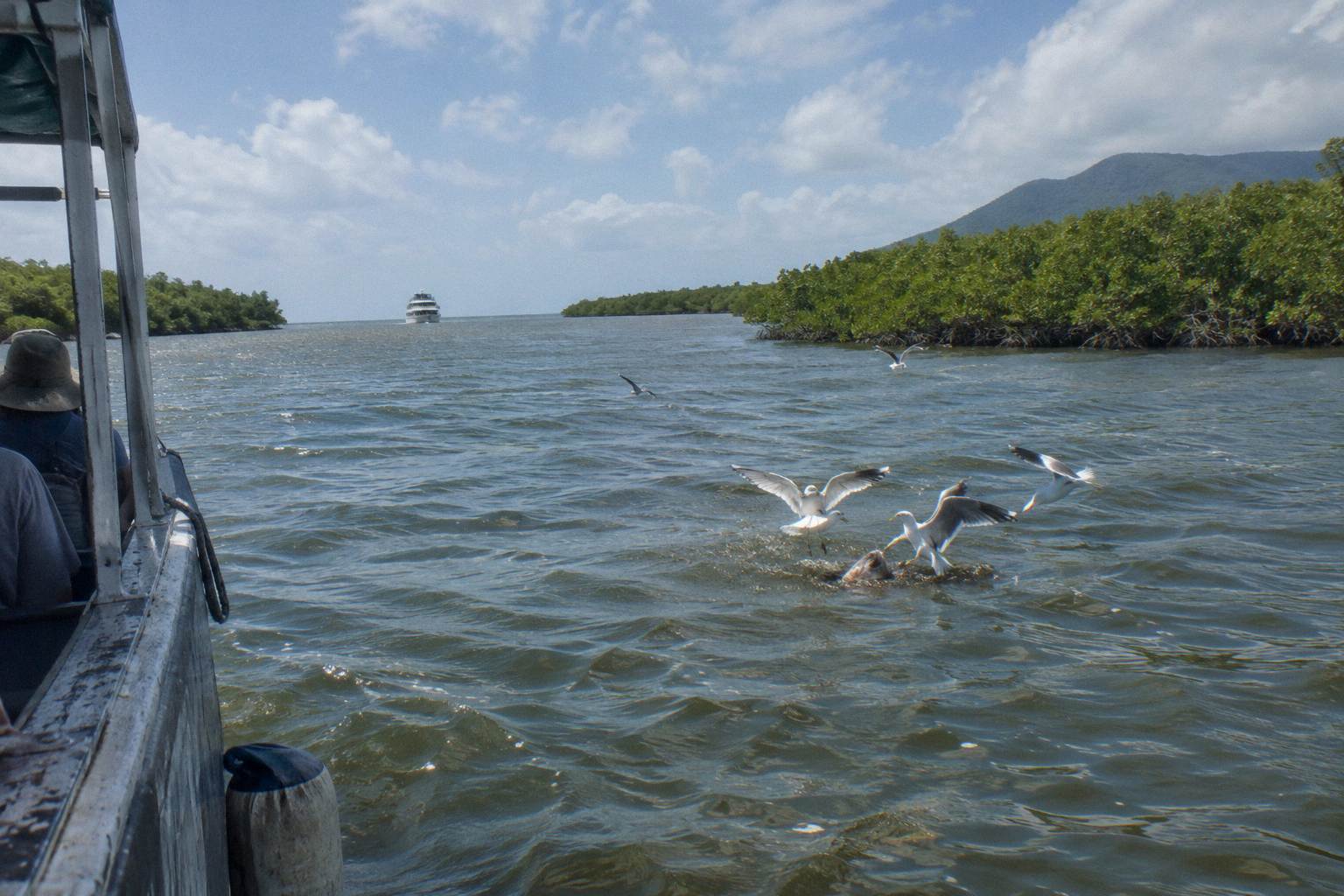
No single river can officially be crowned the most croc-infested in Australia, because no government agency publishes a crocodile count for any river, and every waterway across the northern crocodile range holds a population that moves, breeds, and shifts with the tides. What is published is the species' range: estuarine crocodiles occur in Queensland between Gladstone and Cape York Peninsula, and throughout the Gulf of Carpentaria, and they are most commonly seen in the tidal reaches of rivers. That single Government sentence, plus the fact that crocodiles grow to over 4 metres in length, tells a visitor more about which waterways to take seriously than any invented ranking ever could.
The question itself is worth pausing on. People ask it because they want a number, a river with the most crocs per kilometre, a definitive answer to photograph. The plain answer is that the count does not exist in public form, so the reliable move is to treat every river, creek and inlet in the range as crocodile habitat and go looking from a boat. That is exactly what the Daintree River cruise operators north of Port Douglas offer, and it works because the Daintree is a textbook tidal river system: a narrow, tree-lined upper reach near Daintree Village and a wide mangrove estuary toward the ferry.
A quick sketch of the key facts before the detail:
| Fact | Detail |
|---|---|
| Where estuarine crocodiles occur in Queensland | Between Gladstone and Cape York Peninsula, and throughout the Gulf of Carpentaria (Queensland Government) |
| Where they are most commonly seen | The tidal reaches of rivers |
| Maximum size | Grow to over 4 metres in length |
| Average adult male | 3 to 4 metres, 200 to 300 kilograms |
| Crocodile-free waterways | None in the natural range; no waterway can be considered crocodile free |
| Best place to look | From a licensed river cruise boat, arms and legs inside |
Where Estuarine Crocodiles Actually Live In Australia
Estuarine crocodiles occupy coastal rivers, estuaries and nearshore waters across northern Australia, and in Queensland the Government places them between Gladstone and Cape York Peninsula, plus the Gulf of Carpentaria, with the tidal reaches of rivers named as the places they are most commonly seen. The Daintree River sits squarely inside that description. It is a tidal system for most of its navigable length, ringed with mangroves in its lower reaches, which is precisely the habitat class the Government description points to. That is why croc spotting on the Daintree works as a paid activity at all.
A few biology facts sharpen the picture. Males mature at about 17 years and around 3.3 metres; females at about 12 years and 2.3 metres. Females rarely exceed 3.5 metres and up to 150 kilograms. Courtship begins in October and November, nesting runs December to April, and nests hold 40 to 70 eggs with about 90 days of incubation. Wild lifespan is unknown, with the expectation of 50 years or more. During the breeding season the Queensland Government notes that male crocodiles become very mobile as they look for a mate, so sightings are more prevalent. The Government's own crocodile safety pages carry the range statement and the Be Crocwise advice together, which is a hint at how the two should always be read.
Why does the "most infested" framing mislead? Because crocodile numbers on any given stretch of river change with the tide, the season and the breeding cycle. Bruce Belcher's says crocodiles are spotted on 98 percent of its trips in the cooler months of June to September, and about 50/50 in the warmer months, which it ties to breeding and the wet season. Solar Whisper says low tide is usually better because there are more beaches and less water to hide in. Lady Douglas says crocodiles are normally seen on over 90 percent of trips in the dry season from May to November. These are operator claims about their own boats, not river-wide counts, and the spread between them shows why no single number describes a river.
The practical translation: pick a river inside the Government's range, pick a licensed boat, and go when the conditions favour spotting. For a deeper look at the species itself, the saltwater crocodiles of the Daintree River guide covers size, diet and behaviour in detail.
Why The Tidal Reaches Matter Most For Spotting
The Government's phrase "most commonly seen in the tidal reaches of rivers" is the single most useful spotting tip in the public record, because crocodiles bask on mudbanks and sandbars that only appear at lower water, and those banks sit in the tidal zone. Operators echo it from the water. Solar Whisper says low tide usually improves the odds, since more bank is exposed and there is less deep water for a crocodile to hide in, and Bruce Belcher's says low tide can enhance the chances though crocodiles are still seen at high tide. Tide, not river choice, is the lever a visitor can actually pull.
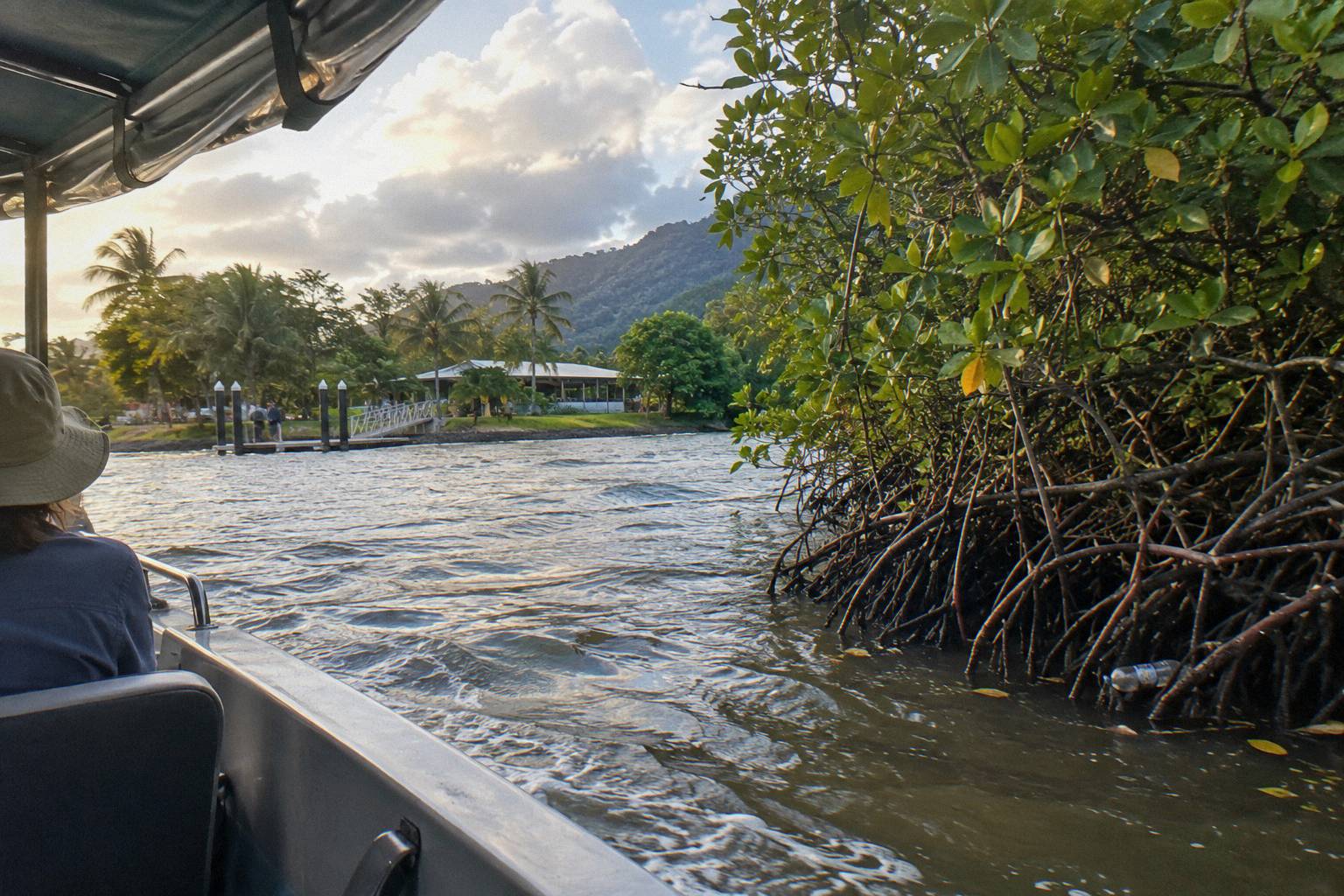
The Daintree River conveniently offers two different faces. Upper Daintree, near the village, is narrower and calmer with overhanging trees, good for kingfishers, herons and snakes along the bank. Lower Daintree, at the ferry end, is a wide tidal estuary with mangroves, and that is the classic open-bank crocodile habitat. Crocodile Express runs one-hour cruises from both ends on a single ticket, its village route from Stewart Street and its ferry-gateway route from a kiosk about 300 metres before the crossing. The two reaches reward different eyes, and the pass is valid 14 days from first activation, so a visitor can sample both.
The month matters almost as much as the tide. The table below folds the Bureau of Meteorology's Port Douglas rainfall averages, 52 years of temperatures and 124 years of rainfall at the Warner Street station, into the same frame as the operators' seasonal wording. Crocodile Express and the Cruise Centre run most days of the year, but Bruce Belcher's closes for all of February, and the wet months of January to March, each averaging 395 to 429 millimetres of rain, are when the river runs high and brown. The driest months are July to September at 23 to 32 millimetres.
| Month | Mean max / min (C) | Mean rain (mm) | Rain days 1 mm+ | What operators say |
|---|---|---|---|---|
| January | 30.3 / 23.7 | 395.8 | 13.8 | Wet season, high water |
| March | 29.5 / 22.8 | 429.4 | 14.4 | Wet season peak |
| June | 25.1 / 17.7 | 47.7 | 5.7 | Bruce Belcher's peak spotting months begin |
| July | 24.6 / 16.8 | 26.4 | 4.2 | Cool, dry, easy banks |
| September | 26.7 / 18.6 | 32.1 | 4.4 | End of the high-odds window |
| November | 29.5 / 22.3 | 106.1 | 7.6 | Breeding mobility begins, rain returns |
The best month for a Daintree croc cruise and tides and croc sightings on the Daintree unpack both levers at length, with the same climate and tide logic applied to specific departure windows.
Is The Daintree River The Answer People Are Looking For?
If the question really means "which river gives me the best chance of seeing a big wild crocodile from a safe boat", the Daintree is the strongest candidate in the Port Douglas region, because it combines tidal estuary habitat, a dense operator presence and published sighting claims from 98 percent down to 50/50 depending on season. It is also a World Heritage setting: the Wet Tropics of Queensland, inscribed on the UNESCO list in 1988, covers about 895,000 hectares and holds some of the oldest continuously surviving tropical rainforests on Earth, as the World Heritage listing records. The crocodile cruise is a wildlife outing inside that landscape, not a theme-park ride.
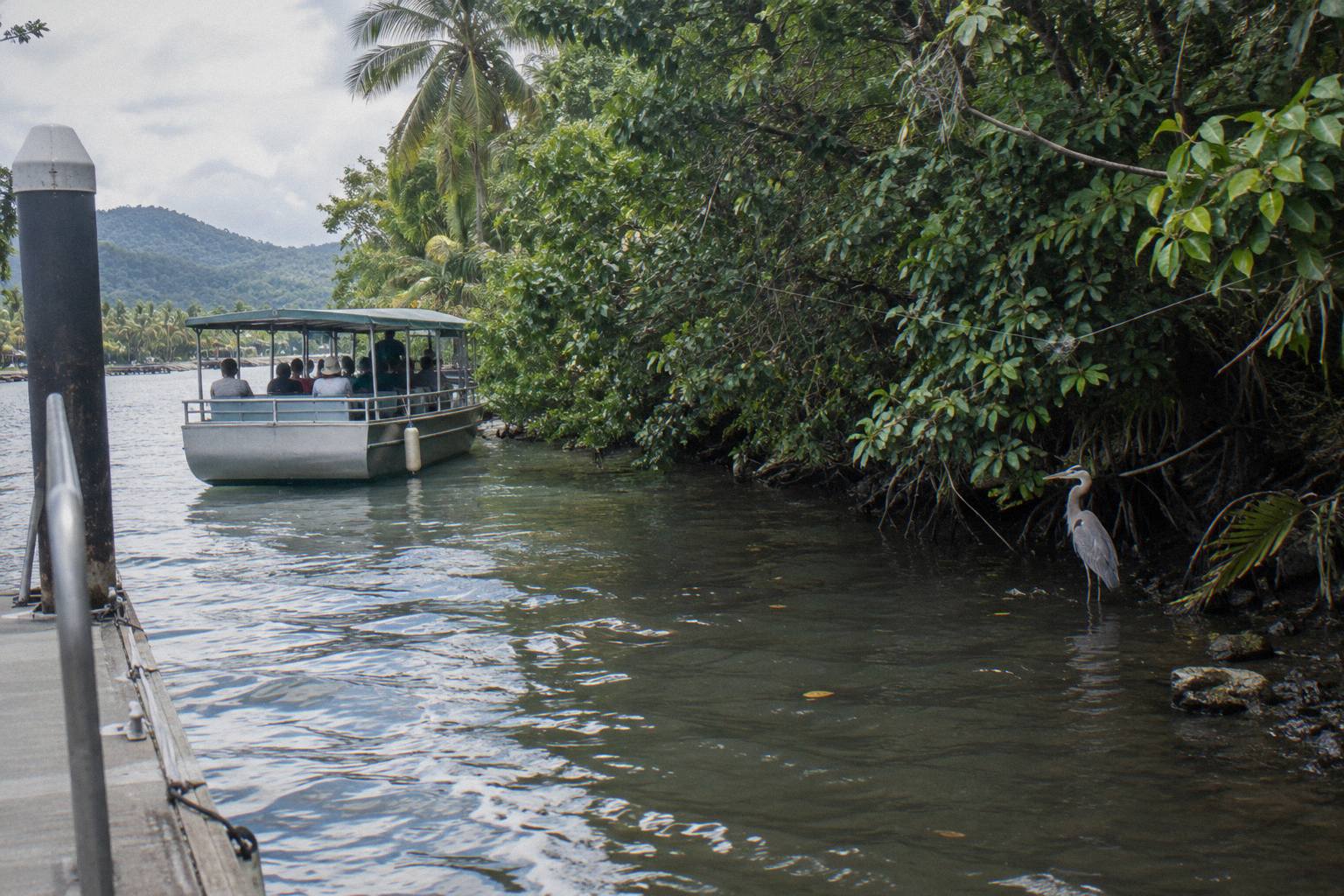
Comparing rivers by any yardstick other than published operator claims would mean inventing numbers, and no crocodile count for any river in Australia appears in the public Government record. So the decision comes down to format, price and departure point. The rest of the planning pages sit on Port Douglas Crocodile Cruises.
| Cruise | Style | Price from | Rating | Duration | Departure point |
|---|---|---|---|---|---|
| Bruce Belcher's Guided Daintree River Cruise | Guide-led, private jetty | US$30 per person | 4.6 from 154 reviews | 1 hour | Lower Daintree, own jetty |
| Daintree River Cruise Centre Wildlife Cruise | Guided cruise, tea included | US$24 per person | 4.6 from 558 reviews | 1 hour | South side before the village |
| Lady Douglas River Cruise | Riverboat, Dickson Inlet | US$32 per person | 4.6 from 571 reviews | 1.5 hours | Crystalbrook Superyacht Marina, Port Douglas |
All three carry free cancellation up to 24 hours before start, and prices are per person as shown on the booking pages. For a wider field that includes two-river passes and sunset trips, the Daintree River cruises compared guide lines up every option side by side.
How To Look For Crocodiles Safely
Every safety rule that matters is in the Queensland Government's Be Crocwise advice: stay more than 5 metres from the water's edge, be extra cautious at night, dusk and dawn, and keep arms and legs inside the boat when you are on one, using the boat as a barrier. A licensed cruise vessel is the compliant way to get close, because the 5 metre line is safety advice on land and the 10 metre line around a basking crocodile is a legal distance; it is an offence in Queensland to remain within 10 metres of a crocodile on a sandbar or riverbank, to disturb one by approaching within 10 metres without reasonable excuse, or to feed one. Boats operate within those rules; swimmers and kayakers cannot.
Two Government lines deserve reading twice. First: no waterway within the crocodile's natural range can be considered crocodile free, which retires the "which river is safe" question for good. Second: crocodiles are highly mobile, especially after heavy rain and floods, and interactions can occur at any time of the year. The full Be Crocwise guidance sits on the Queensland Government's environment pages. On the boats themselves the rules are simpler still: stay seated, keep limbs inside, and listen to the skipper, who does the spotting for a living.
This is also why the Northern Territory's jumping crocodile format has no Queensland equivalent here. Deliberately feeding or disturbing a crocodile is an offence in Queensland, so a Daintree cruise is a spotting trip: you watch a wild animal doing what it does on a sandbank or in the shallows, at a legal distance, from a barrier of hull and rail. The croc cruise safety guide covers boat types, rail heights and what the operators themselves say about weather calls.
Mistakes People Make Chasing Crocodile Numbers
The three commonest errors are treating a river as crocodile-free because it looks calm, booking a single midday cruise in the wet season and expecting the dry-season odds, and standing on a riverbank with a phone instead of viewing from a boat. Every one of them traces back to the same root: wanting a guarantee that no river and no operator can give. The Government's no-safe-waterway line disposes of the first error outright, and the operators' own seasonal wording disposes of the second, because the same river shifts between a 98 percent claim in July and roughly even odds in January on Bruce Belcher's own published numbers.
A compact list of the traps worth avoiding:
- Expecting a crocodile count per river. None is published, and any figure quoted online is not an official number.
- Reading one operator's sighting claim as a river-wide rate. Each claim belongs to that boat alone, and the operators differ.
- Ignoring the tide. Low water exposes the banks where crocodiles bask, and several operators say low tide usually improves the odds.
- Picking February. It is the wettest single month by rain days, and Bruce Belcher's, one of the main operators, closes for all of February.
- Waiting for dusk on foot. Crocodiles are most active at night, dusk and dawn, which is exactly when the Government says to be extra cautious on land, and no night cruise exists among the trips covered here.
- Crossing to the north side of the Daintree River by mistake. The covered cruises leave from the south side or from Daintree Village, before the ferry.
The last point catches people regularly. The Daintree River Cruise Centre and Bruce Belcher's both sit on the south side of the river, and the Cruise Centre tells guests not to cross the ferry at all. The ferry itself runs continuously between 5 am and midnight daily, including Christmas Day, but that is for Cape Tribulation traffic, not for the croc cruises. The Daintree Ferry and croc cruise routing guide untangles the geography with maps of each jetty.
For the timing question specifically, what time of day is best to see crocodiles works through the operator timetables hour by hour, from Bruce Belcher's 8:30am first cruise to Daintree Boatman's 4.30pm sunset departure in the warmer half of the year.
Which Cruise To Book If You Want The Croc-Dense Experience
For a visitor based in Port Douglas or Cairns who wants the highest-odds crocodile experience, the sequence is: drive to the Lower Daintree or Daintree Village, book a one-hour cruise on the tidal estuary, go between June and September at low tide, and pick Bruce Belcher's for the guide-led trip or the Cruise Centre for the lowest price from US$24. The half-day and full-day tours add a cruise to Mossman Gorge, a waterfall swim and lunch, from US$121 and US$165 respectively, which suits readers building a whole Daintree day around the river rather than the crocodile alone.
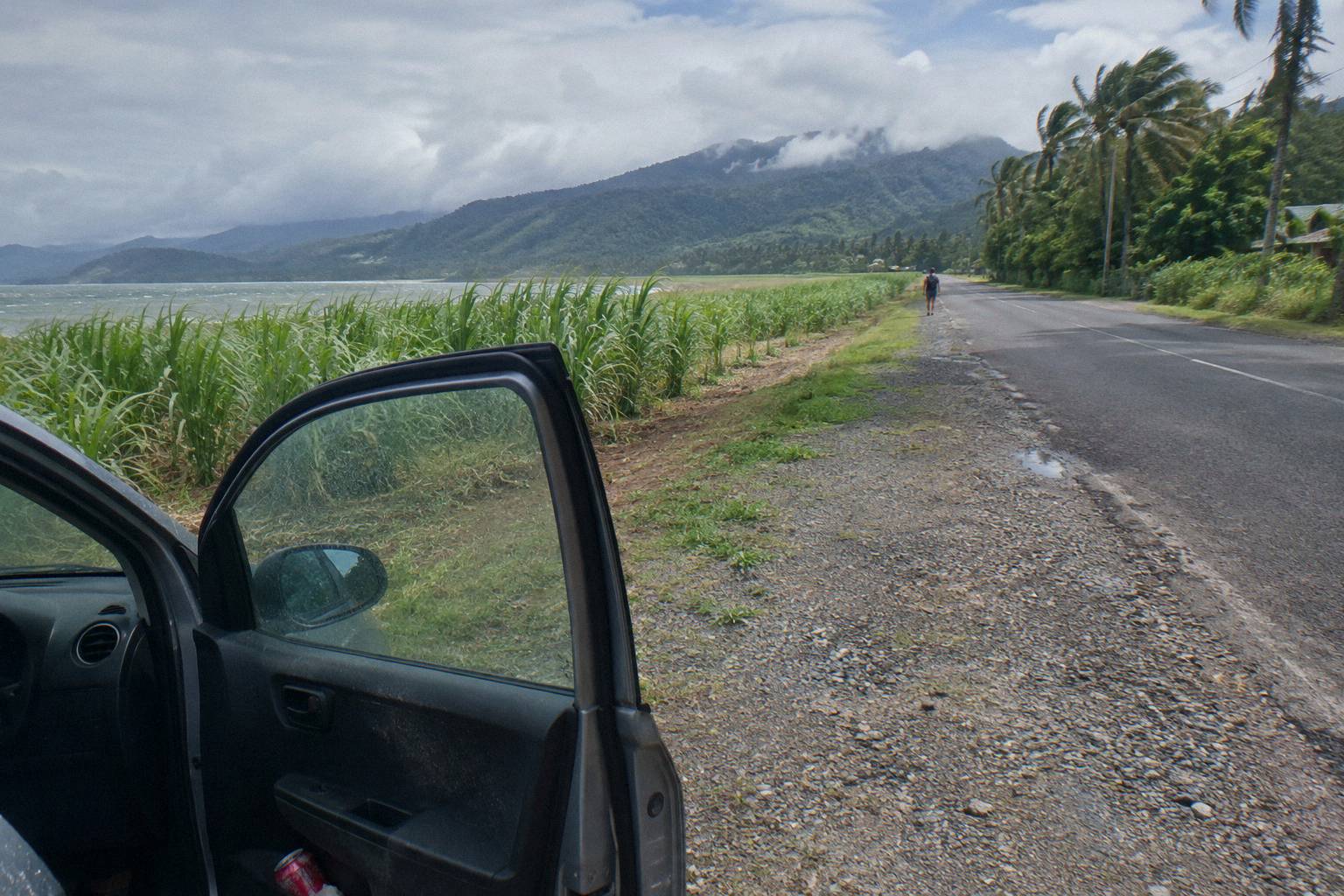
Bruce Belcher's Guided Daintree River Cruise earns its place at the top of that sequence on its own published numbers. It runs from a private jetty at 2856 Mossman-Daintree Road, one hour with a guide and commentary throughout, tea or coffee complimentary, from US$30 per person, rated 4.6 from 154 reviews, free cancellation up to 24 hours before start. The operator says crocodiles are spotted on 98 percent of trips in the cooler months and offers a complimentary return trip if none is seen, and it never guarantees a sighting. Two cautions from its booking page: a 200 metre uncovered walk to the boats, so bring non-slip shoes, and the trip is marked not suitable for pregnant women, people with back problems or anyone prone to seasickness. It closes for all of February, Christmas Day and New Year's Day, with cruises listed from 8:30am to 3pm the rest of the year.
The Daintree River Cruise Centre is the budget entry and the family day out. From US$24 per person, rated 4.6 from 558 reviews, it includes morning or afternoon tea plus use of the Centre's displays, picnic areas and bathrooms, with daily departures listed from 9.30am to 3.30pm and every cruise at least an hour, extended to 1.5 hours when the schedule permits. Arrive 15 minutes early and check in at reception. Transfers are excluded, so it suits self-drivers, and the booking page marks the boats not suitable for wheelchair users even though the Centre grounds are accessible; call ahead about the jetty.
Readers who would rather not drive at all have a real option in Lady Douglas, the only scheduled croc cruise covered here that leaves Port Douglas itself. The riverboat departs the Crystalbrook Superyacht Marina on Wharf Street for 1.5 hours on Dickson Inlet, a mangrove inlet that is a different waterway from the Daintree River, with covered back-deck seating, a licensed bar, a beverage and snacks included, and wheelchair and pram access with a call ahead. From US$32 per person and rated 4.6 from 571 reviews, it trades the big-river estuary for calm water and zero driving, and the operator says crocodiles are normally seen on over 90 percent of trips in the dry season. Scheduled slots run 10.30am, 12.30pm, 2.30pm and a 4.30pm sunset departure, dependent on seasonal demand.
The Daintree croc tour options guide walks through all of them.
Common Questions About Australia's Crocodile Rivers
What Is The Most Croc-Infested River In Australia?
No official crocodile count exists for any Australian river, so no river can be named the most croc-infested on record. The Queensland Government places estuarine crocodiles between Gladstone and Cape York Peninsula and throughout the Gulf of Carpentaria, most commonly seen in the tidal reaches of rivers. The Daintree River fits that description exactly and is the strongest croc-spotting destination in the Port Douglas region.
Is Any River In Australia Crocodile-Free?
No. The Queensland Government states plainly that no waterway within the crocodile's natural range can be considered crocodile free. Crocodile interactions can occur at any time of year, and the animals are highly mobile, especially after heavy rain and floods.
How Big Do Crocodiles Get In Australian Rivers?
Estuarine crocodiles grow to over 4 metres in length. The average male is 3 to 4 metres and 200 to 300 kilograms; females rarely exceed 3.5 metres and up to 150 kilograms. Wild lifespan is unknown, with an expectation of 50 years or more.
What Are The Odds Of Seeing A Crocodile On A Daintree River Cruise?
Each operator publishes its own claim only. Bruce Belcher's says crocodiles are spotted on 98 percent of trips in the cooler months of June to September and about 50/50 in the warmer months. Solar Whisper says about a 99 percent success rate, and Lady Douglas says crocodiles are normally seen on over 90 percent of trips in the dry season from May to November. None of them guarantees a sighting.
Can I Swim In The Daintree River?
Never treat a far-north Queensland waterway as safe to swim. Government advice says to stay more than 5 metres from the water's edge and be extra cautious at night, dusk and dawn, when crocodiles are most active. On a cruise, keep arms and legs inside the boat and let the vessel act as the barrier.
Do Crocodile Cruises Feed The Crocodiles To Make Them Jump?
No Queensland cruise does. Feeding a crocodile, and disturbing one by approaching within 10 metres without reasonable excuse, are offences in Queensland. A Daintree cruise is a spotting trip: wild crocodiles are observed basking or swimming at a legal distance from a licensed boat.